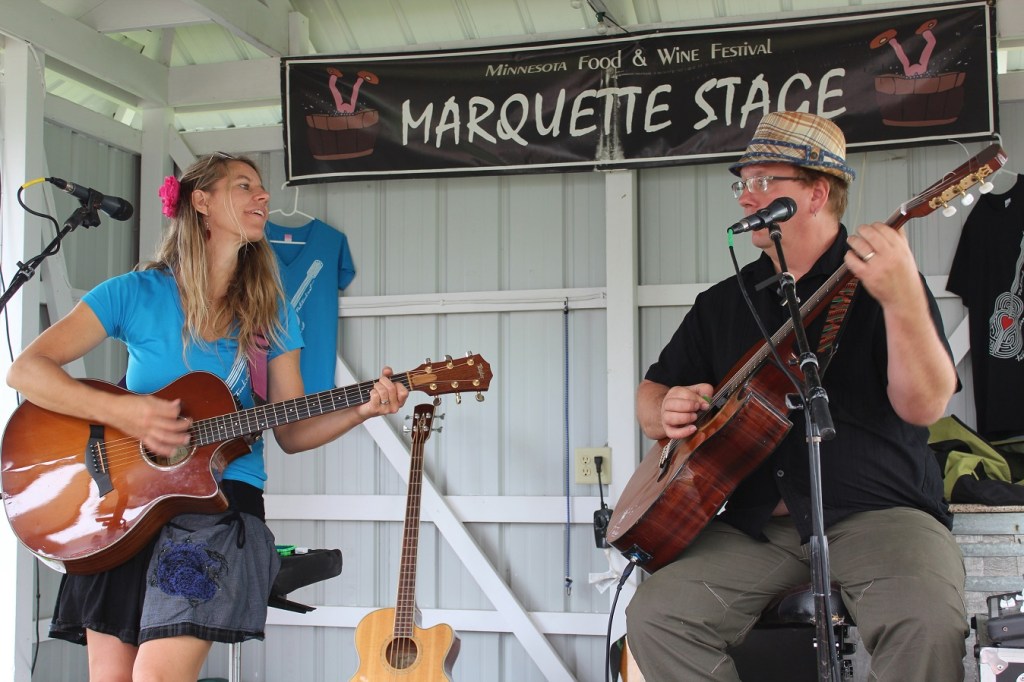
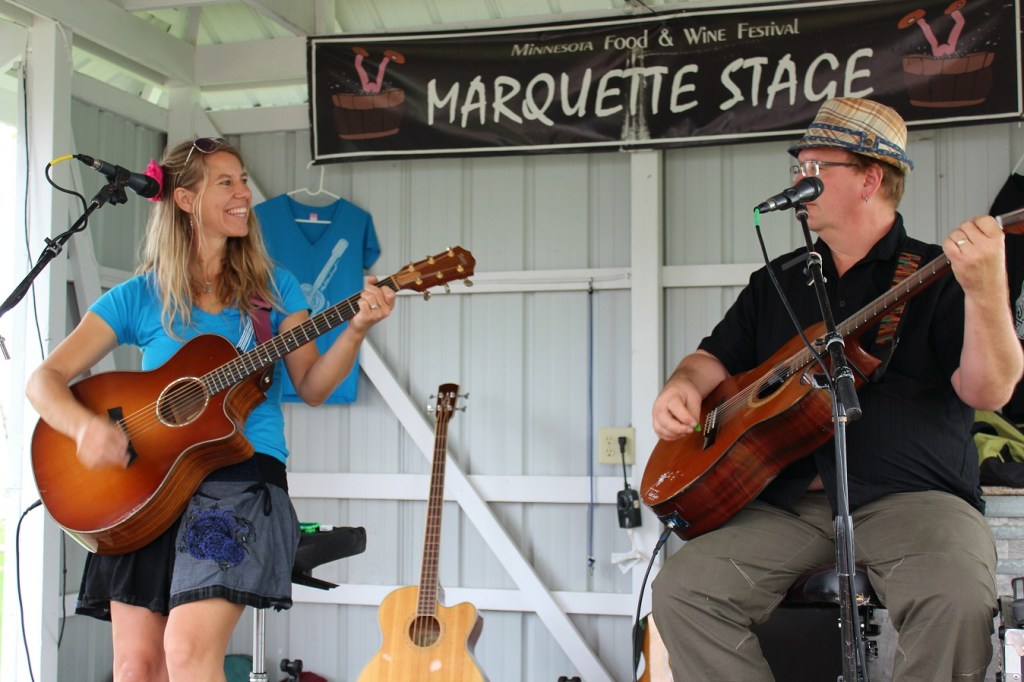
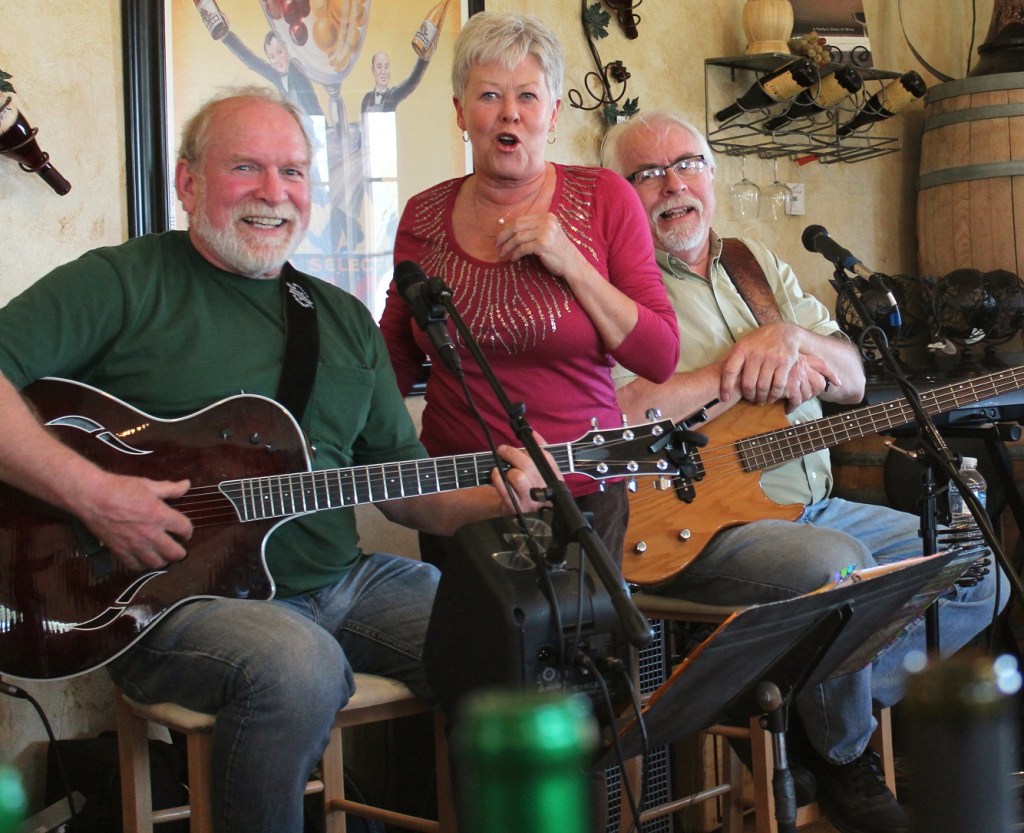
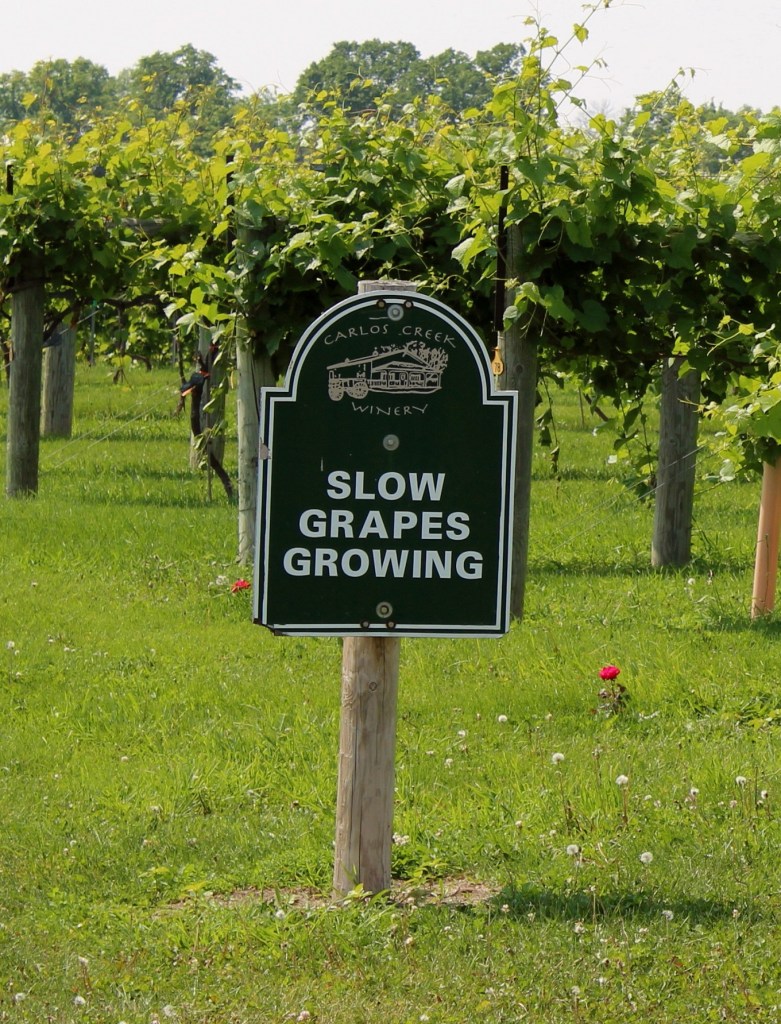
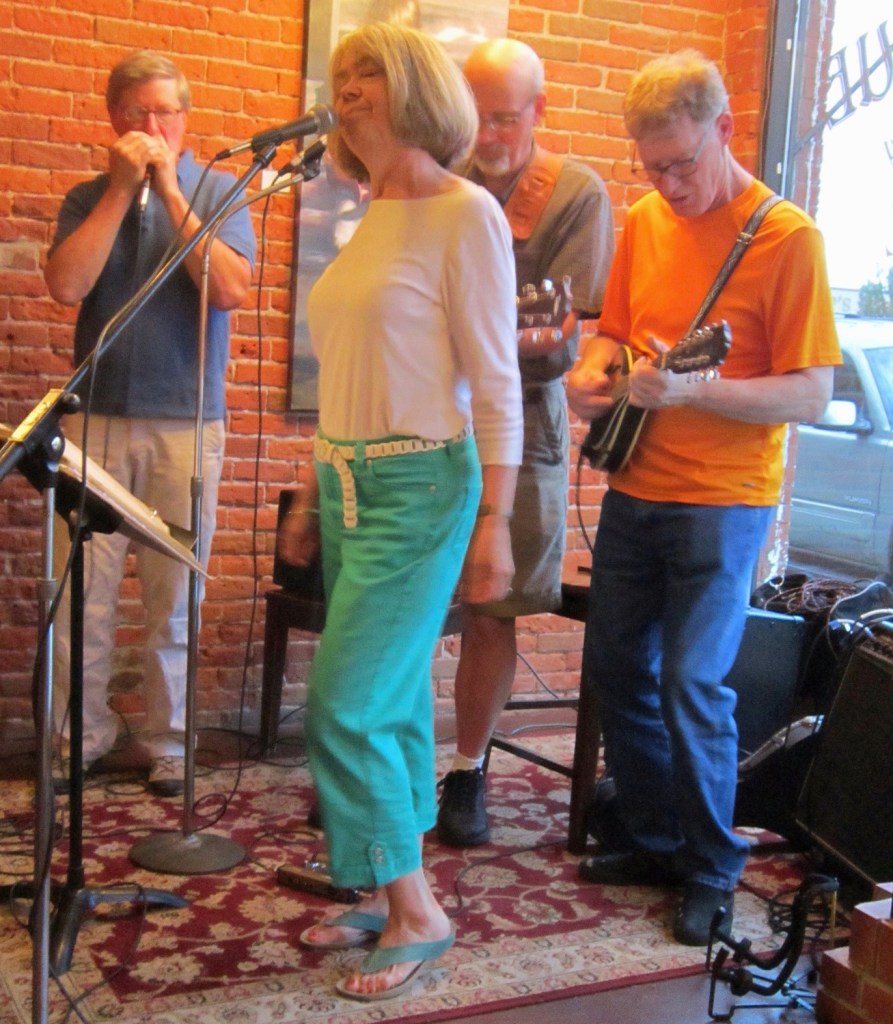
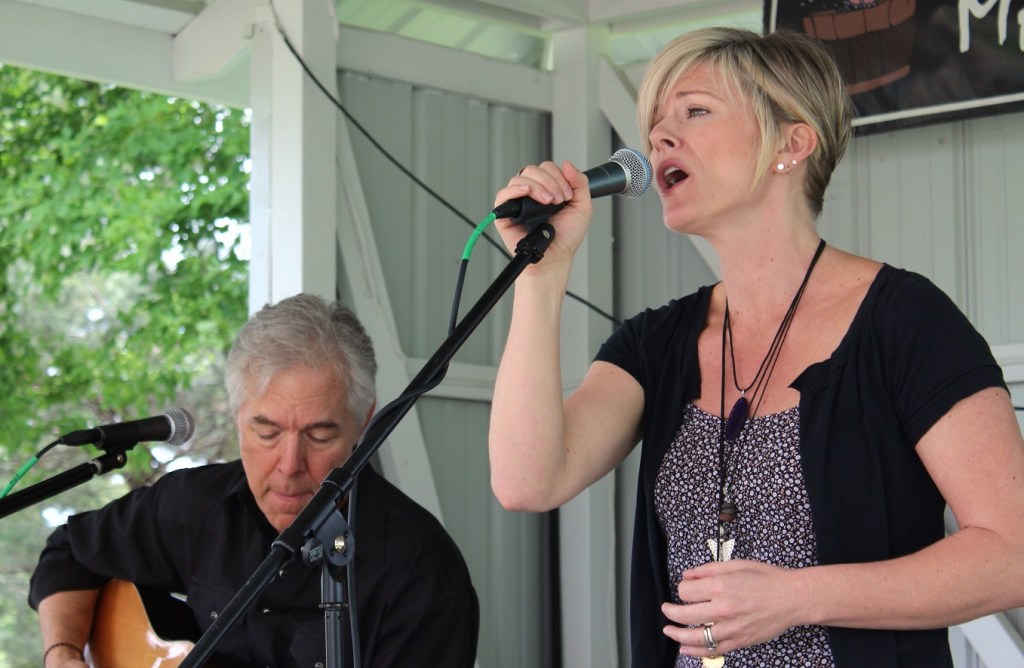
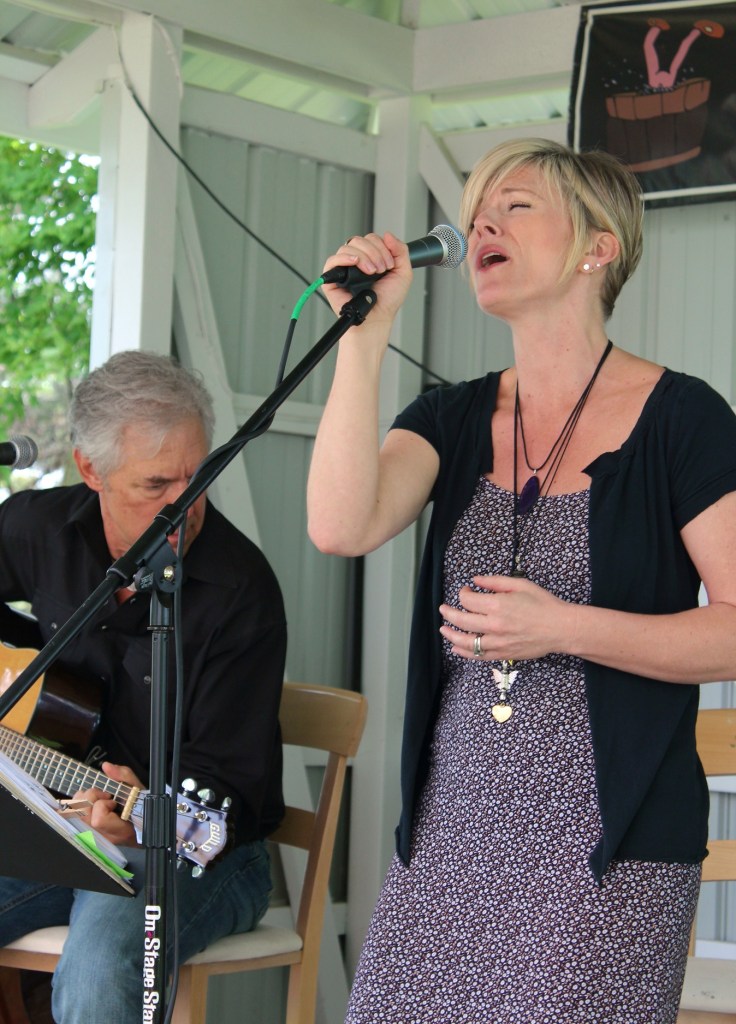
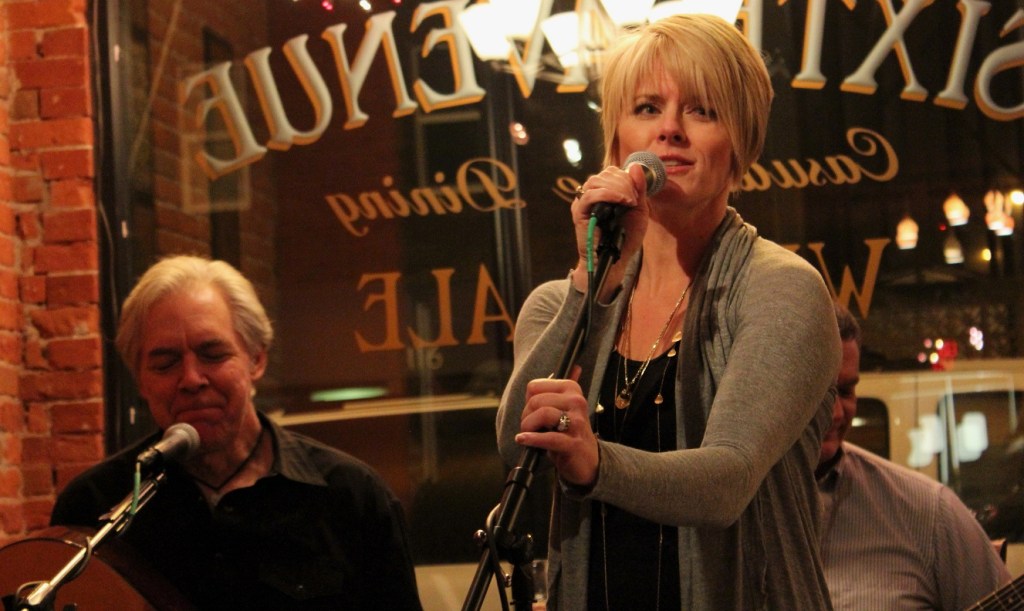
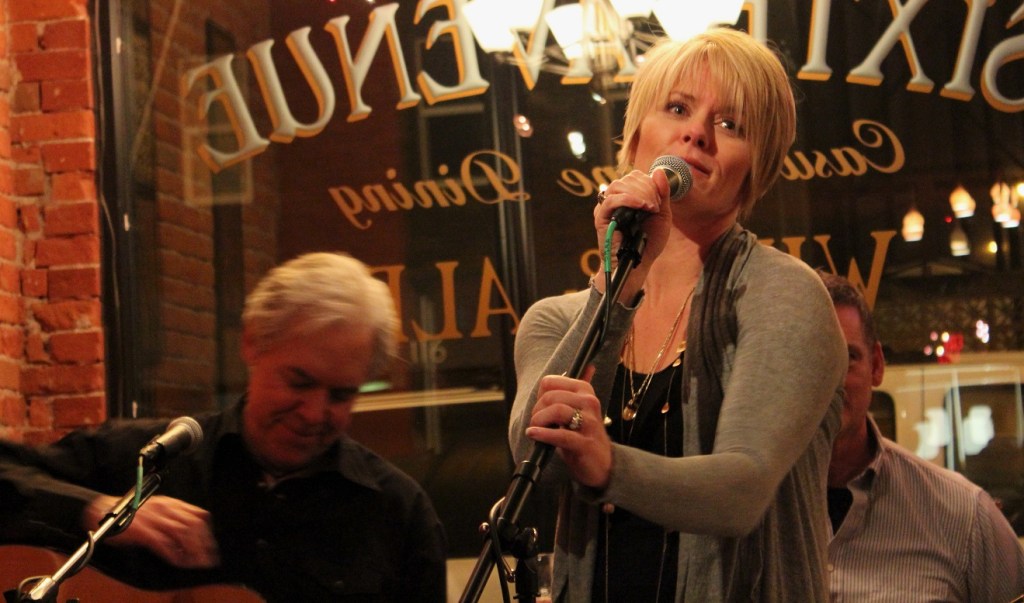
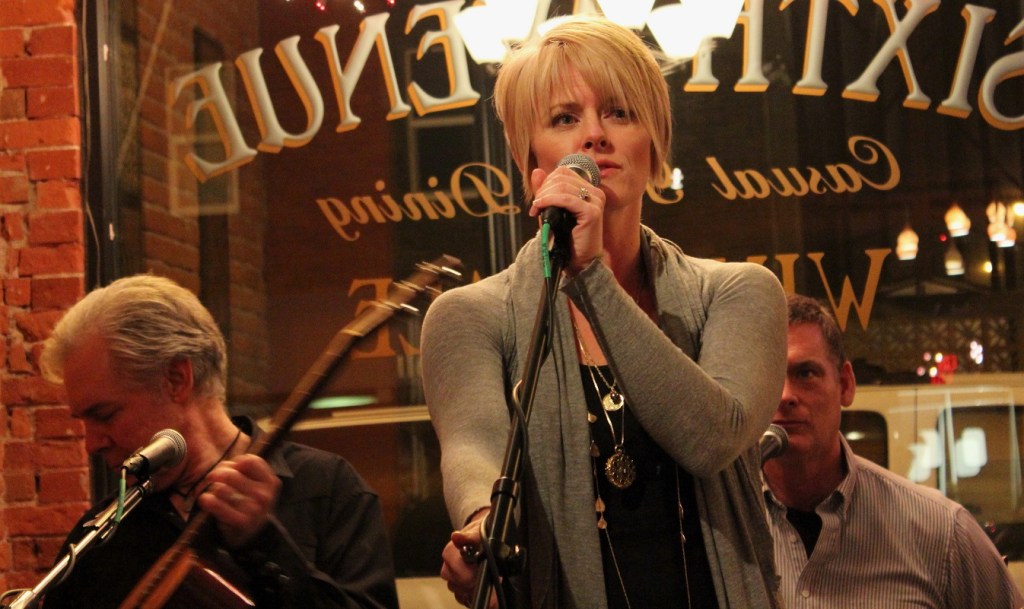
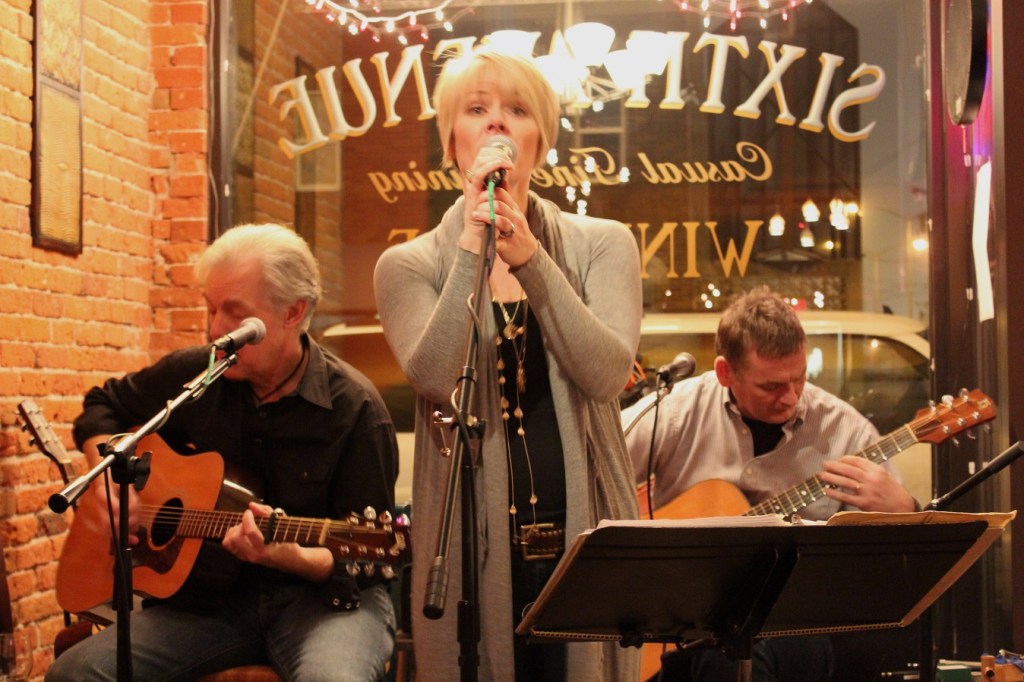
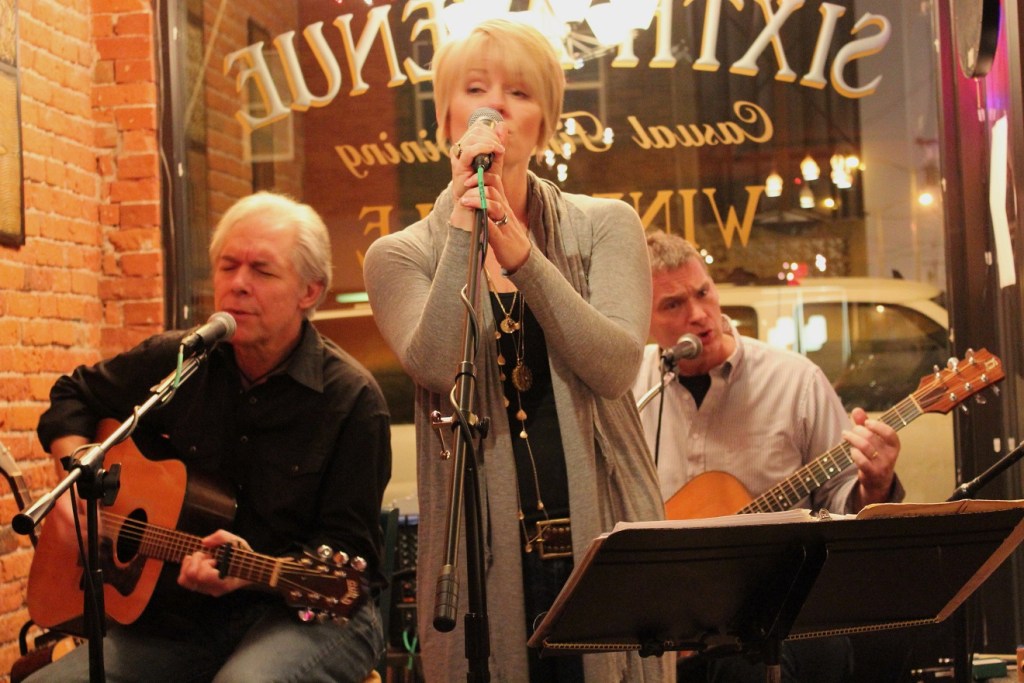
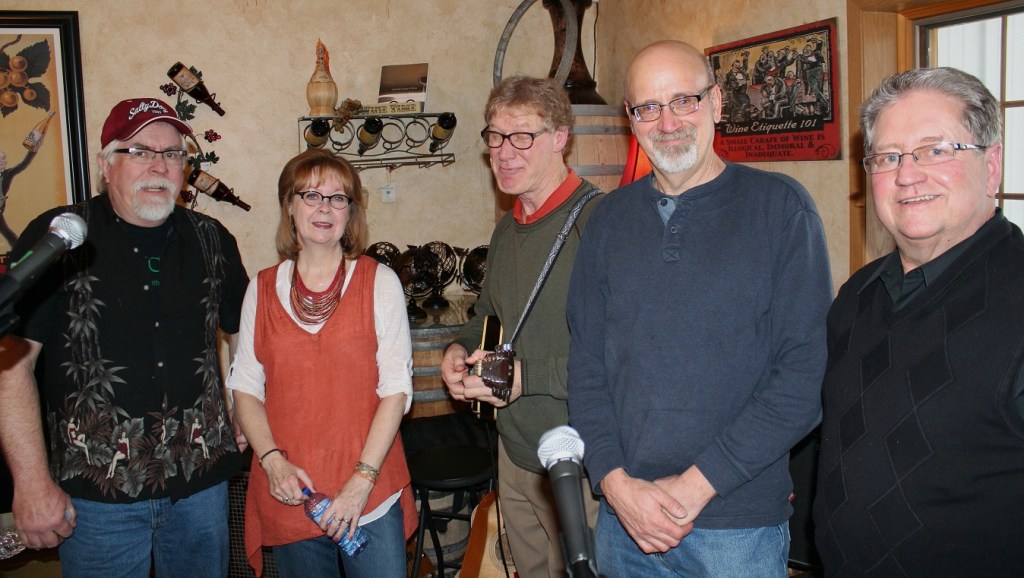
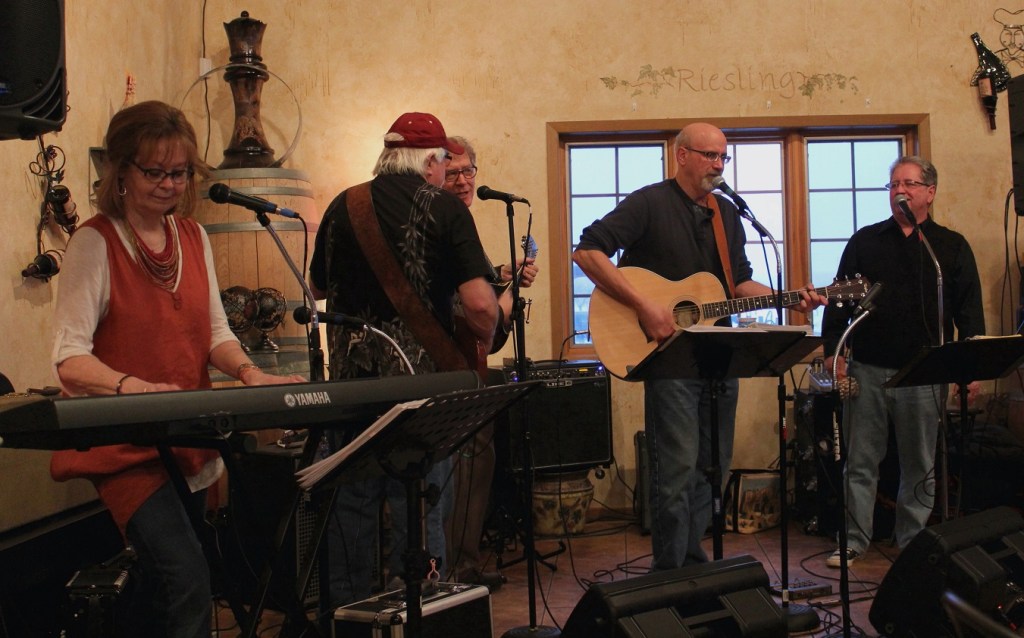
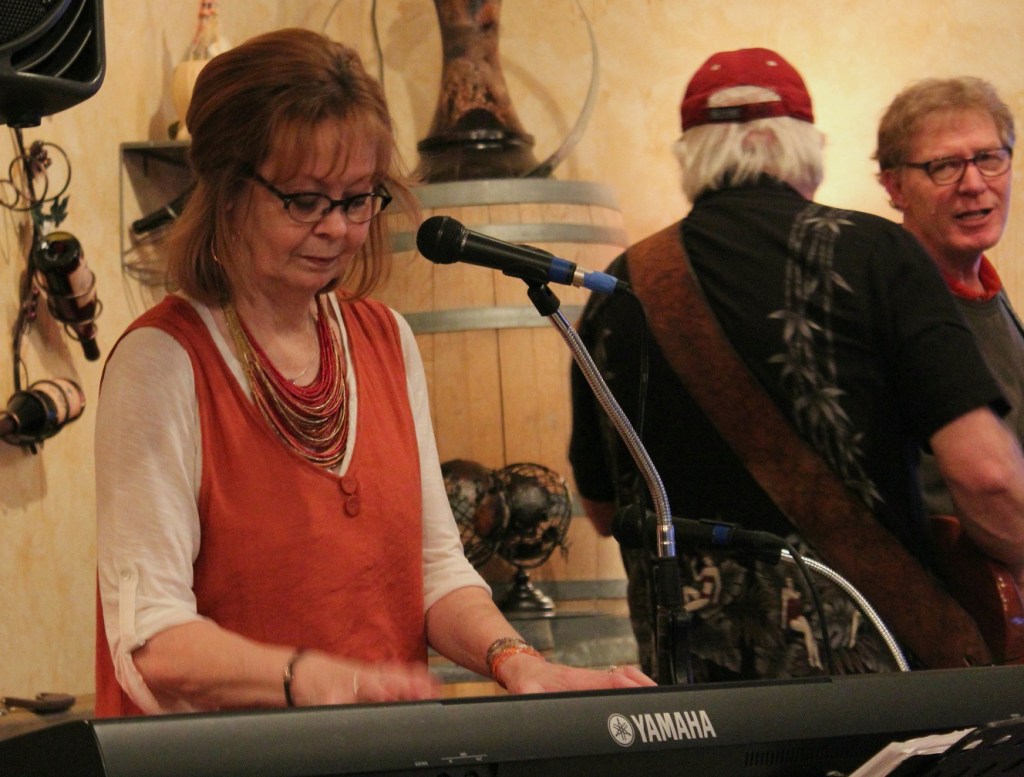
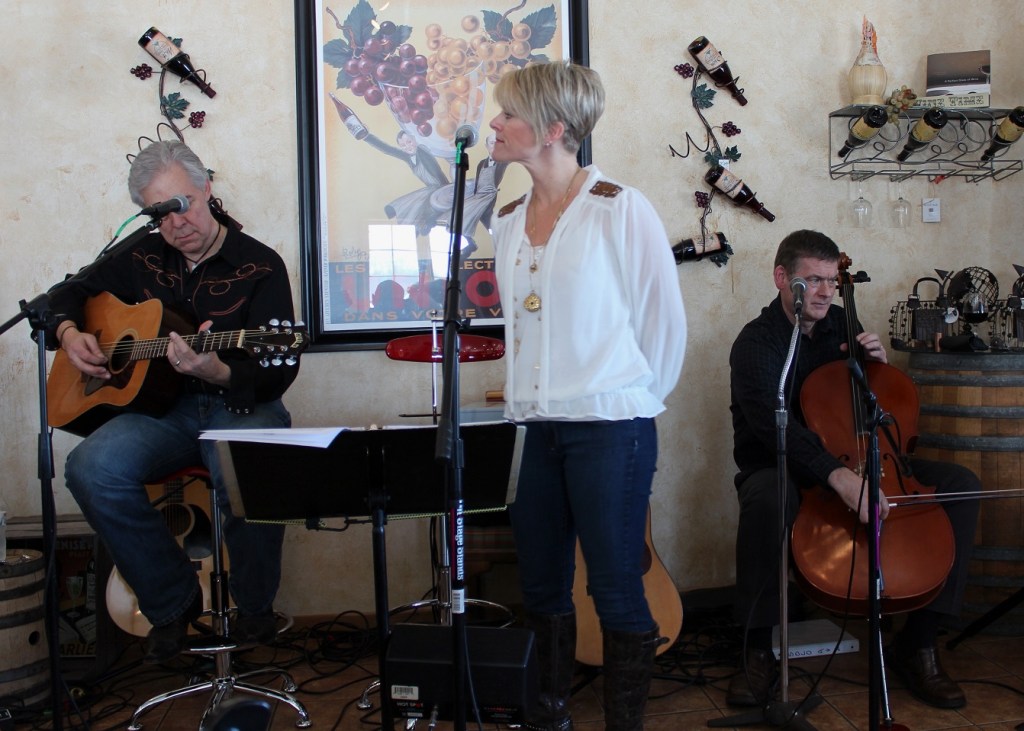
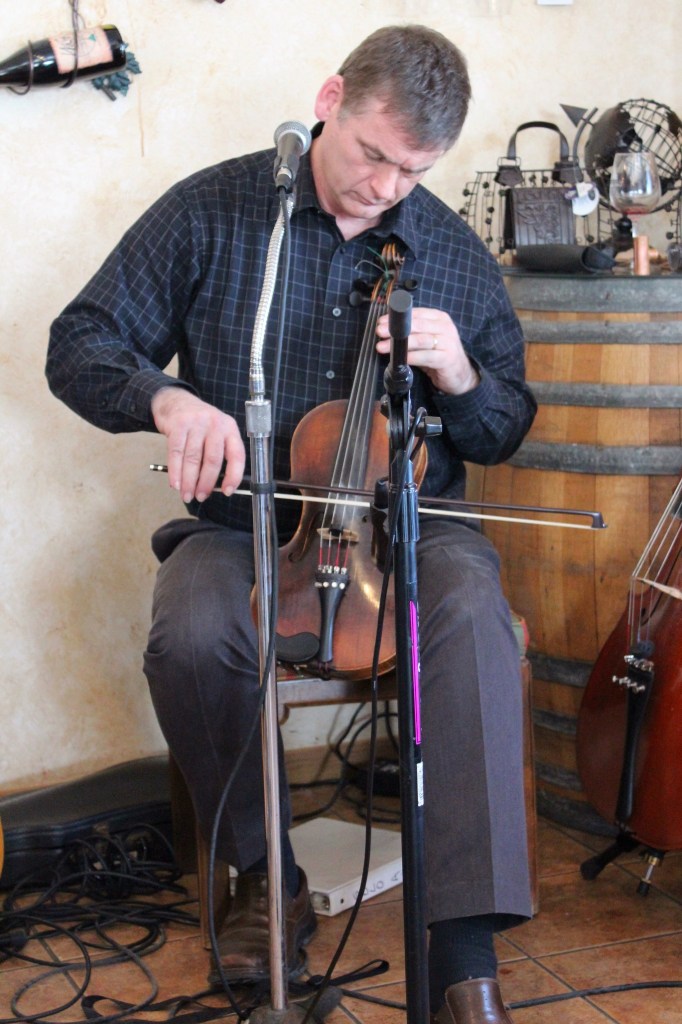
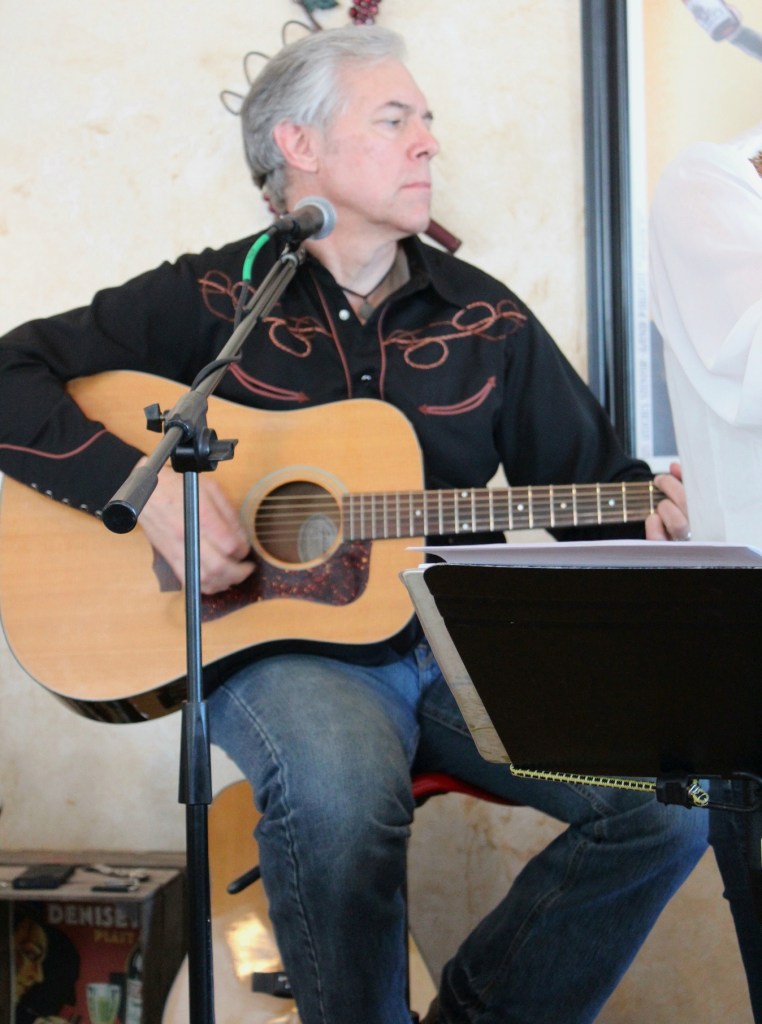
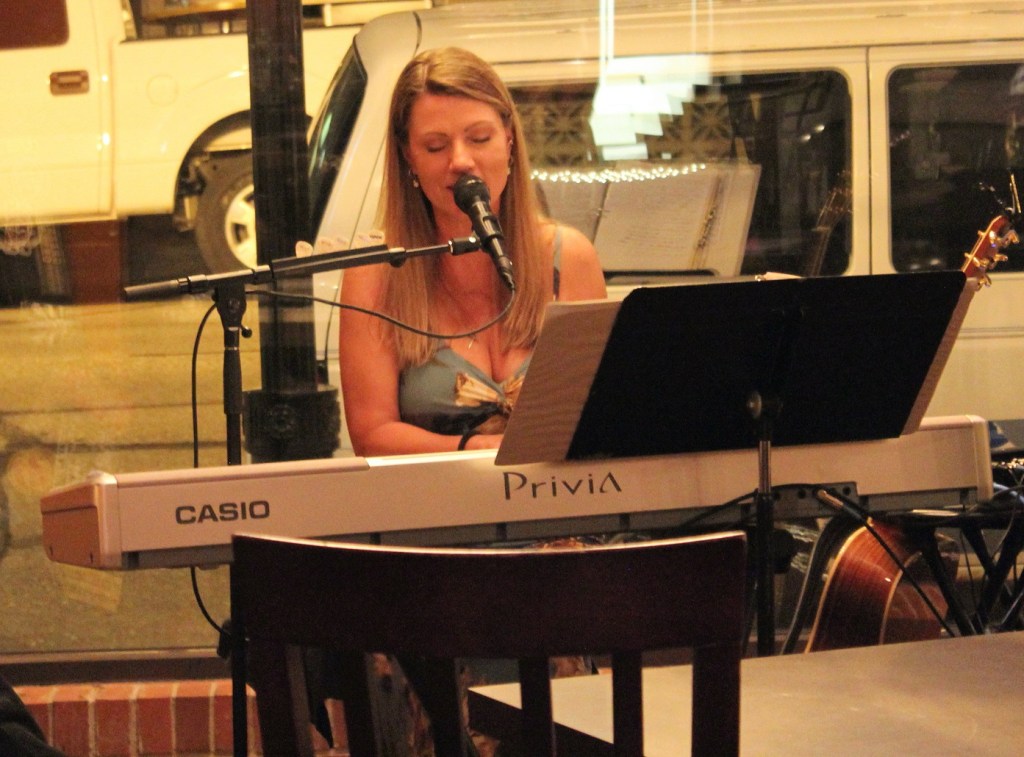
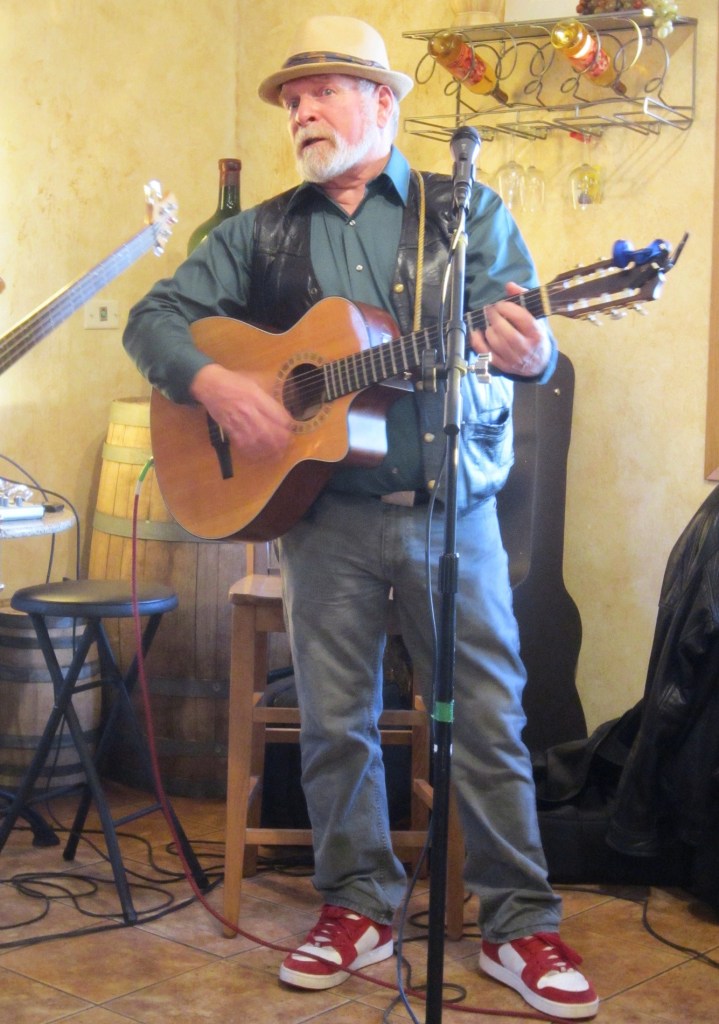
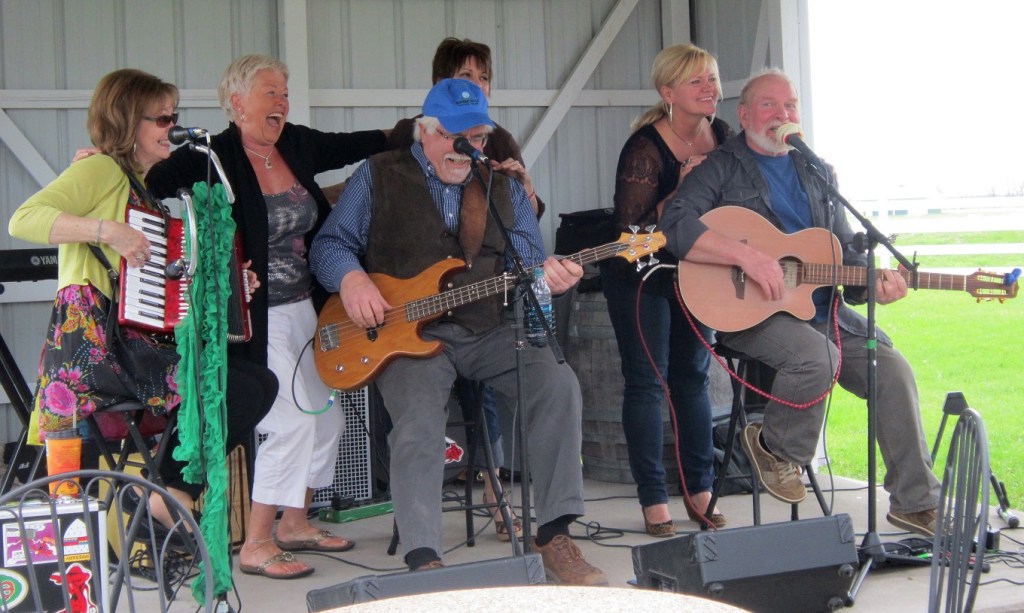
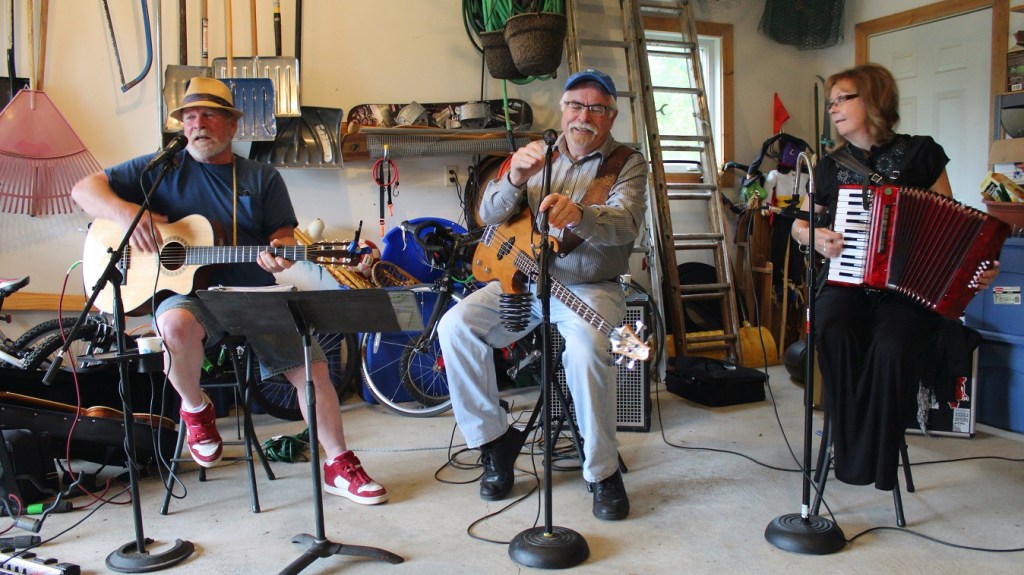
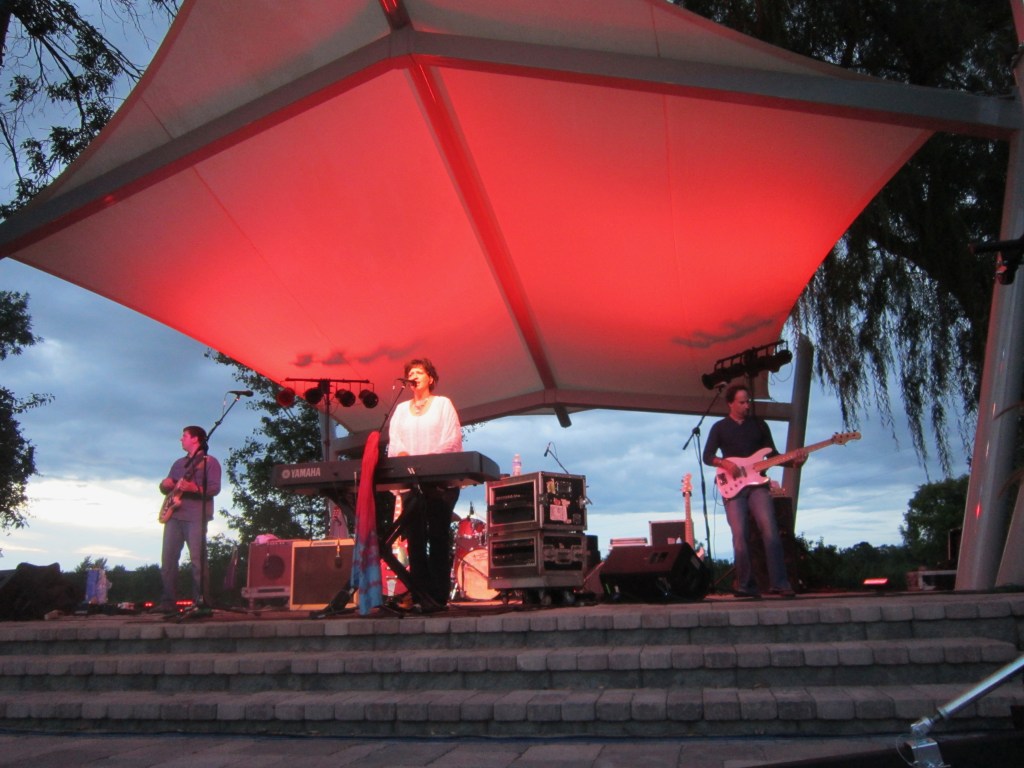
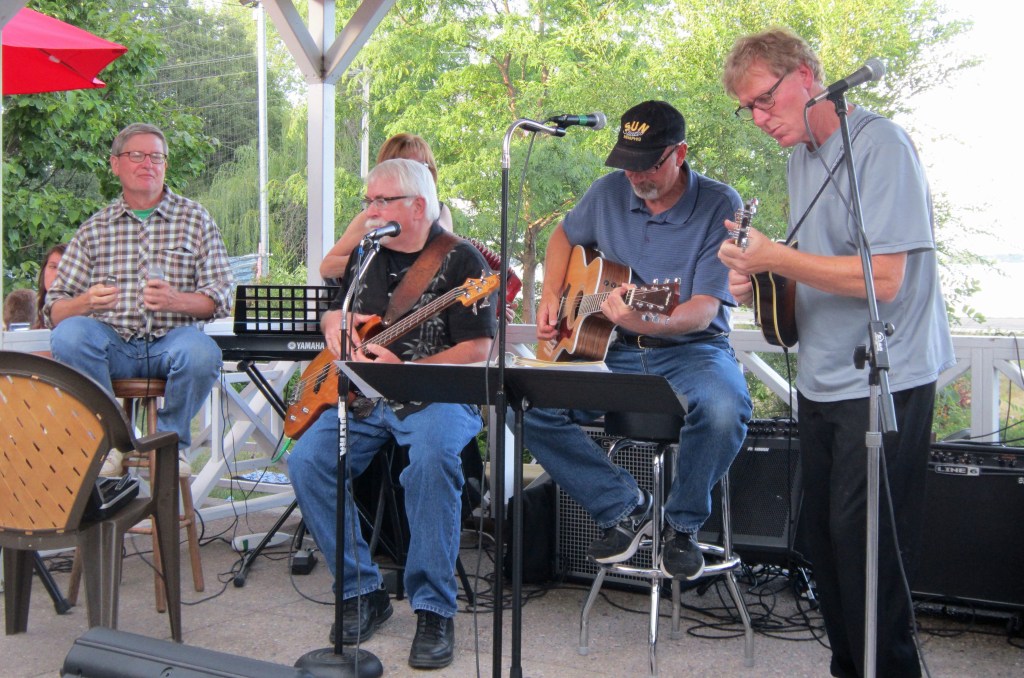
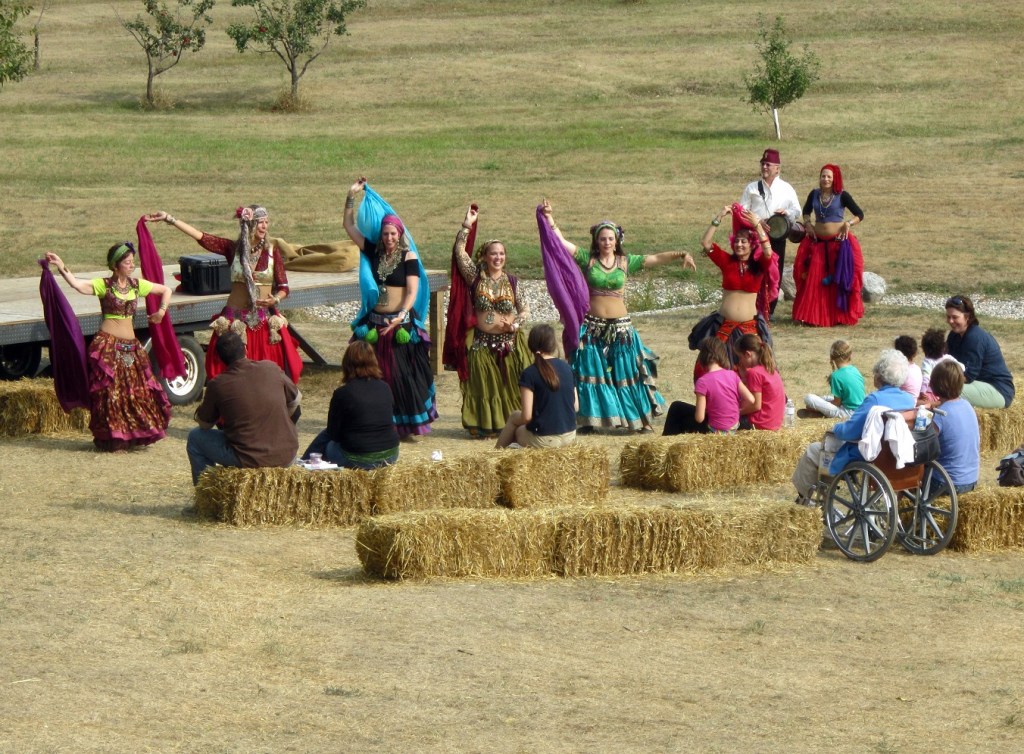
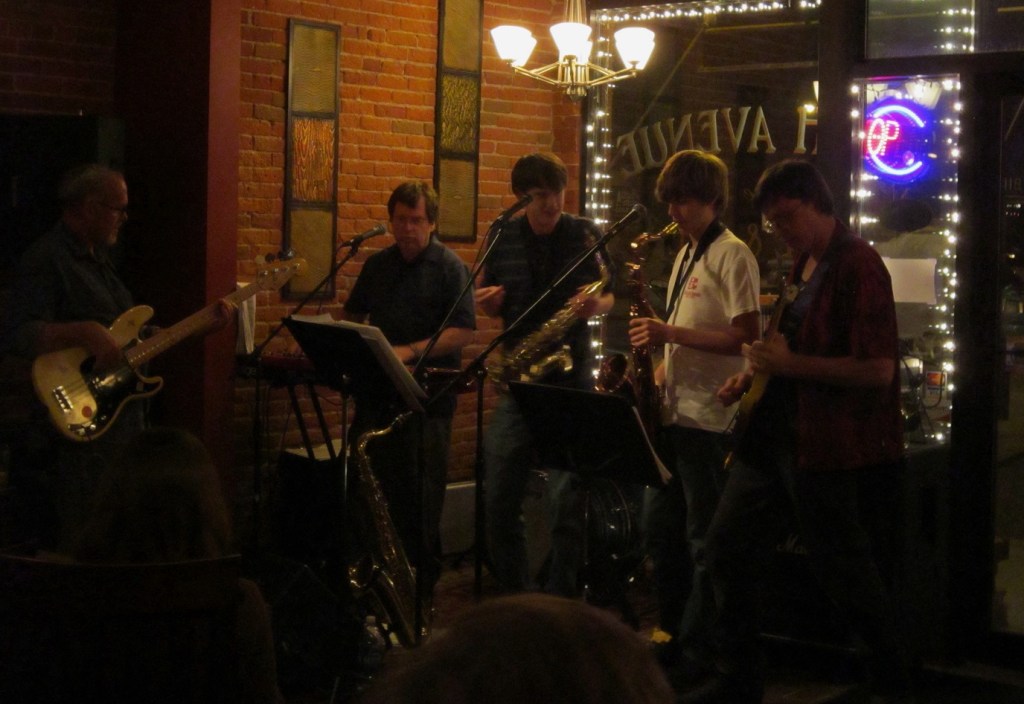
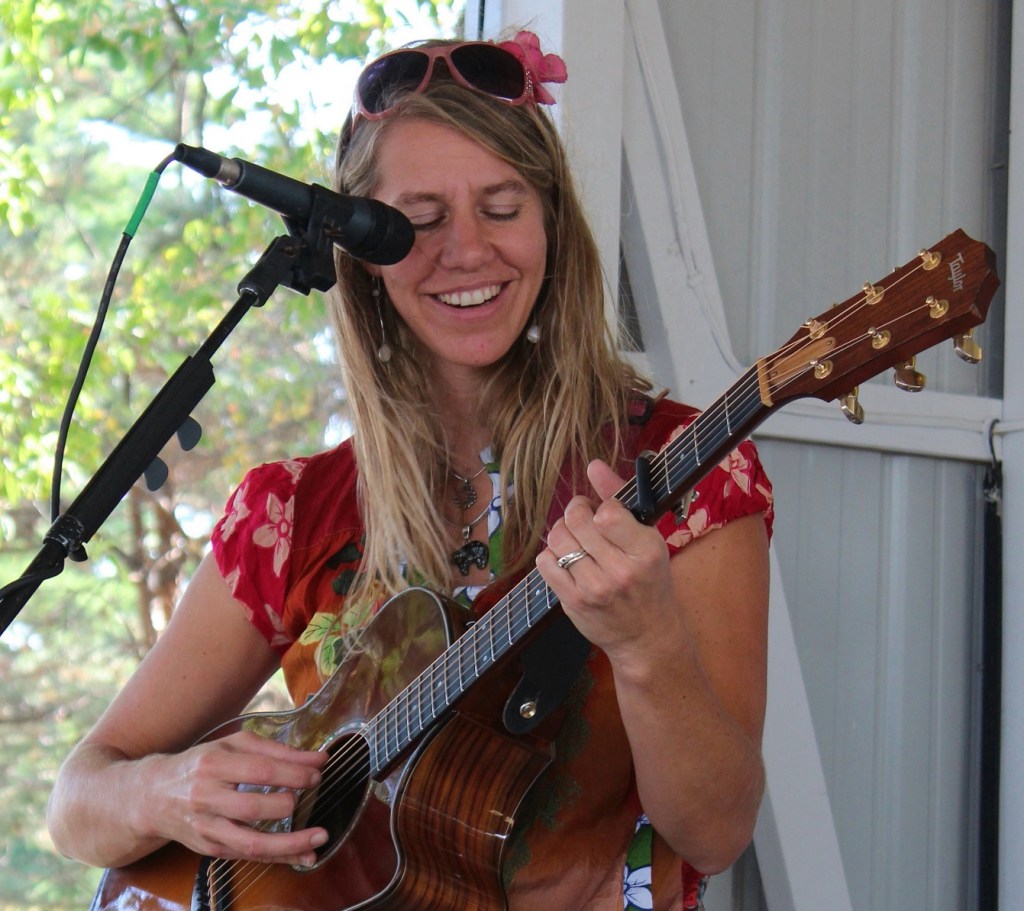
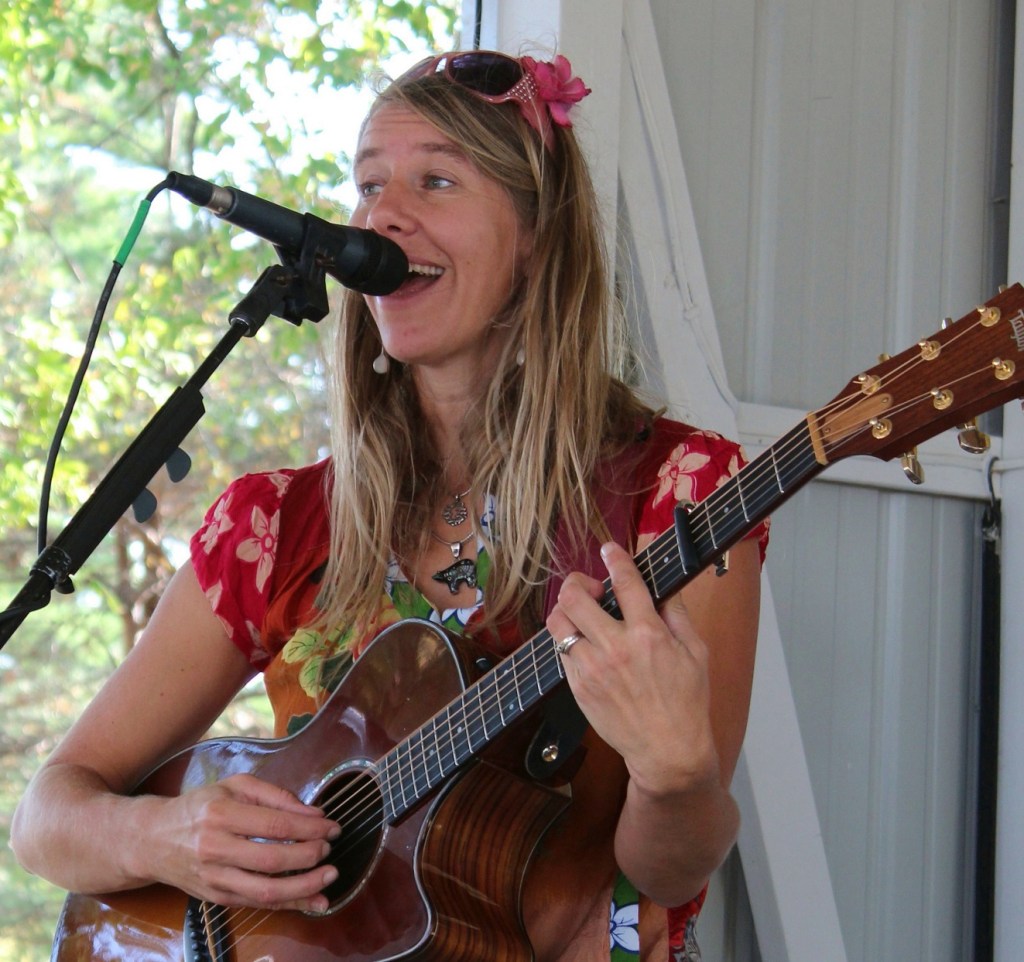
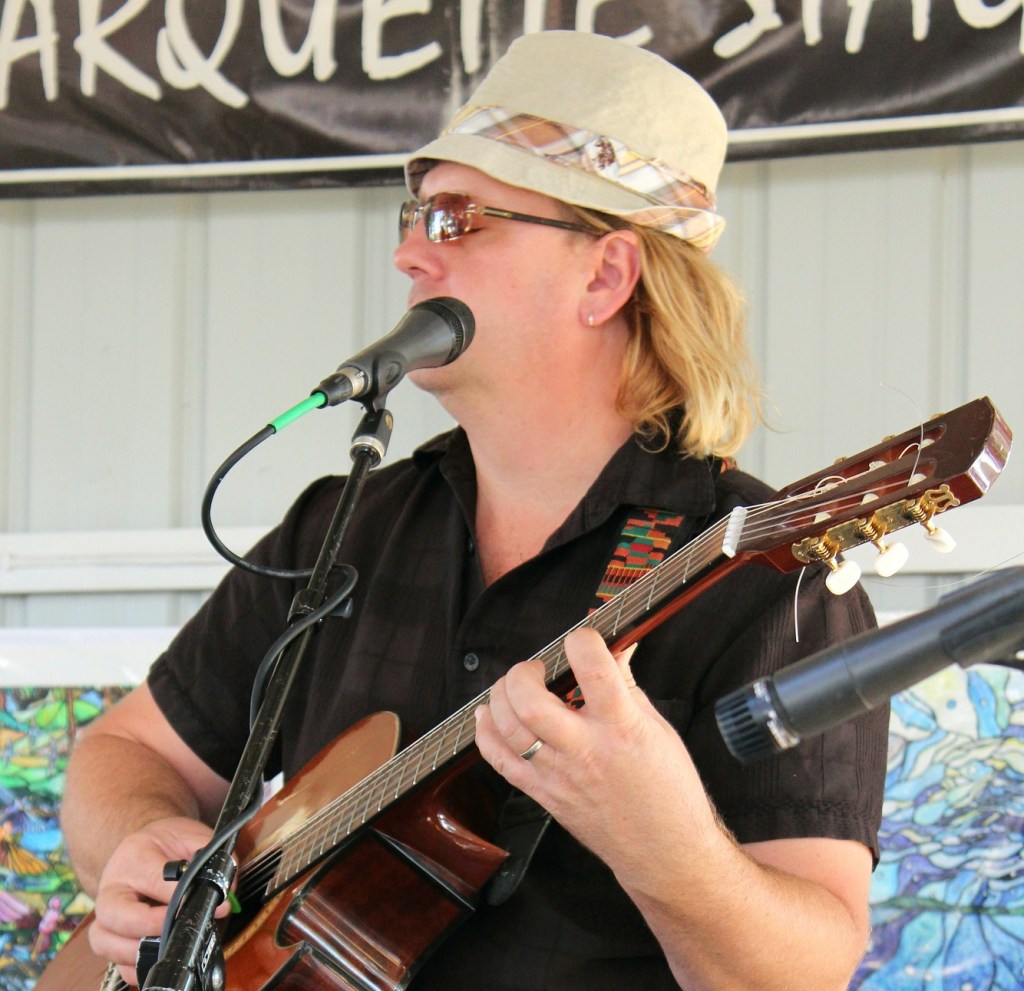
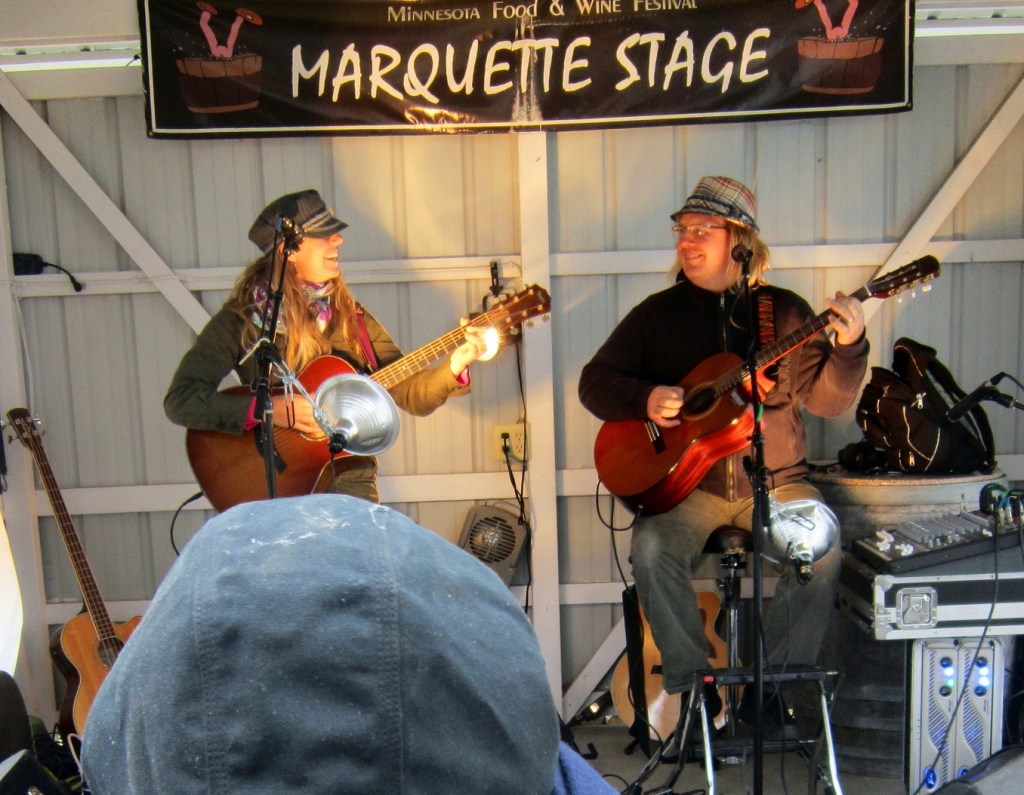
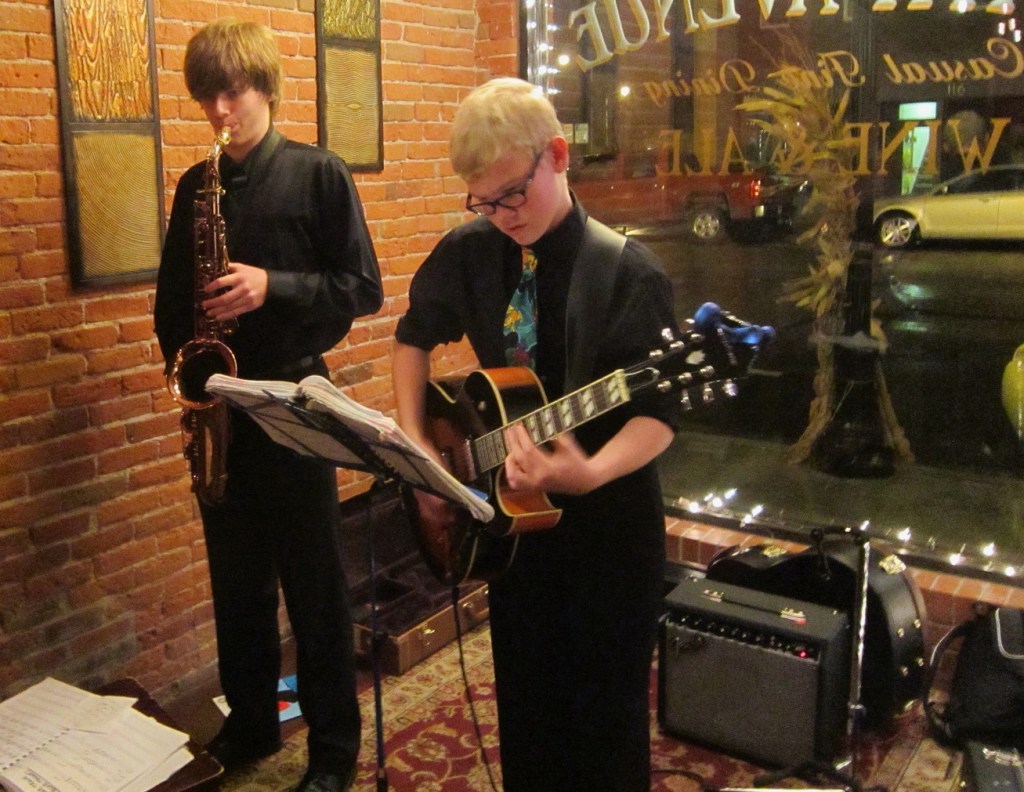
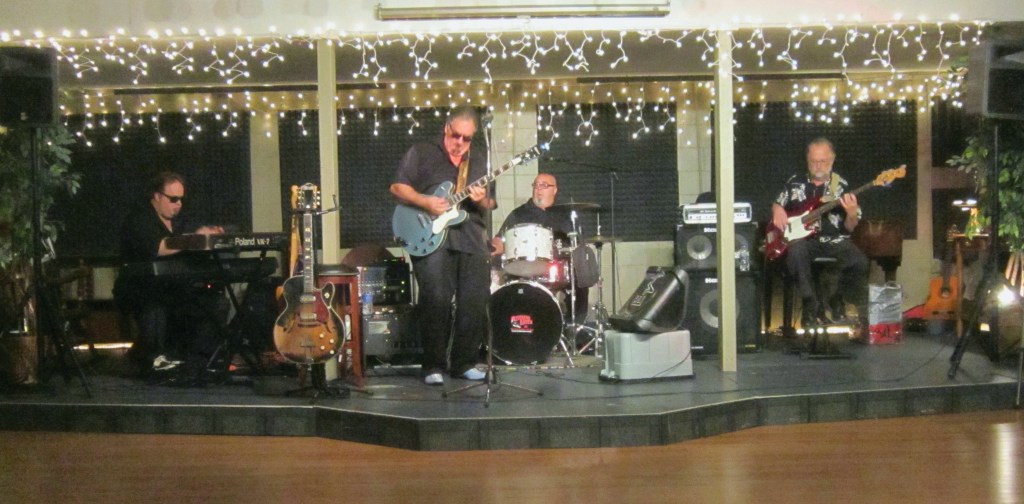
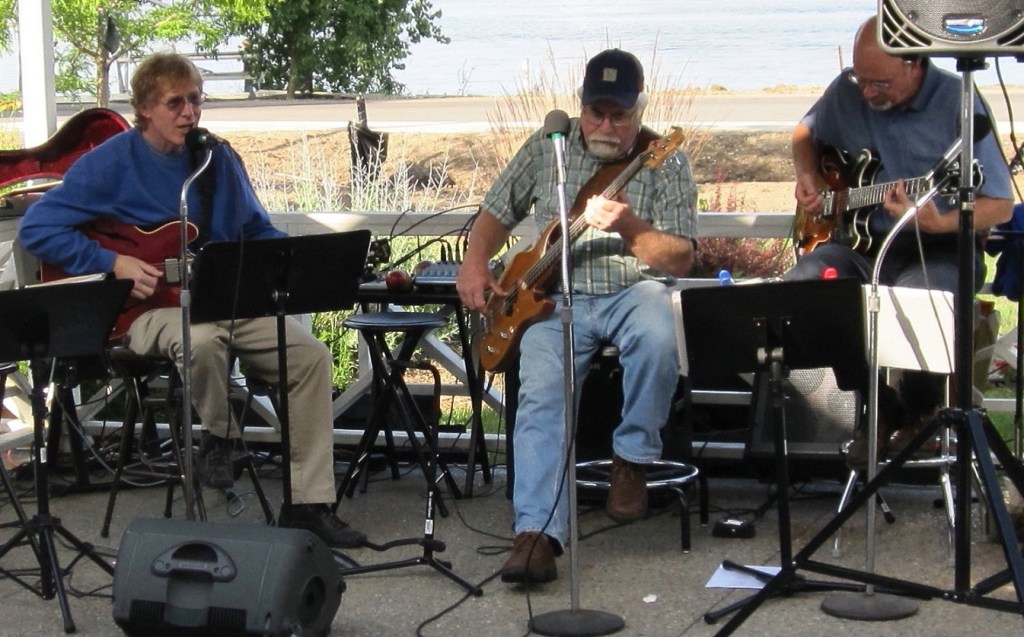
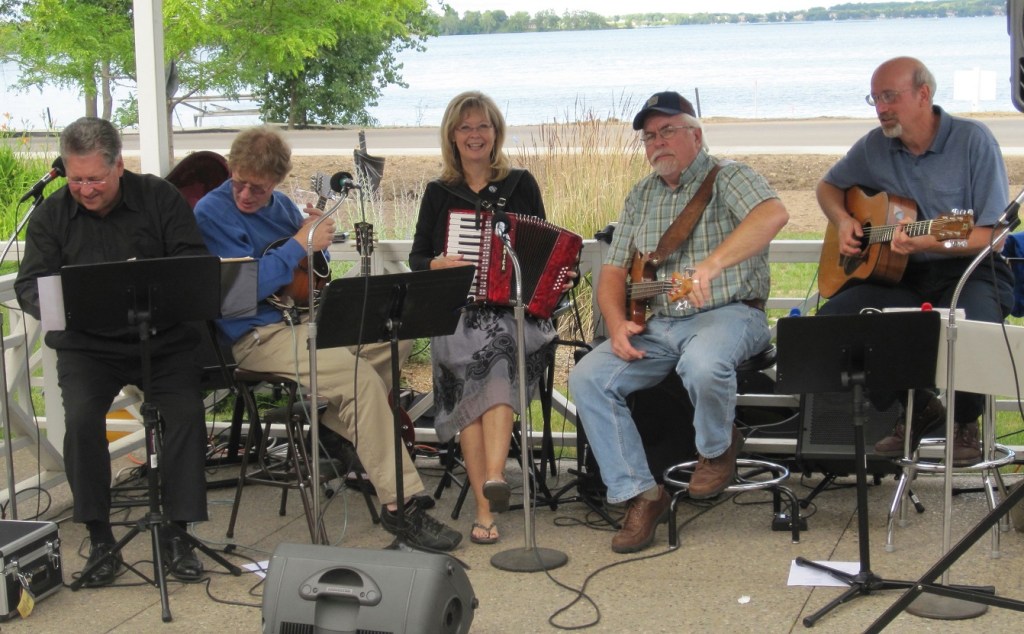
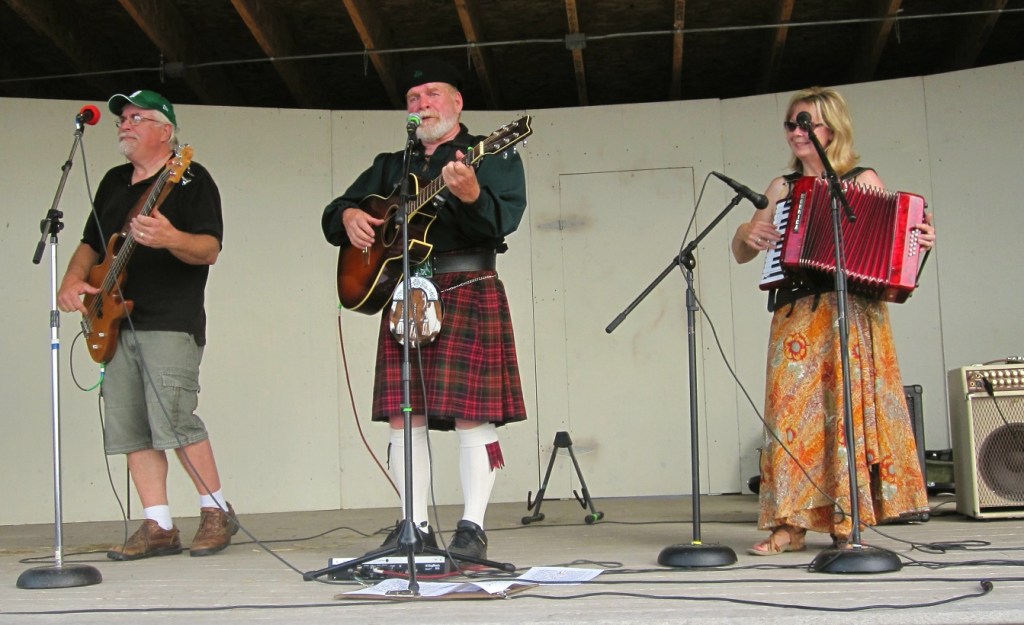
* In the greater Alexandria, Minnesota, standard metropolitan statistical area.
I don’t like country music, but I don’t mean to denigrate those who do. And for the people who like country music, denigrate means ‘put down’. ~ Bob Newhart
Continuing with the banner year of 2013 . . .
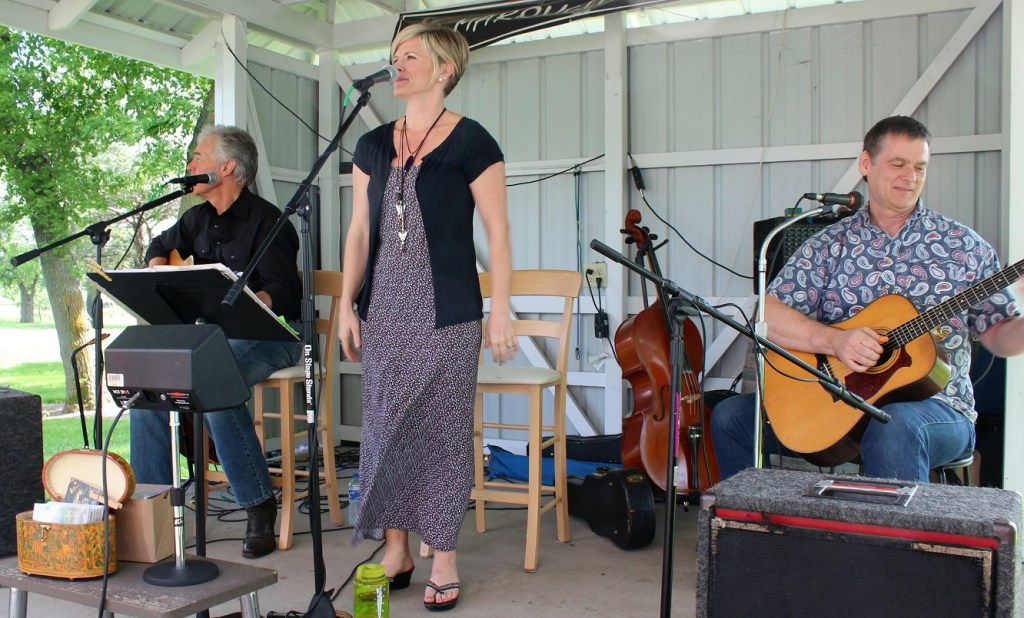
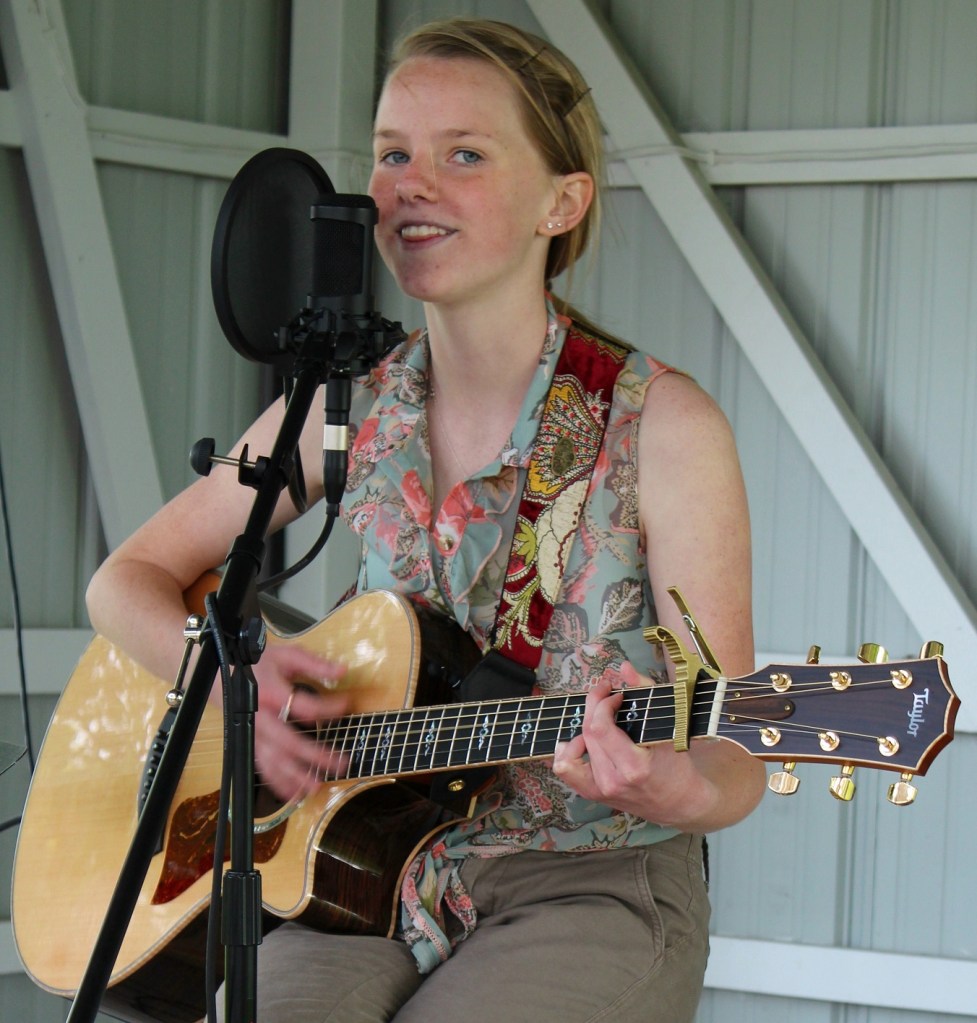
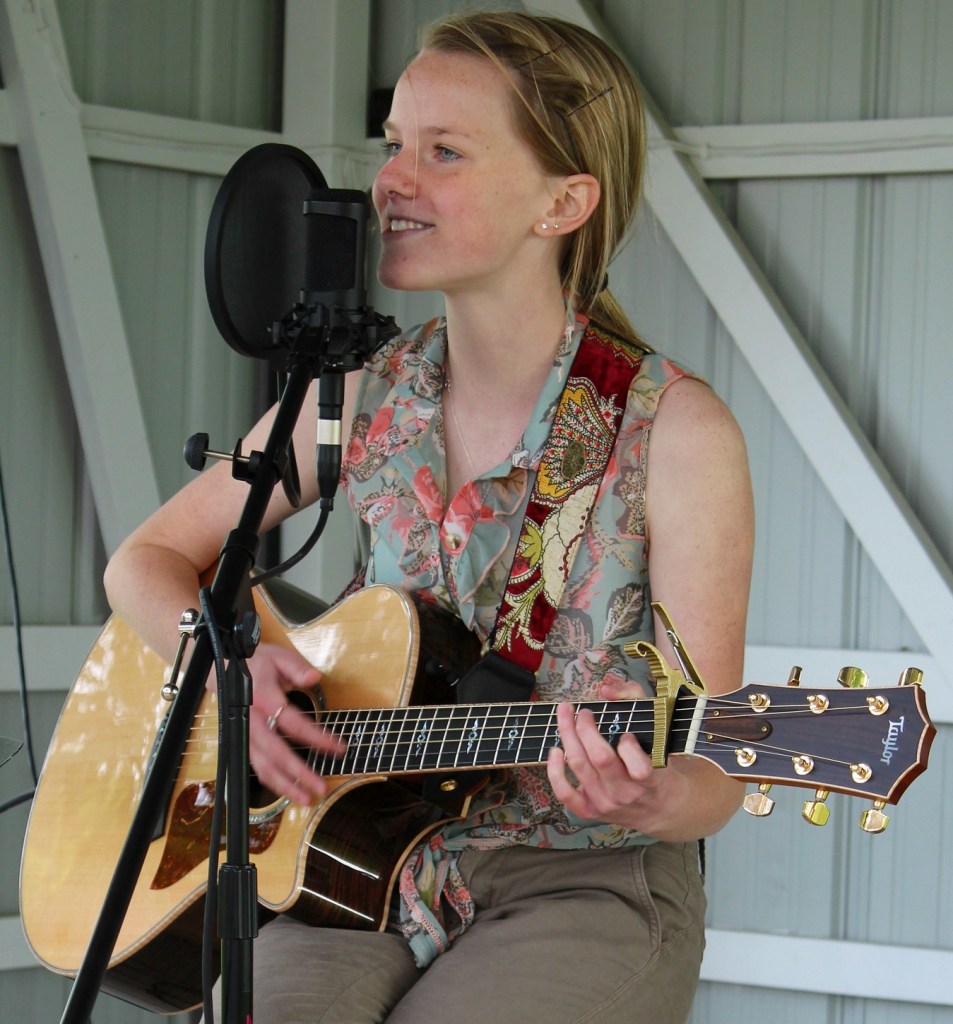
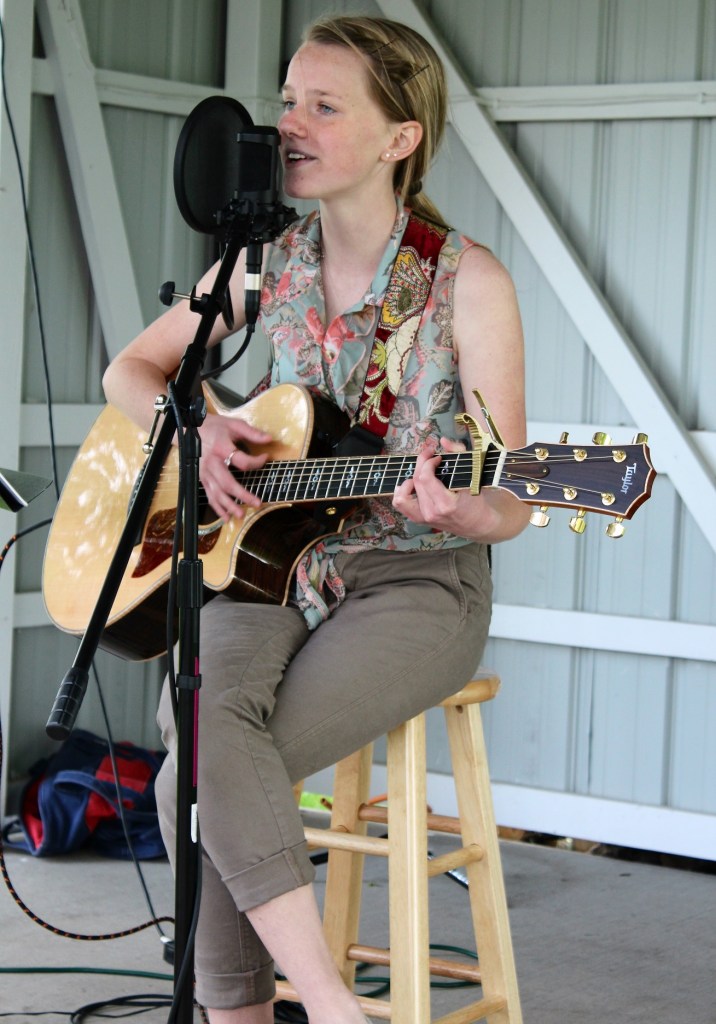
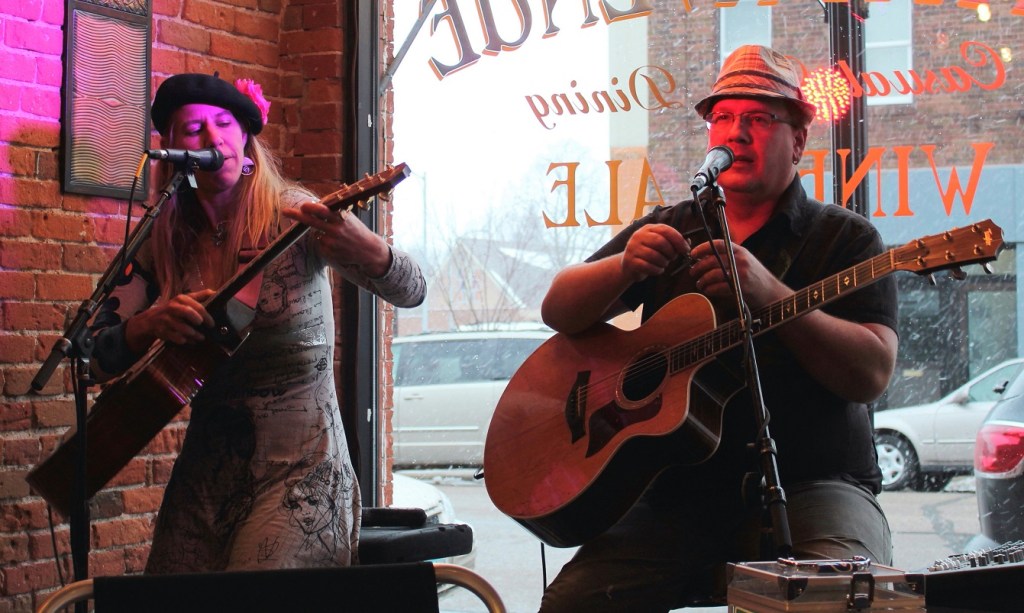
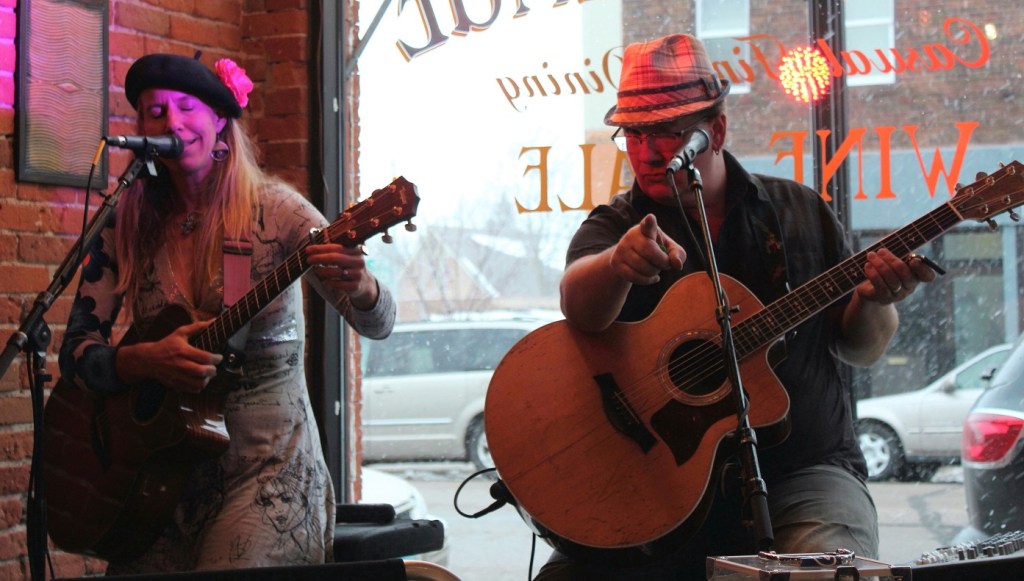
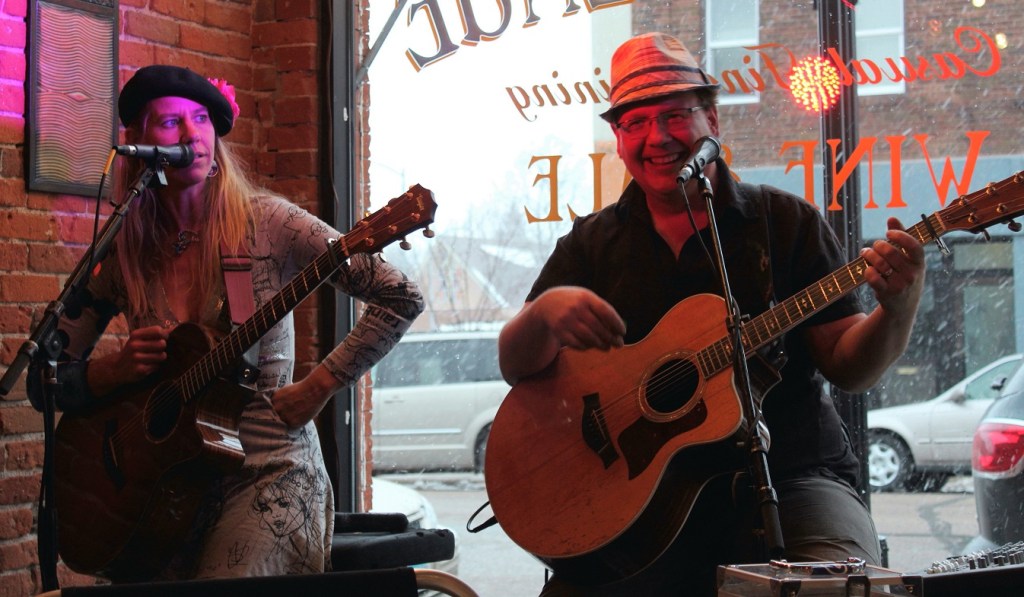
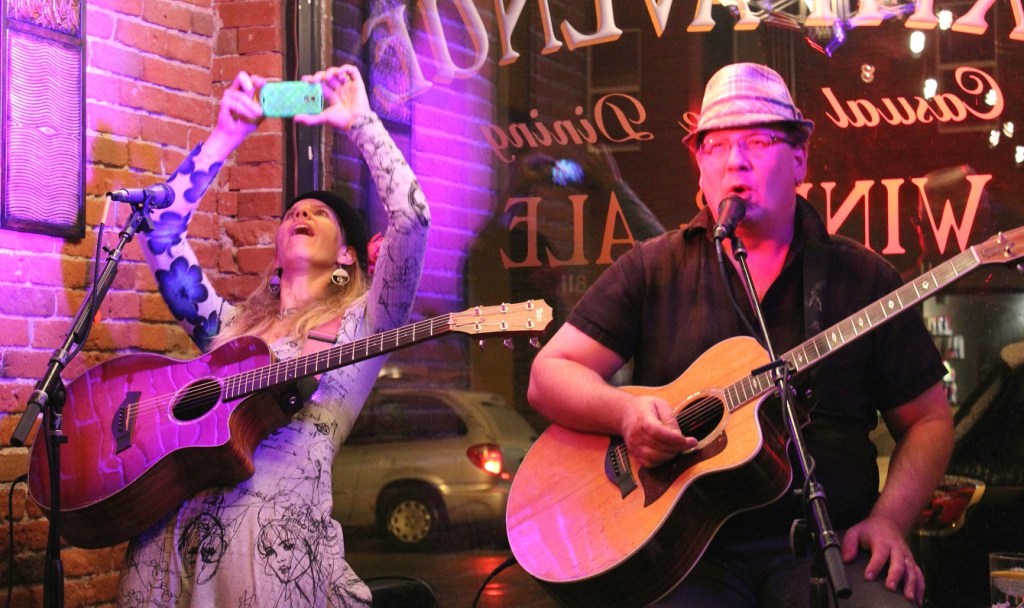
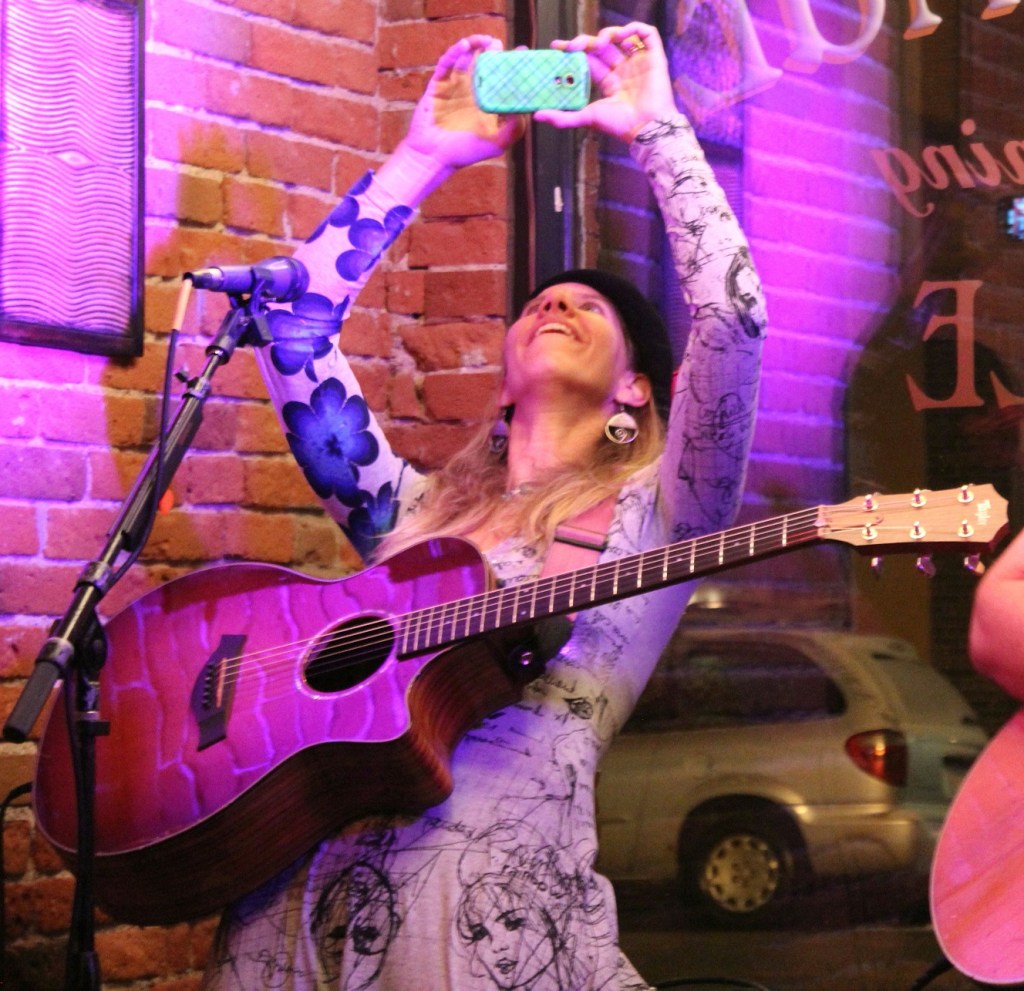
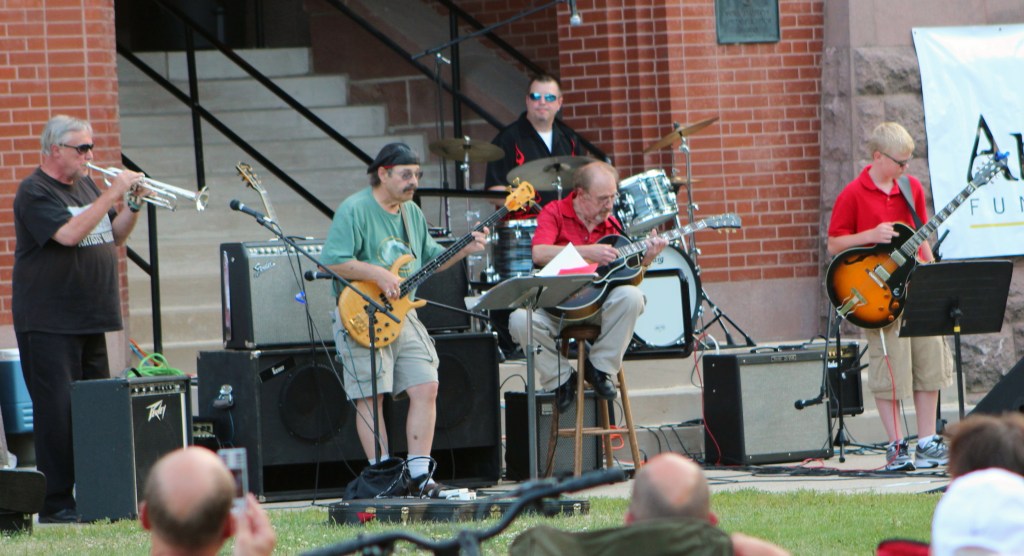
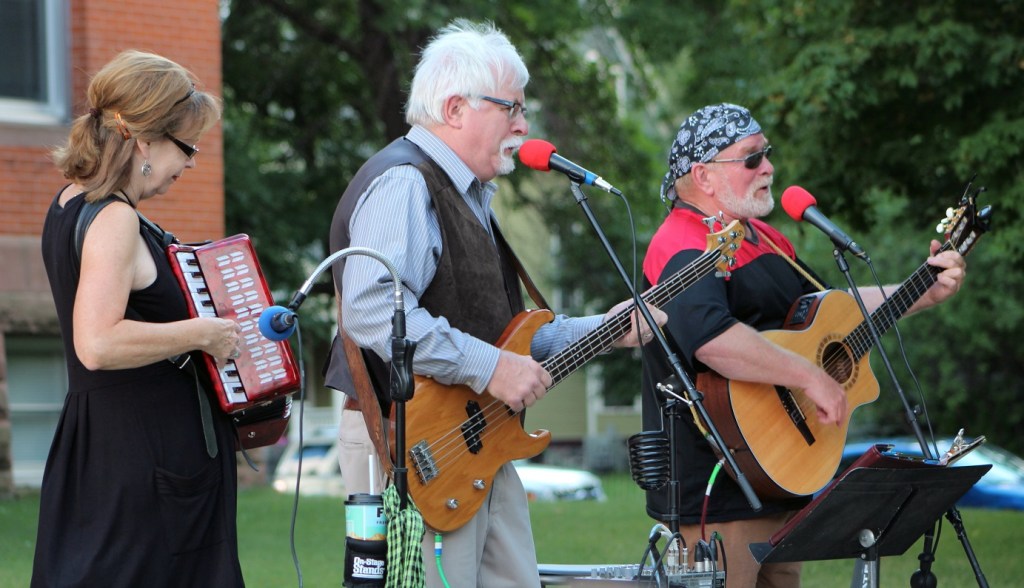
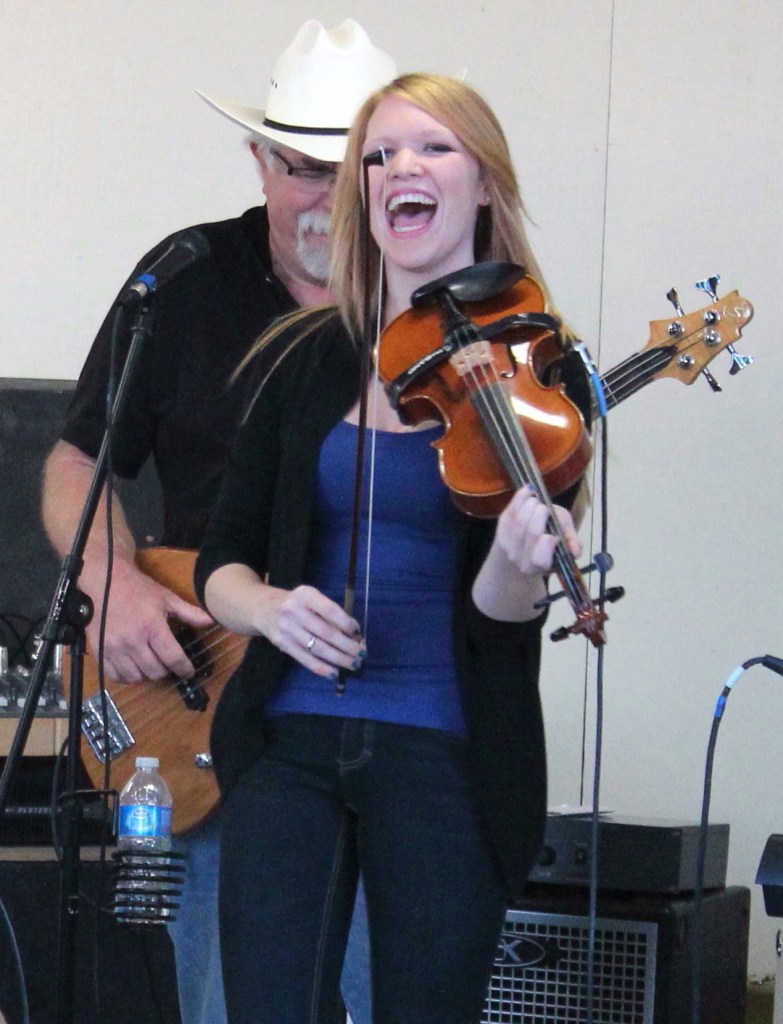
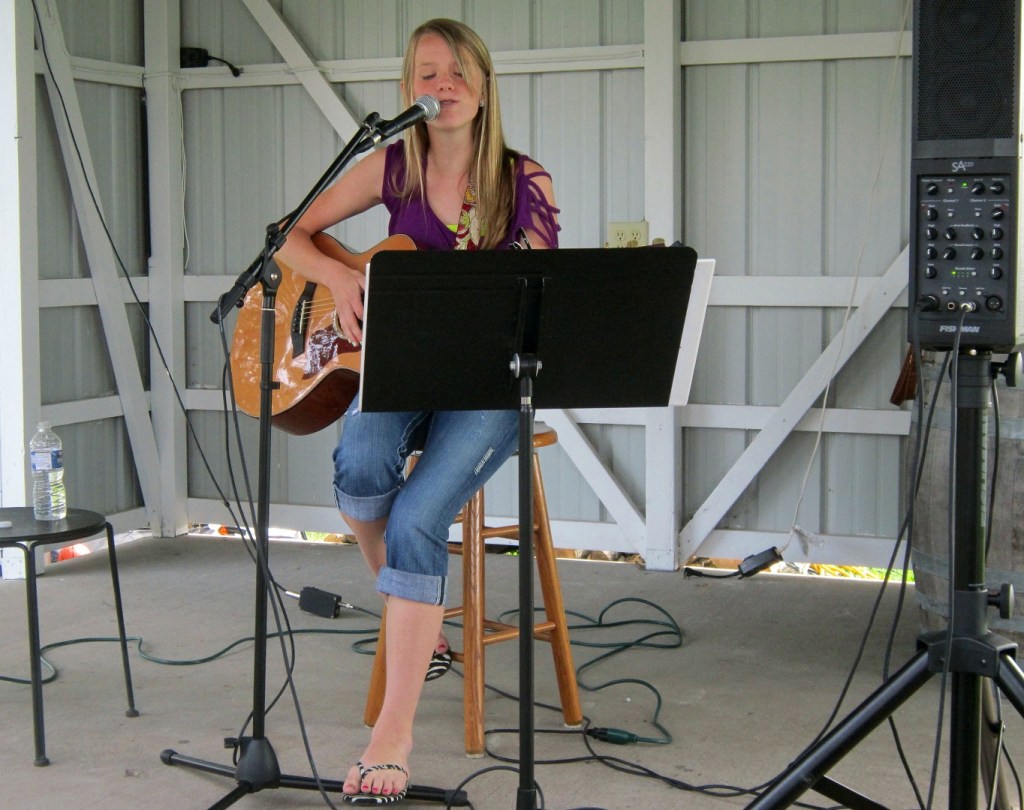
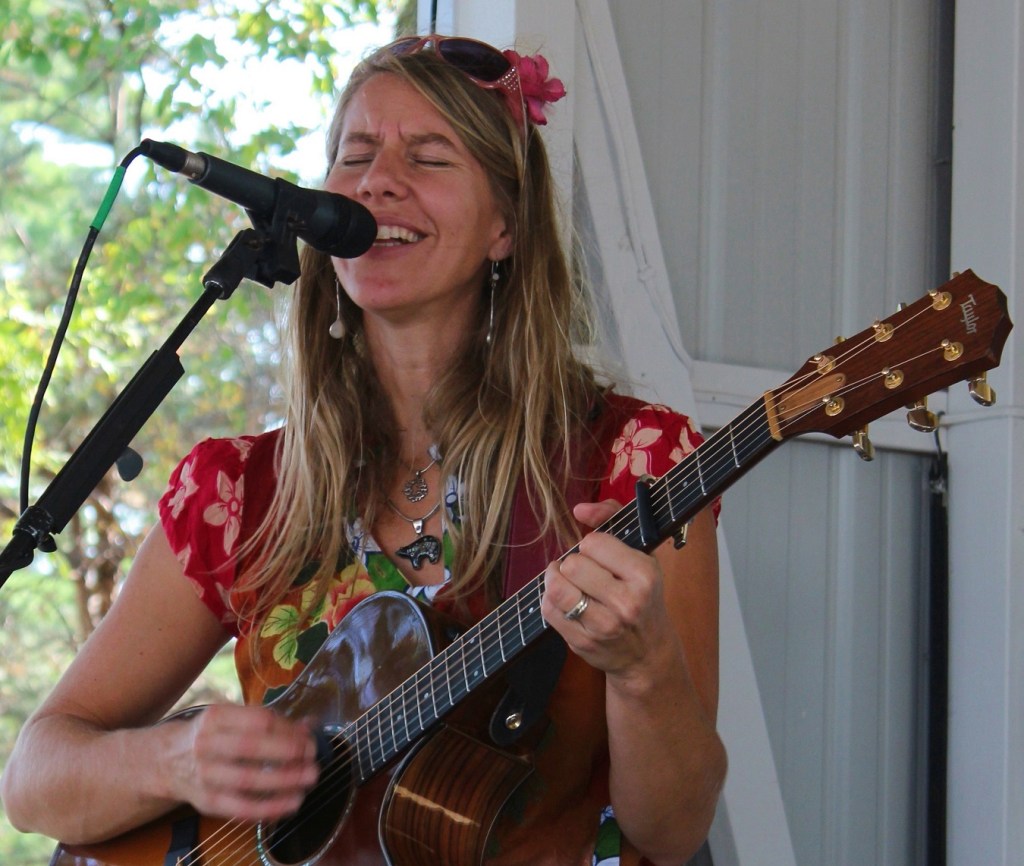
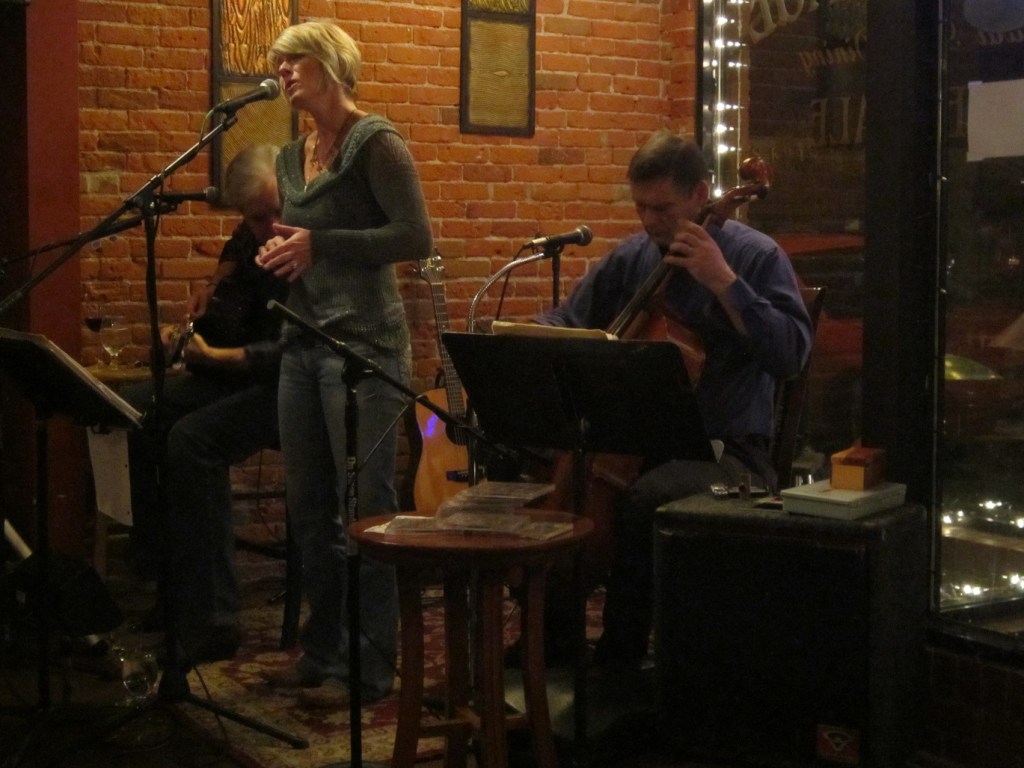
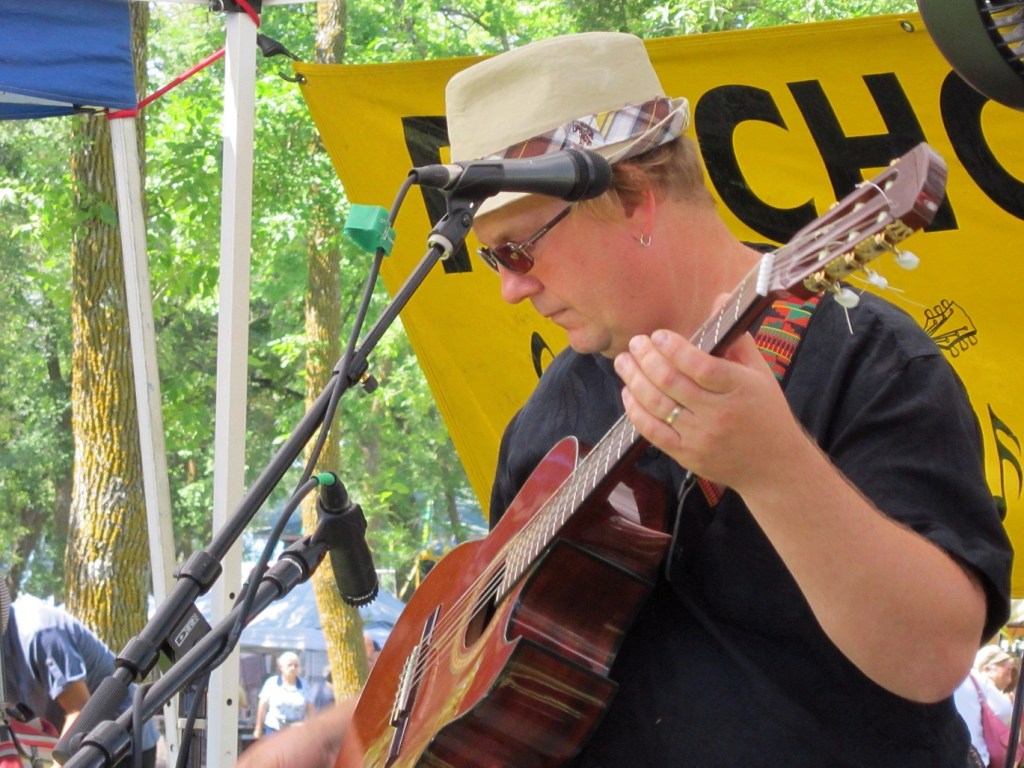
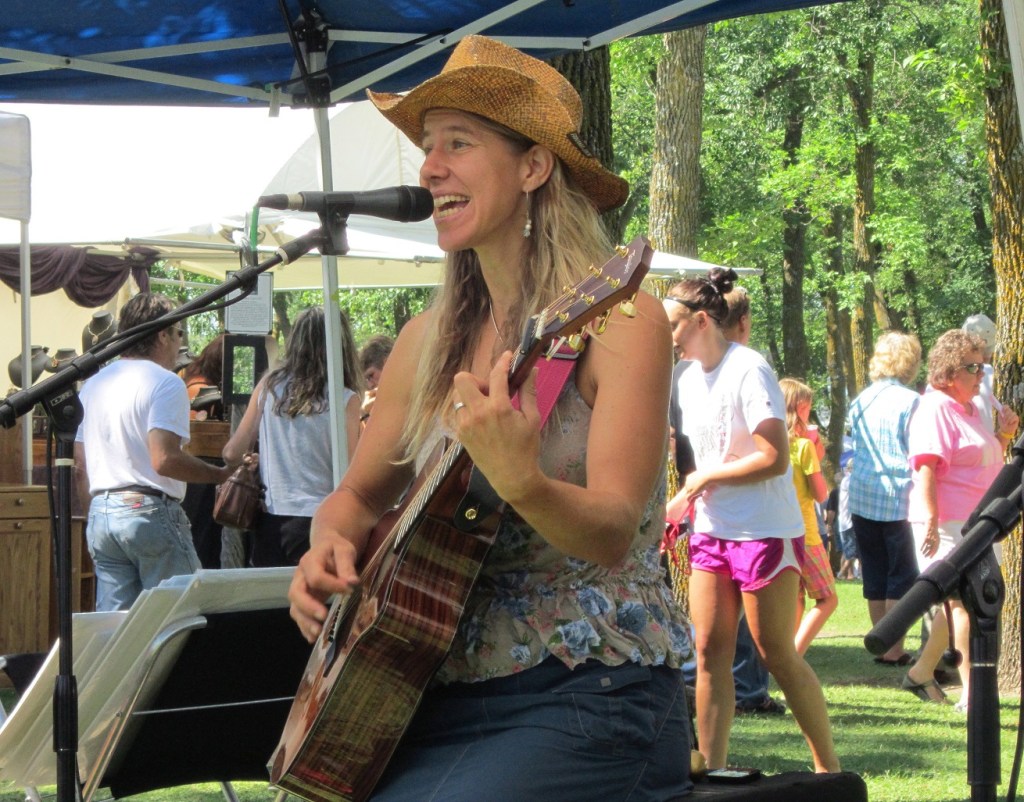
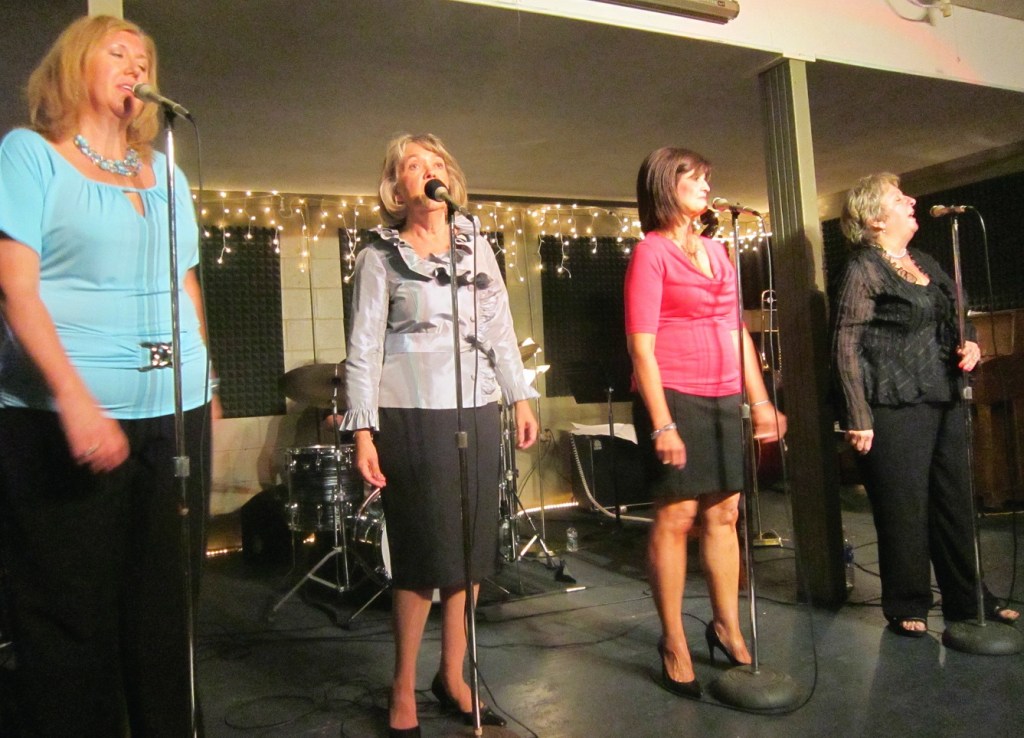
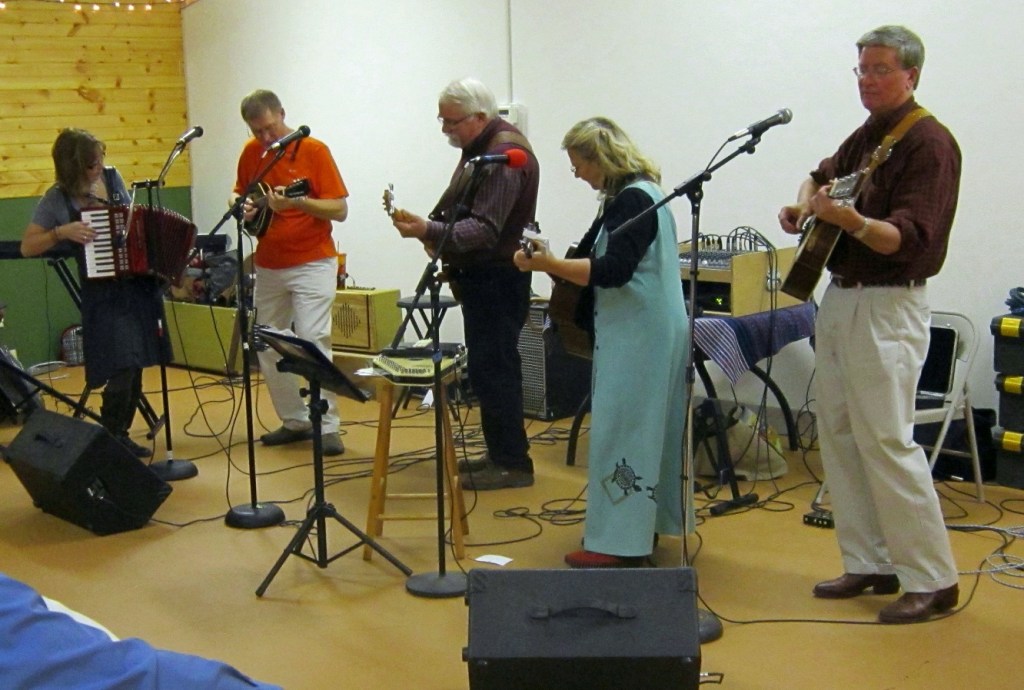
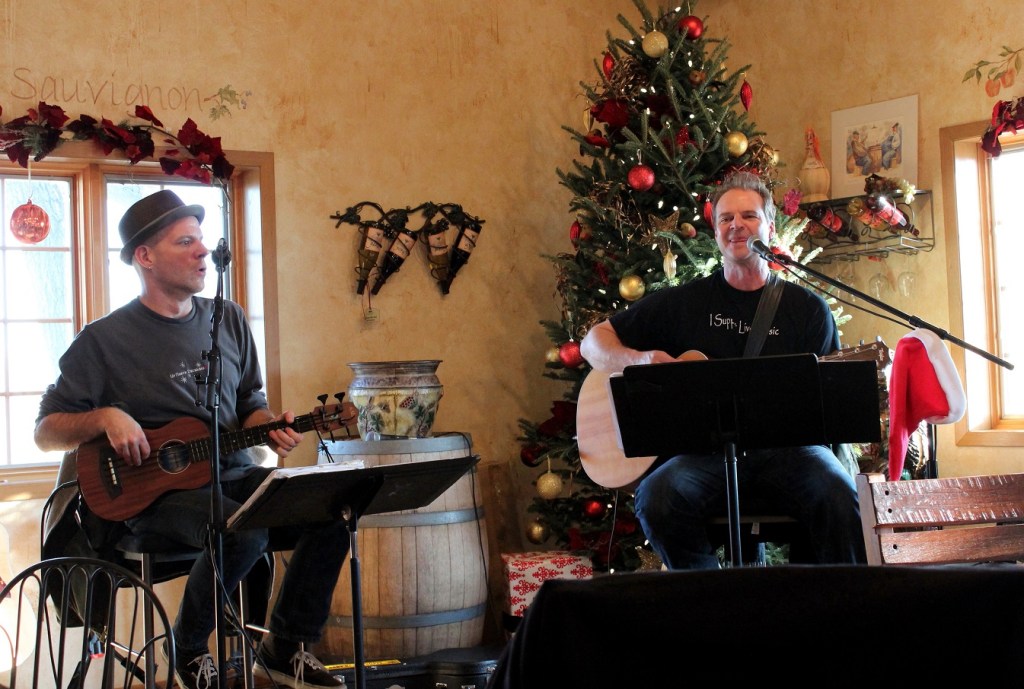
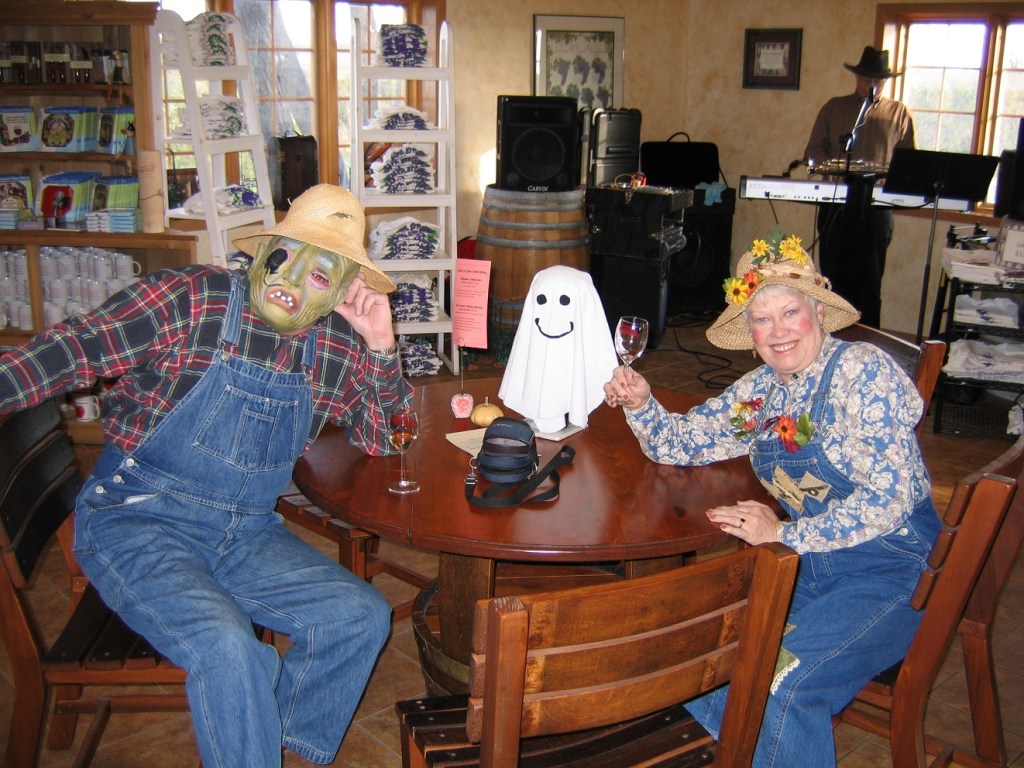
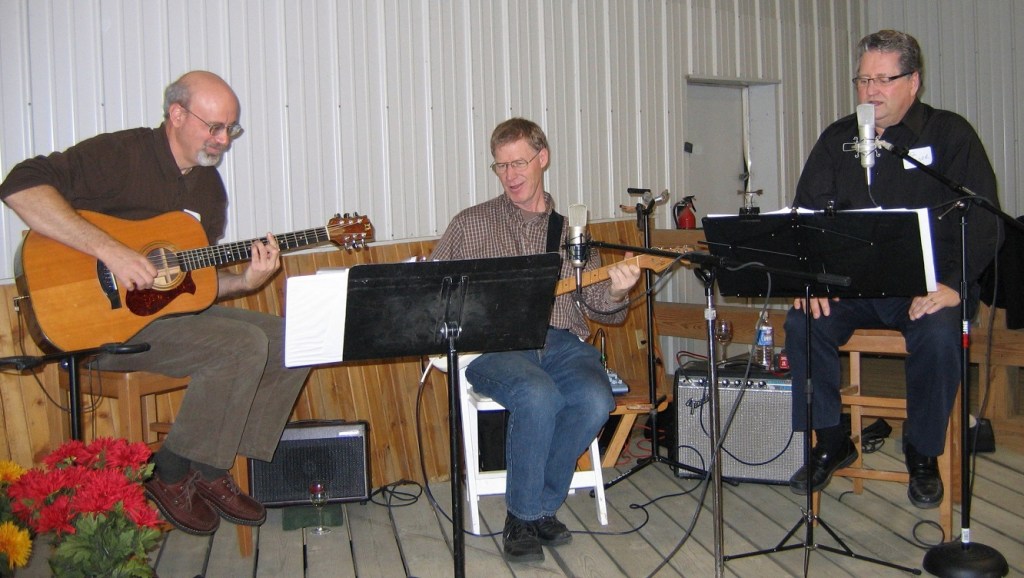
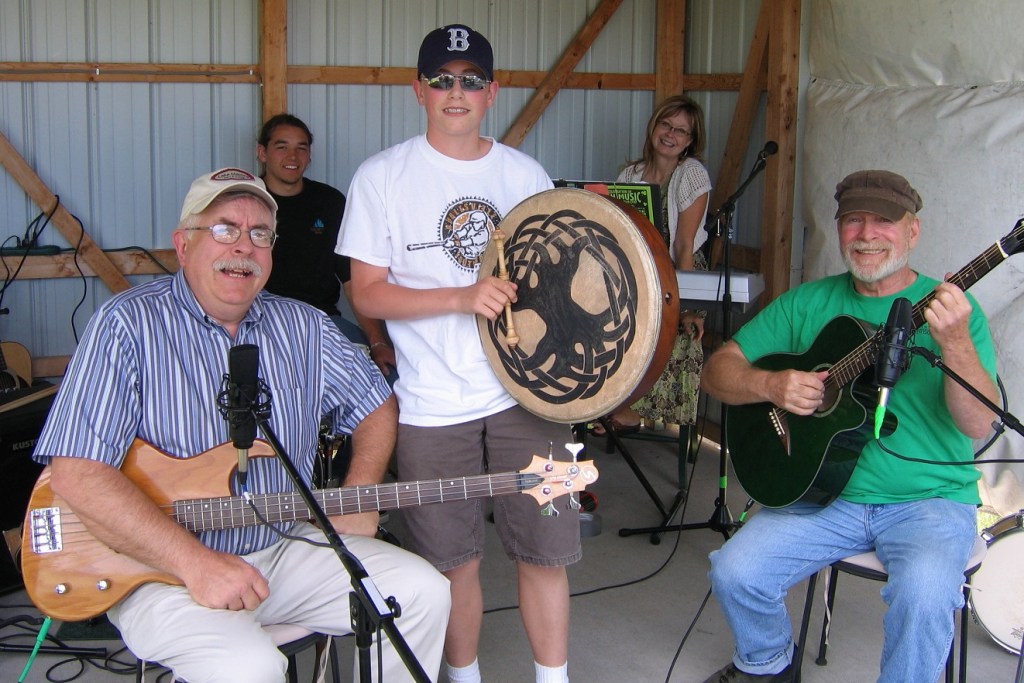
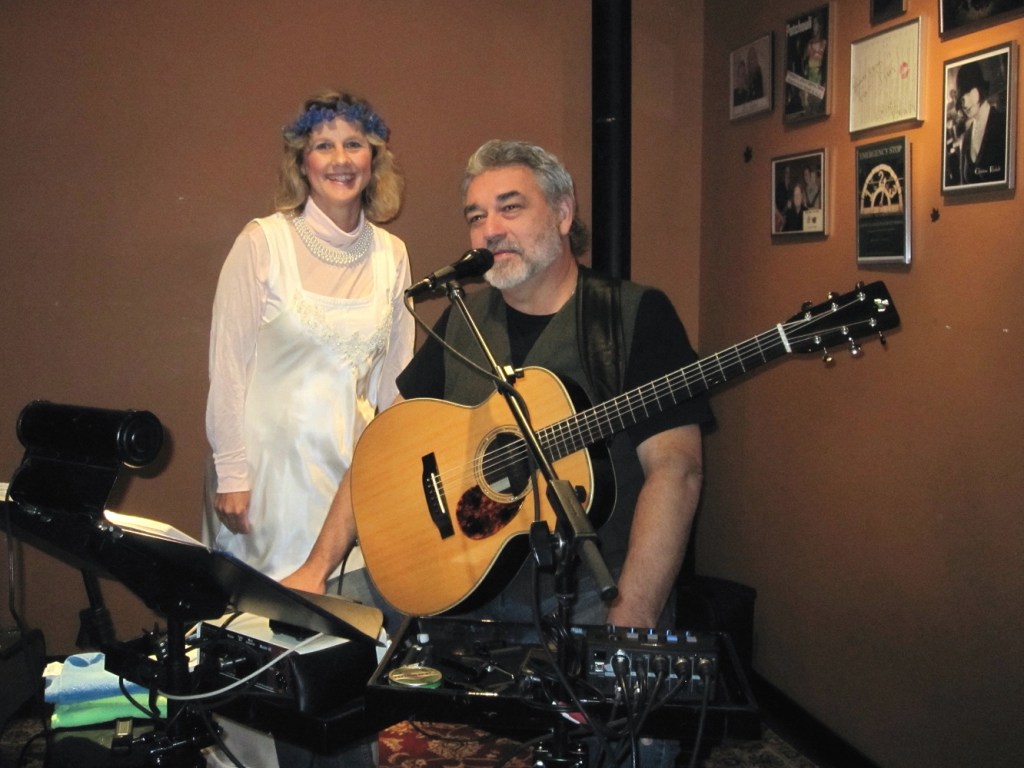
Patchouli @ CCW, May 2013
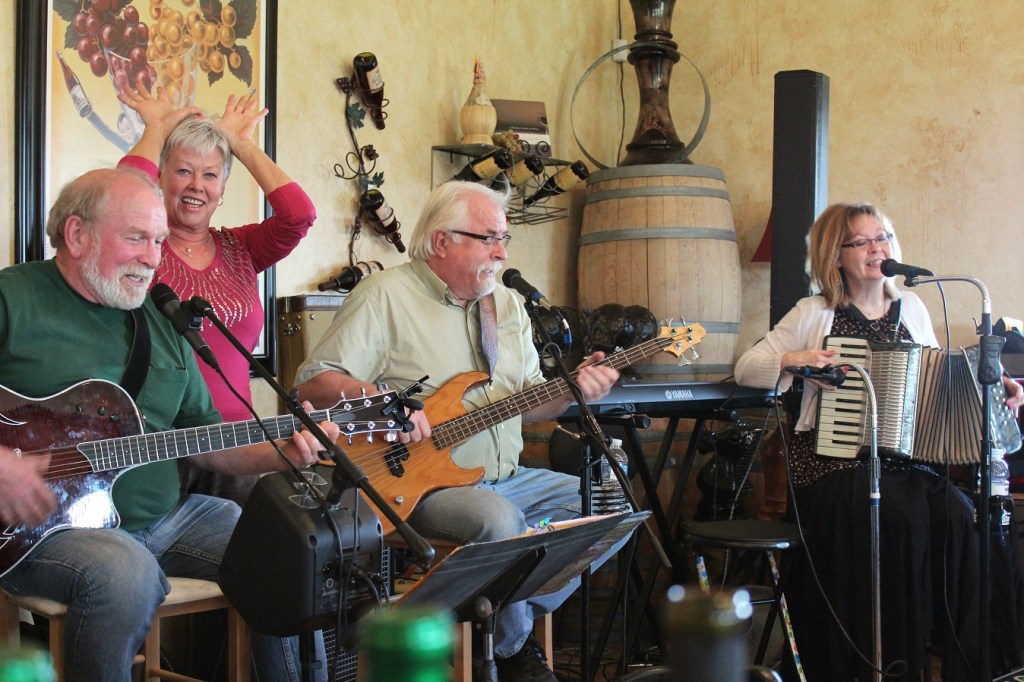
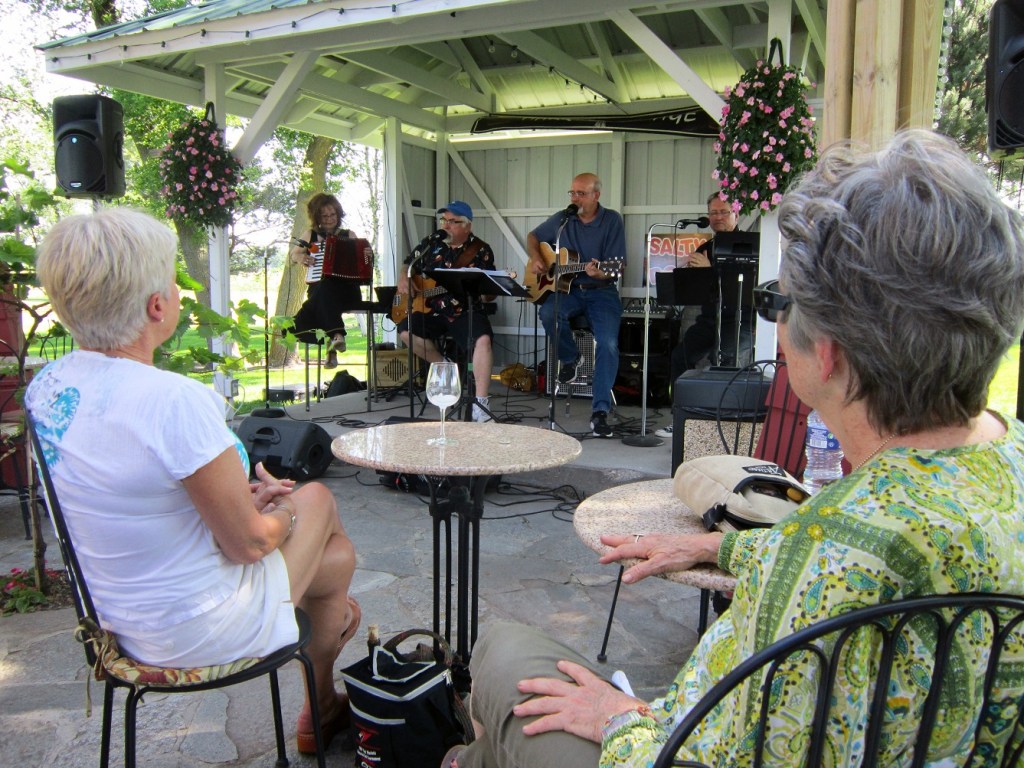
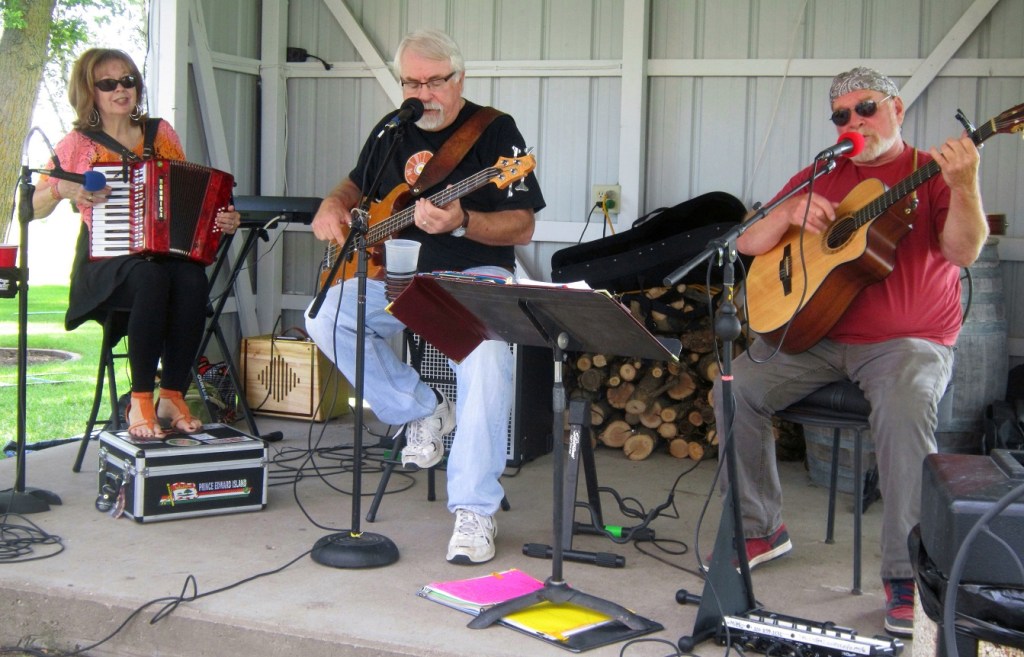
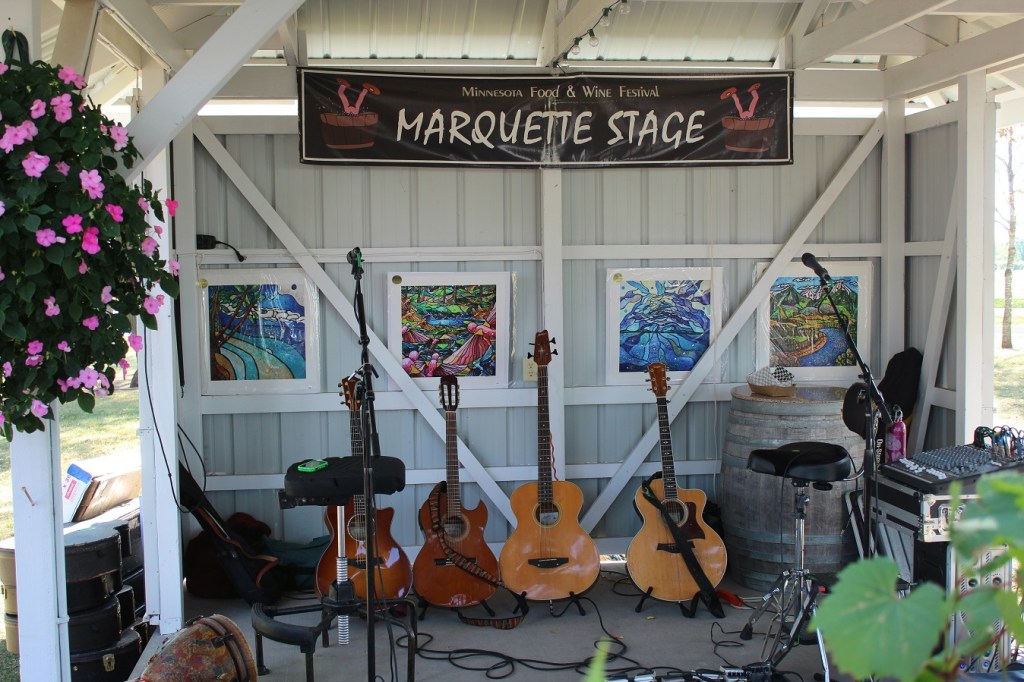
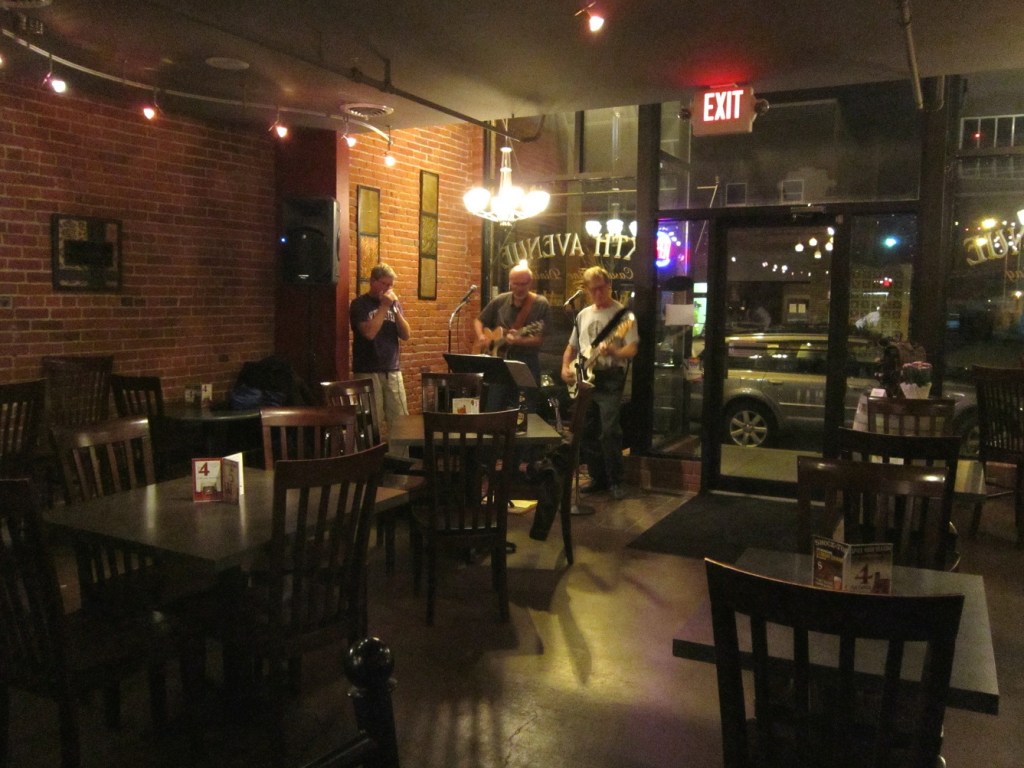
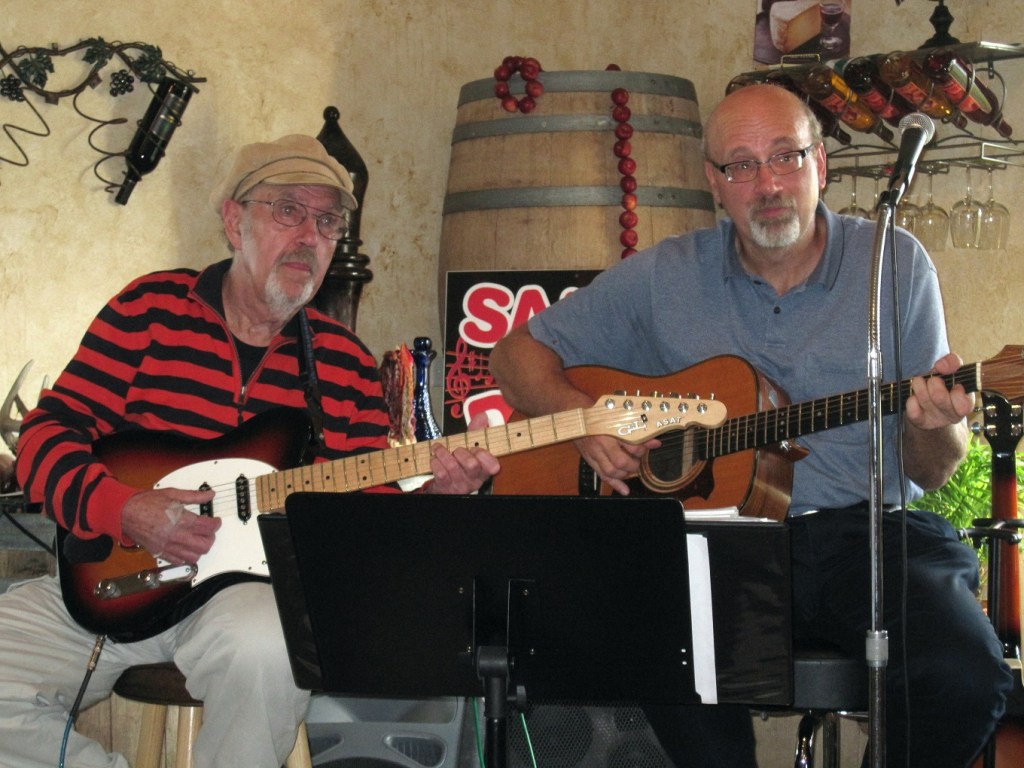
SAWA, May 2013
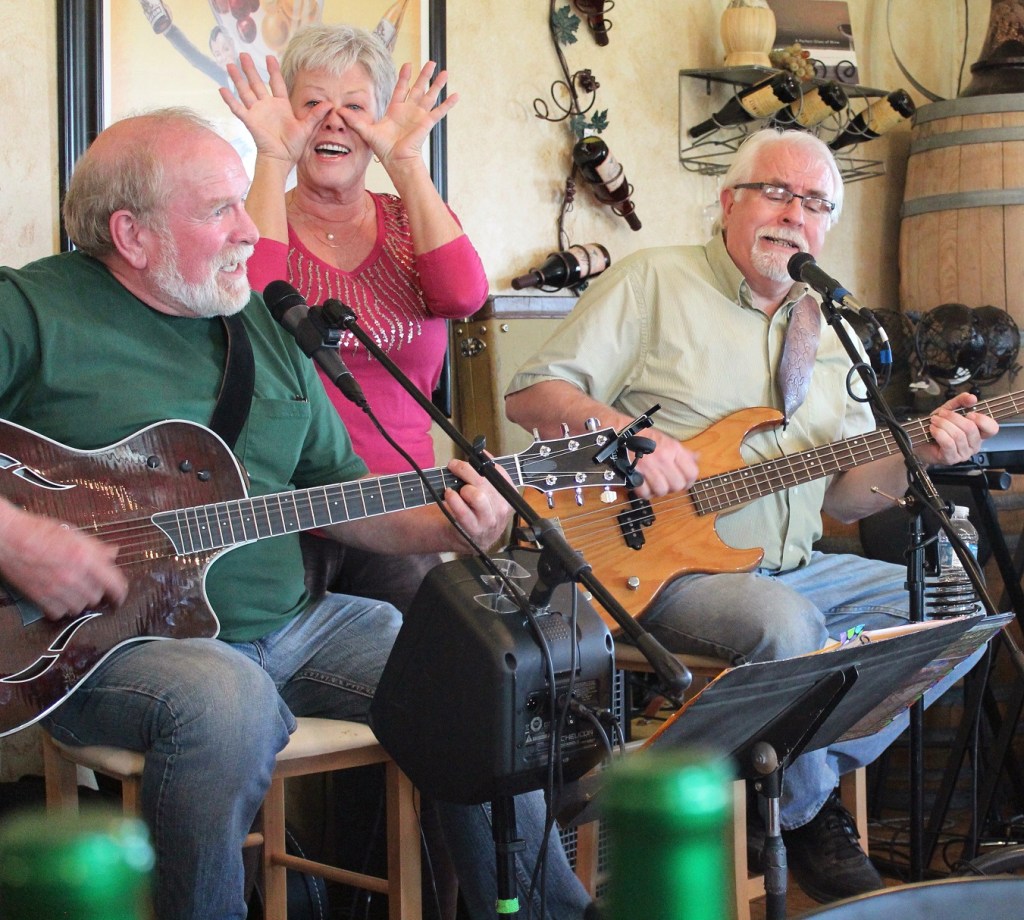
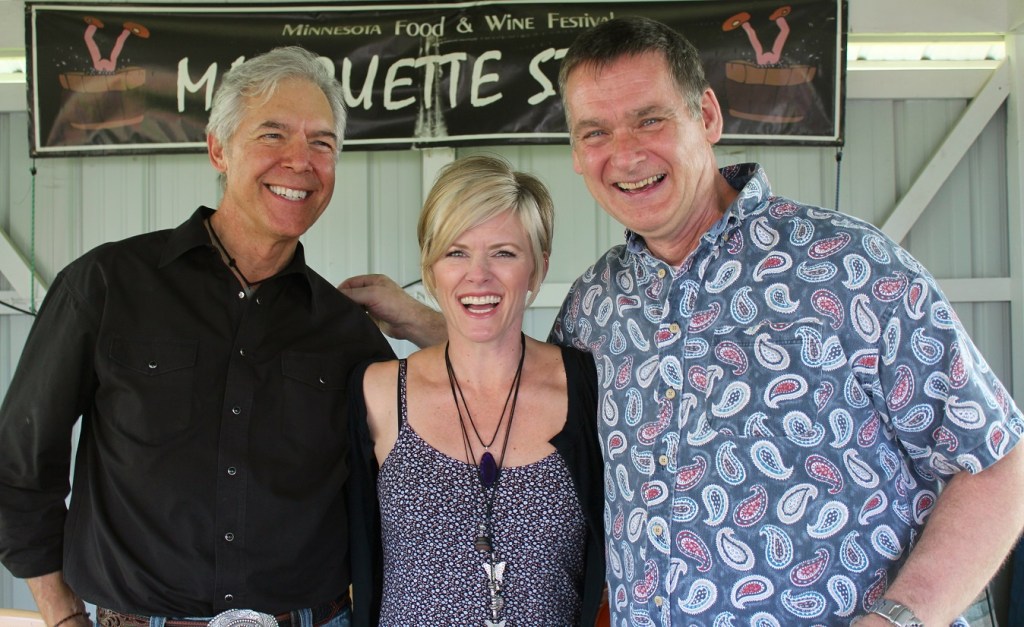
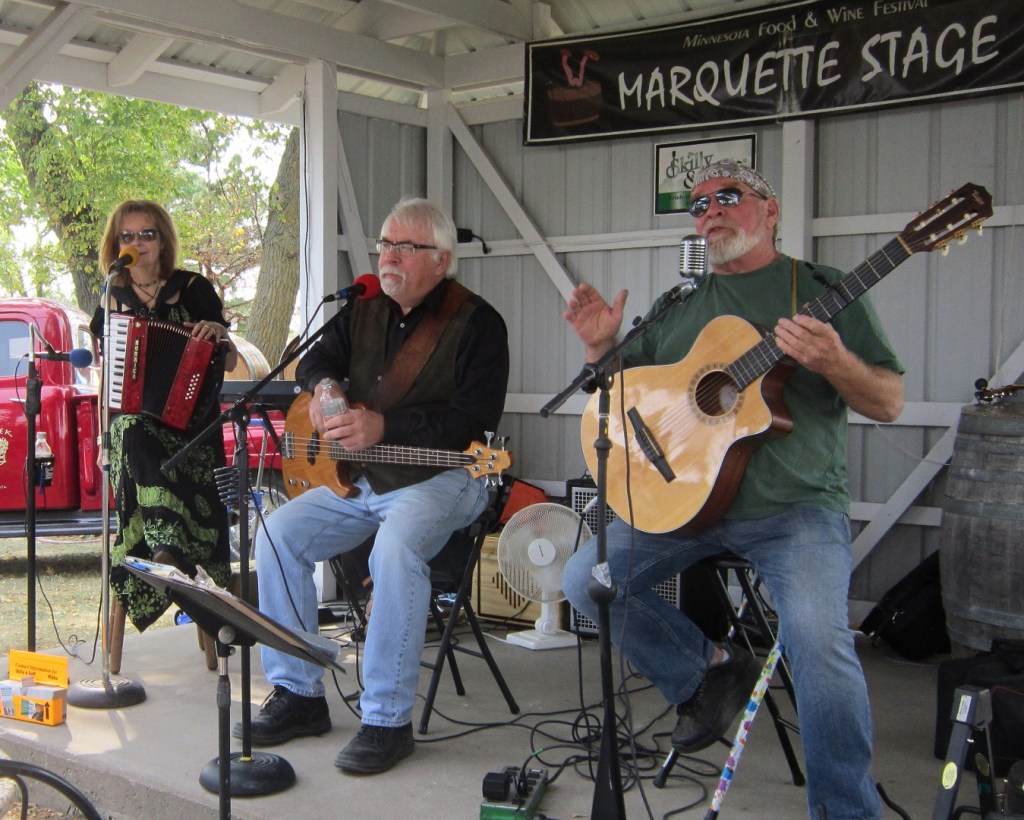
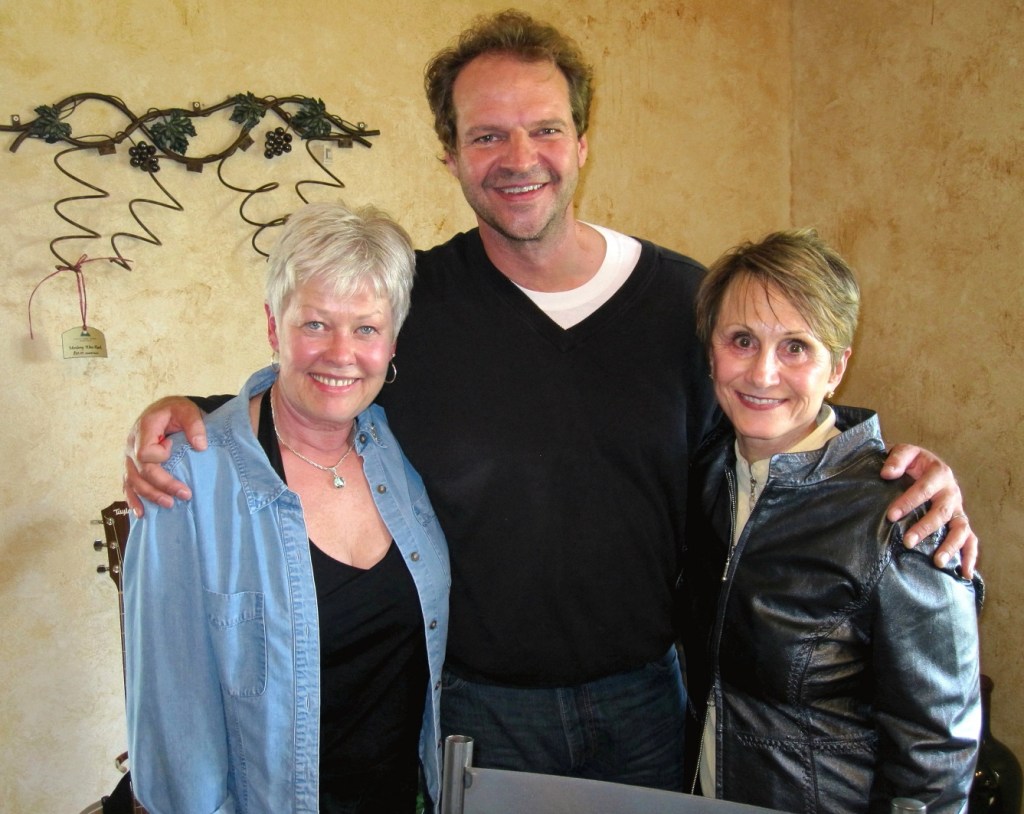
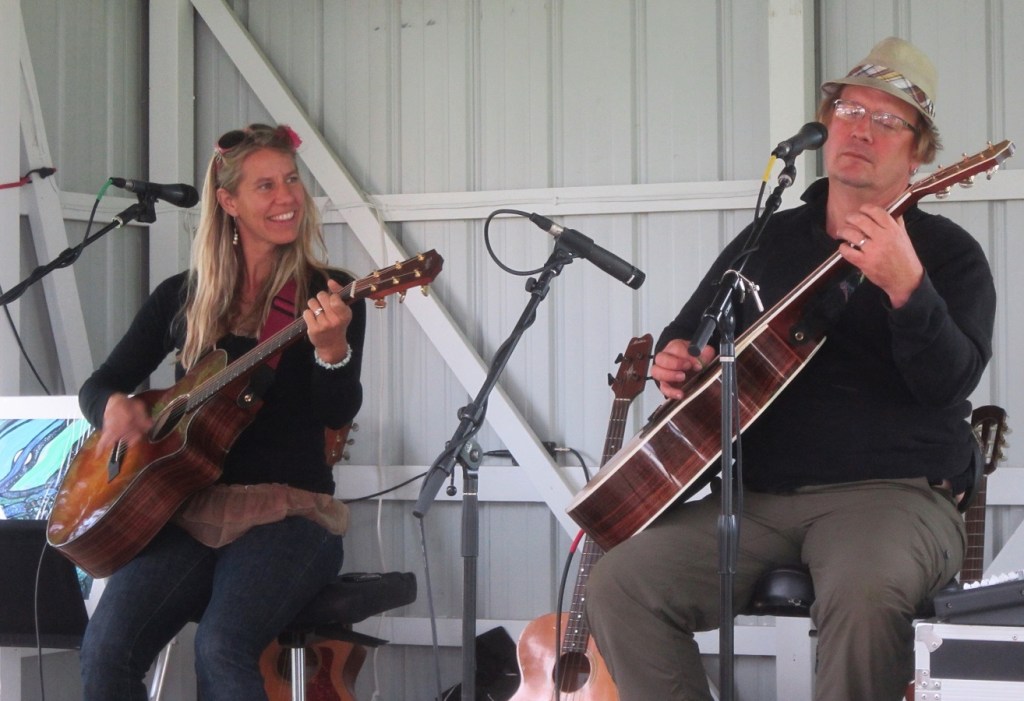
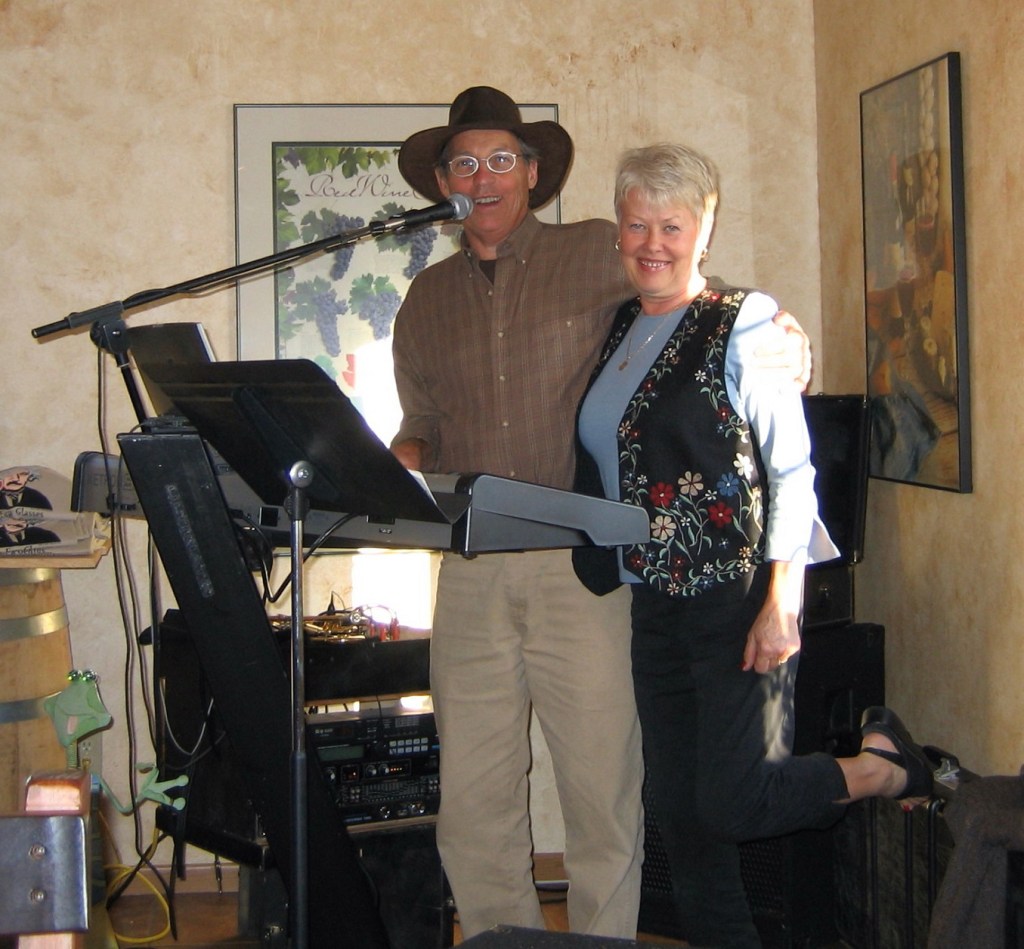
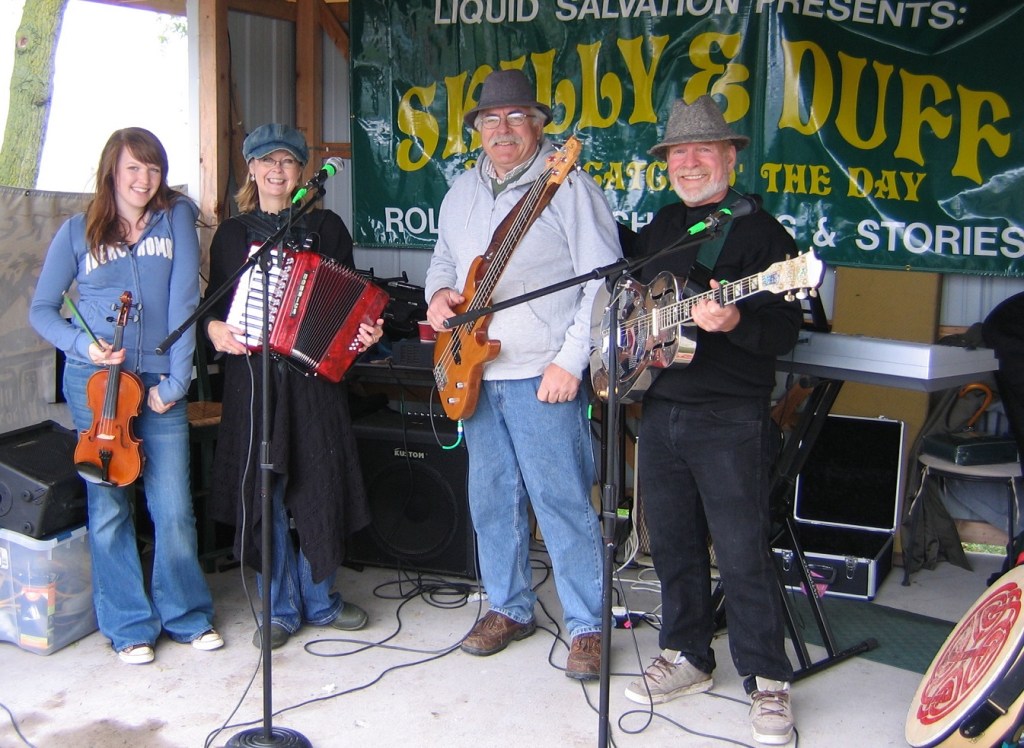
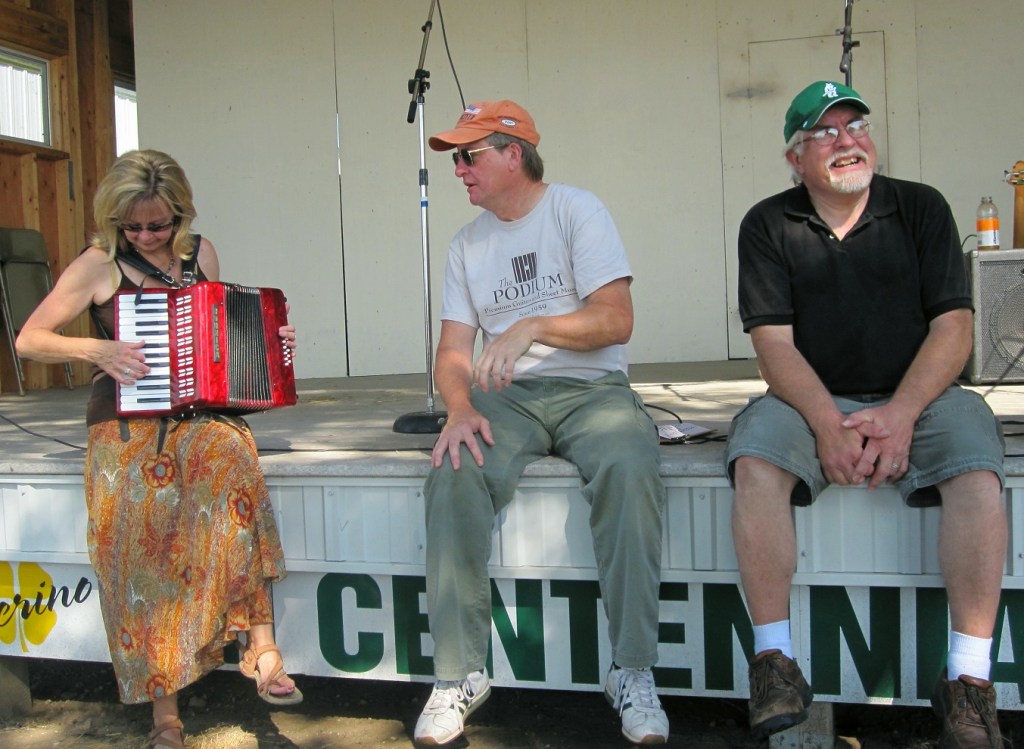
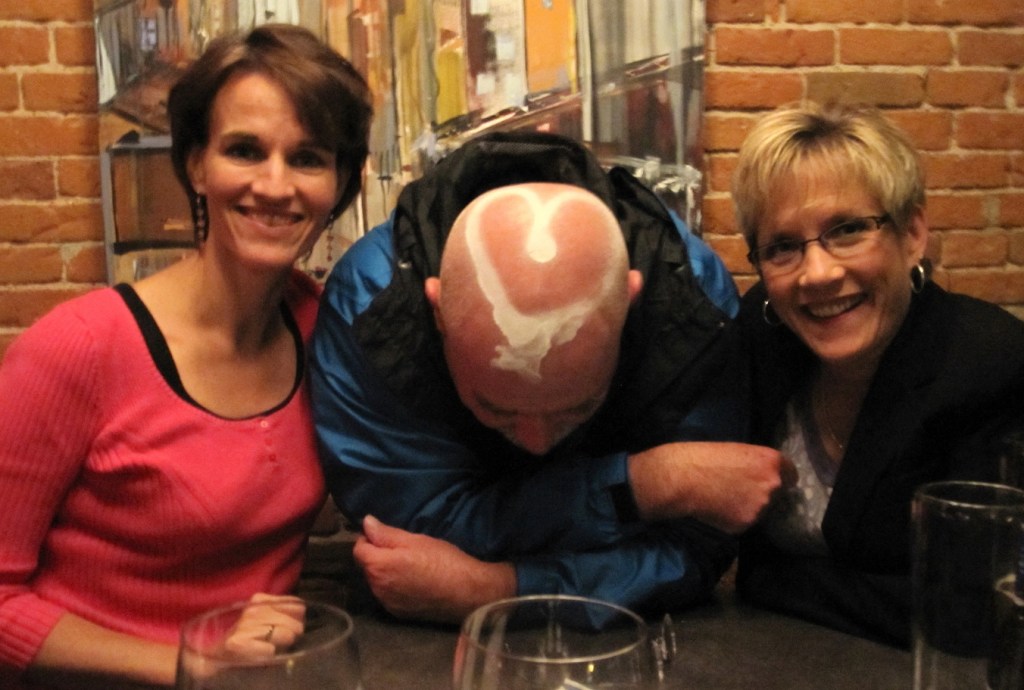
Skilly & Duff w/ actor fan @ CCW, May 2013
Her eyes they shown like diamonds . . .
I thought her the queen of the land . . .
And her hair, it hung over her shoulder . . .
Tied up with a black velvet band . . .
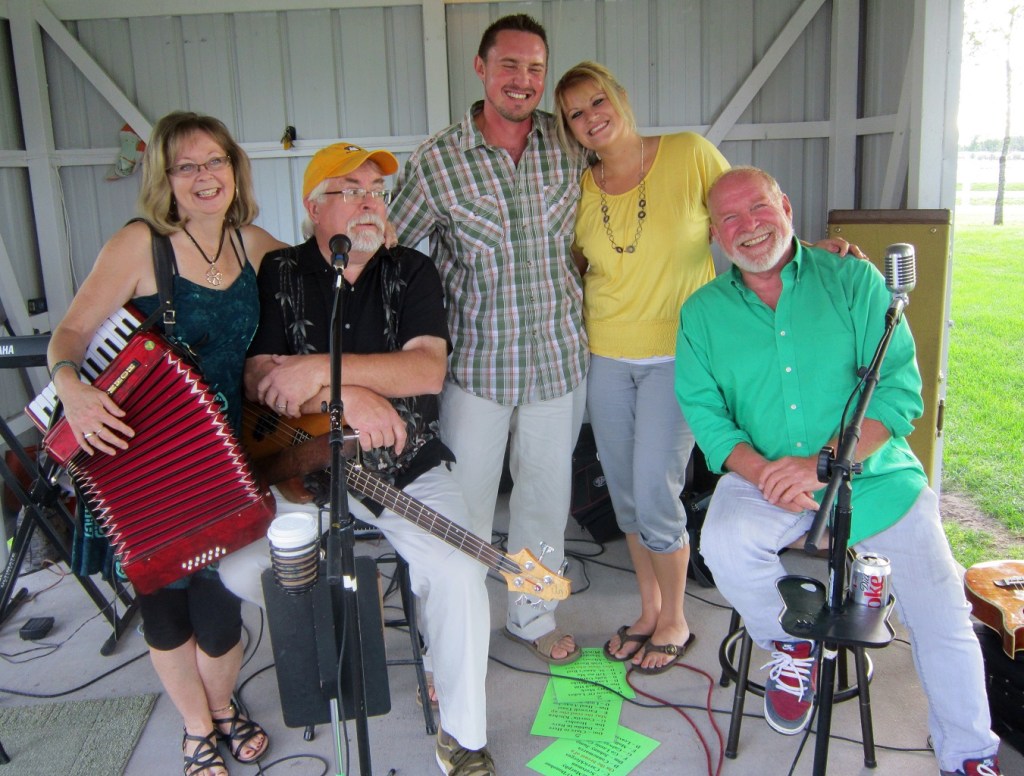
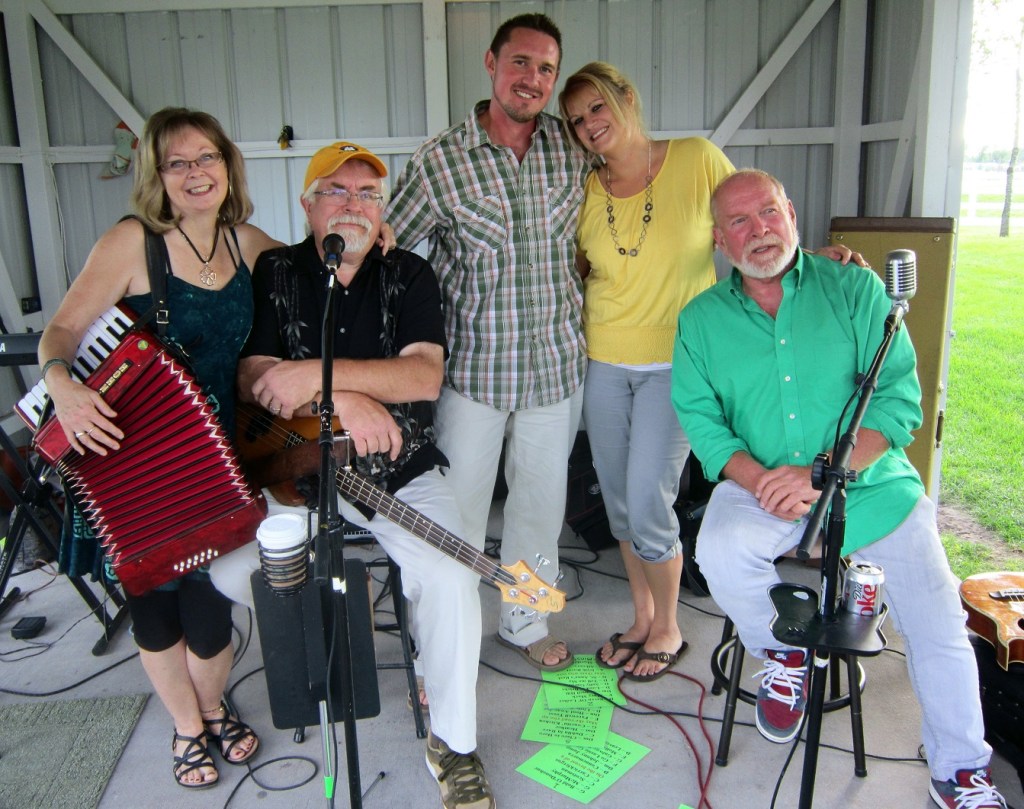
Black Velvet Band
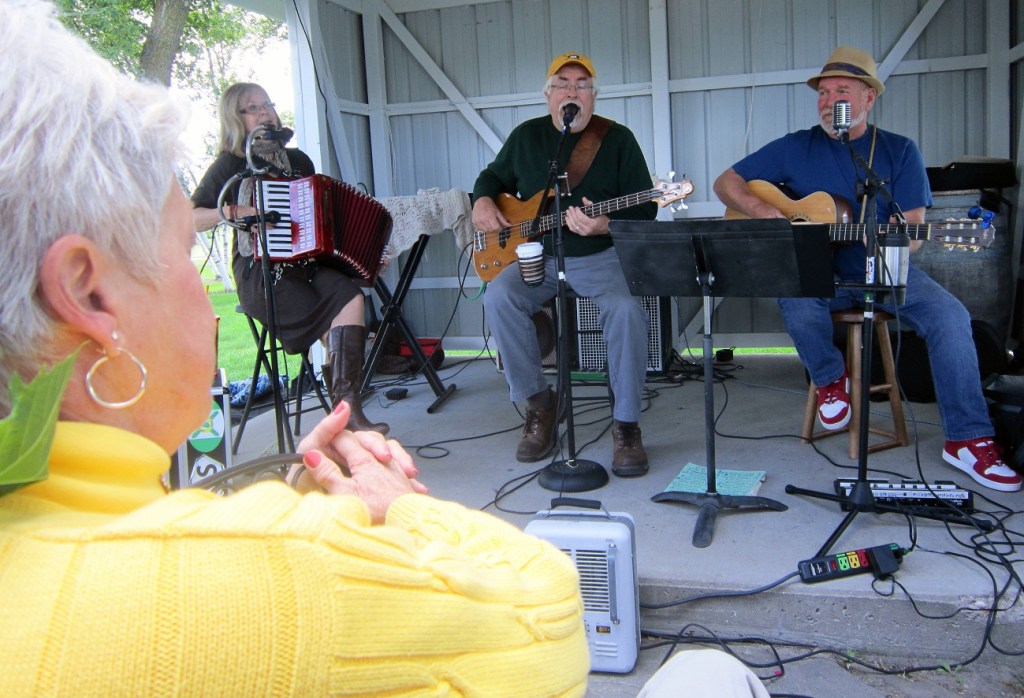
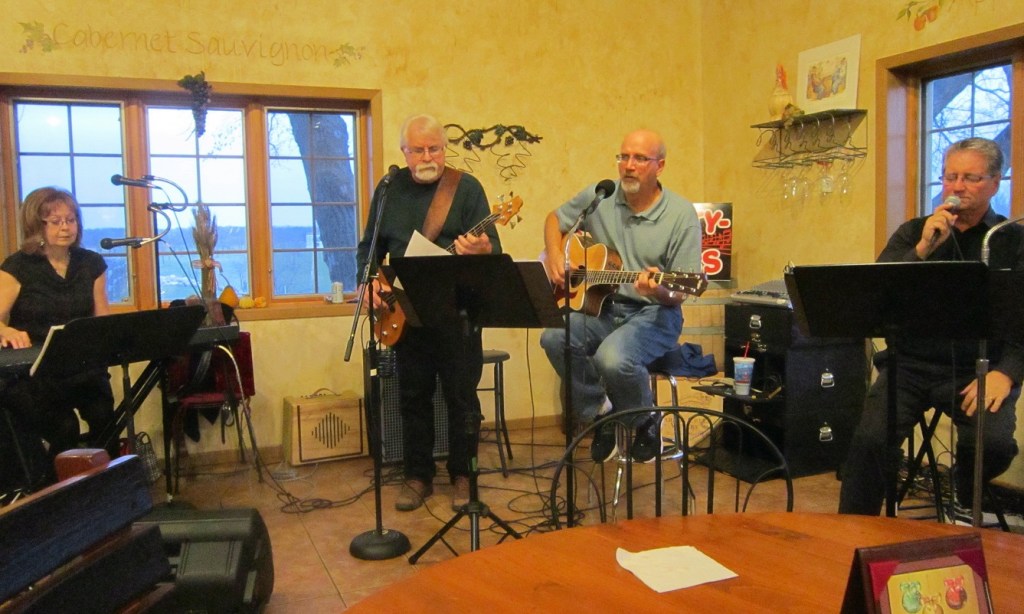
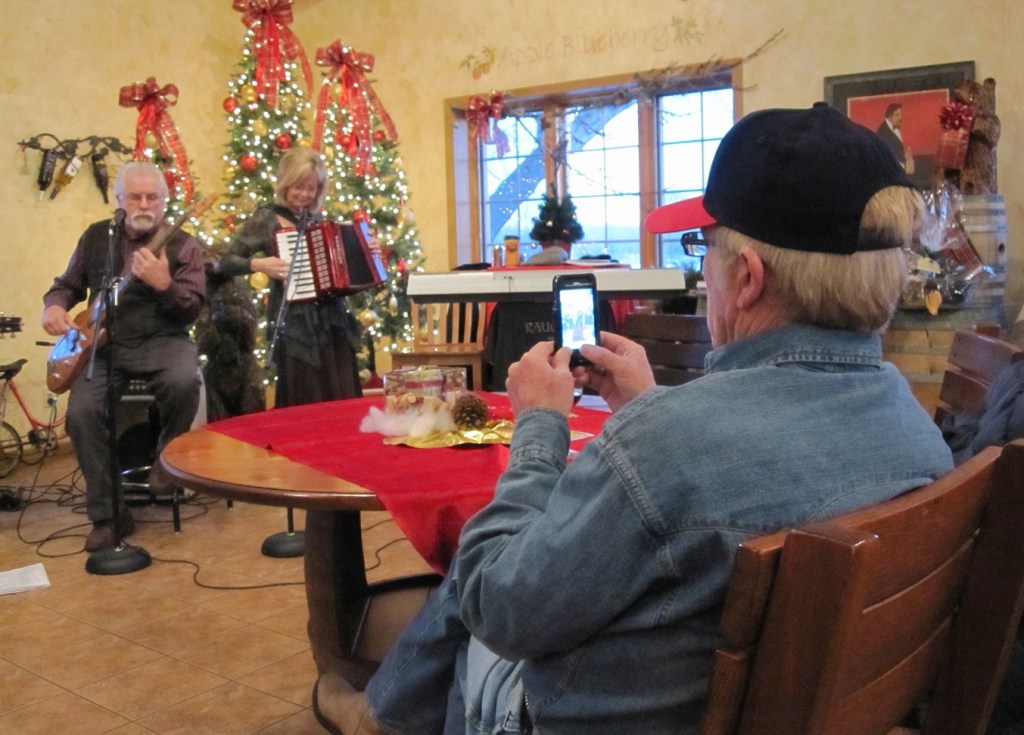
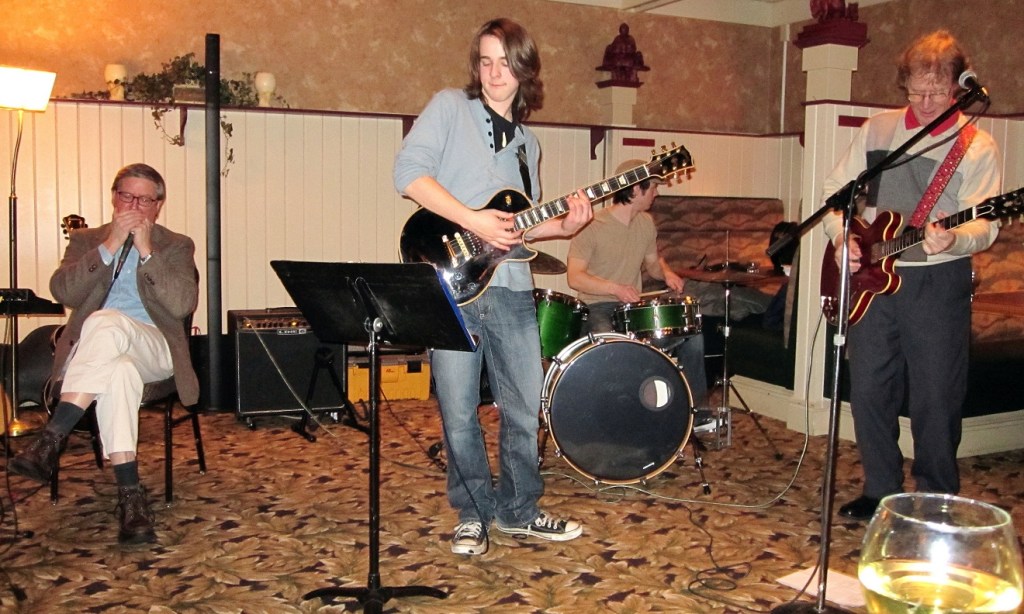
CCW, June 2013
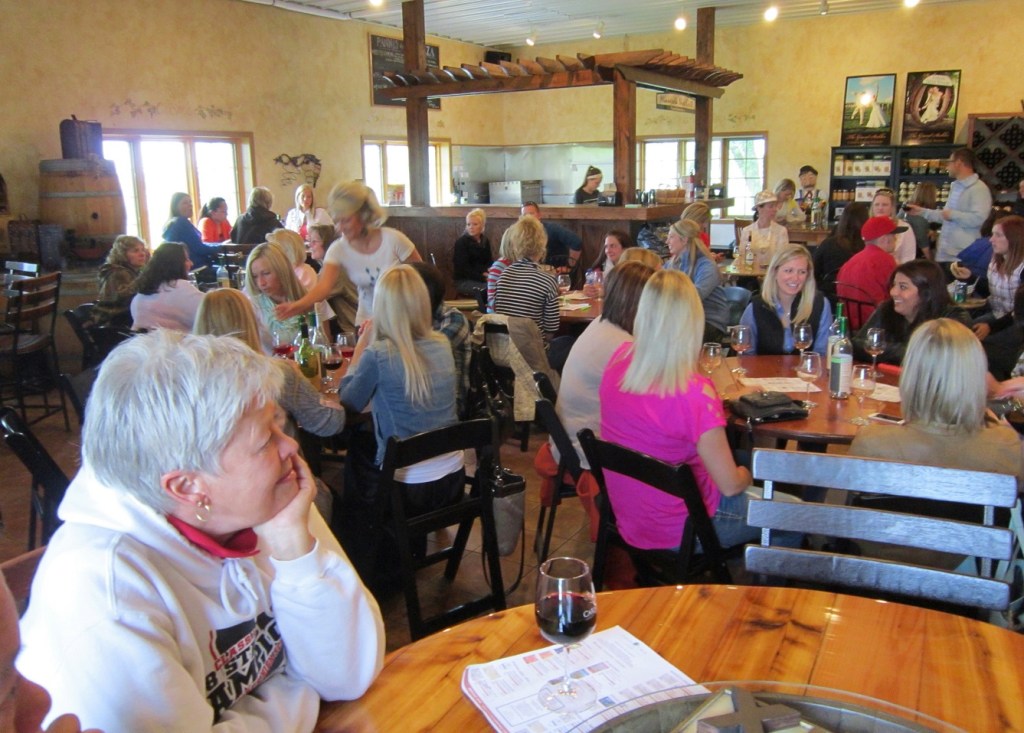
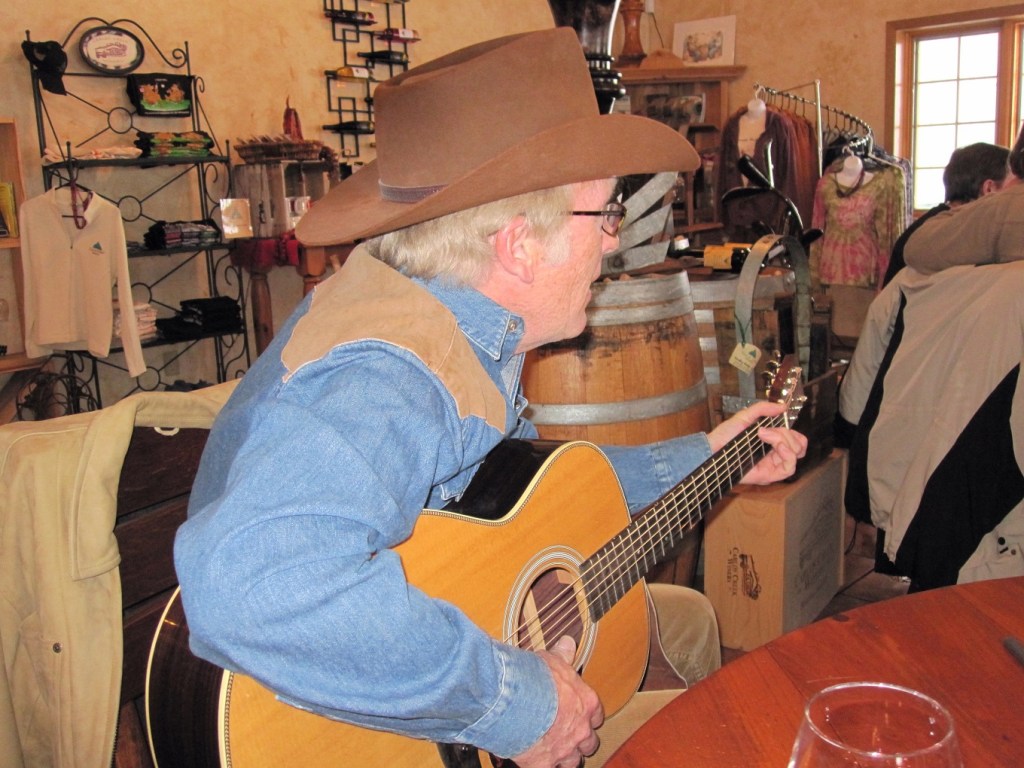
CCW, June 2013 (with Alia (nee) Kopischke, former Cardinal hockey player and operating the counter above, and her parents also work/worked for the winery . . . )
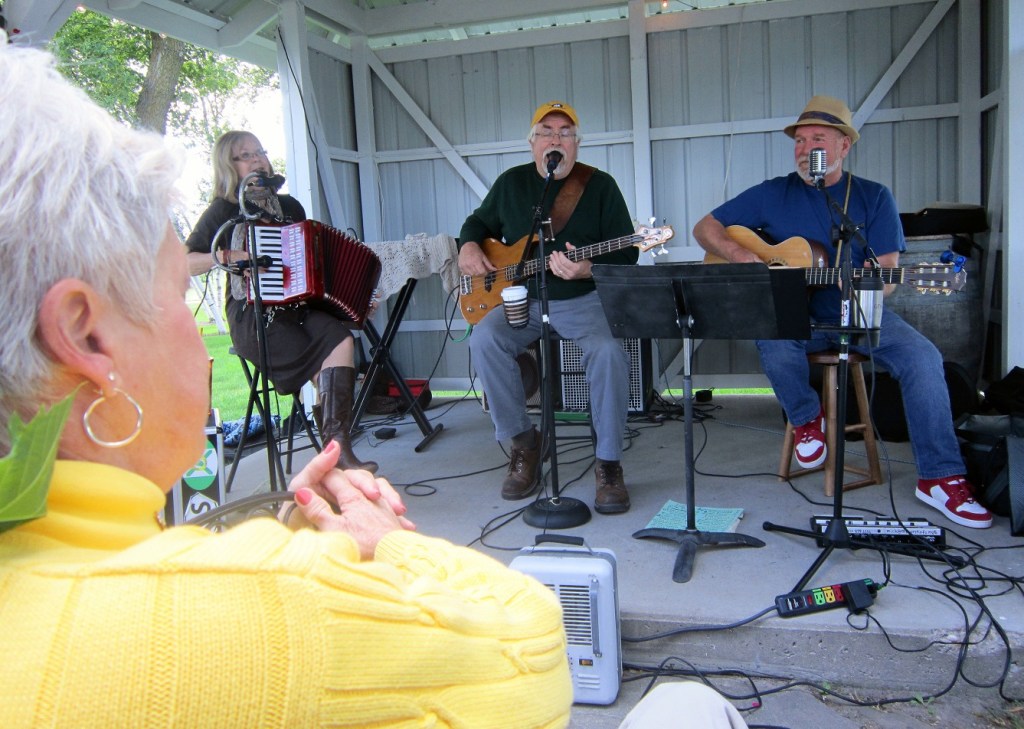
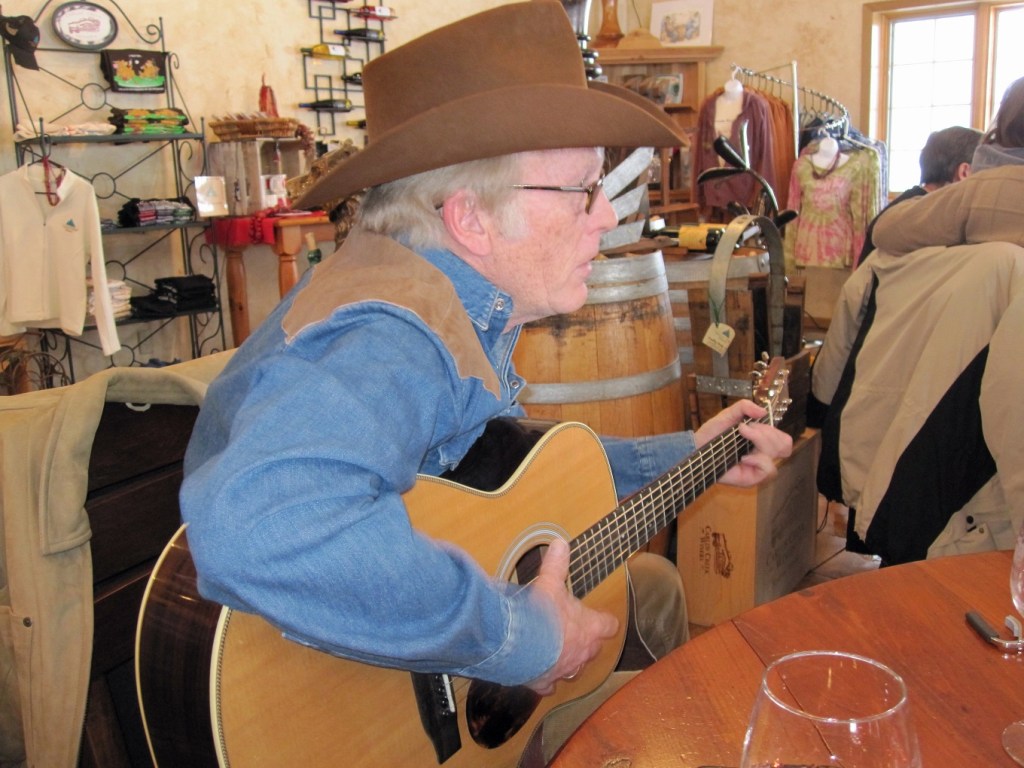
CCW, June 2013
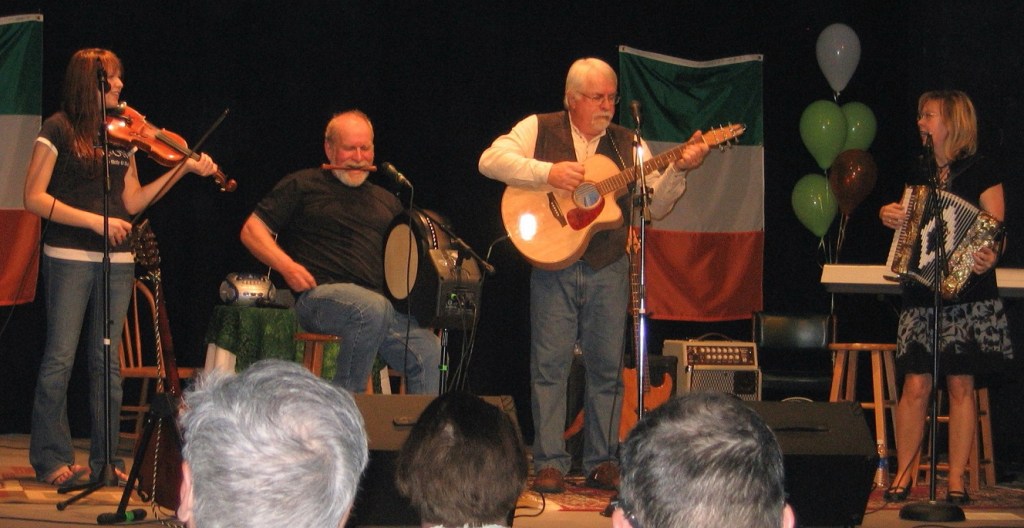
CCW, June 2013
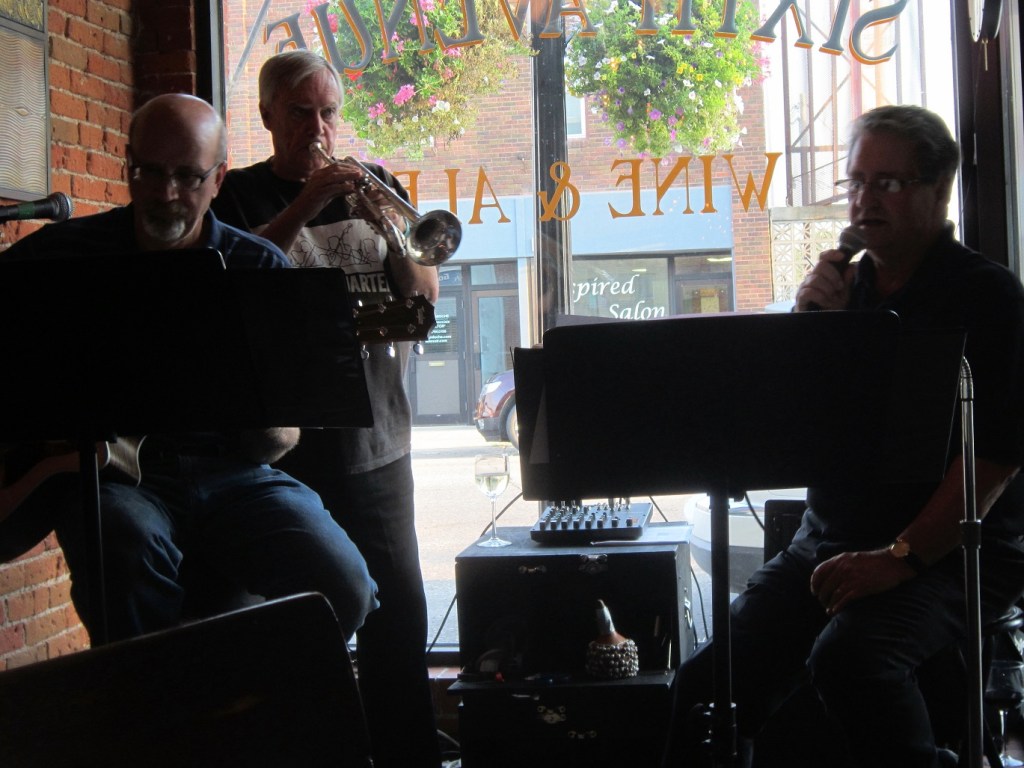
Tuesday Night Club w/ Mary Lou Thunselle & Al Lieffort @ SAWA, June 2013
Harper’s Chord @ CCW, June 2013
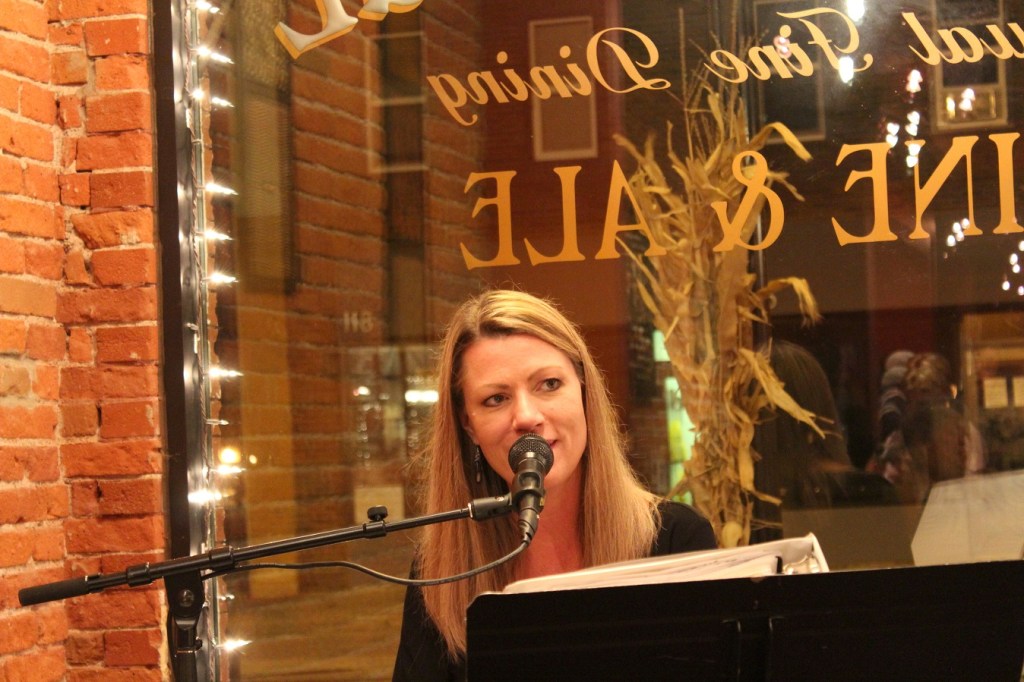
Josie Nelson @ CCW, June 2013
Mikko Cowdery @ CCW, June 2013
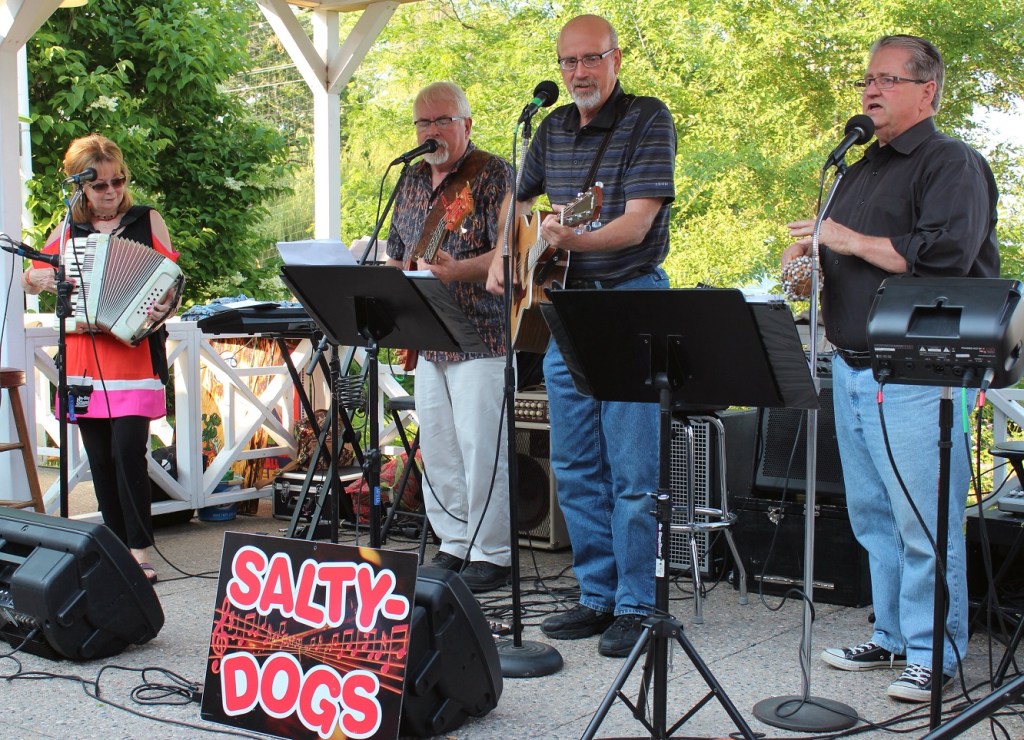
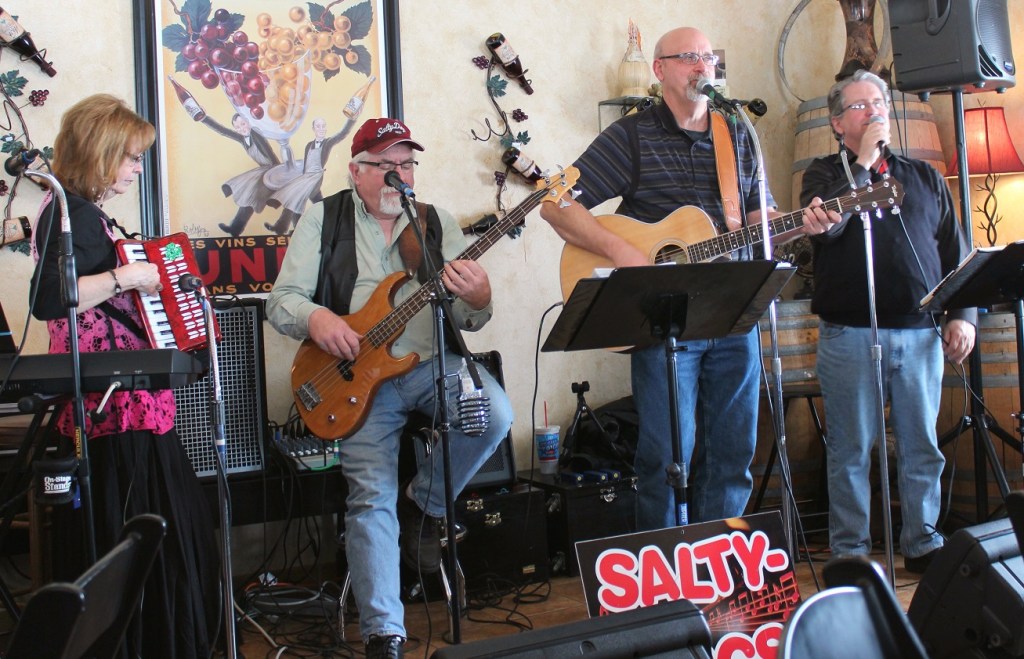
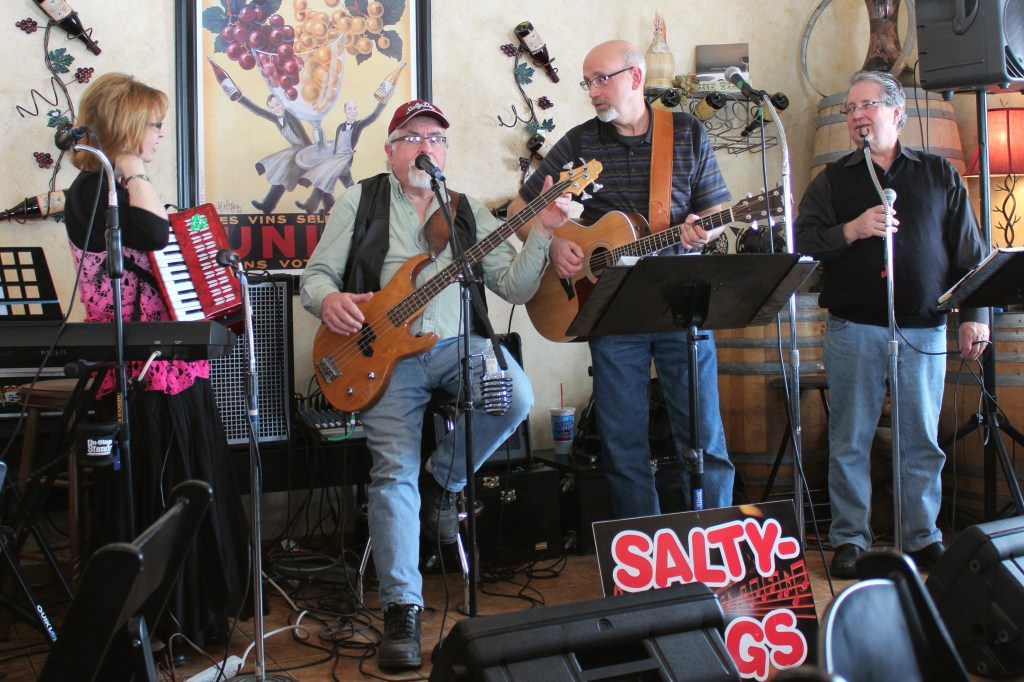
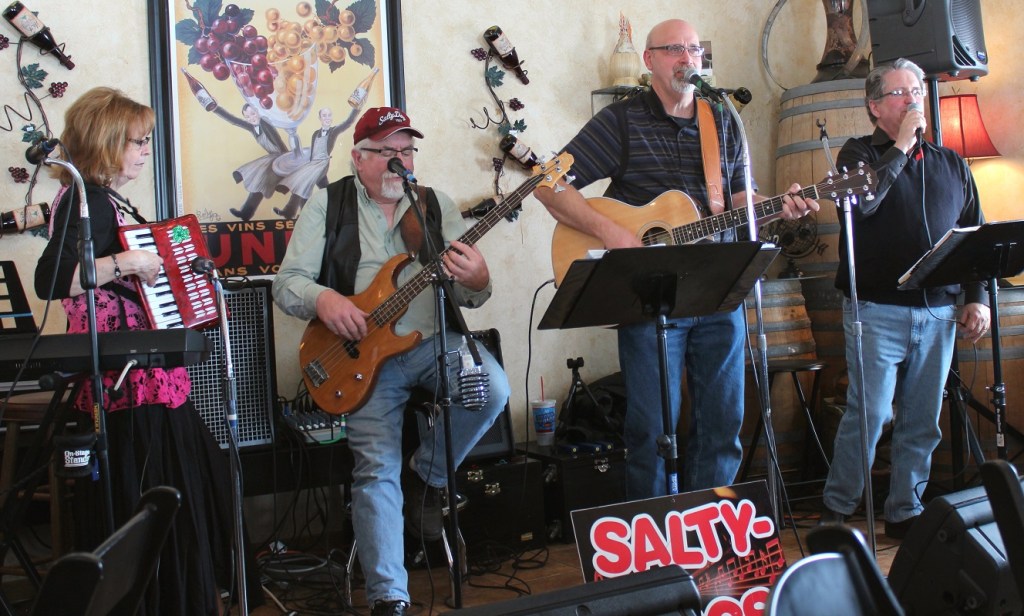
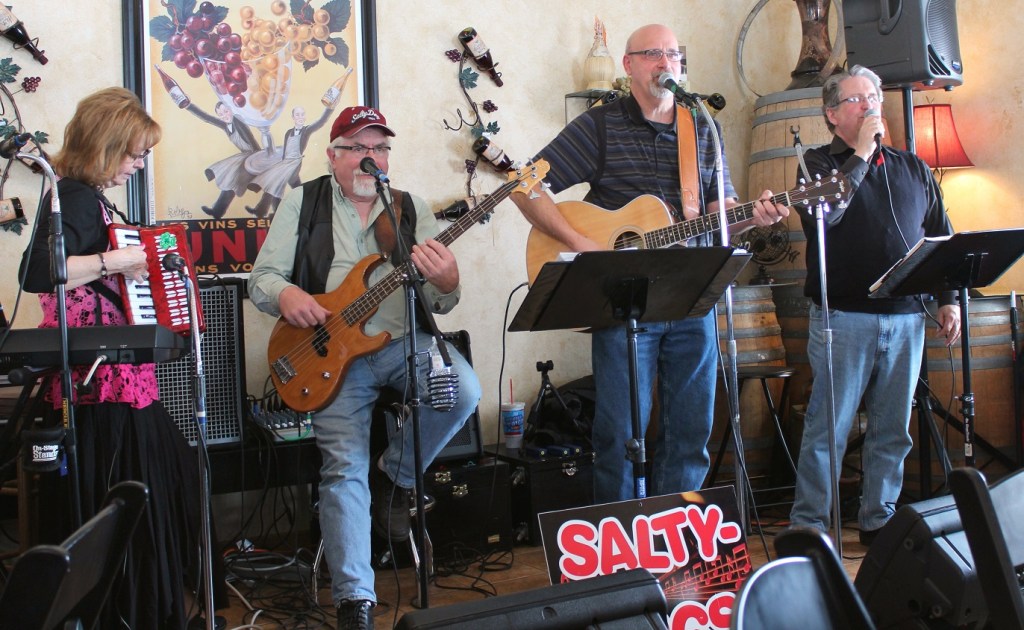
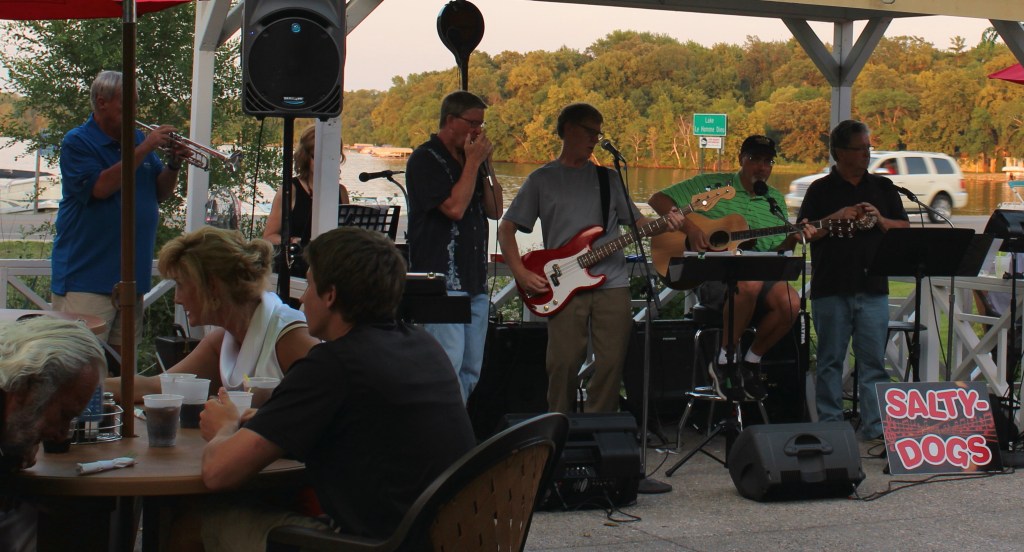
Salty Dogs @ Bug-A-Boo Bay, June 2013
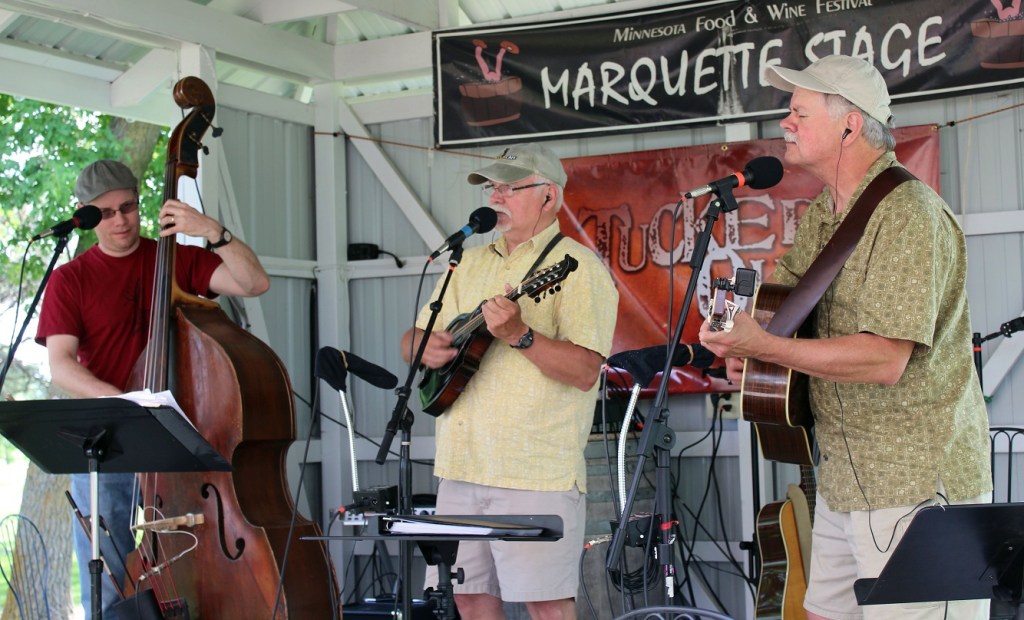
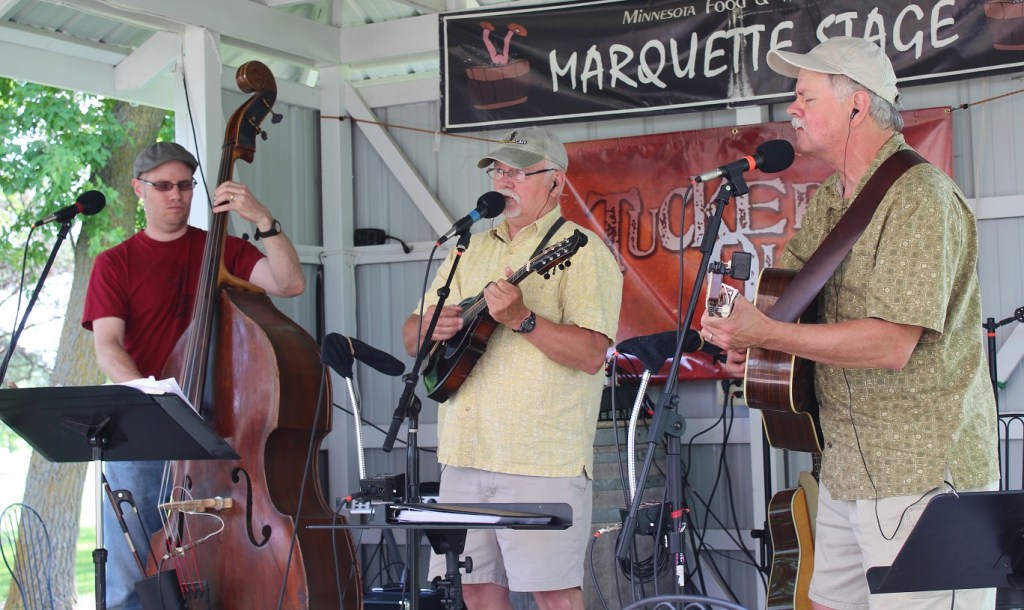
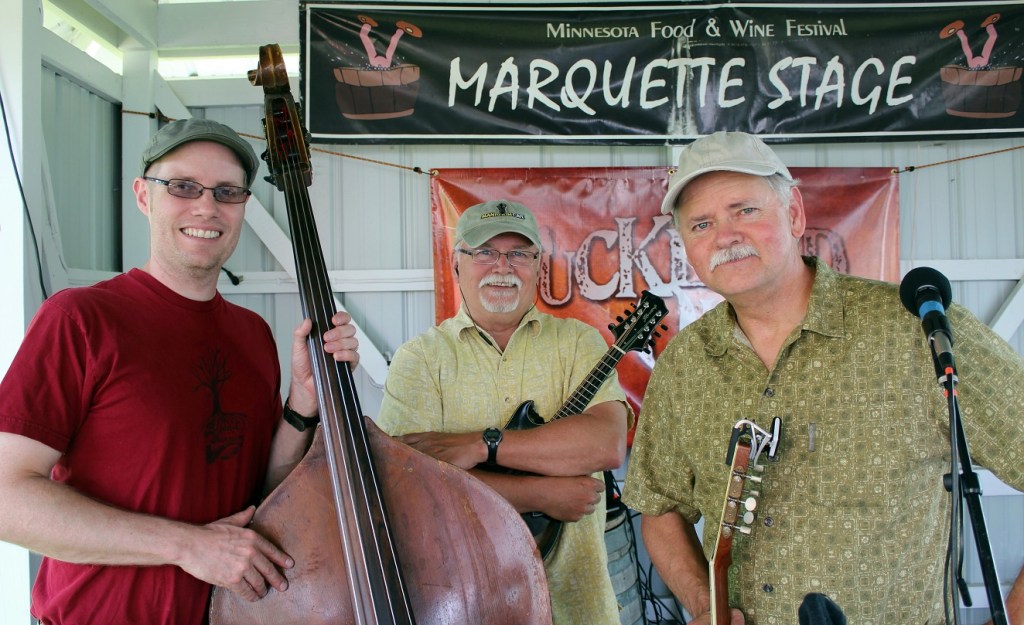
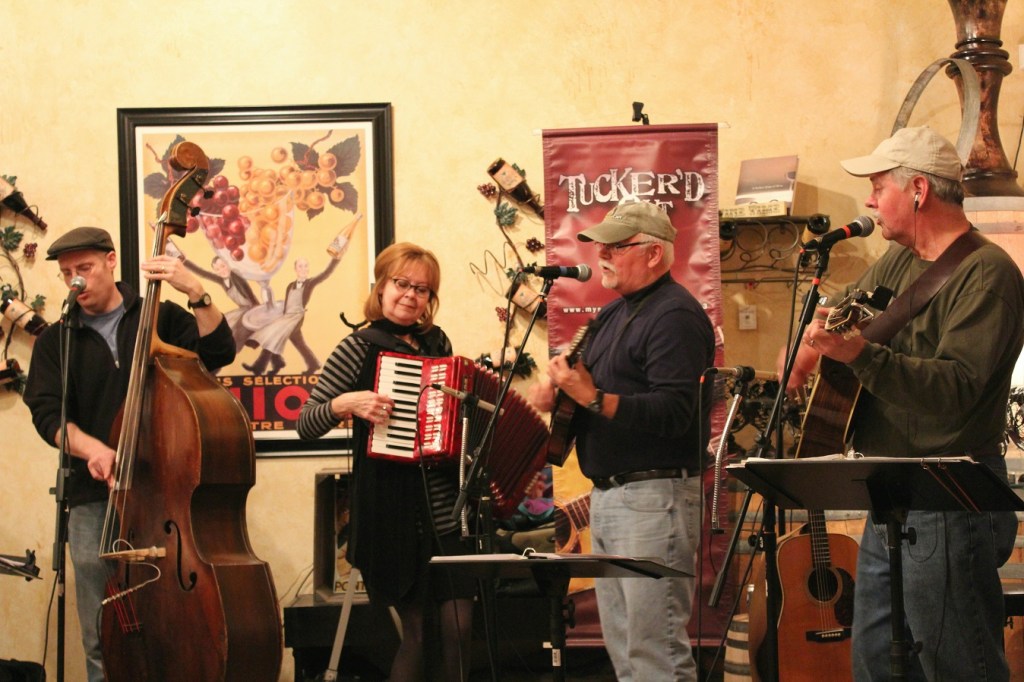
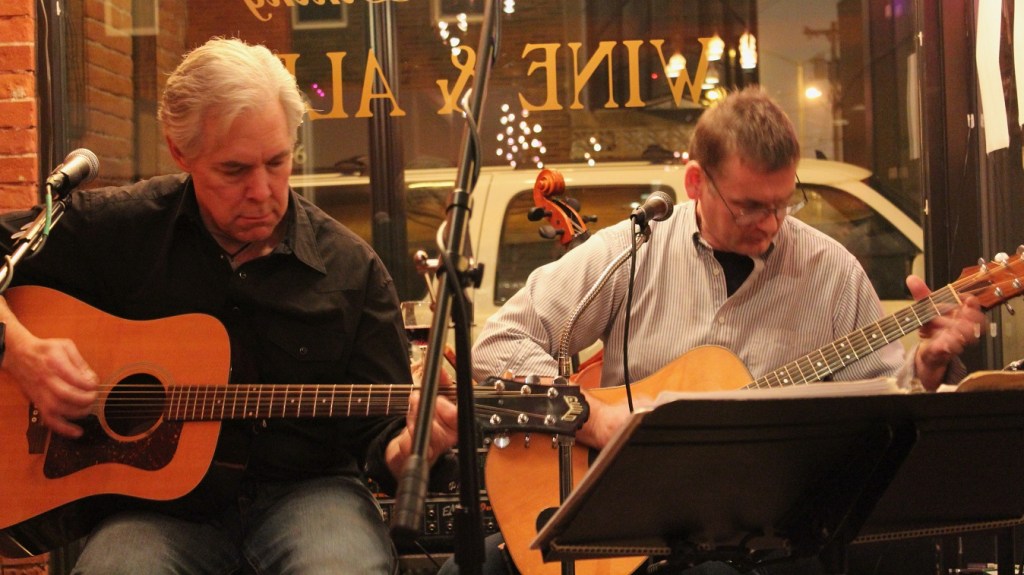
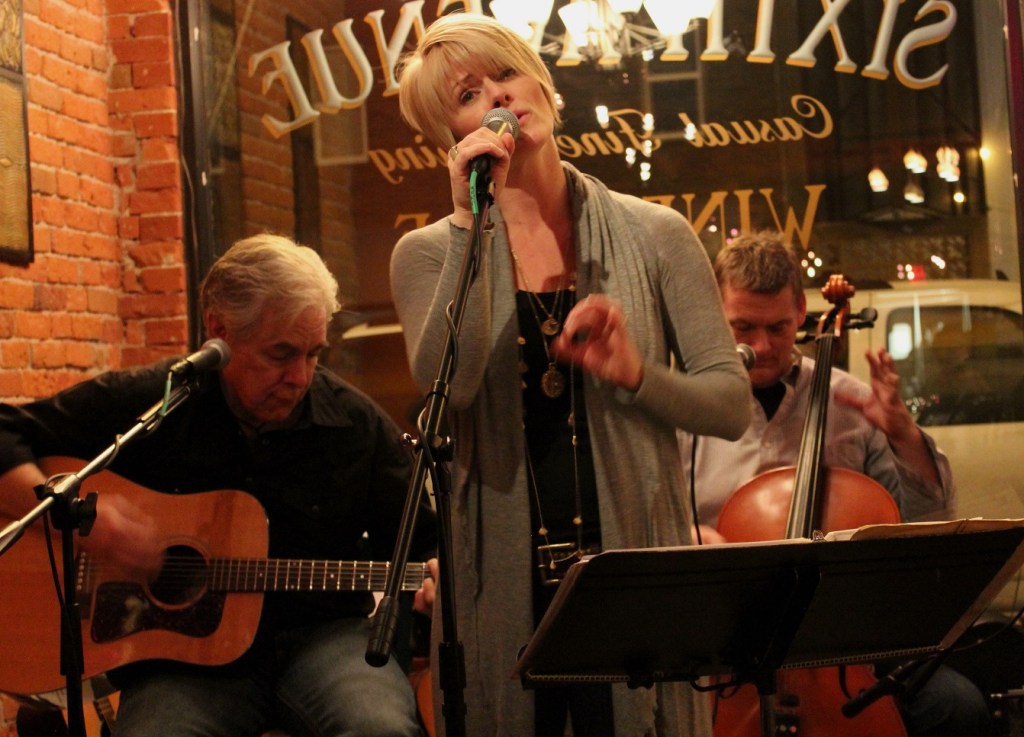
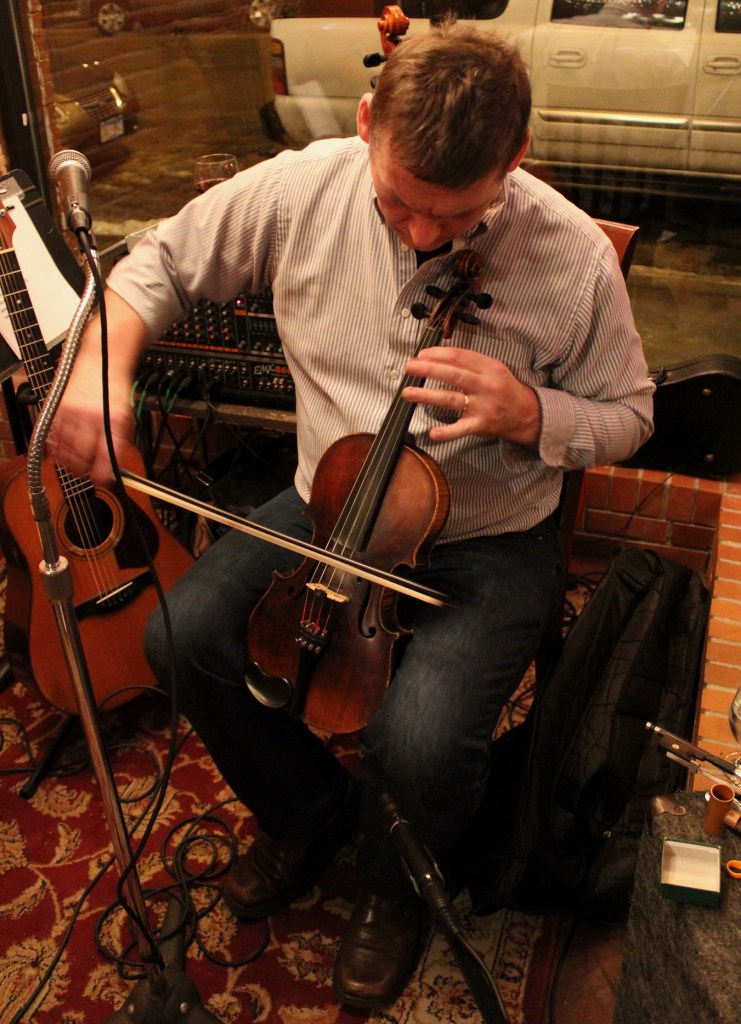
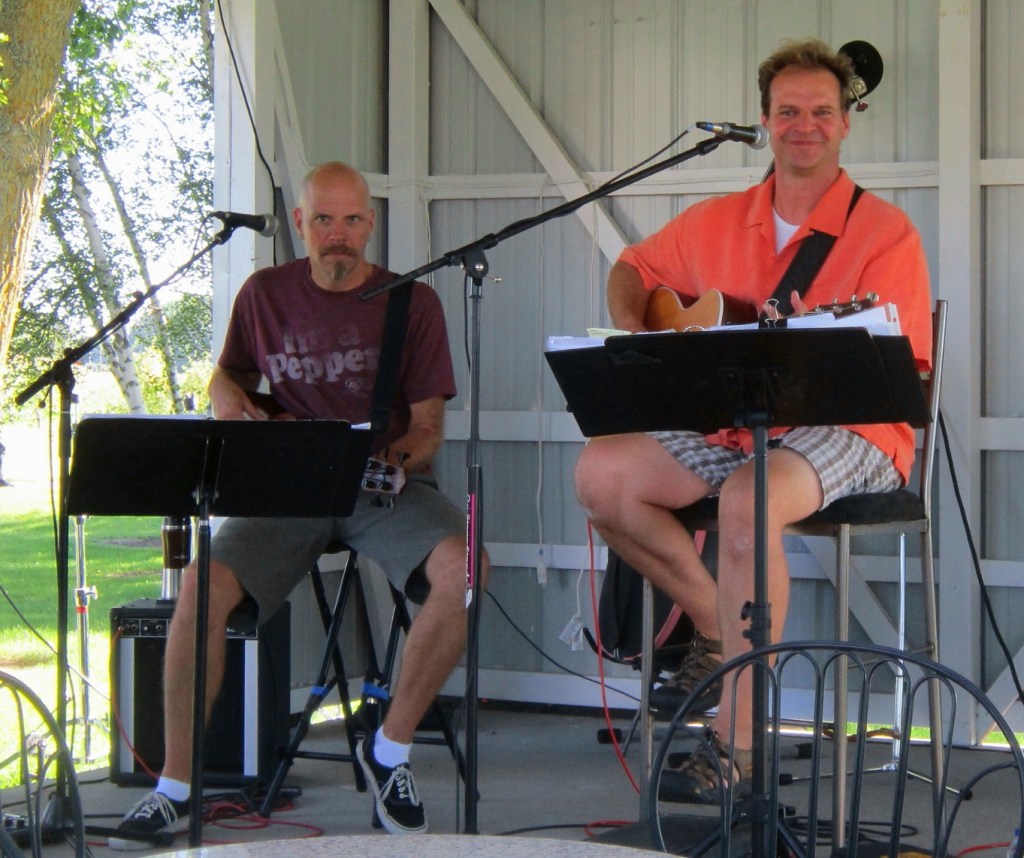
Tucker’d Out @ CCW, June 2013
[And photographed by Mikko . . . ]
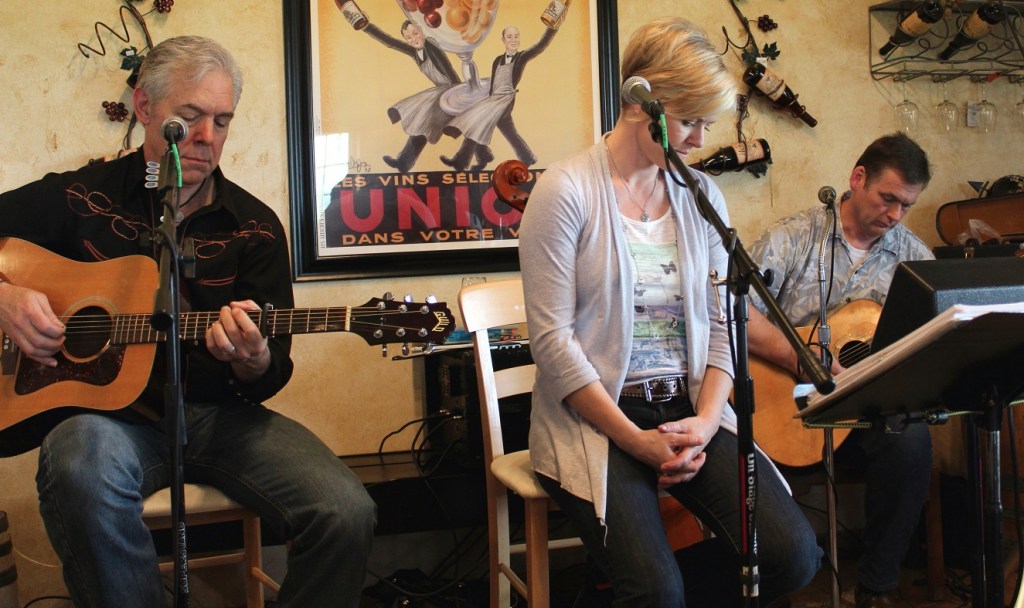
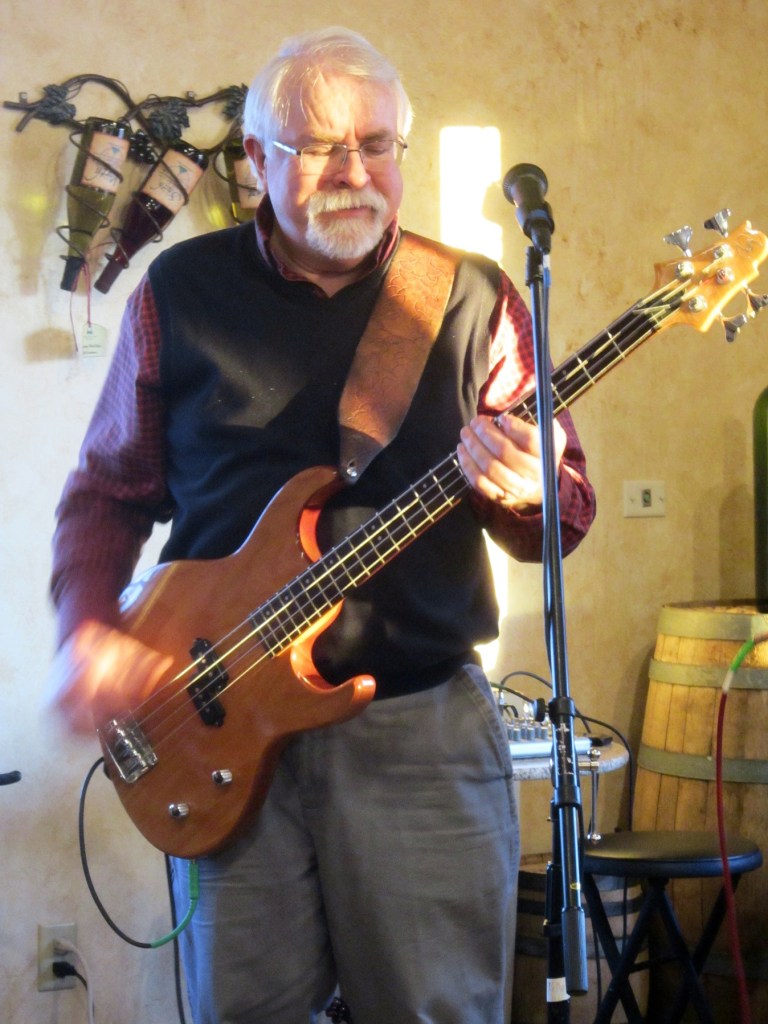
Uncle Willie’s Gut Bucket Blues Band @ CCW, June 2013
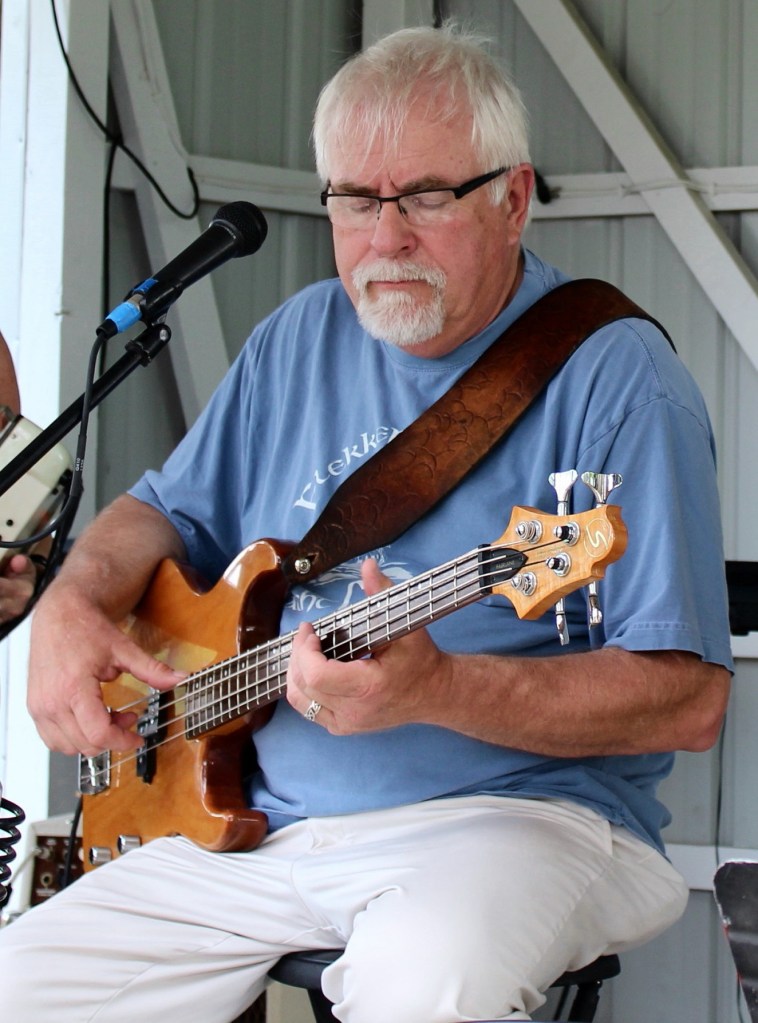
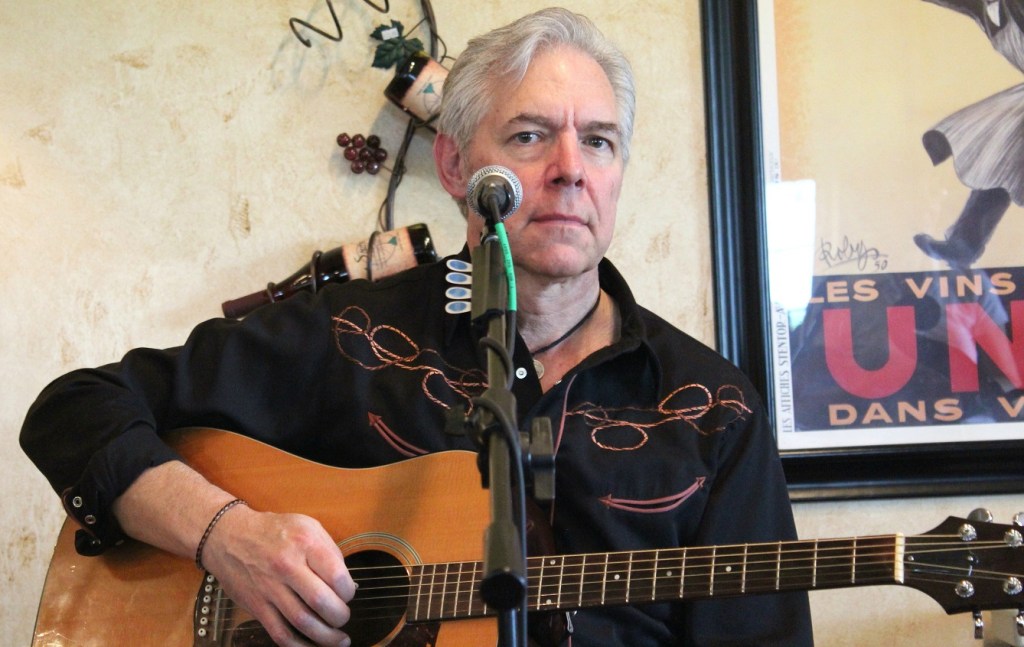
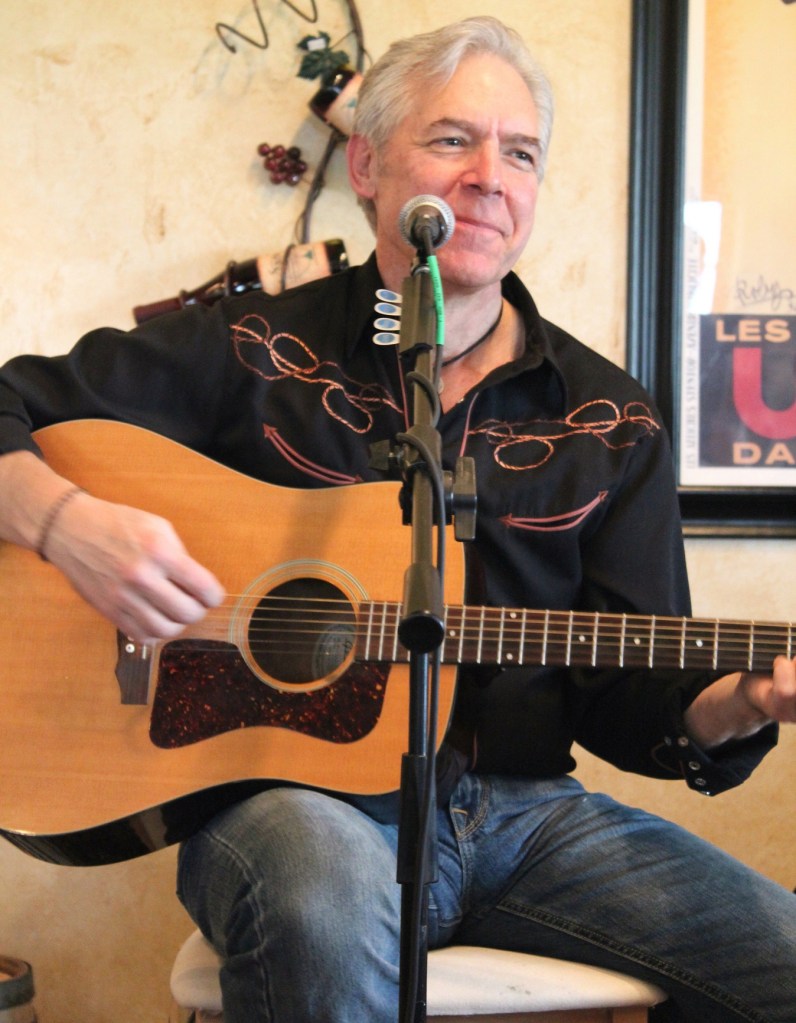
Bruce Kelly @ CCW, July 2013
CCW, July 2013
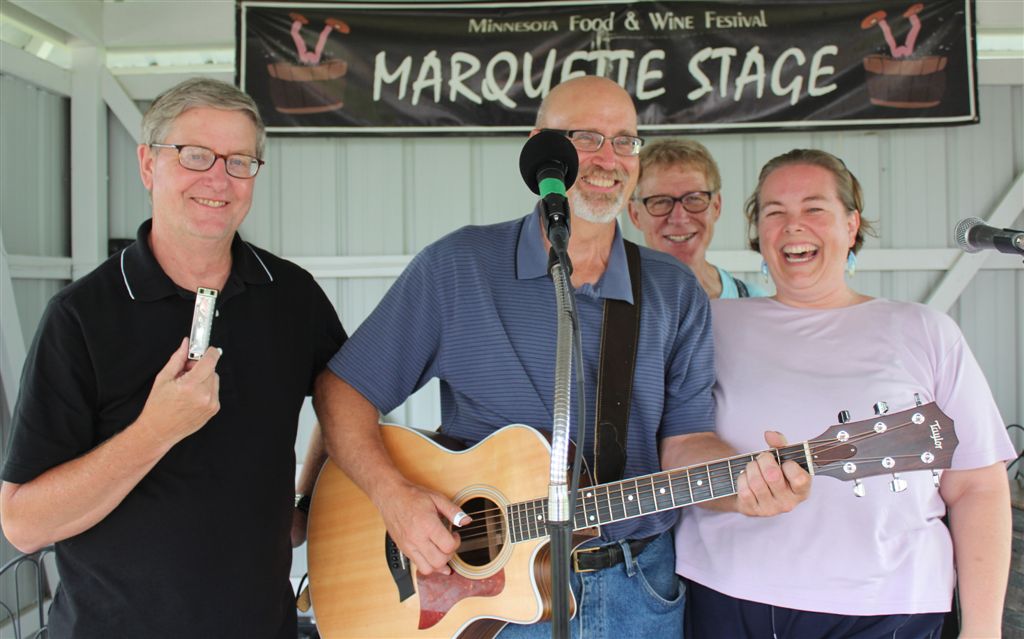
Djangleville w/ a fan @ CCW, July 2013
[With out fan . . . ]
Josie Nelson & fans @ CCW, July 2013
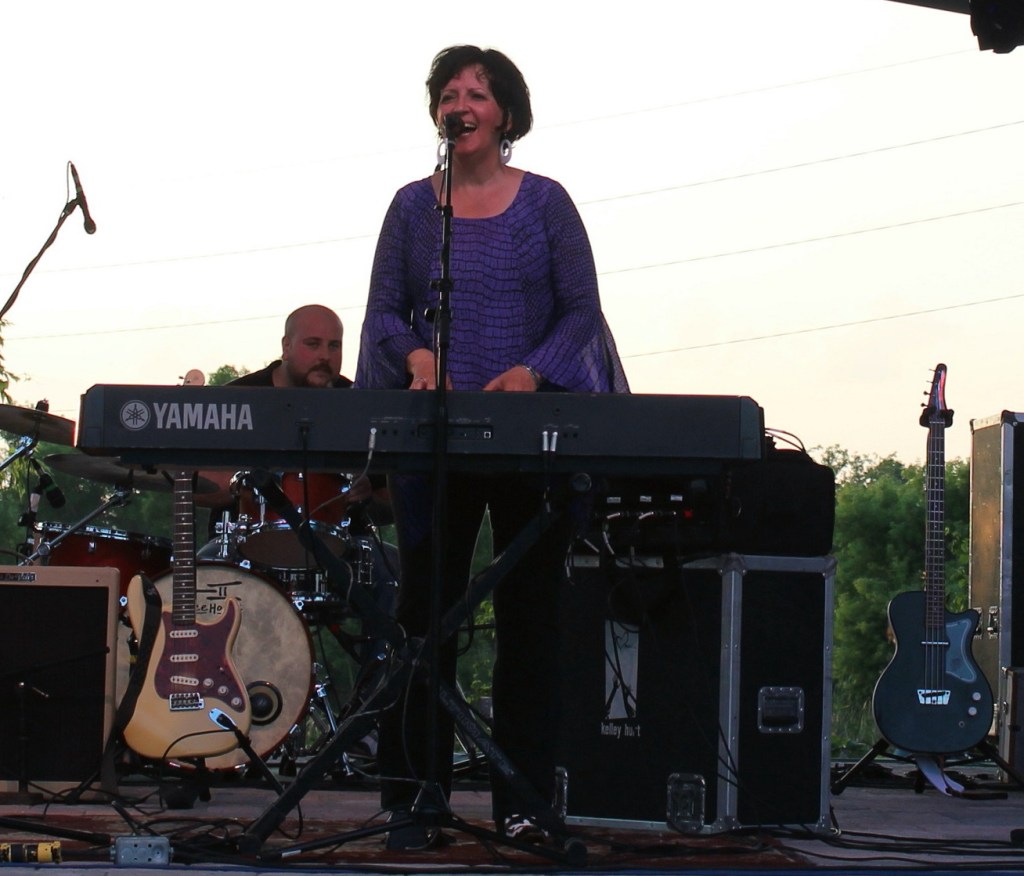
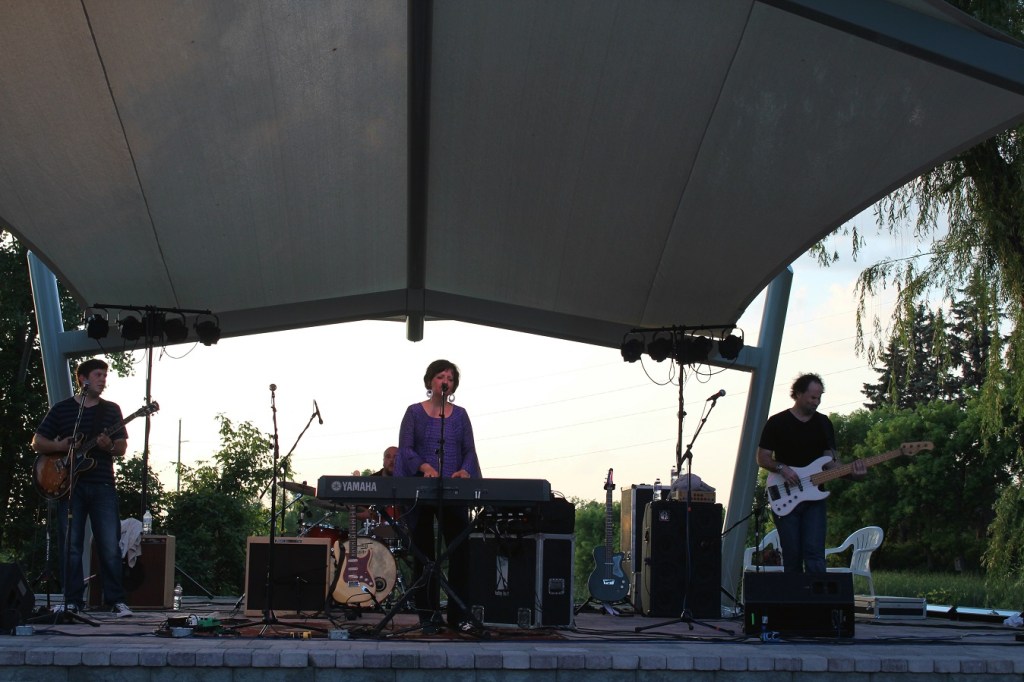
Kelley Hunt @ Legacy of the Lakes Gardens, July 2013
Imagine
Music makes one feel so romantic – at least it always gets on one’s nerves – which is the same thing nowadays. ~ Oscar Wilde
* In the greater Alexandria, Minnesota, standard metropolitan statistical area.
Andrew Lloyd Webber’s music is everywhere, but so is AIDS. ~ Malcolm Williamson
The year is now 2013. I must have been taking this cub reporter stuff pretty seriously by then. Based on the volume (a financial planner’s guide to economic success), I will have to split the year up into 4 separate posts. There was one day sometime in this era when the Super and I took in FIVE concerts in a 24-hour period. And we weren’t even teenagers . . .
Tucker’d Out @ CCW, January 2013
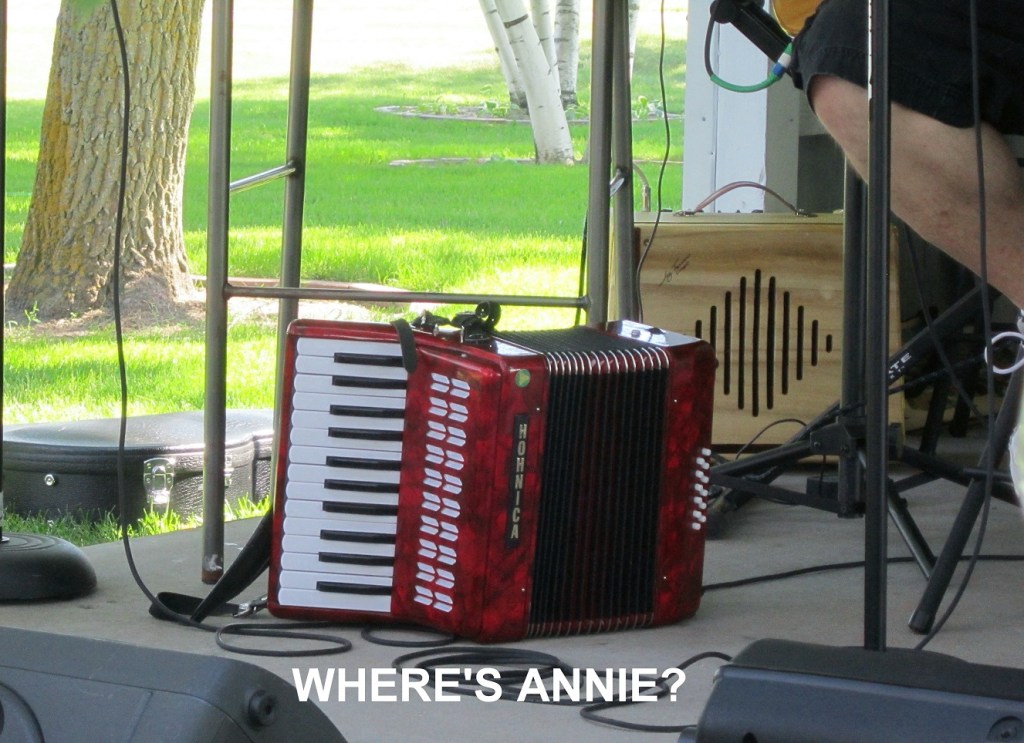
[Joined by Annie O’Flynn . . . ]
Harper’s Chord @ SAWA, February 2013
Lisa Lynn protege @ SAWA, February 2013
Salty Dogs @ CCW, February 2013
Harper’s Chord @ CCW, March 2013
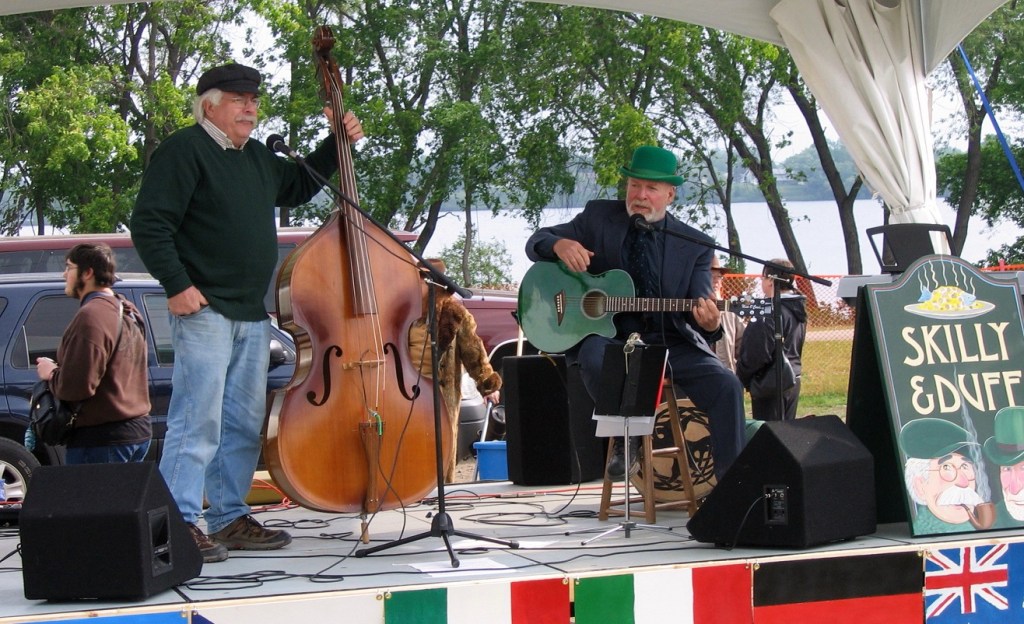
Skilly & Duff @ Andria Theater, March 2013
Lisa Lynn @ SAWA, April 2013
Patchouli @ SAWA, April 2013
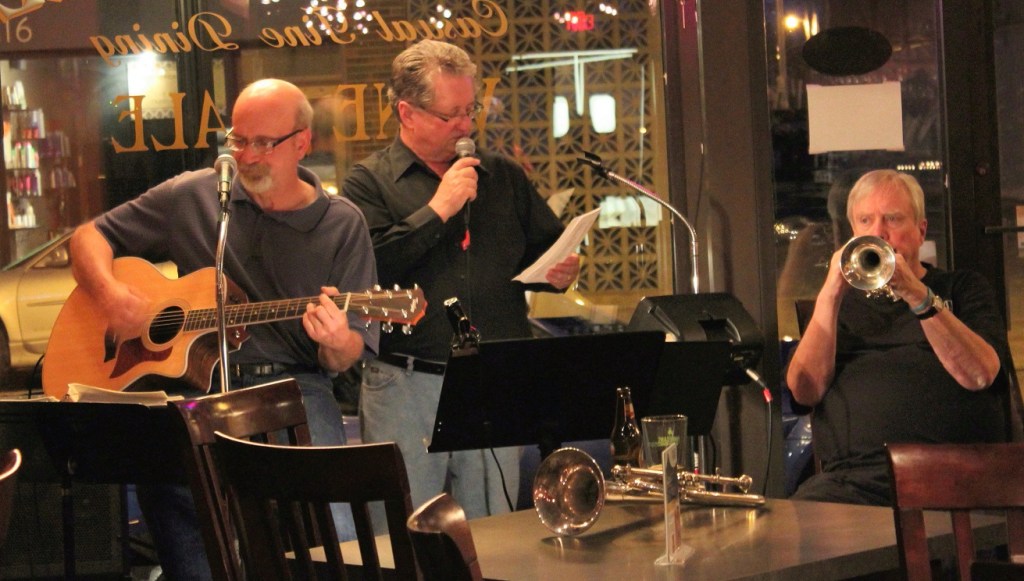
Salty Dogs @ CCW, April 2013
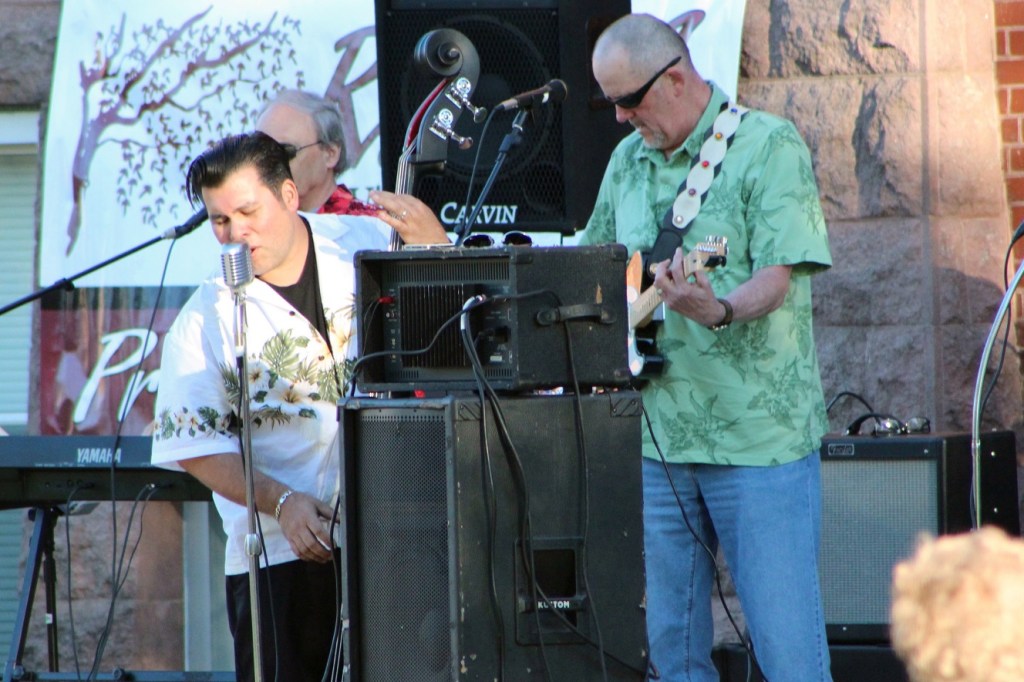
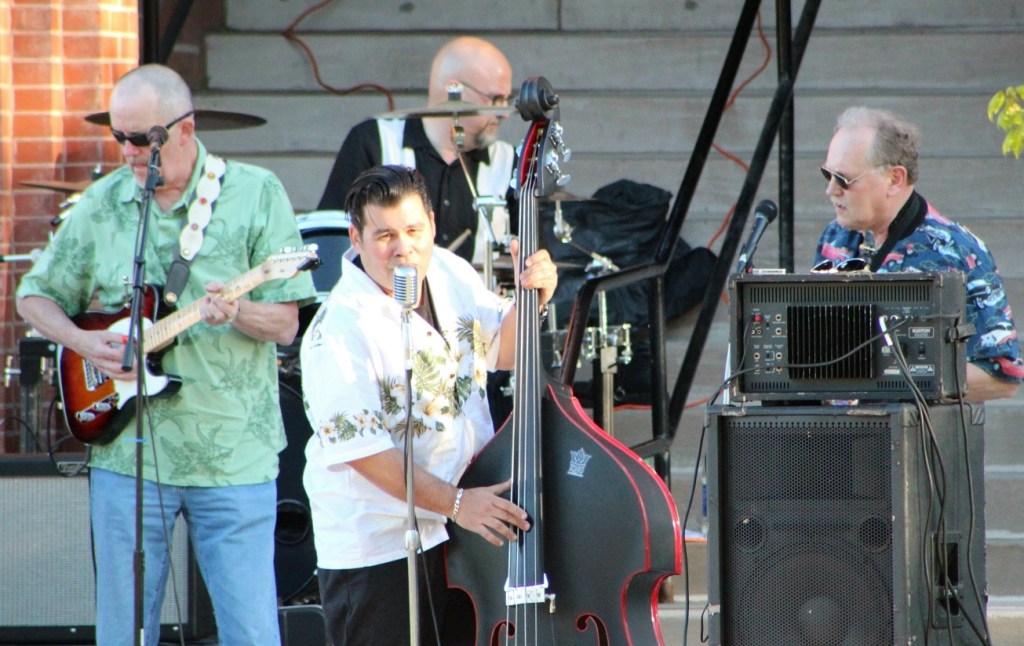
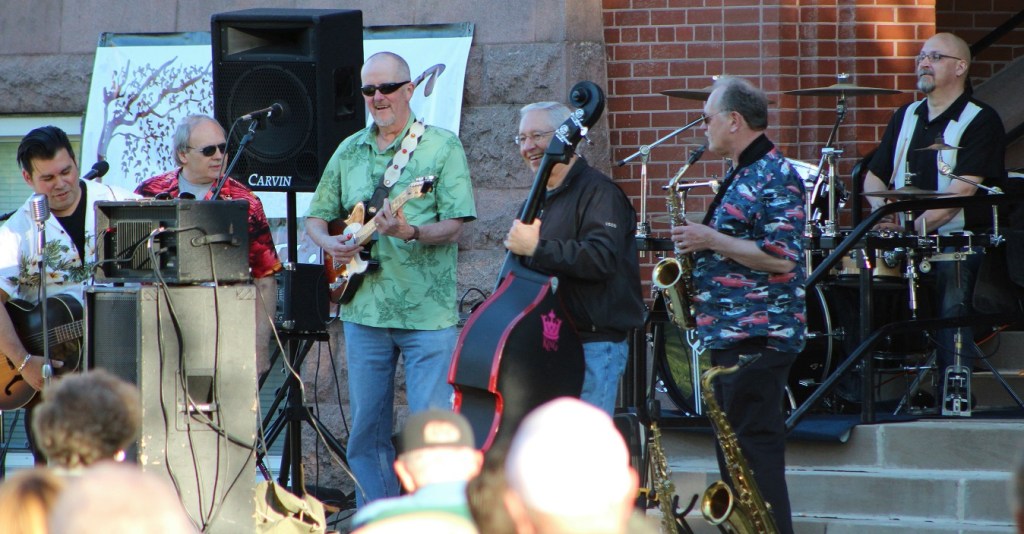
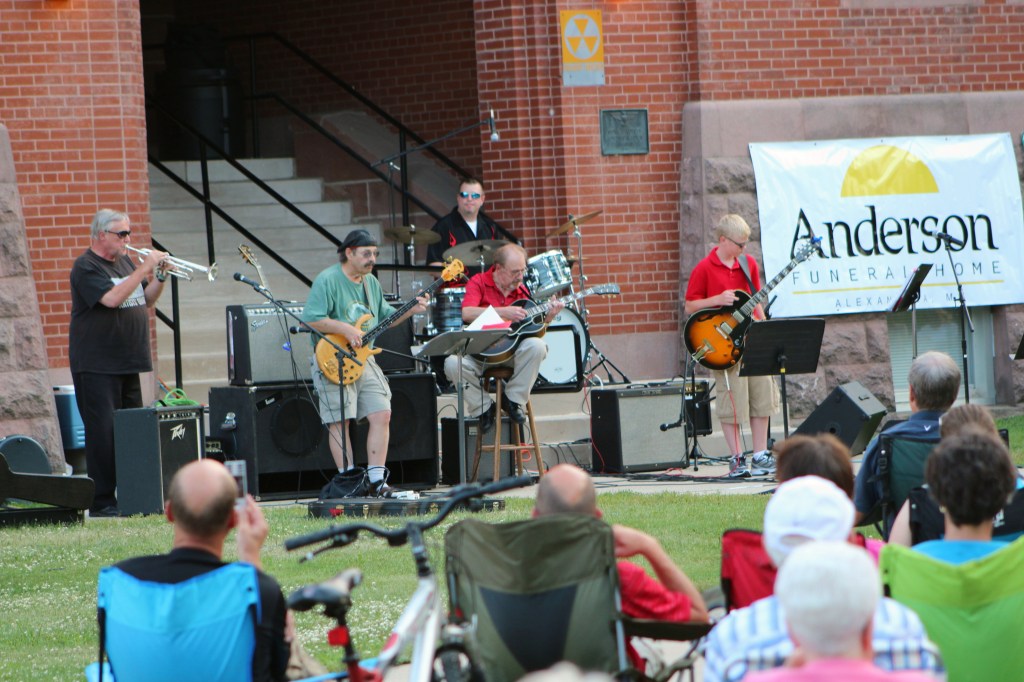
’57 Chevy @ Courthouse Lawn (King Louie Morena, w/ guests Kevin Klimek (guitar) & Bob Wilken (keyboards)), May 2013
[And Jim Faber (bass), Chuck Wencl (saxophone) & Paul Strand (drums) . . . ]
Anthony Miltich & Anna Miltich-Krenik @ CCW, May 2013
Anthony Miltich @ CCW, May 2013
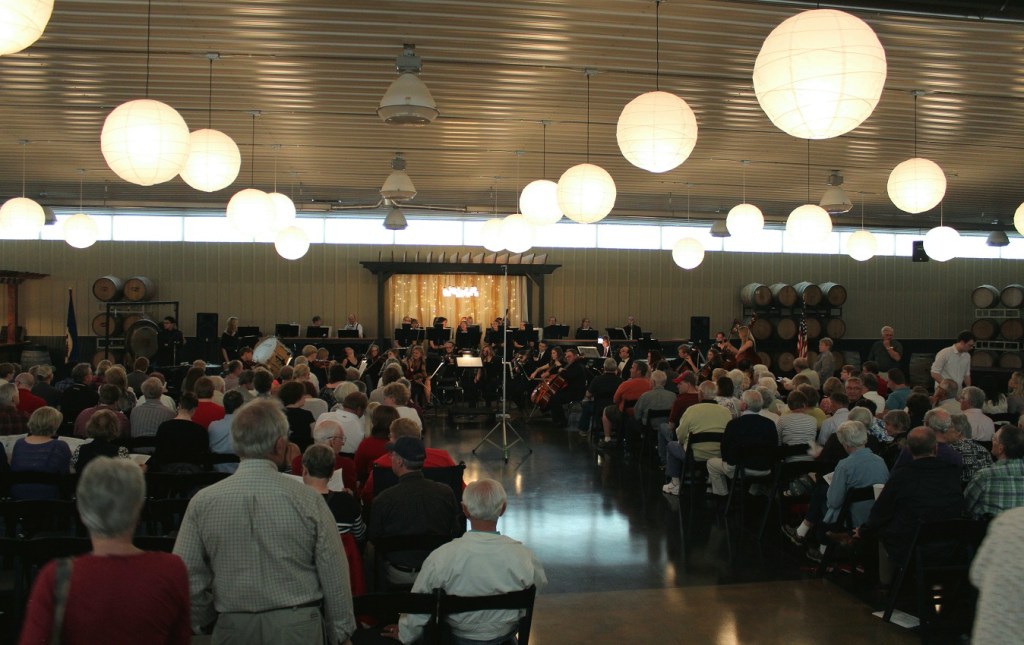
Central Lakes Symphony Orchestra @ CCW, May 2013
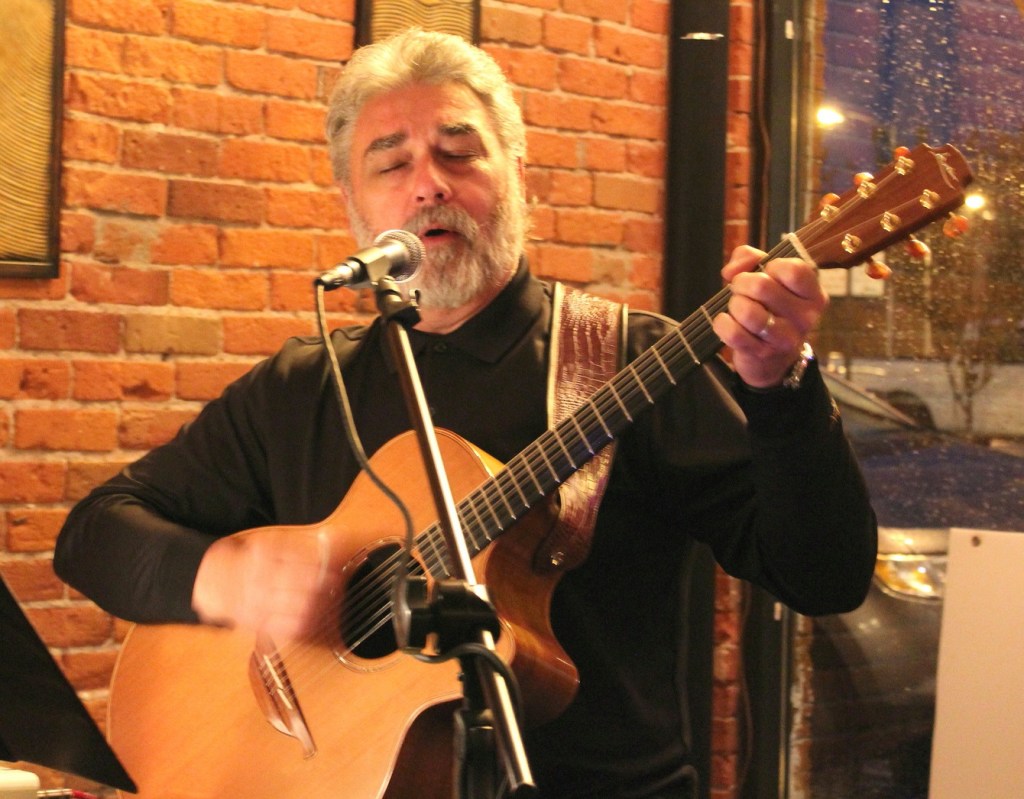
Dan Mahar @ SAWA, May 2013
Djangleville @ SAWA, May 2013
Harper’s Chord @ CCW, May 2013
Never Played Alex
I never had much interest in the piano until I realized that every time I played, a girl would appear on the piano bench to my left and another to my right. ~ Duke Ellington
Up Next: This seems like a good place to end this portion of 2013 . . .
* In the greater Alexandria, Minnesota, standard metropolitan statistical area.
I’ve been imitated so well I’ve heard people copy my mistakes. ~ Jimi Hendrix
Moving on to Part 3, the finer points of 2012. A certain trendline is becoming apparent that music is often enjoyed with fine dining and fine wines. Not that we would notice . . .
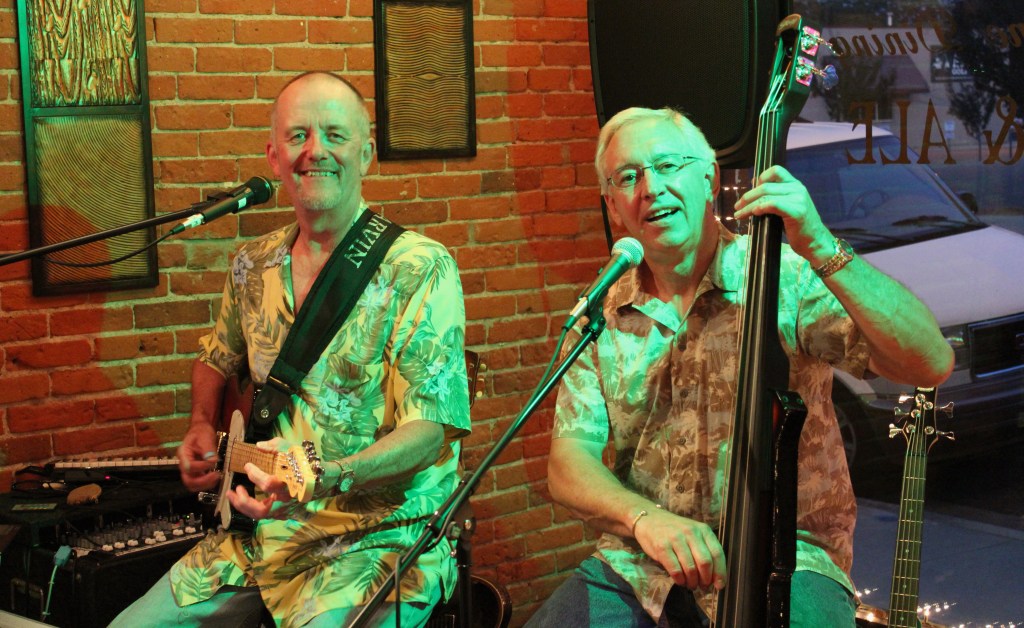
Salty Dogs (Annie O’Flynn, Bruce Kelly, Erik Schultz & Tom Mulder) @ CCW, January 2012
Bruce Kelly @ CCW, February 2012
Uncle Willie’s Gut Bucket Blues Band (Bill Riggs, Terry Kennedy, Al Lieffort & Erik Schultz) @ SAWA, February 2012
Mikko Cowdery @ CCW, February 2012
Skilly & Duff, w/ fans!! @ CCW, April 2012
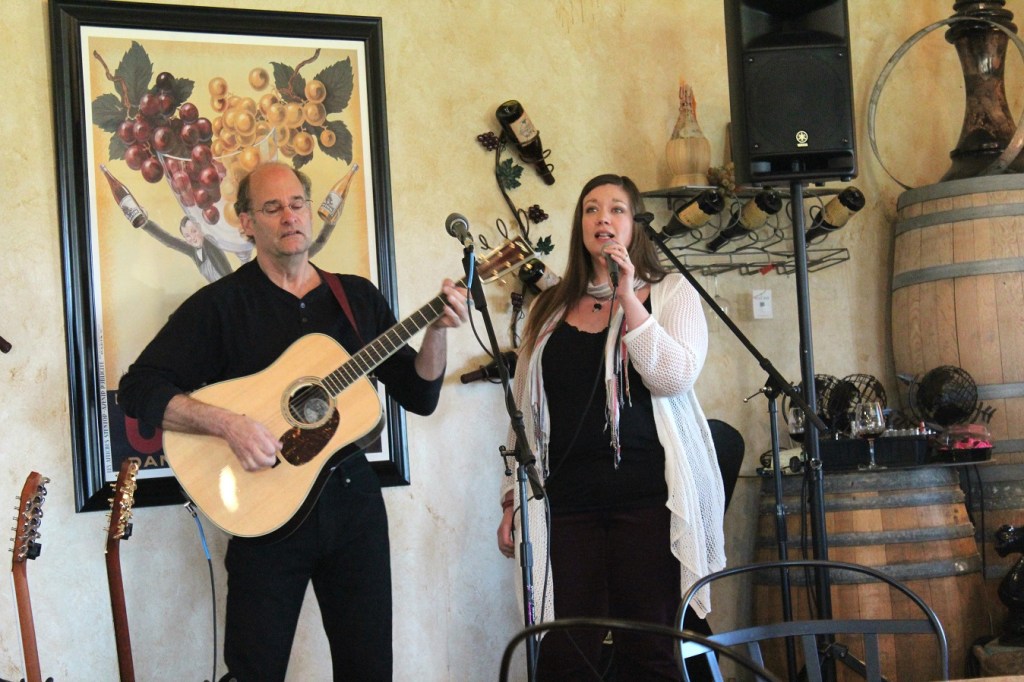
Patchouli @ CCW, May 2012
[Bruce’s art was used as CCW bottle labels . . . ]
Skilly & Duff @ Jeanne’s garage, May 2012
Annie O’Flynn @ CCW, June 2012
Enterprise (Kevin Klimek & Jim Faber) @ SAWA, June 2012
Salty Dogs @ Bug-A-Boo Bay, June 2012
Salty Dogs @ CCW, June 2012
Skilly & Duff @ CCW, June 2012
Matt Velline @ CCW, July 2012
Matt Velline @ Courthouse Lawn, July 2012
Mel Lamar Trio (Bill Riggs (trumpet), Mel’s son (bass), Bill Engebretson (drums), Mel (guitar), Adam Astrup (guitar)) @ Courthouse Lawn, July 2012
Skilly & Duff @ Courthouse Lawn, July 2012
Sami Steidl & Bruce Kelly @ Douglas County Fairgrounds, August 2012
[Bruce’s schtick was to whisper dumb jokes to Sami to crack her up during the performance . . . ]
Josie Nelson @ CCW, August 2012
Julie & Matt Velline @ CCW, August 2012
Kelley Hunt @ Legacy of the Lakes Gardens, August 2012
Salty Dogs @ Bug-A-Boo Bay, August 2012
Djangleville @ Legacy of the Lakes Gardens, August 2012
CCW, September 2012 (well, it required dance music . . . )
[Ibid.]
Funky Gumbo Trio w/ friends @ SAWA, September 2012
Mike Gill of Funky Gumbo Trio w/ a fan @ SAWA, September 2012
Patchouli @ CCW, September 2012
SAWA, September 2012
Skilly & Duff @ CCW, September 2012
Tucker’d Out (Ryan Hogue, John & Lynn Trelstad) @ CCW, September 2012
Djangleville @ SAWA, October 2012
Harper’s Chord (Roger Fink, Jill Moore & Paul Drinkwine) @ SAWA, October 2012
Lisa Lynn @ SAWA, October 2012
Patchouli @ CCW, October 2012
Paul Meland & Adam Astrup @ SAWA, October 2012
Reverend Raven & the Chain Smoking Altar Boys @ Phoenix Event Center, October 2012
SAWA, October 2012
Athletic Directors @ SAWA, October 2012
SAWA, October 2012
SAWA, October 2012
Anthony Miltich & fan @ CCW, December 2012
Hairdo Trendsetters
Life can’t be all bad when for ten dollars you can buy all the Beethoven sonatas and listen to them for ten years. ~ William F. Buckley, Jr.
* In the greater Alexandria, Minnesota, standard metropolitan statistical area.
A composer is a guy who goes around forcing his will on unsuspecting air molecules, often with the assistance of unsuspecting musicians. ~ Frank Zappa
Part 2 is all about 2011, unabridged. I should note (so I will) that I did not include any large musician clusters (i,e., Central Lakes Symphony Orchestra; AAHS orchestra, band, and choirs) because that would offer too many opportunities for libel suits . . .
CCW, January 2011
Djangleville & fan @ SAWA, undated but likely of this era . . .
Funky Gumbo Trio (Luke Skrove (trumpet), Mike Gill (saxophone, vocals), Craig Sandberg (bass, vocals), Spencer Christensen (guitar) & Bill Engebretsen (drums, leader of the pack) @ SAWA, February 2011
Salty Dogs @ CCW, February 2011
SAWA (Vic Rima), April 2011
Tommy & Matt Velline @ CCW, April 2011
CCW, May 2011
Matt Velline & fans @ CCW, May 2011
Mikko Cowdery @ CCW, May 2011
Sami Steidl Graduation, June 2011
Patchouli (Julie Patchouli & Bruce Hecksel), July 2011
Patchouli @ City Park, July 2011
Patchouli @ CCW, July 2011
SAWA, July 2011
Spencer Christensen & Sami Steidl @ City Park, July 2011
Terry Kennedy & Al Lieffort @ City Park, July 2011
CCW, July 2011
CCW, August 2011
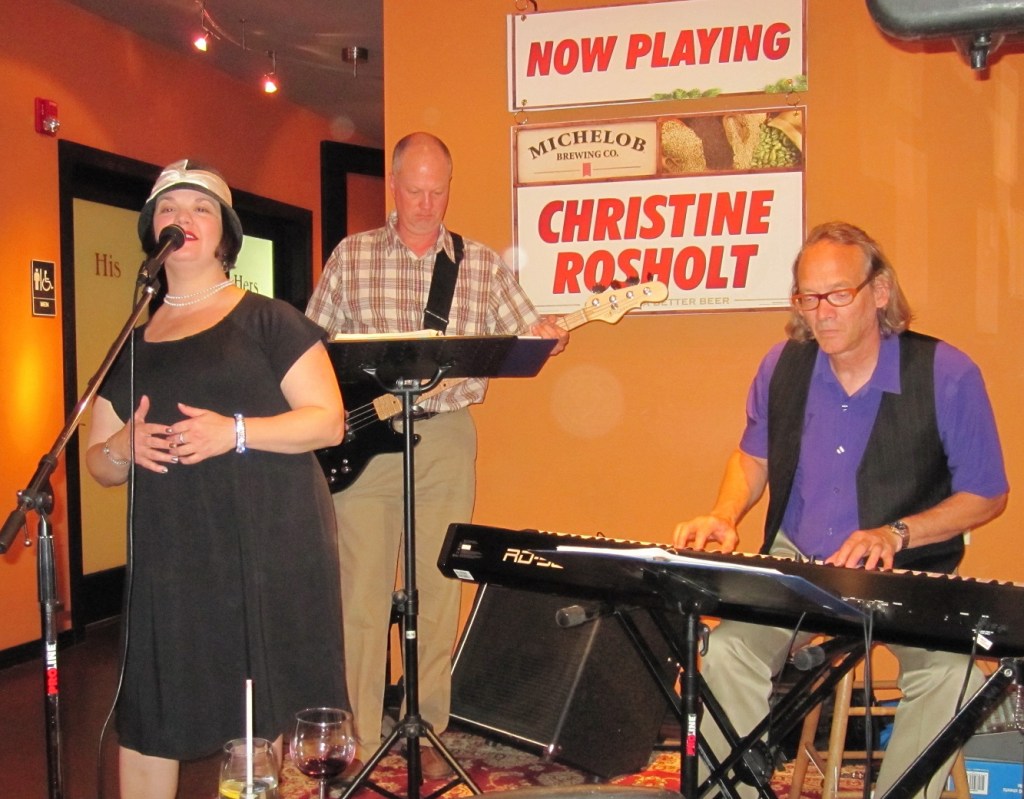
Christine Rosholt @ SAWA, August 2011
Hotdishes (Dedra Zweig, Mary Lou Thunselle, Miriam Thornquist & Stephanie Osterberg) @ Phoenix Event Center, August 2011
Patchouli @ CCW, August 2011
Skilly & Duff, and fans @ CCW, August 2011
Tommy & Matt Velline @ CCW, August 2011
Djangleville (Erik Schultz, Bill Riggs & Tom Mulder) @ SAWA, September 2011
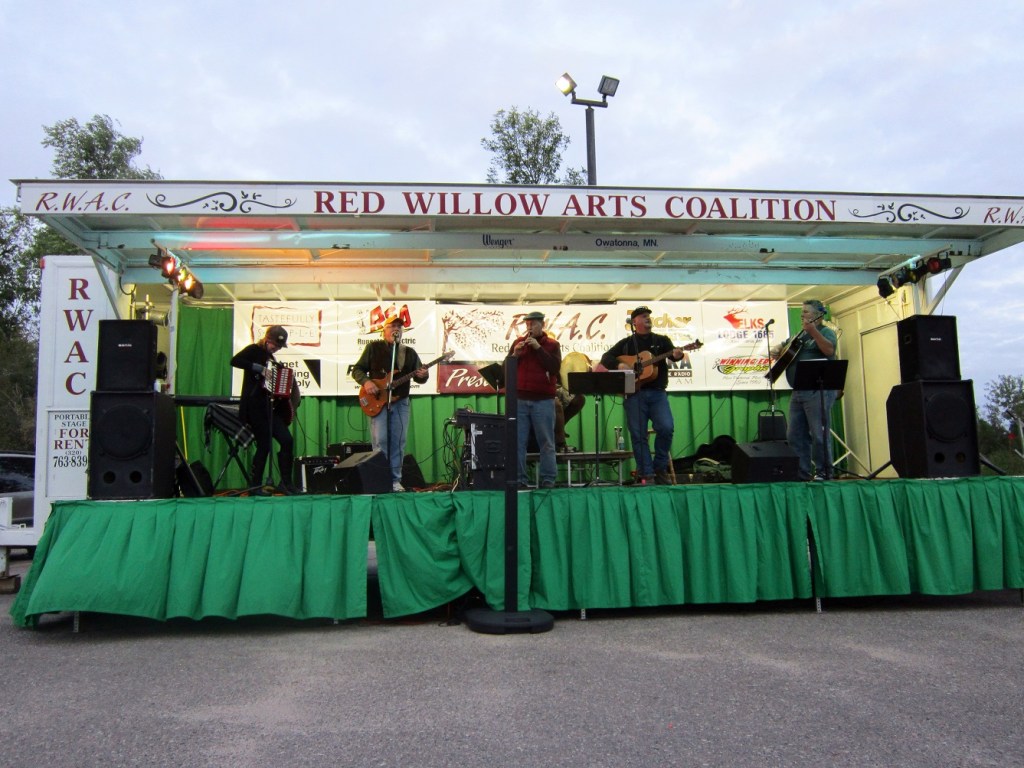
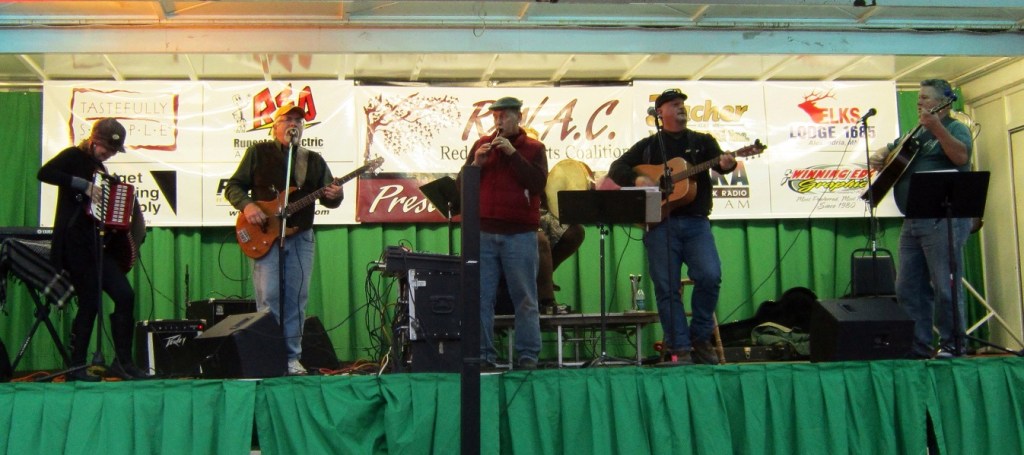
Red Willow Arts Coalition @ Big Ole Park, September 2011
Skilly & Duff @ CCW, September 2011
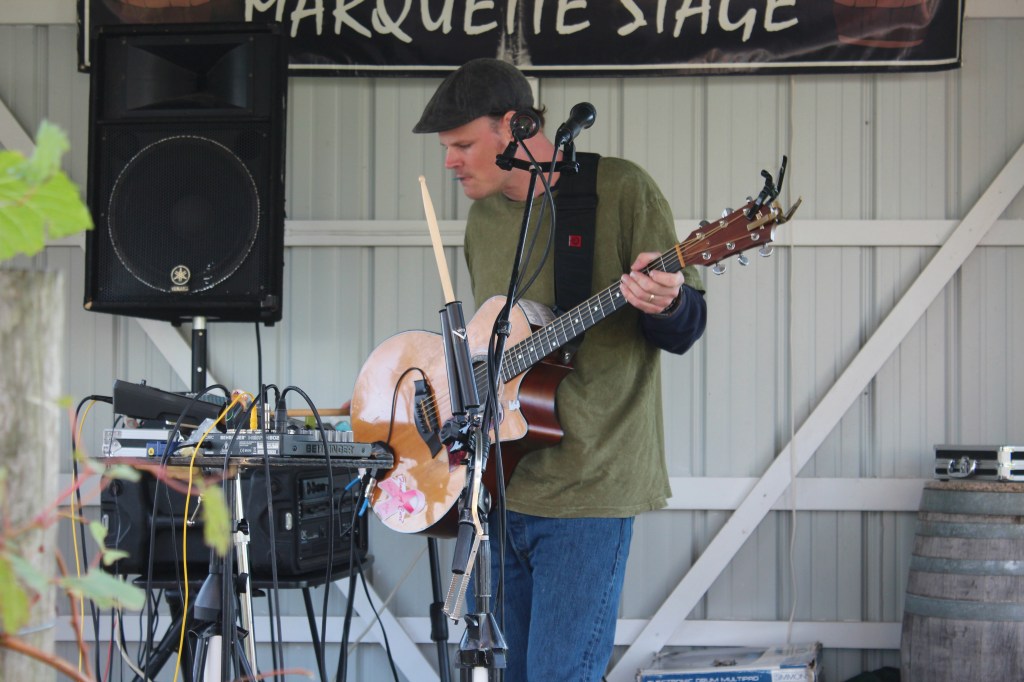
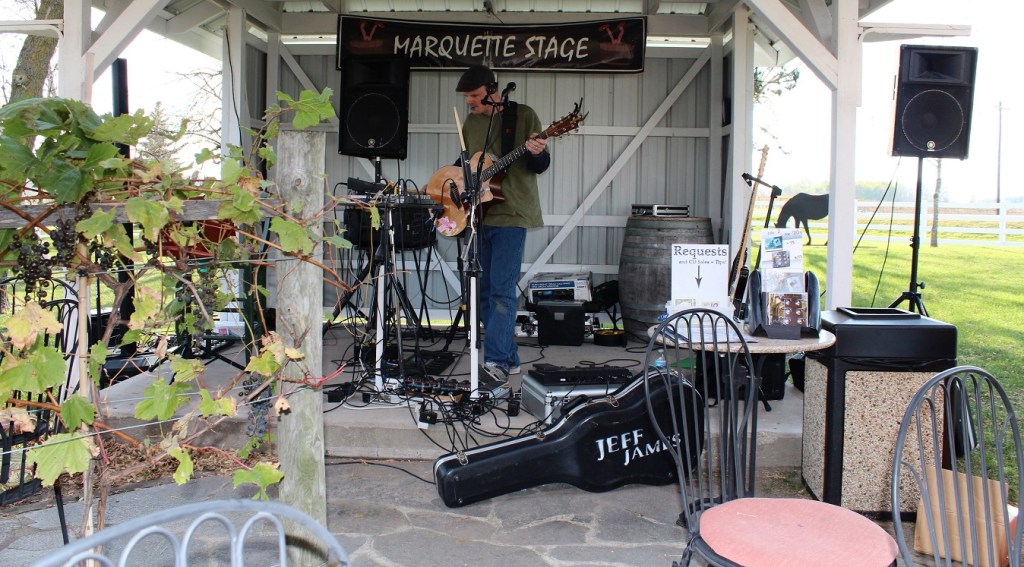
Jeff James @ CCW, October 2011
Annie O’Flynn, Al Lieffort, Bruce Kelly, Patty Kakac & Terry Kennedy @ The Pines, November 2011
Salty Dogs @ CCW, November 2011
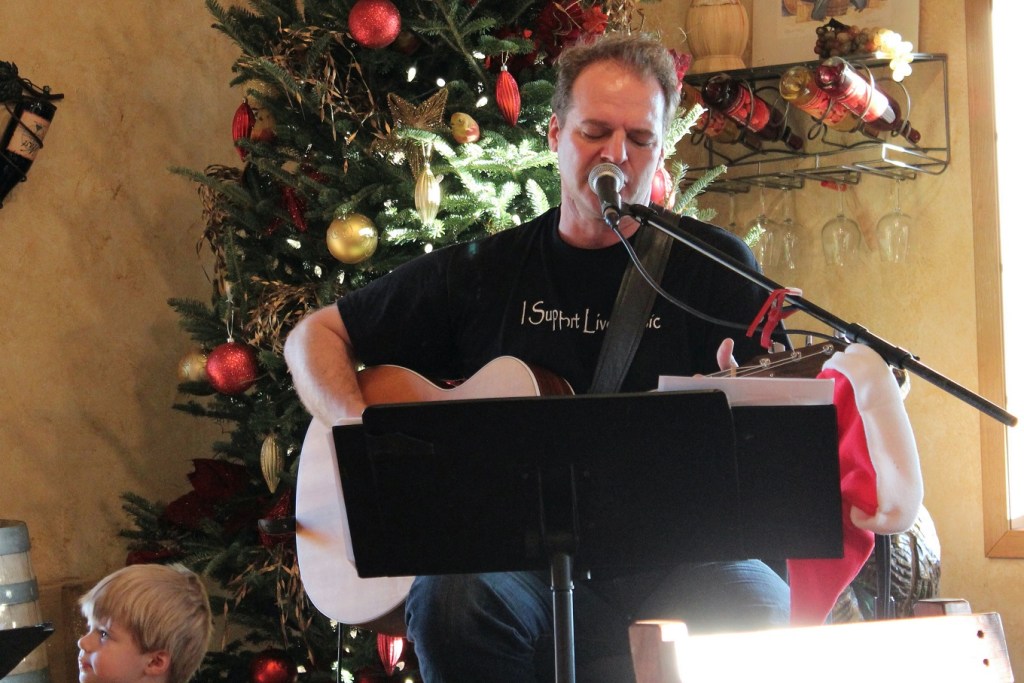
High School Carolers @ CCW, December 2011
Djangleville @ SAWA, December 2011
Matt Velline @ CCW, December 2011
Tommy & Matt Velline @ CCW, December 2011
Allegedly from England
A gentleman is someone who can play the accordion, but doesn’t. ~ Tom Waits
* In the greater Alexandria, Minnesota, standard metropolitan statistical area.
Talking about music is like dancing about architecture. ~ Steve Martin
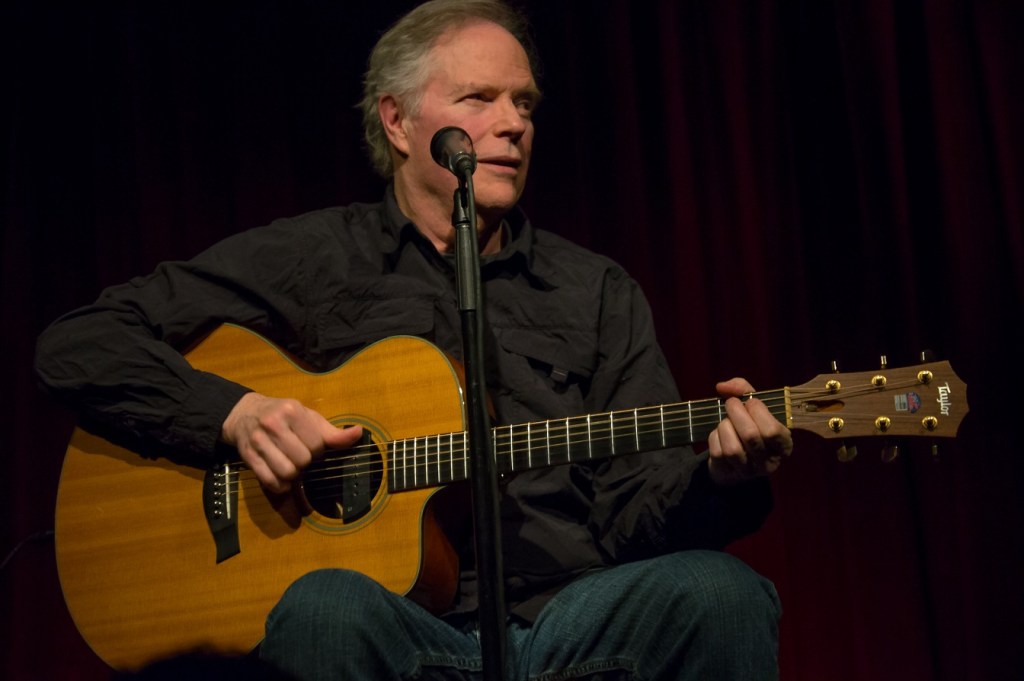
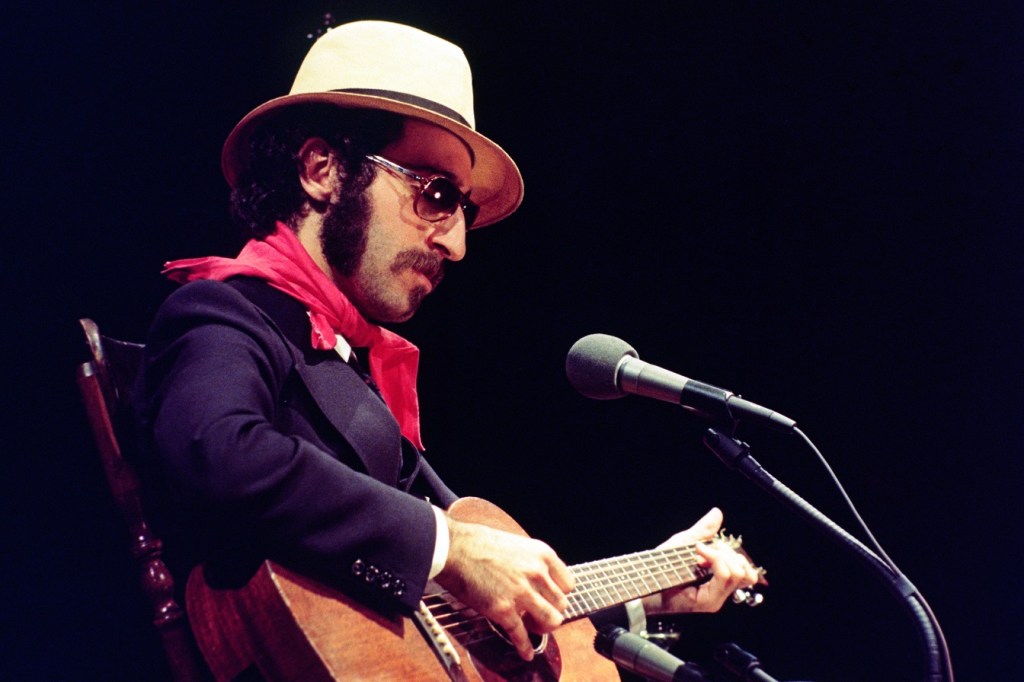
The Super and I are rapidly approaching our 20th year of retirement. In the COVID induced absence of travel and live music, I thought it time for a retrospective. Otherwise I’d just be wandering aimlessly around the house (to the Super’s chagrin). To the best of my knowledge, I (or my camera) took all of the photos contained here, except for the first two. My first music memories from the early 2000’s are of concerts by Leo Kottke (2, as I recall) and Leon Redbone at the Andria Theater. This whole adventure will take multiple posts because, as many have noted, I’ve taken multiple photos over the years (2013 alone may require three separate posts). And if you’re interested in what any of these folks actually sound like, a YouTube search will reveal several videos posted by ‘tomruth1933’ . . .
Leo Kottke
Leon Redbone
The Music Venues
Alexandria Area High School Performing Arts Center (AAHS) Alexandria City Park Alexandria Methodist Church Andria Theater Arrowwood Resort & Conference Center Ashby City Park Bennigan’s Big Ole Park Broadway Ballroom Bug-A-Boo Bay Carlos Creek Winery (CCW) Carlson Music Center Central Square Cultural and Civic Center (Glenwood) Chandler Field hangar Copper Trail Brewing Co. Discovery Middle School Douglas County Couthouse Lawn Douglas County Fairgrounds Evansville Arts Canter Gathered Oaks Interlachen Inn Jamie Sandberg’s Jeanne Johnson’s garage Jordie’s Trailside Cafe (Bowlus) Legacy of the Lakes Gardens Lure Lakebar Phoenix Event Center Sixth Avenue Wine & Ale (SAWA) The Garden Bar on 6th The Peak Supper Club (Clitherall) The Pines Theatre L’Homme Dieu (TLHD)
The Early Years
Carlos Creek Winery (CCW) fans, September 2002
Dennis Murphy (w/ fan) @ CCW, October 2005
Kevin Klimek & Dennis Murphy @ CCW, September 2006
Skilly (Bruce Kelly) & Duff (Mikko Cowdery) @ Big Ole Park, May 2007
Dennis Murphy @ CCW, October 2007
Djangleville (Erik Schultz, Al Lieffort & Tom Mulder) @ CCW, November 2007
Skilly & Duff (Bruce Kelly, Annie O’Flynn & Mikko Cowdery) w/ our grandson Tom @ CCW, July 2008
Skilly & Duff (Sami Steidl, Annie O’Flynn, Bruce Kelly & Mikko Cowdery) @ CCW, September 2008
Emergency Stop (Terry Kennedy & Al Lieffort) @ Sixth Avenue Wine & Ale (SAWA), November 2008
CCW, January 2009
SAWA, April 2009
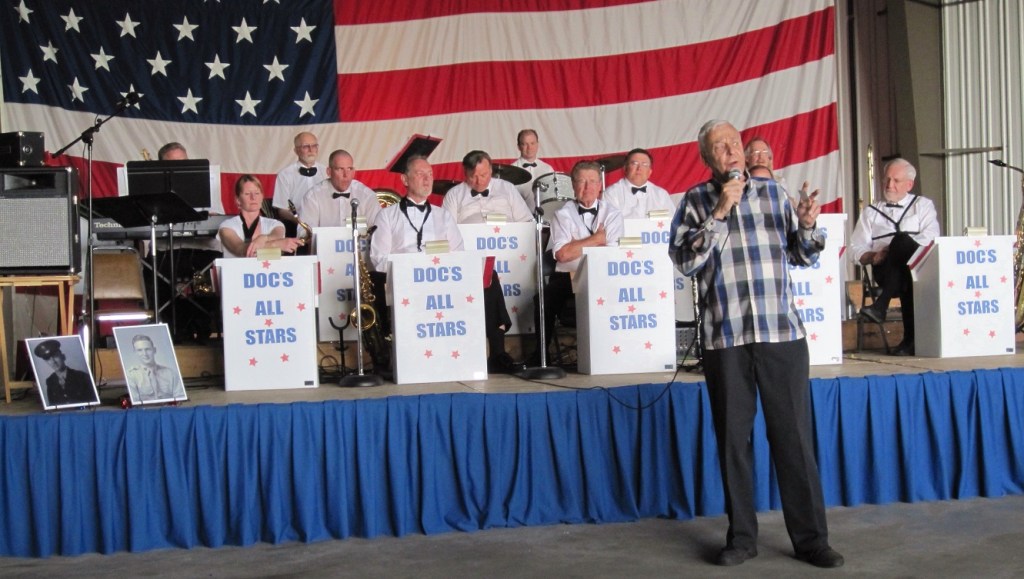
Doc’s All Stars @ Chandler Field (hosted by Jerry VanKempen), June 2009
Uncle Willie’s Gut Bucket Blues Band (Al Lieffort, Bruce Kelly & Erik Schultz) @ Bug-A-Boo Bay, July 2009 (Editor’s note: These guys were also in Djangleville, Salty Dogs, among others over the years. I will no doubt guess wrong on the group name at a particular time.)
Al Lieffort, Bruce Kelly & Erik Schultz @ CCW, July 2009 (The story line: My friend, Bob Gilbert, from D.C. days, came up from his retirement home in Arizona. Whoever was scheduled to perform that day couldn’t make it. Word must have gone out on the local wire about the situation because musicians just started showing up. There wasn’t much of a crowd because no one knew they would all be performing. Bob was astonished how good they were (they were all on their A-games) and there was hardly any audience.)
Tom Mulder & Annie O’Flynn joined in . . .
Same group @ Bug-A-Boo Bay, July 2009
SAWA, August 2009
Skilly & Duff @ Douglas County Fairgrounds, August 2009
Skilly & Duff (w/ Terry Kennedy in the middle) @ Douglas County Fairgrounds, August 2009
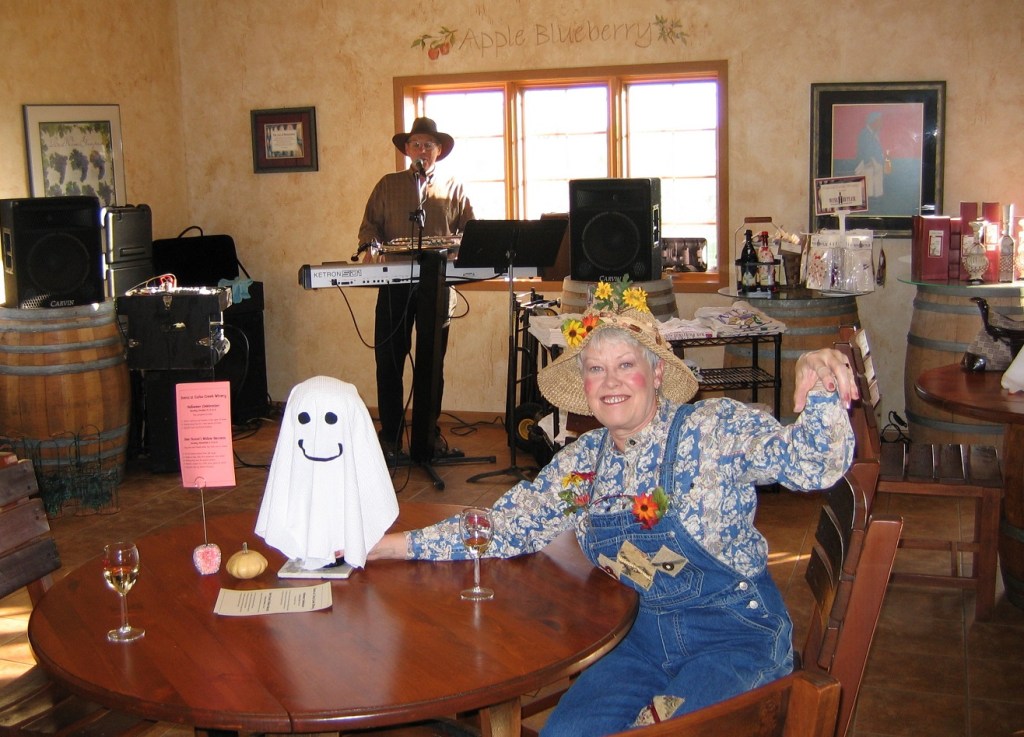
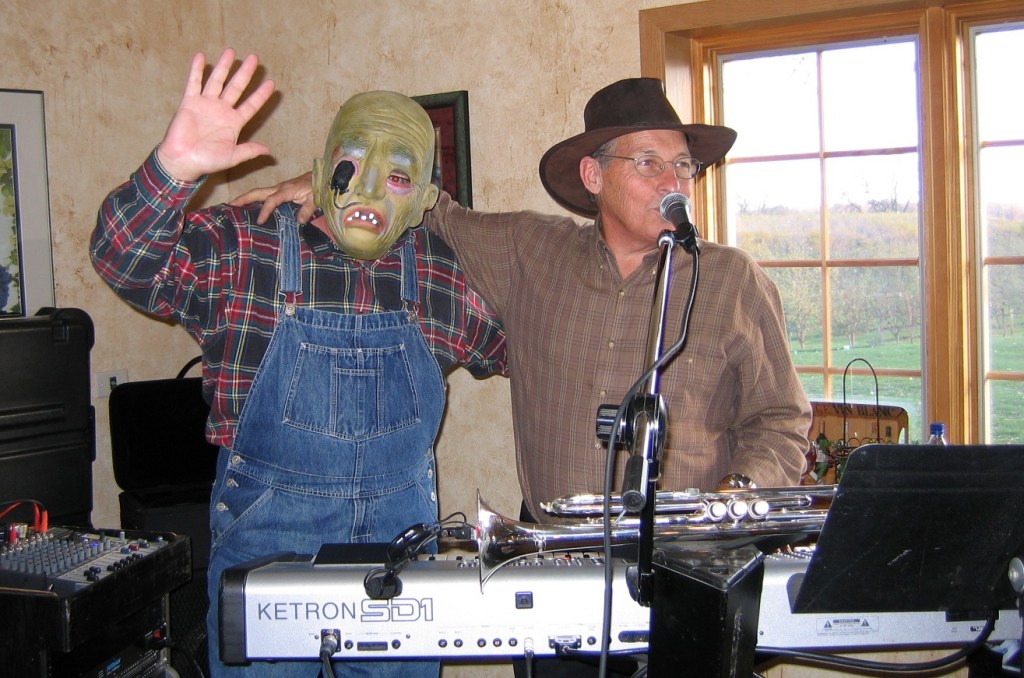
Dan Mahar & Halloween fan @ SAWA, October 2009
SAWA, October 2009
Kevin Klimek @ SAWA, December 2009
Skilly & Duff @ CCW, December 2009
Christine Rosholt @ SAWA, December 2009
Terry Kennedy, Spencer Christensen & Al Lieffort @ Arrowwood, February 2010
Rusty Rolandson @ CCW, February 2010
Skilly & Duff w/ Sami Steidl @ Andria Theater, April 2010
Bruce Kelly @ CCW, June 2010
Christine Rosholt (w/ Jay Johnson on keyboard) @ SAWA, June 2010
Skilly & Duff w/ Sami Steidl @ City Park, July 2010
Terry Kennedy, Sami Steidl & Al Lieffort @ City Park, July 2010
SAWA cellar for a tornado watch (one of two over the years), July 2010
Mel Lamar & Erik Schultz @ CCW, September 2010
CCW, September 2010
Julie & Matt Velline @ CCW, November 2010
Unknown Group
I don’t deserve a Songwriters Hall of Fame Award. But fifteen years ago, I had a brain operation and I didn’t deserve that, either. So I’ll keep it. ~ Quincy Jones
Up Next: Likely Part 2 of music (I will get back to Japan 1983, it just requires a lot of research) . . .
People don’t notice whether it’s winter or summer when they’re happy. ~ Anton Checkov
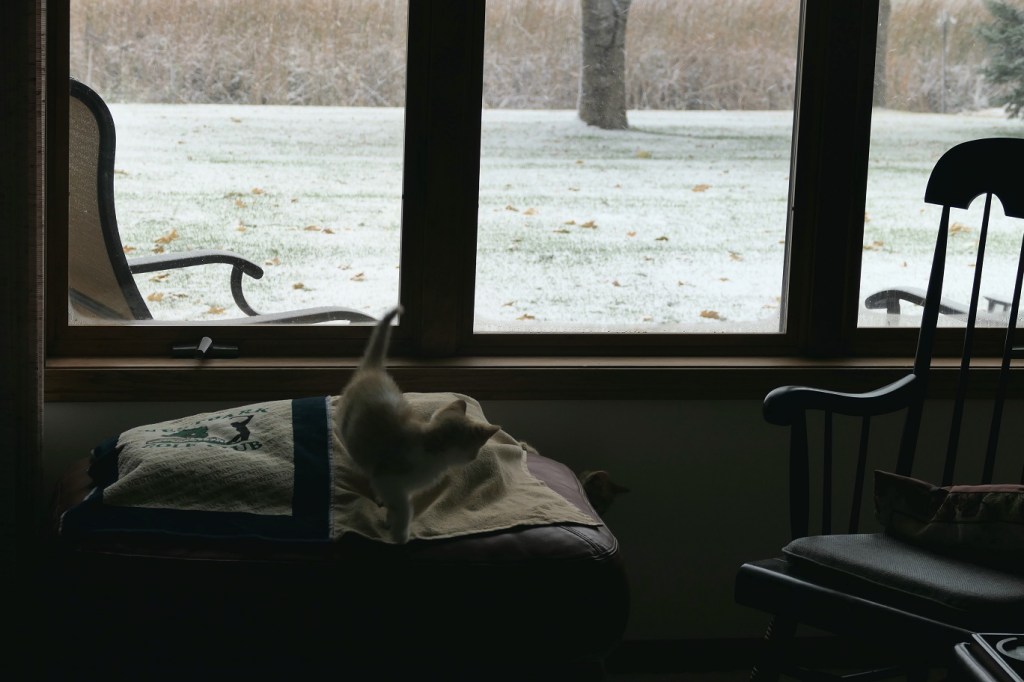
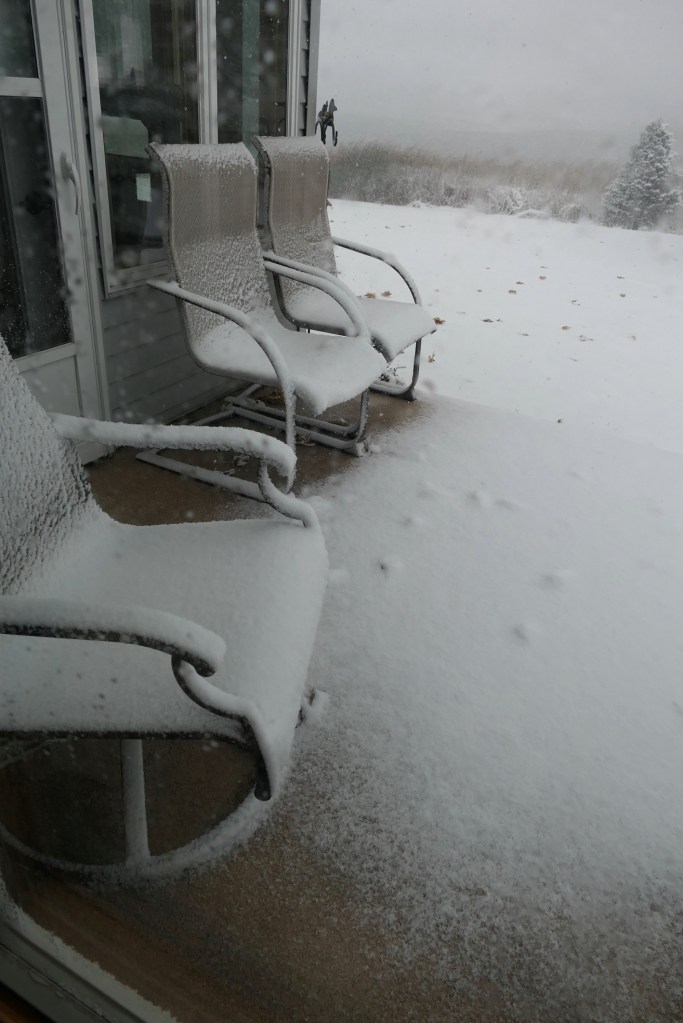
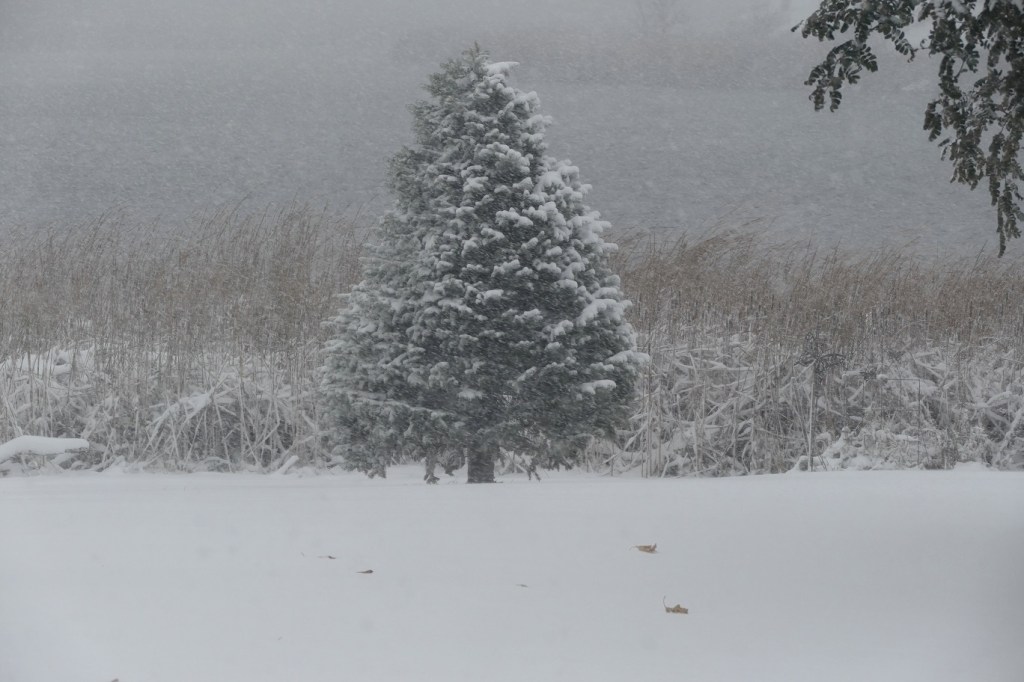
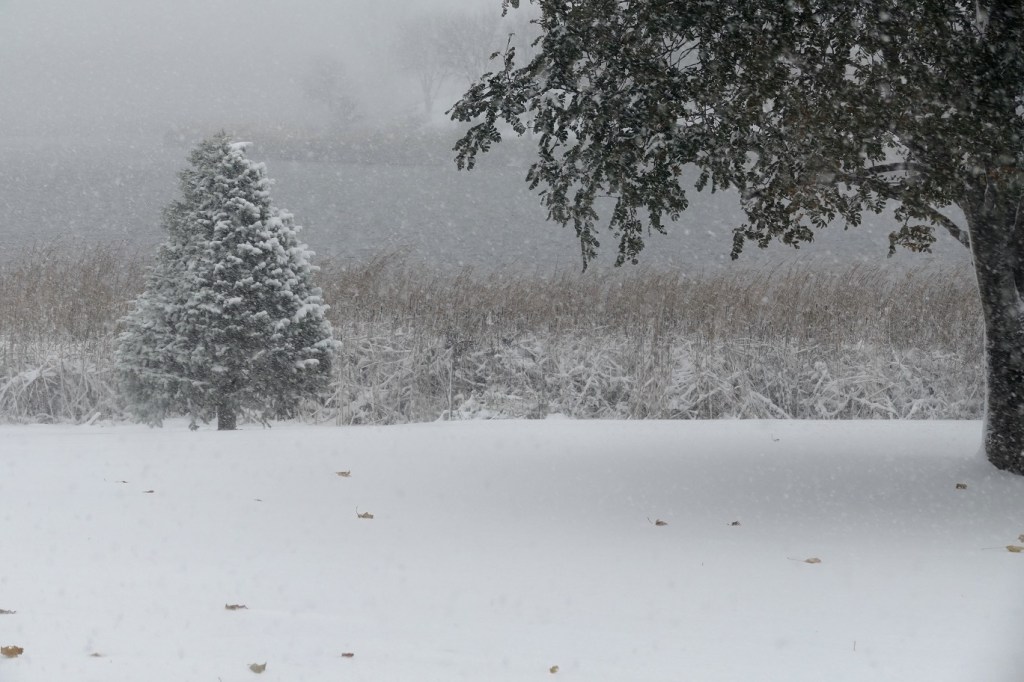
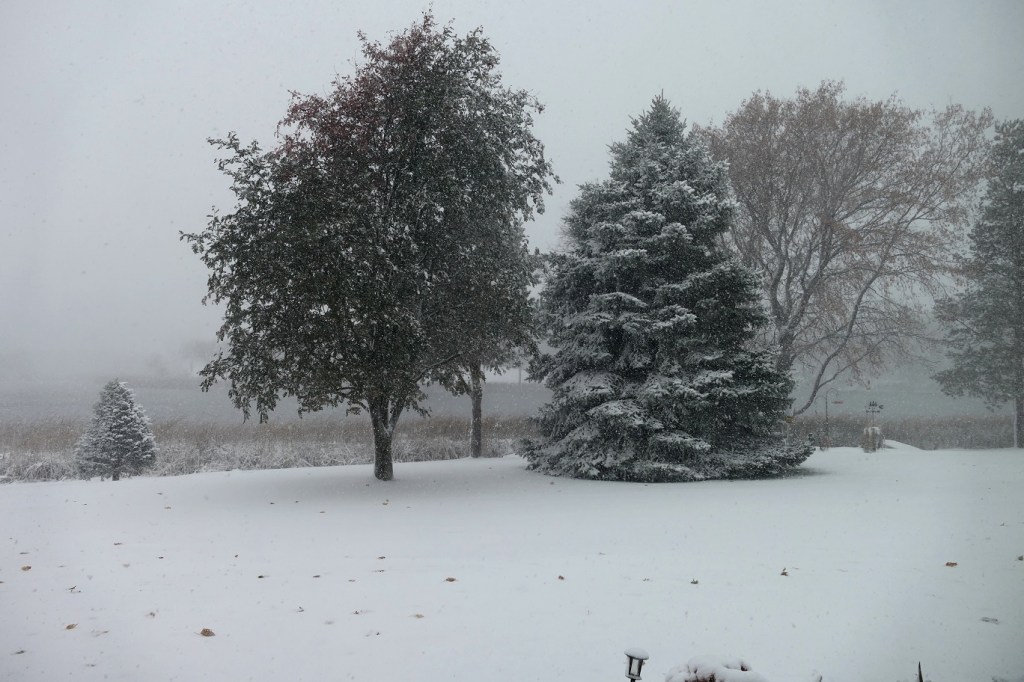
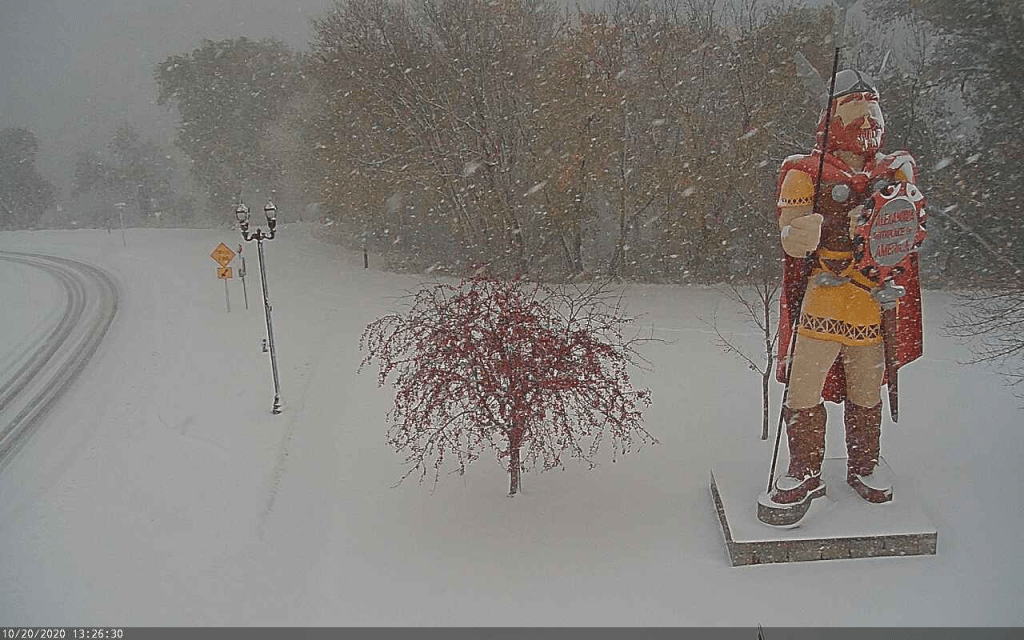
This is the first of what may be three such wintry events this week. For your dining and dancing pleasure, therefore, I have included Ole Slushball public service announcements in days of yore . . .
It is the life of the crystal, the architect of the flake, the fire of the frost, the soul of the sunbeam. This crisp winter air is full of it. ~ John Burroughs
And some places you been before are so great that you don’t ever mind going back. Some places you been before you don’t ever want to go back, you know, like Montreal in the Winter. ~ Morgan Freeman
We cannot stop the winter or the summer from coming. We cannot stop the spring or the fall or make them other than they are. They are gifts from the universe that we cannot refuse. But we can choose what we will contribute to life when each arrives. ~ Gary Zukav
I love the scents of winter! For me, it’s all about the feeling you get when you smell pumpkin spice, cinnamon, nutmeg, gingerbread and spruce. ~ Taylor Swift
I prefer winter and fall, when you feel the bone structure of the landscape. Something waits beneath it; the whole story doesn’t show. ~ Andrew Wyeth
I think bare legs in winter are idiotic. Unless your naked pins are toned, tanned and veinless, it’s best to cover up. There is nothing more elegant in winter than dark tights worn with matching knee-length boots and a belted trench coat. ~ Joan Collins
Songs that aren’t even remotely connected to Christmas are now officially canonized Christmas tunes. ‘Frosty the Snowman,’ ‘Jingle Bells’ and ‘Winter Wonderland’ never mention anything religious but are still notches in Christmas’ belt of musical dominance. ~ Matisyahu
I enjoy hiking and skiing, like most Norwegians. In winter, there will be snow for months on end. In the summer, there are the long evenings to enjoy. ~ Magnus Carlsen
I spent two years at the Guthrie Theater in Minneapolis, and then some New York types saw me there as Benvolio in ‘Romeo and Juliet.’ They sent me some enticing letters – about why didn’t I come to New York? – and since it was well below zero that winter in Minneapolis, it didn’t take much to get me to leave. ~ Peter MacNicol
In Minneapolis, the overhead sky walks protect pedestrians from the winter cold and snow. ~ Bill Dedman
Winter lies too long in country towns; hangs on until it is stale and shabby, old and sullen. ~ Willa Cather
Never take a job where winter winds can blow up your pants. ~ Geraldo Rivera
From my point of view, this is the best time of the year. I don’t love heat. I’m a winter guy. ~ Alexander Lukashenko
The best thing about a British winter is the cold weather, real fires, frosty mornings. I love living somewhere that has proper seasons. ~ Jane Fallon
All sounds are sharper in winter; the air transmits better. ~ John Burroughs
I once bought a winter jacket on one of my travels abroad – definitely an extravagant purchase because I hardly have any use for it, since I live in Mumbai! ~ Asin
I need a long, cold winter. ~ John Rzeznik
I hear from my Inuit and Yupik relatives up north that everything has changed. It’s so hot; there is not enough winter. Animals are confused. Ice is melting. ~ Joy Harjo
The winter’s a little bit daunting in Montana. ~ Phil Jackson
I’m an actress that’s game for anything. I would love to do a movie like ‘Winter’s Bone.’ ~ Eiza Gonzalez
The problem with winter sports is that – follow me closely here – they generally take place in winter. ~ Dave Barry
I got a bronze medal and I can’t complain about that, the only African-American to get a medal in the Winter Olympics. ~ Debi Thomas
[And then there’s Big Ole . . . ]
I had slumps that lasted into the winter. ~ Bob Uecker
I’m telling you, until I shaved my head, I never realized how much heat is lost through the top of the head. I walk out in winter and it feels like I have an ice pack on my head. Unbelievable. ~ Bryan Cranston
Up Next: Japan 1983 (Part 6), or something else . . .
Due to the lack of experienced trumpeters, the end of the world has been postponed for three weeks. ~ Unknown
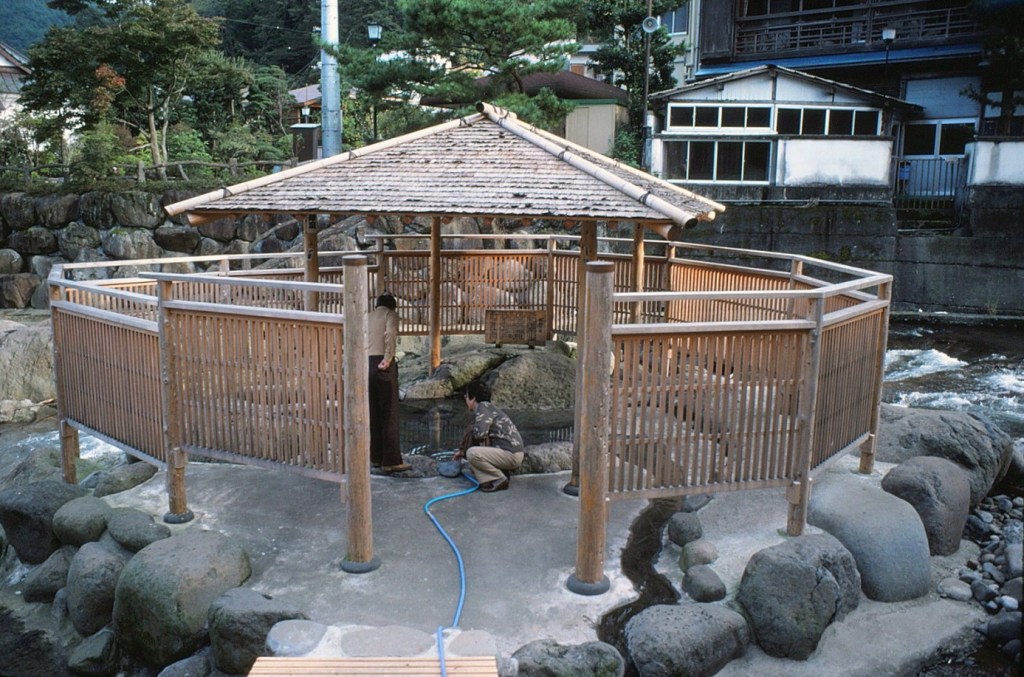
Picking up where we left off in Shuzenji, “located in an inland region of Izu Peninsula and noted for its numerous onsen hot spring resorts. The area is also noted for its production of wasabi and shiitake” (Wikipedia).
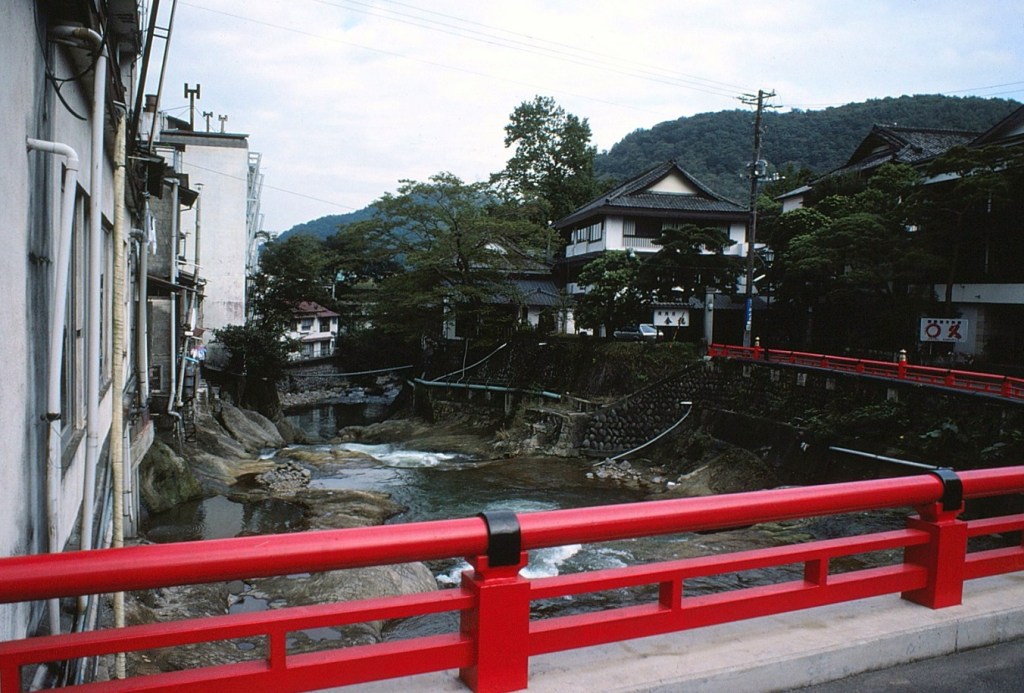
[There are five red bridges crossing the Katsura River, which runs through the center of Shuzenji Onsen. If you cross all five bridges while making a wish for love, it is said to come true (ana.co.jp). I didn’t know about that wish at the time . . . ]
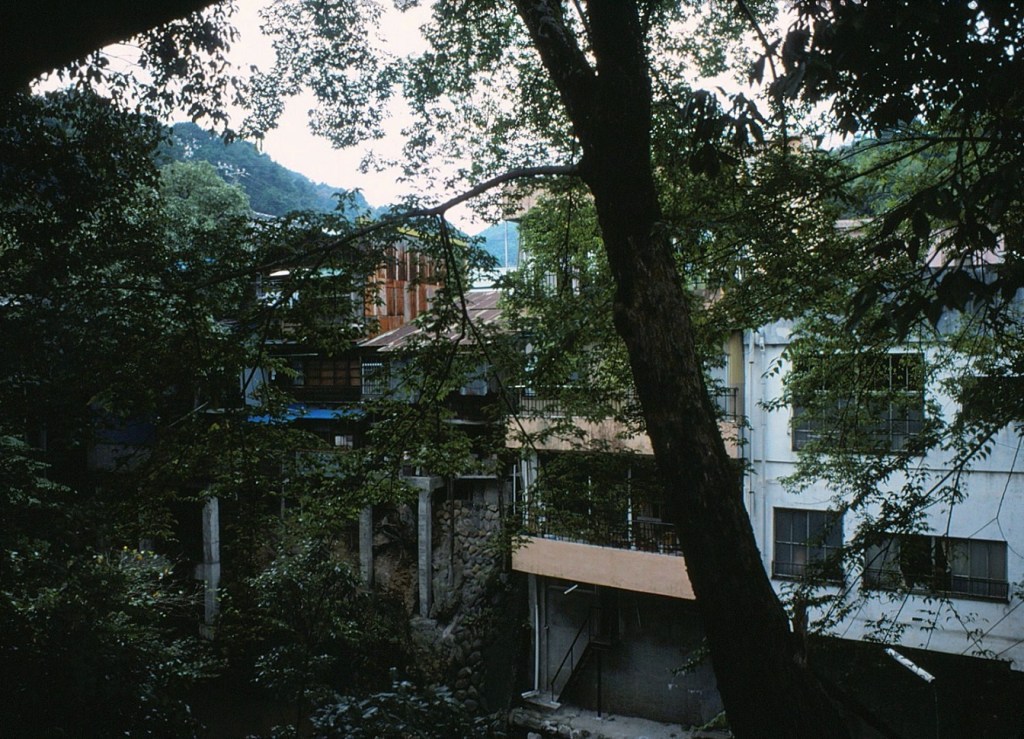
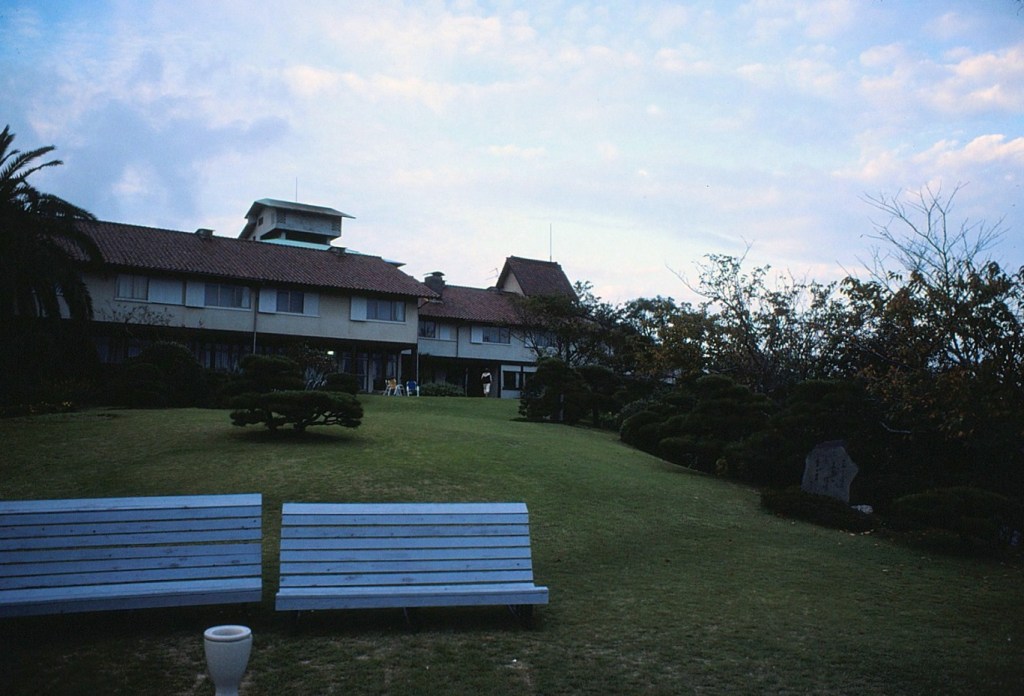
[Toku leads a walk through the downtown area. I believe that is the entry to our ryokan . . . ]
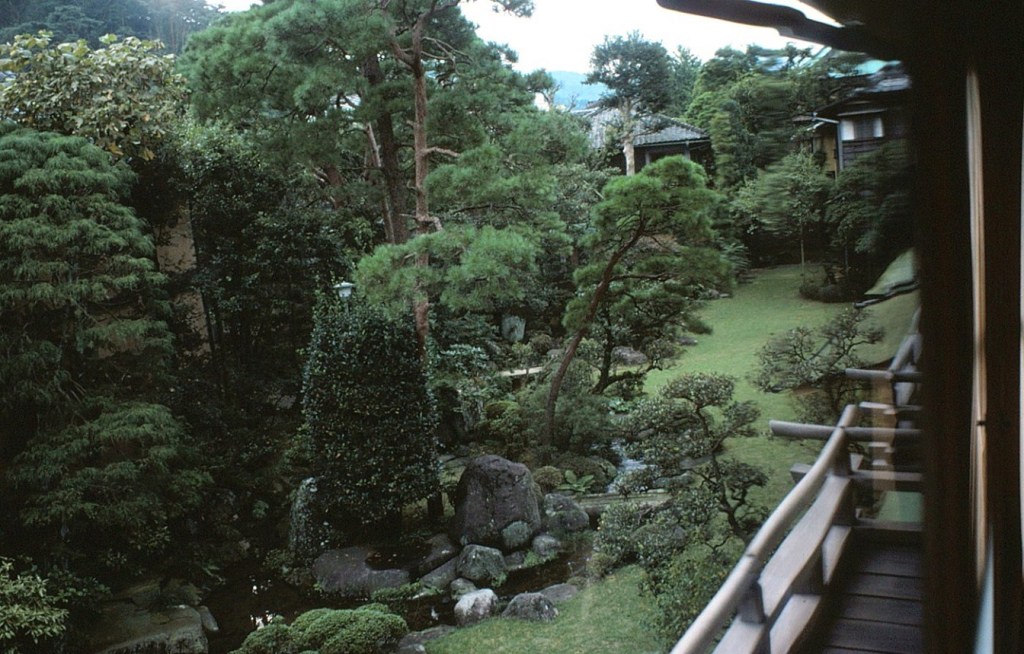
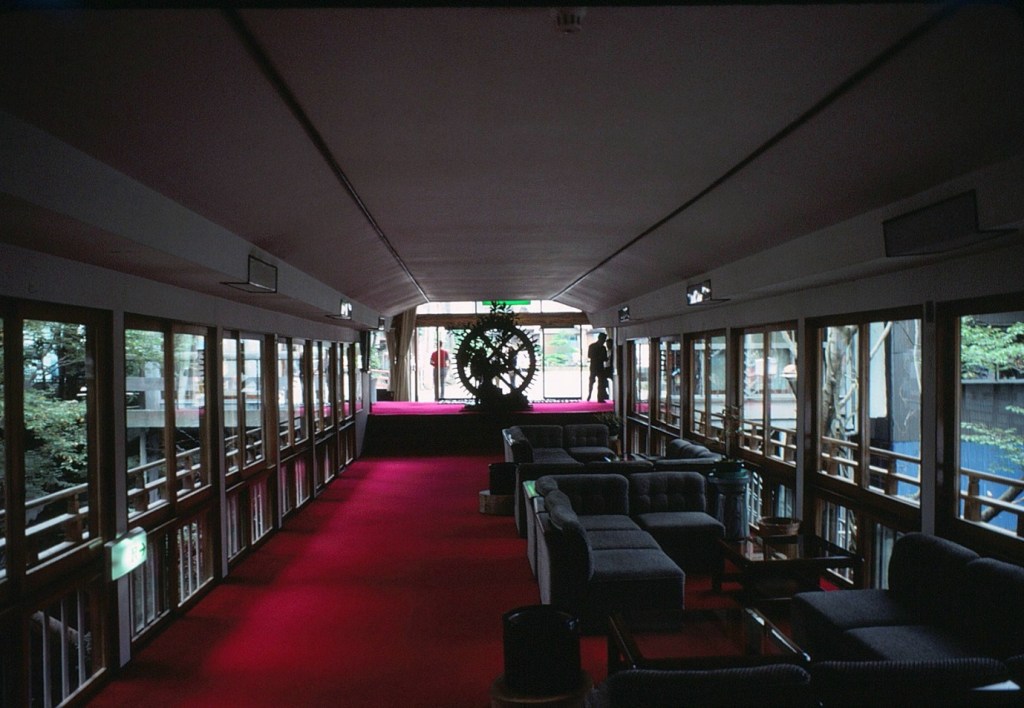
[And from the entry, you cross over the river in an enclosed bridge to the guest rooms . . . ]
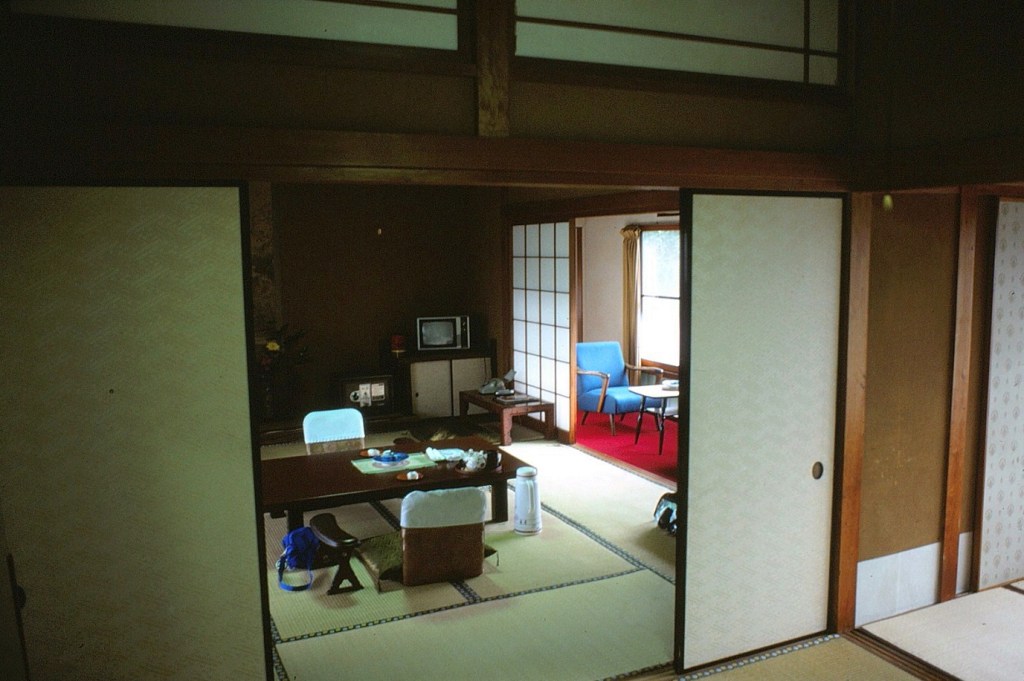
[And here’s ours. Classic Japan with the rice paper walls and tatami mat floors . . . ]
[The sit on the floor tables, with full size chairs on the “porch” for tourists. The room likely looks exactly the same today . . . except for the TV!]
[Looking out our bedroom window . . . ]
[I still have vivid memories of this because it was so cool. The enclosed bridge back to the office and main entryway . . . ]
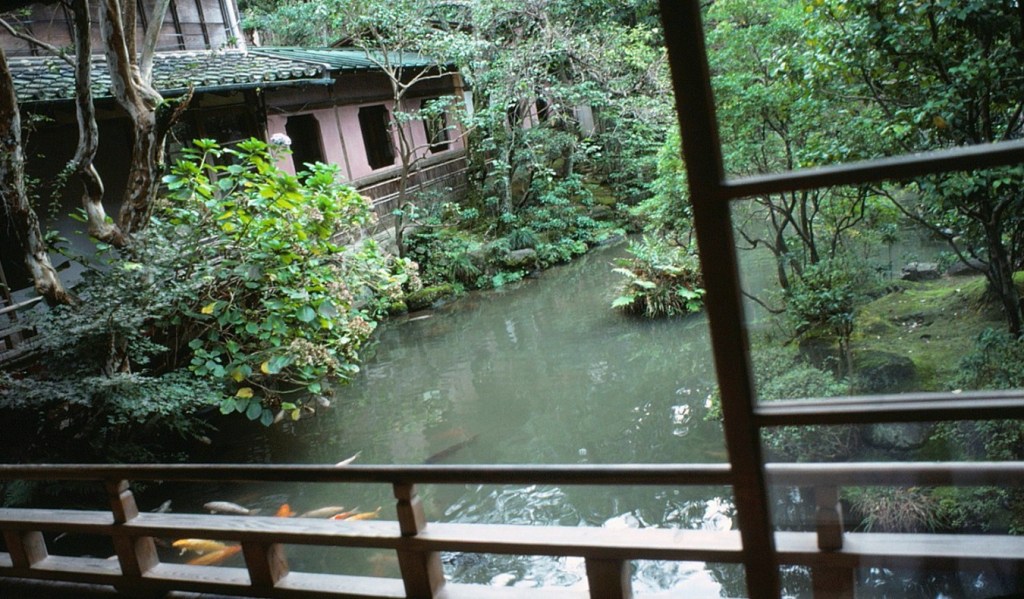
[And the view from that side . . . ]
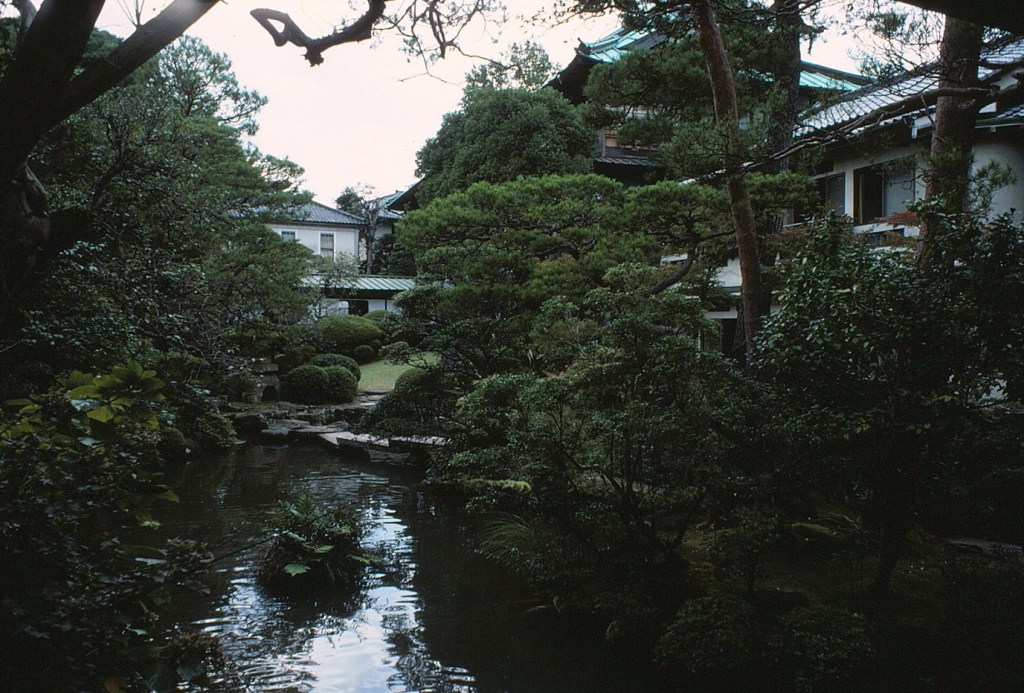
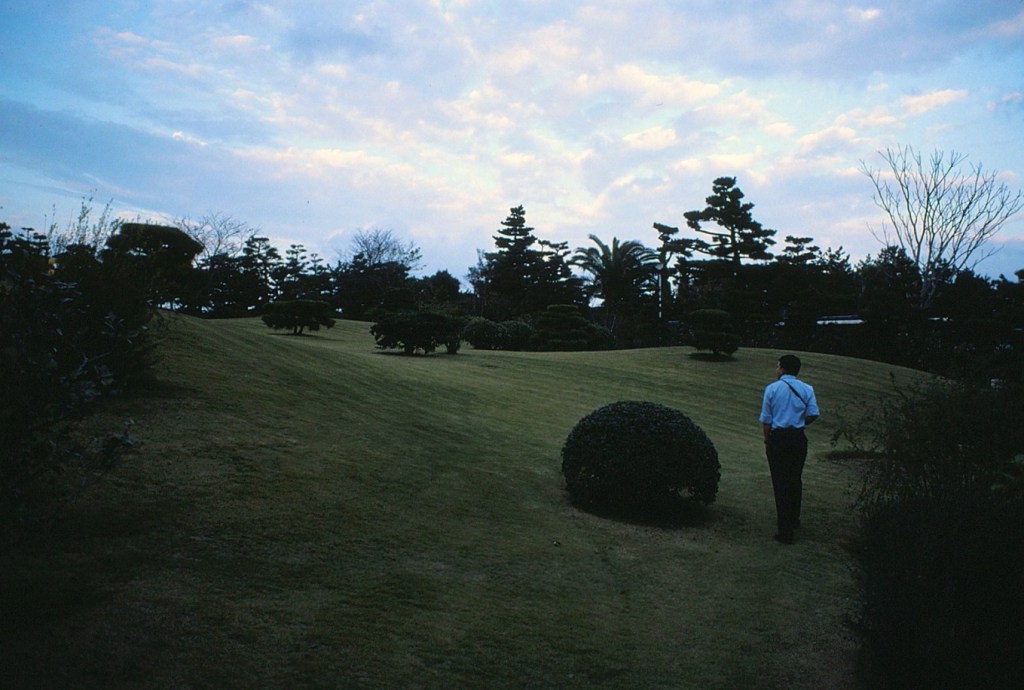
[Beautiful example of Japanese shakkei, the principle of incorporating background landscape into the composition of a garden . . . ]
Design is a vital component to the enrichment of our everyday lives. Japan has a very rich history and culture of design, and I feel it is a very important dialogue to open and keep evolving. ~ Issey Miyake
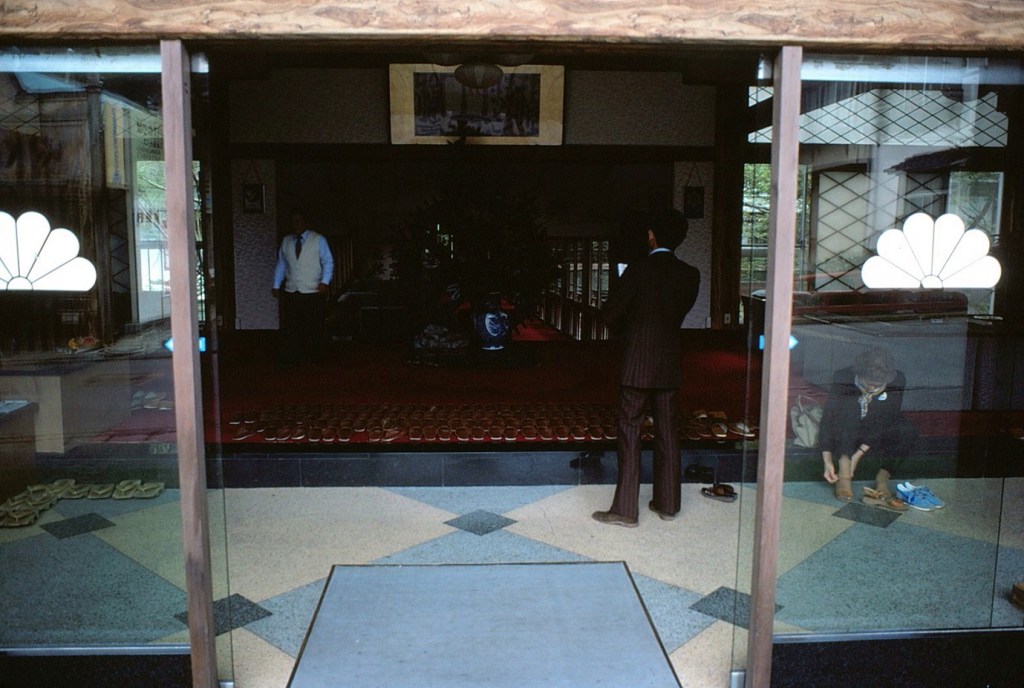
[The office, with our guide in his ever present brown suit, where one drops off one’s shoes in favor of slippers. A Japanese tradition nonpareil (I seldom wear shoes in the house) . . . ]
It seems the best approach for any venture is a combo platter – Japan’s quality-consciousness paired with America’s willingness to experiment and (sometimes) fail. ~ Daniel H. Pink
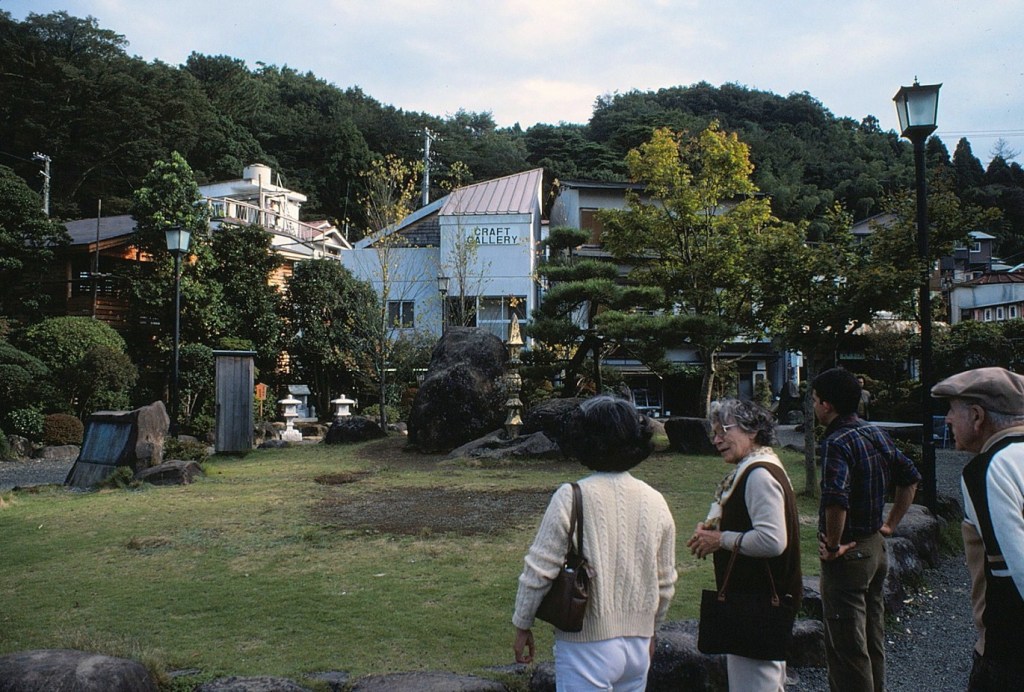
[With Toku and Roy in the foreground and Craft Gallery in the background. Craft Gallery? You think this place caters much to American tourists?]
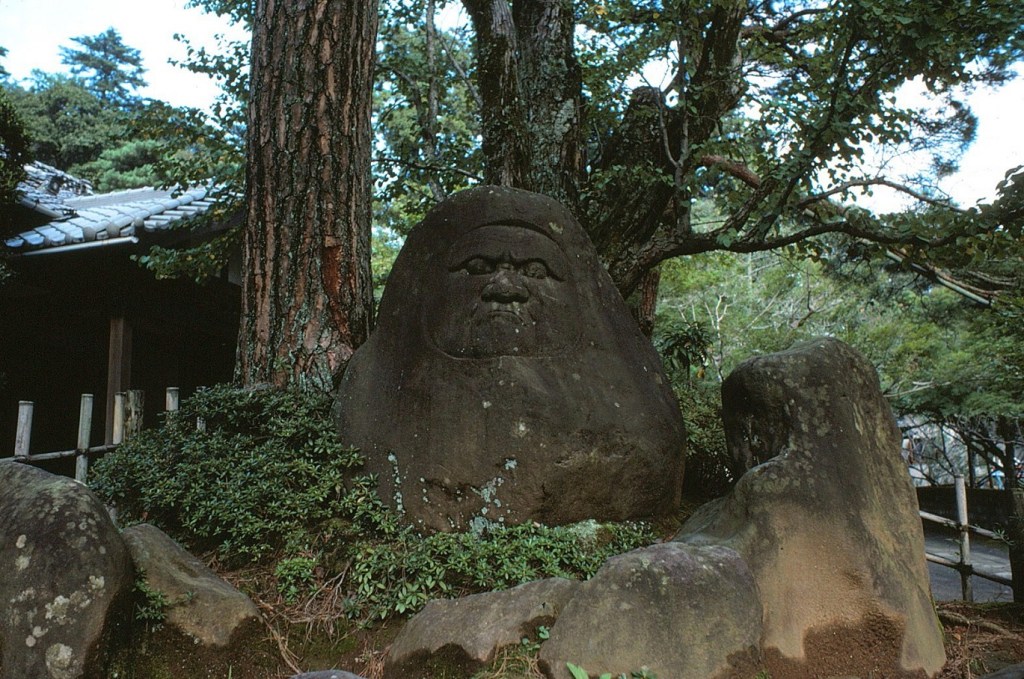
[Daruma stone at the Shuzenji Temple. A Daruma doll is a hollow, round, Japanese traditional doll modeled after Bodhidharma, the founder of the Zen tradition of Buddhism. These dolls, though typically red and depicting a bearded man (Bodhidharma), vary greatly in color and design depending on region and artist. Though considered a toy by some, Daruma has a design that is rich in symbolism and is regarded more as a talisman of good luck to the Japanese. Daruma dolls are seen as a symbol of perseverance and good luck, making them a popular gift of encouragement. The doll has also been commercialized by many Buddhist temples to use alongside the setting of goals (Wikipedia).]
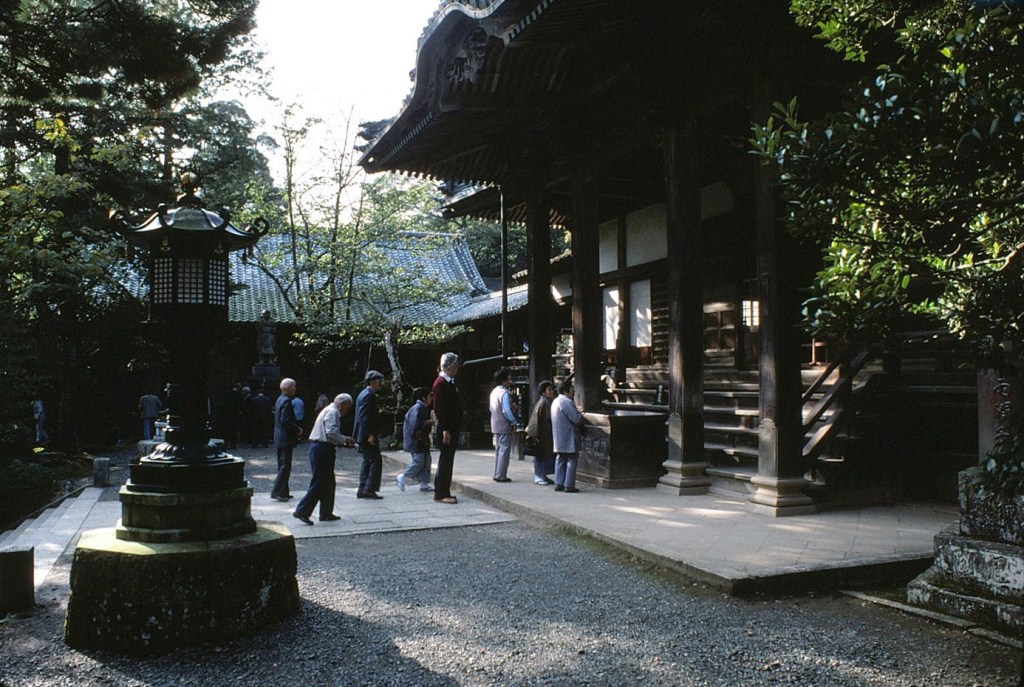
[At the temple . . . ]
[Shuzenji Temple]
The rest of the world may devour Japanese hardware – from Honda Civics to Sony Walkmans – but Japanese software, such as books, movies and recordings, has had little impact outside Japan. The exception is video games. ~ David Scheff
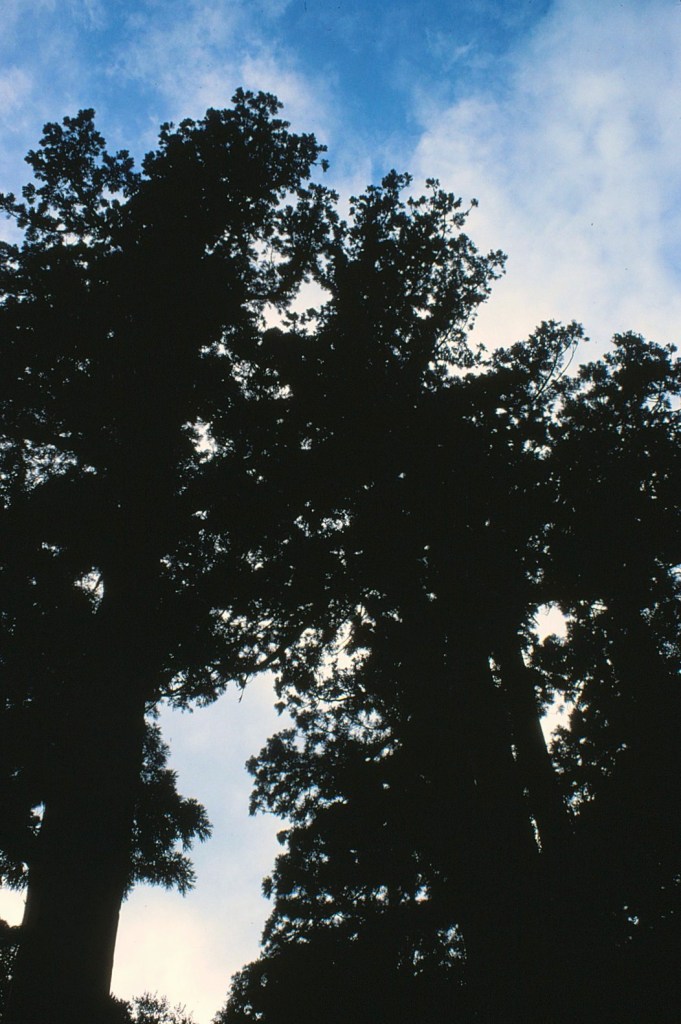
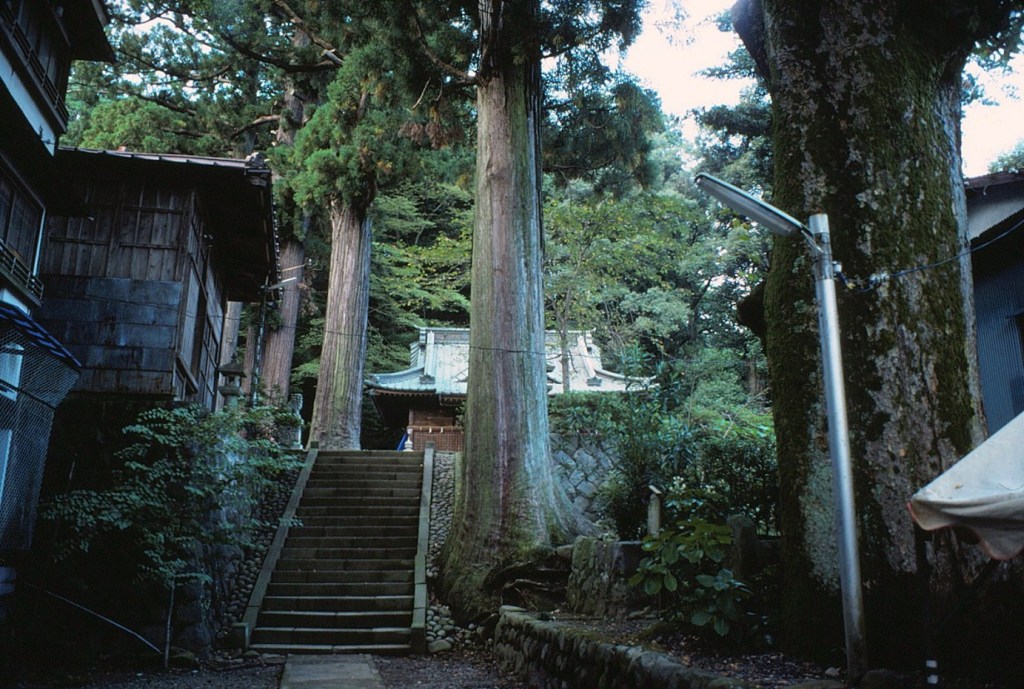
[With Randy providing perspective, a tall, evergreen coniferous tree, the Hinoki cypress hails from southern Japan. The soaring tree is often used for privacy screens because it’s so tall and dense. It is also a favorite for ornamental plantings, and dwarf forms of this tree are popular for bonsai. Hinoki cypress trees feature globose cones that are 8 to 12 millimeters in diameter. Although dwarf cultivars exist that are just a couple of feet tall, Hinoki cypress trees can grow to be as tall as 130 feet in its native areas (thespruce.com).]
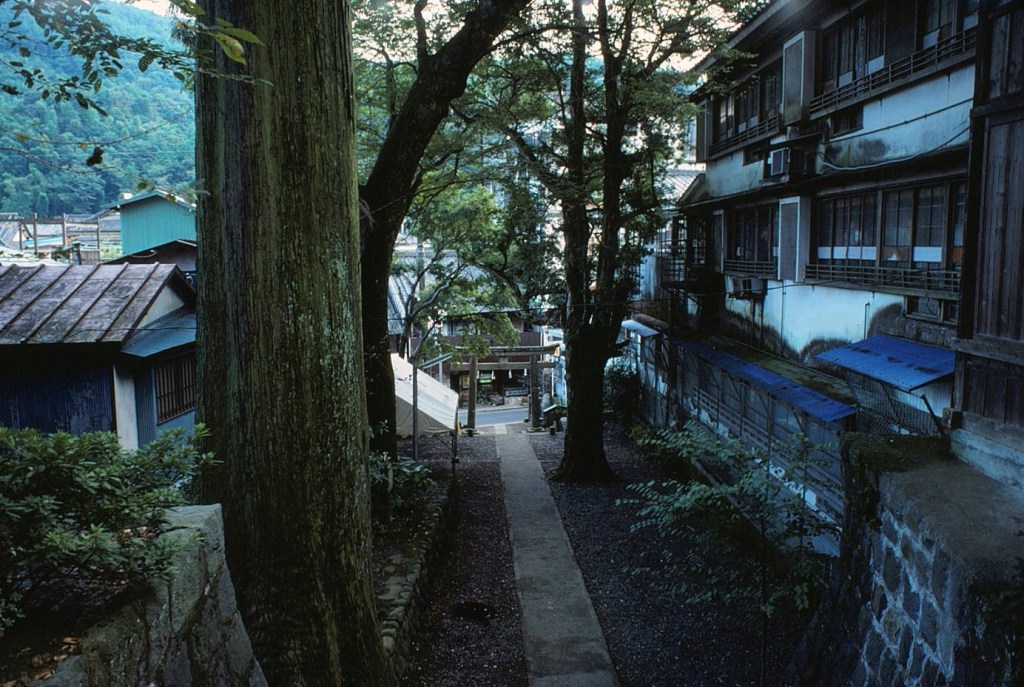
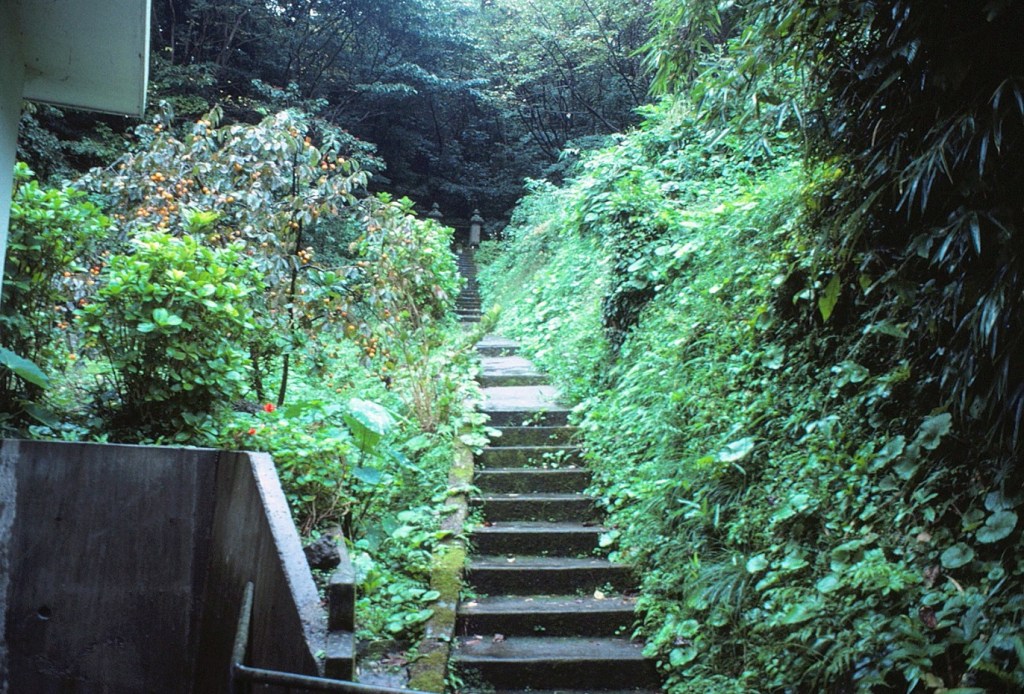
[Stairway to town . . . ]
[Stairway to temple, lined with beautiful, huge cypress trees . . . ]
[I thought I told you not to move?]
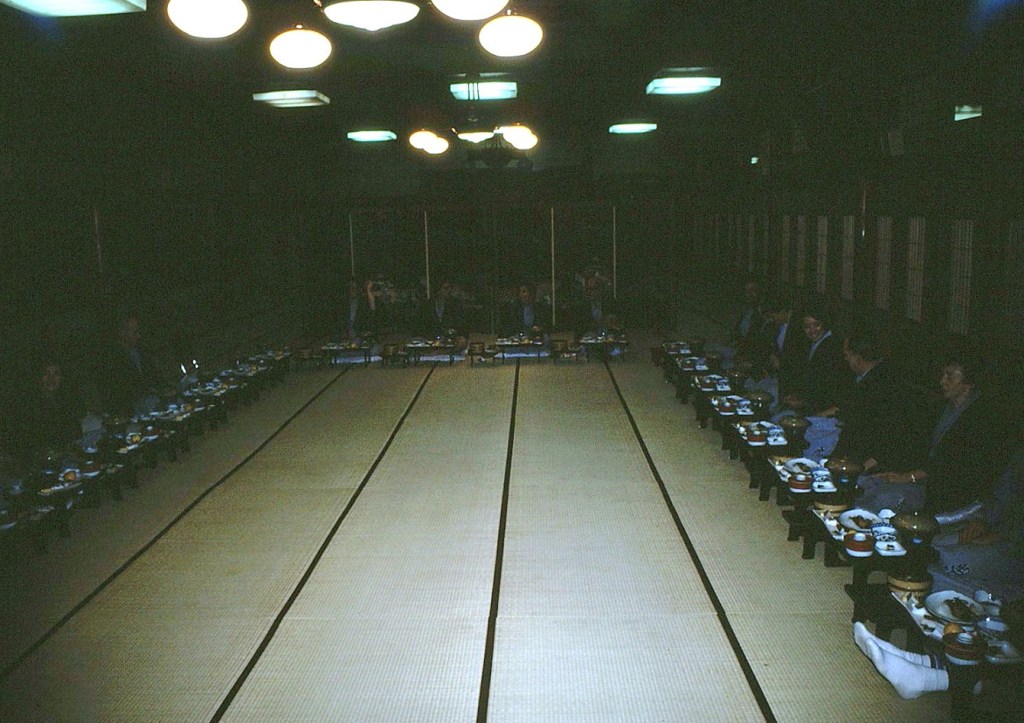
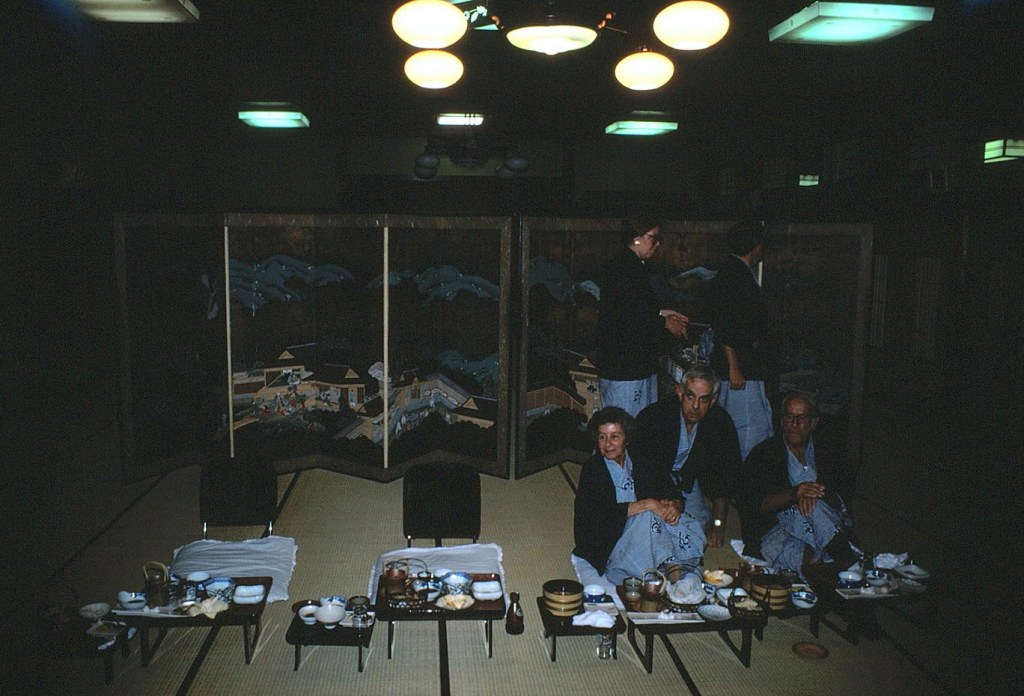
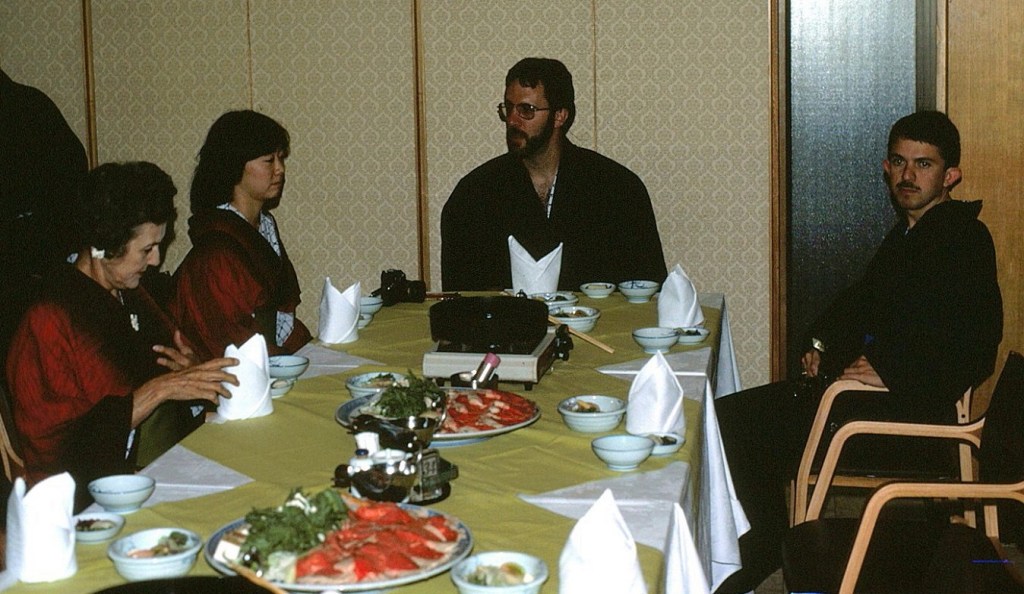
[Fine dining in the ryokan. My body was not designed for sitting on the floor . . . ]
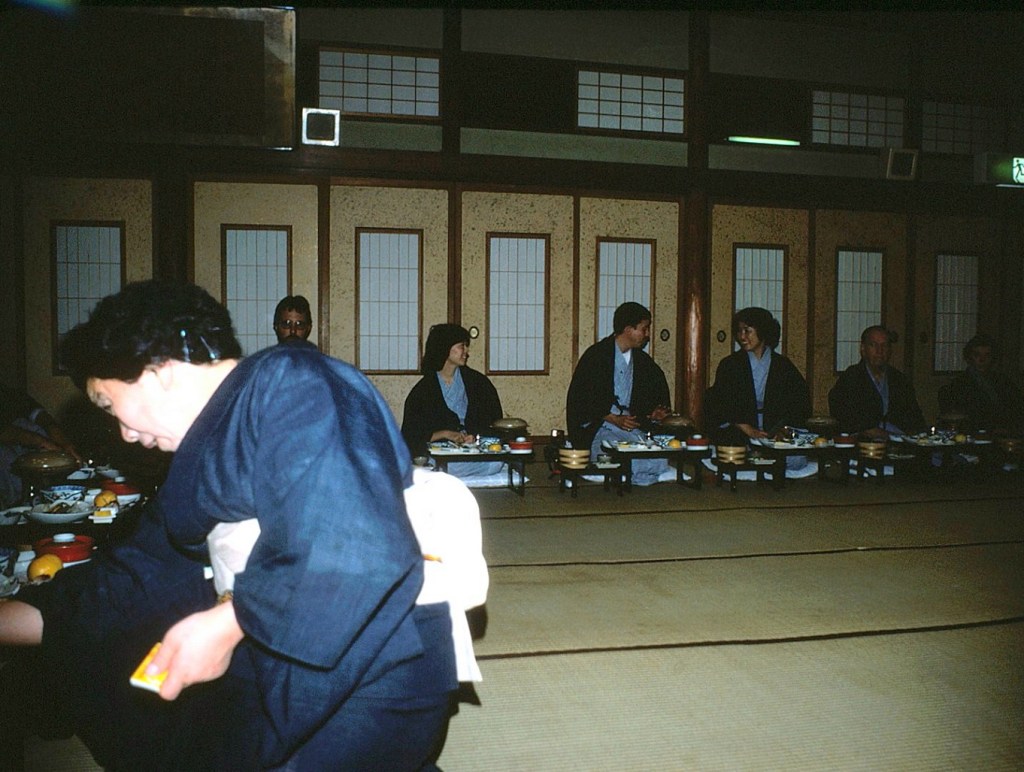
[Nevertheless, a marvelous dining experience with Randy, Marsha, Roy and Toku . . . ]
There’s nothing in Chinese culture that is an equivalent of the geisha. It’s so different, so special to Japan. ~ Zhang Ziyi
I’ve been interested in Japan since the 1930s, when I read about Japan’s vicious crimes in Manchuria and China. ~ Noam Chomsky
Japan is a great nation. It should begin to act like one. ~ John C. Danforth
[This is either still on Izu Peninsula, or 131 miles south on Kii Peninsula, or somewhere in between. I have no recollections of this place . . . ]
Well the least favourite question is the one that one’s asked particularly about in Japan is what’s the difference between theatre and cinema and I think, well, that’s about eighty bucks. ~ Andrew Lloyd Webber
[But Roy peruses its beautiful property . . . ]
Japan’s humid and warm summer climate, as well as frequent earthquakes resulted in lightweight timber buildings raised off the ground that are resistant to earth tremors. ~ Harry Seidler
[I like it! Classic Japanesey . . .]
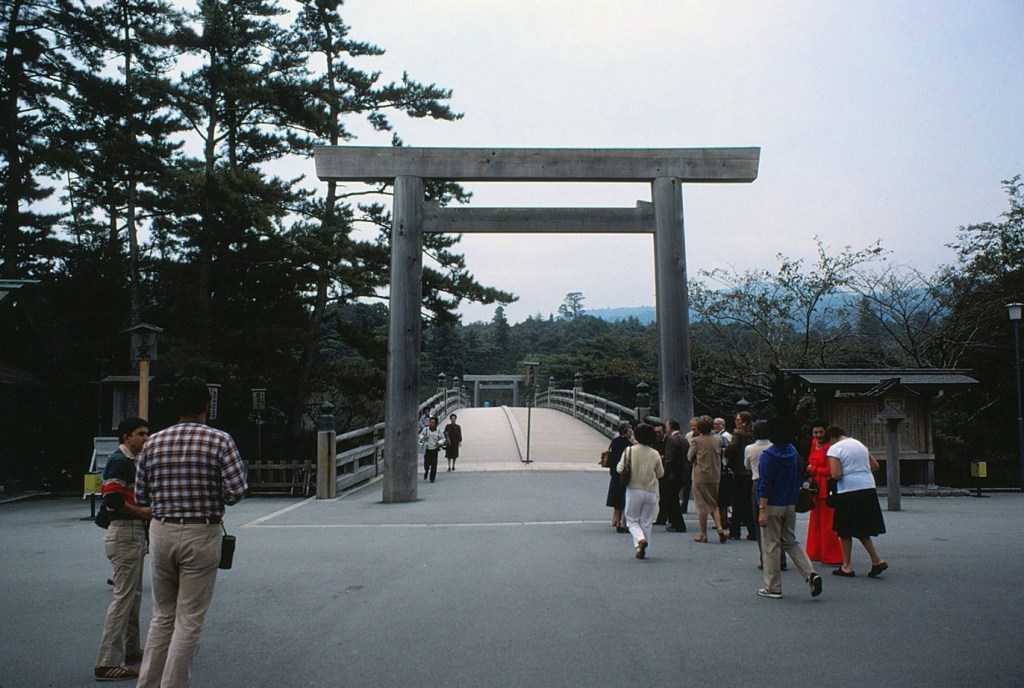
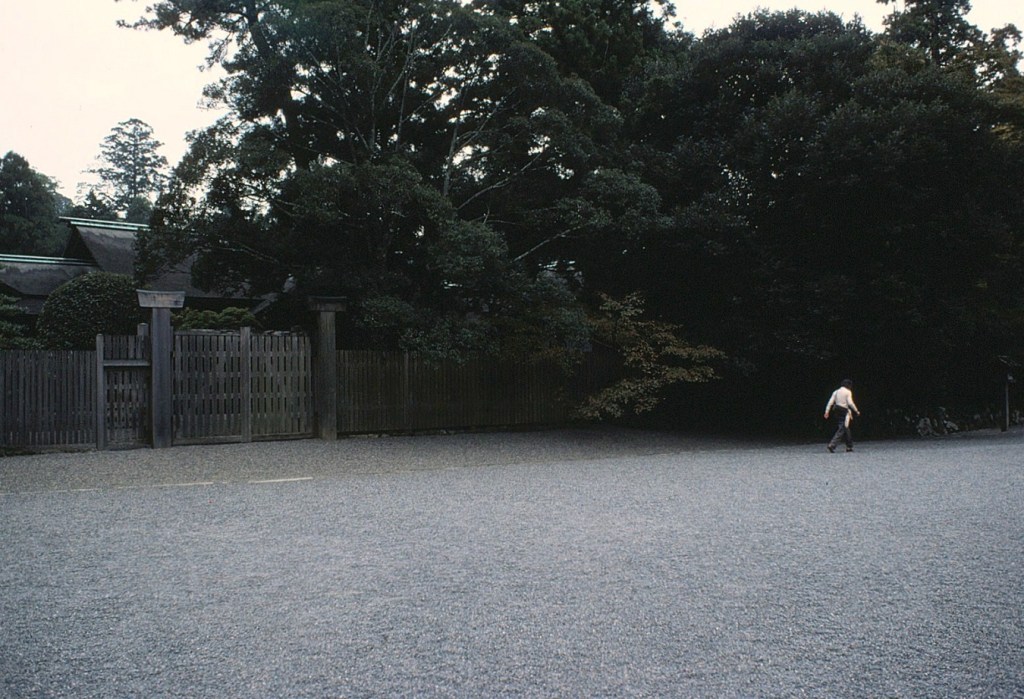
[Our group is about to enter Ise Grand Shrine, Japan’s most sacred Shinto shrine and dates back to the 3rd Century. It is considered to be the spiritual home of the Japanese and its national religion Shinto, and as such receives over six million pilgrims and tourists every year (blog.guijinpot.com).]
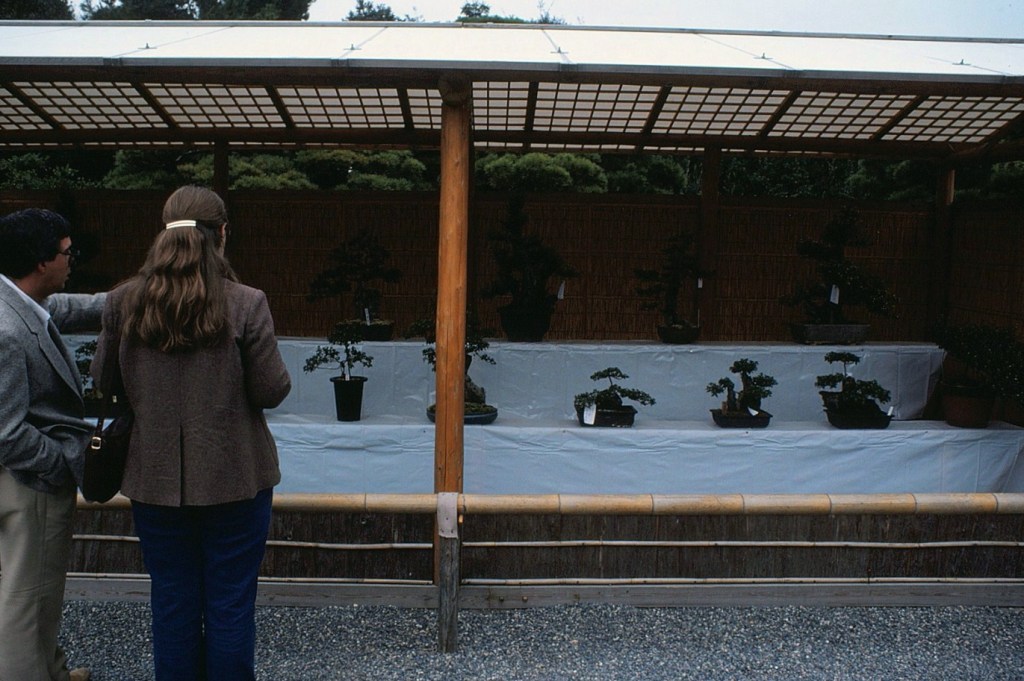
[A bonsai display in the temple . . . ]
Sure, President Bush can say that the U.S. government won’t fund stem cell research, but believe me, Japan is applauding. Because they will just do it first and get all the patents. ~ Kevin J. Anderson
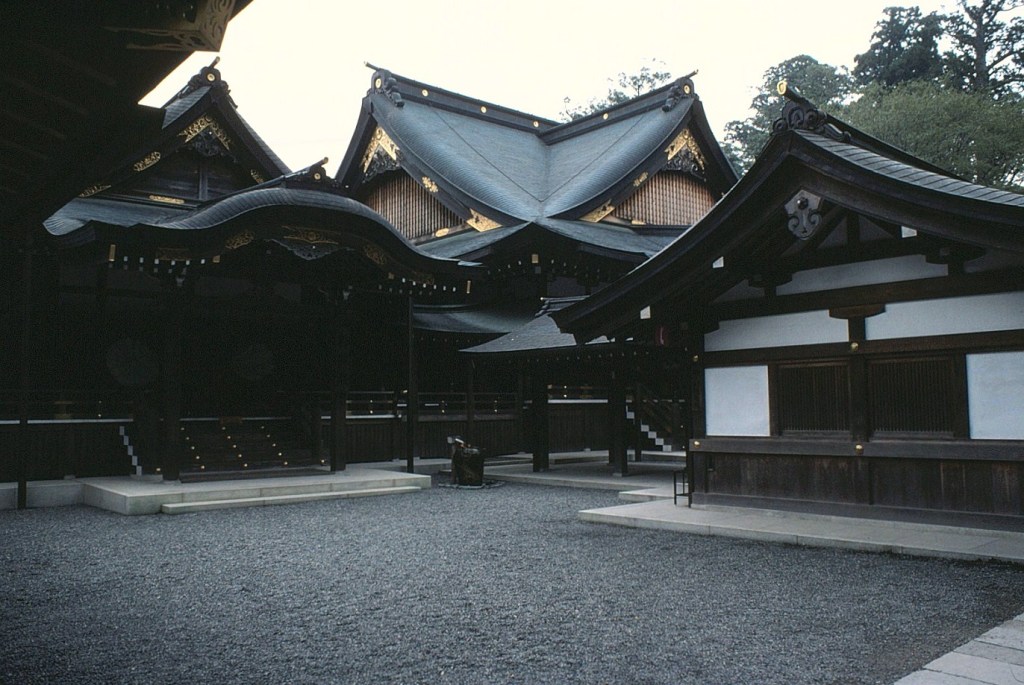
[The Ise Grand Shrine, located in Ise, Mie Prefecture, is a Shinto shrine dedicated to the sun goddess Amaterasu. Officially known simply as Jingū, Ise Jingū is a shrine complex composed of many Shinto shrines centered on two main shrines, Naikū and Gekū. The Inner Shrine, Naikū (also officially known as “Kōtai Jingū”), is located in the town of Uji-tachi, south of central Ise, and is dedicated to the worship of Amaterasu, where she is believed to dwell. The shrine buildings are made of solid cypress wood and use no nails but instead joined wood. The Outer Shrine, Gekū (also officially known as “Toyouke Daijingū”), is located about six kilometers from Naikū and dedicated to Toyouke-Omikami, the god of agriculture, rice harvest and industry. Besides Naikū and Gekū, there are an additional 123 Shinto shrines in Ise City and the surrounding areas, 91 of them connected to Naikū and 32 to Gekū (Wikipedia)].
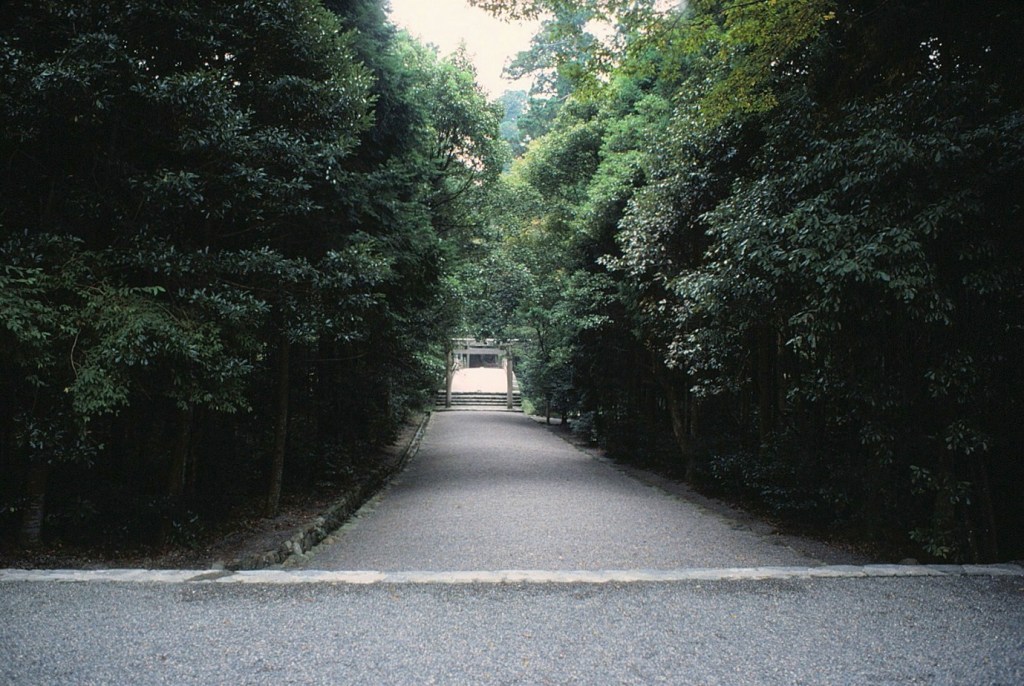
[Purportedly the home of the Sacred Mirror, the shrine is one of Shinto’s holiest and most important sites. Access to both sites is strictly limited, with the general public not allowed beyond sight of the thatched roofs of the central structures, hidden behind four tall wooden fences. However, tourists are free to roam the forest, including its ornamental walkways which date back to theMeiji period. During the Edo period, it is estimated that one out of ten Japanese conducted an Okage Mairi pilgrimage to the shrine. According to historical documents, 3.62 million people visited the shrine in 50 days in 1625, and 1.18 million people visited the shrine in three days in 1829 when the grand festival held every 20 years was held. Because the shrine is considered sanctuary, no security checkpoints were conducted, as it was considered sacrilege by the faithful. The two main shrines of Ise are joined by a pilgrimage road that passes through the old entertainment district of Furuichi (Wikipedia).]
[From one of my all-time favorite books, The Woman in the Dunes, by Kobo Abe (I also would recommend a similarly bizarre novel by Abe, The Box Man) . . . ]
I’m sure that President Johnson would never have pursued the war in Vietnam if he’d ever had a Fulbright to Japan, or say Bangkok, or had any feeling for what these people are like and why they acted the way they did. He was completely ignorant. ~ J. William Fulbright
Up Next: Part 7, or the complete history of music . . .
Today, Japan is one of the few countries in the world where one hears laughter everywhere. ~ David Douglas Duncan
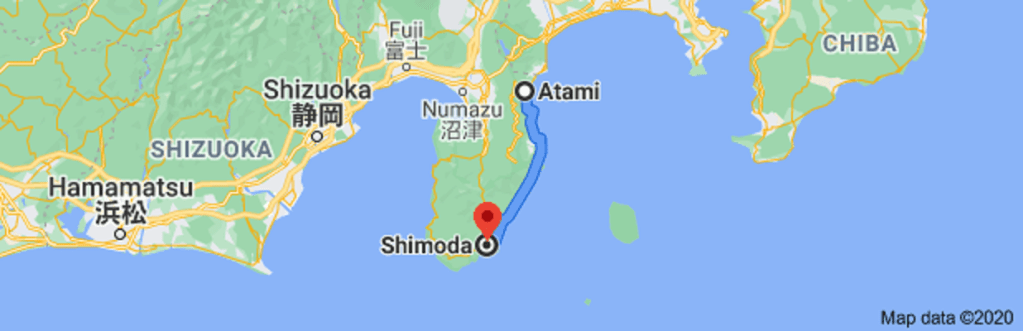
We are now slipping further and further into the land of missing memories. I’m pretty sure with everything in this post that we’re still on the Izu Peninsula. Thus, a map is always helpful . . .
[This, for instance, really bothers me that I can’t find an identification. I know that’s Marsha and Randy on the path ahead of me, I remember this, and I remember the photo, because I thought everything about it was splendiferous. And because it is splendiferous, I can’t believe I can’t find it anywhere on the Google machine . . . ]
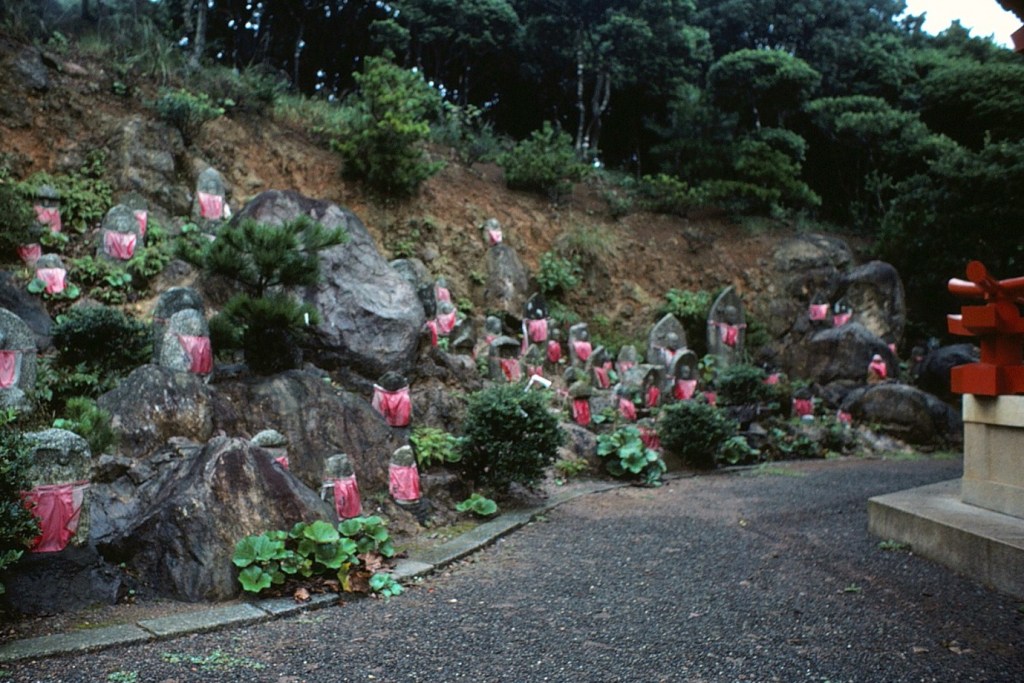
[Any tourist trekking Japan’s countryside and visiting roadside temples will quickly notice the many stone statues that litter the rural streets of Japan. These are the statues of Jizo. They are often clothed in stone robes and hold canes and are dressed in red bibs. They are often bald, smiling serenely, with eyes closed. Some, however, are faceless formless stones, only distinguished by the red bibs and aprons wrapped around them. Traditionally it is believed that Jizo is the guardian of unborn children. One often finds the ojizosan in graveyards. According to one legend, children who die before their parents are punished for making their parents grieve, and must build small stone towers to gather good karma. Demons often come to smash the stone towers and beat the children, but Jizo protects the children by hiding them in his sleeves and robe. Flower and water and food offerings, and even small towers of stones are often visible in front of ojizosan, placed there by grieving parents hoping for protection for the souls of their children (buddhistchannel.tv/index).]
[Again, I’m guessing this is Shimoda . . . ]
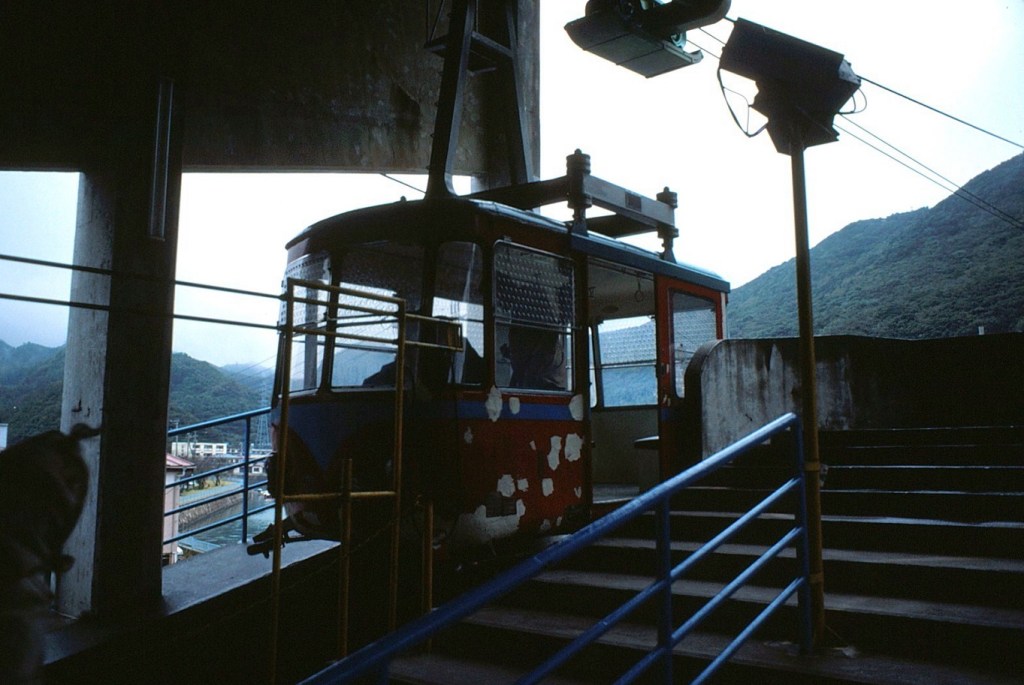
[White House sources believe this to be the Shimoda Ropeway, an aerial life line in Shimoda, Shizuoka. The line is also called Nesugatayama Ropeway as it climbs Mount Nesugata. The observatory has a view of Port of Shimoda and Pacific Ocean. The line began operation on April 1, 1961 (Wikipedia).]
[Stairway to heaven?]
[See the following photo . . . ]
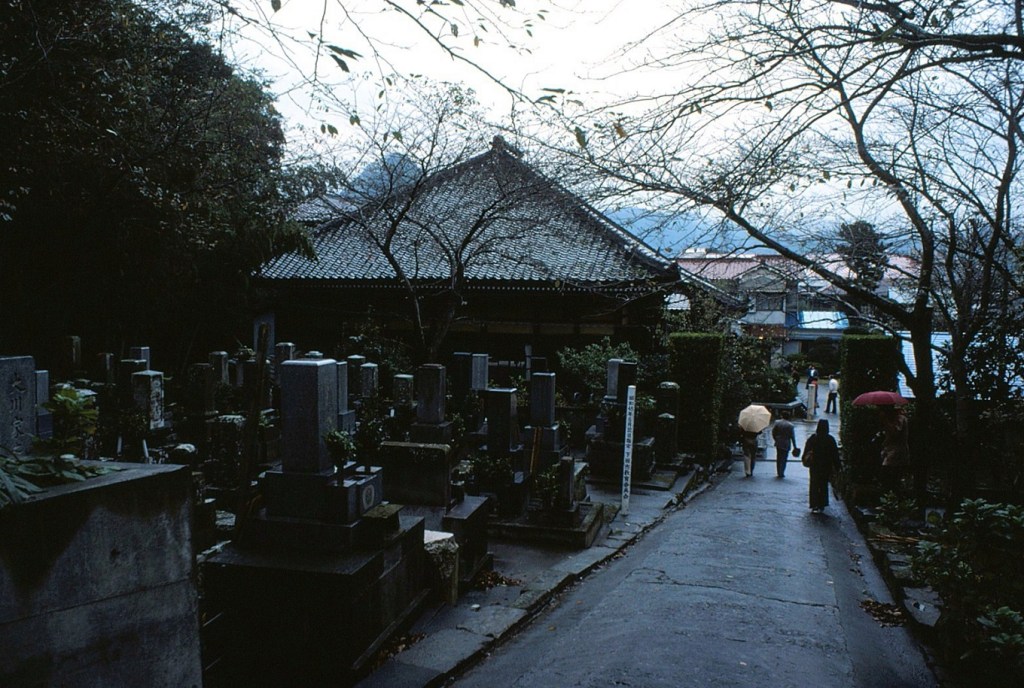
[Gyokusenji Temple, a Zen Buddhist temple of the Soto sect with its history older than 430 years over 27 generations, used to be a thatch hut belonging to the Singon sect, another sub-sect of the Zen Buddhism, which was converted to Soto sect in the 1580s by Priest Ichirei shunei. The present main hall was completed in the days of its 20th Priest Suigan Bimo. In March 1854, The Japan-U.S Treaty of Peace and Amity was concluded and Shimoda was opened to foreign shipping. When The Shimoda Treaty was appended to it in May 1854, Gyokusenji Temple was officially designated as a resting place as well as a cemetery for American sailors (izu-gyokusenji.or.jp).]
[A room with a view, a place to kick up your heels after a hard day of touring, and wait for a Geisha to bring you a peeled grape . . . ]
[Said view . . . ]
[Not the Geisha I was anticipating . . . ]
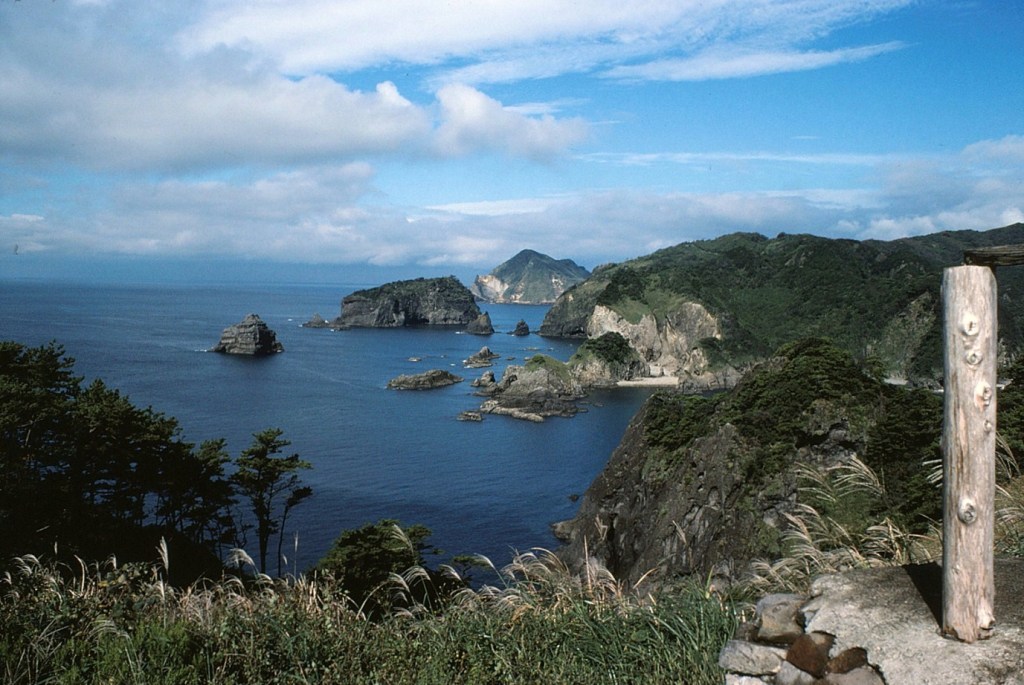
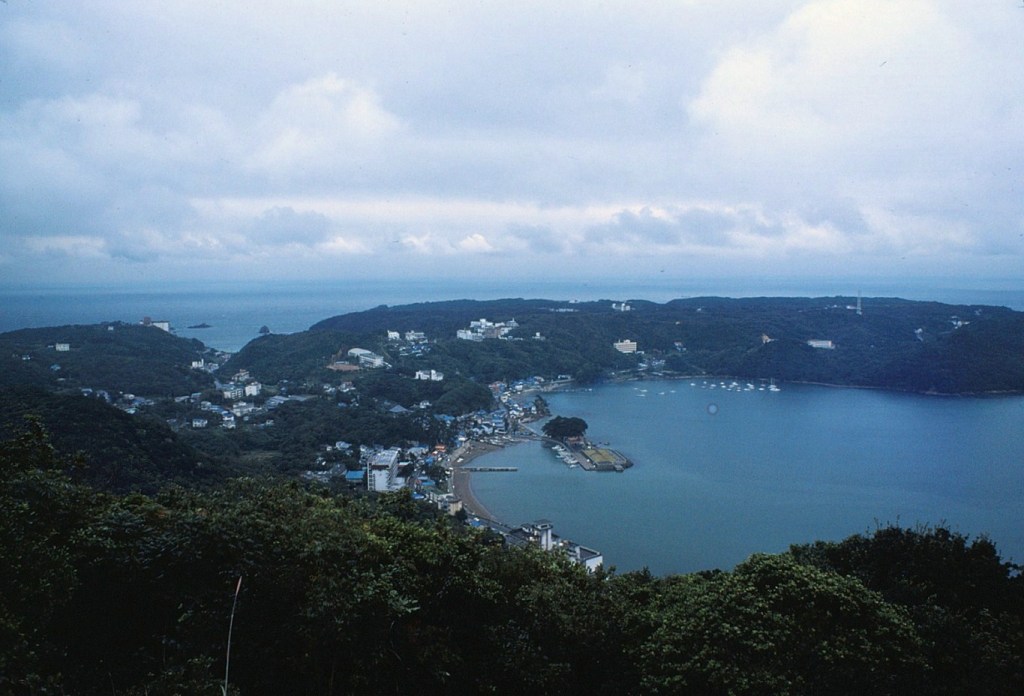
[I was shocked and amazed that I found this place where we stayed. The Shimoda Prince Hotel (following photo) looks the same today (in current literature) as it did 37 years ago . . . ]
[Shimoda Prince Hotel is located on the Izu Peninsula, an area known for its beautiful, graceful coastline. This seaside hotel faces the magnificent Shirahama Chuo Beach, known for its pristine sands. Our location affords incredible views of the sunrise over the endless ocean, and scenery that changes over time (princehotels.com).
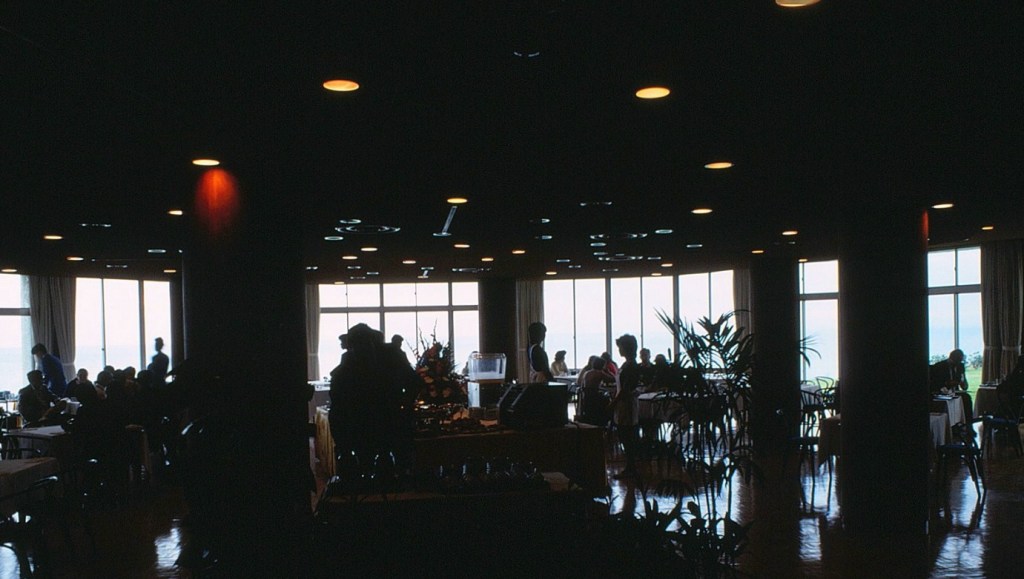
[A really not too shabby dining room!]
[On the road again . . . ]
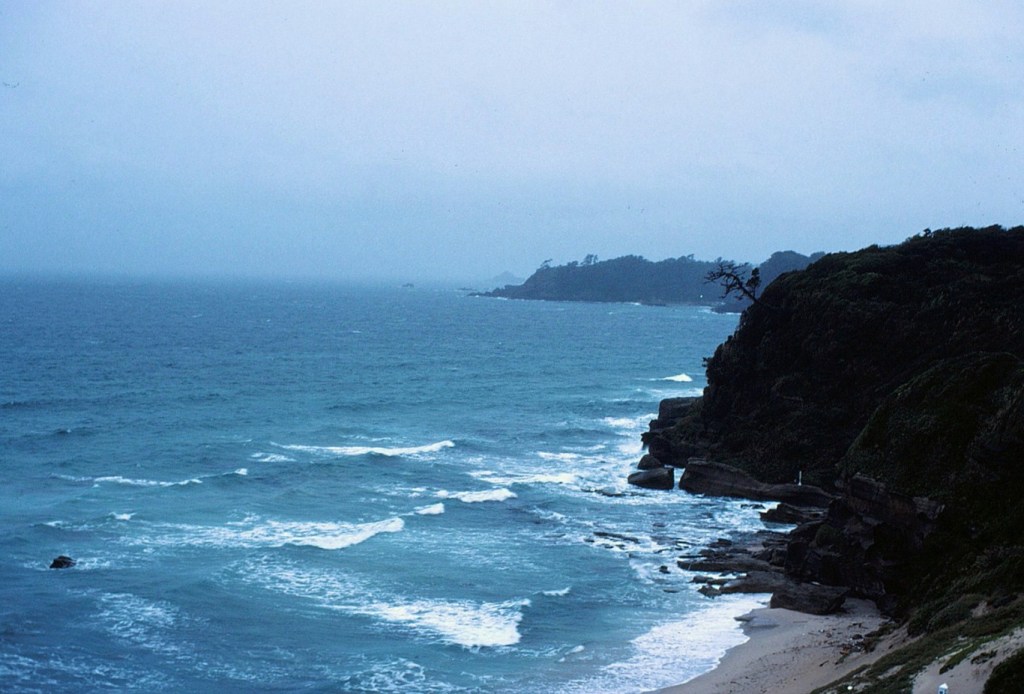
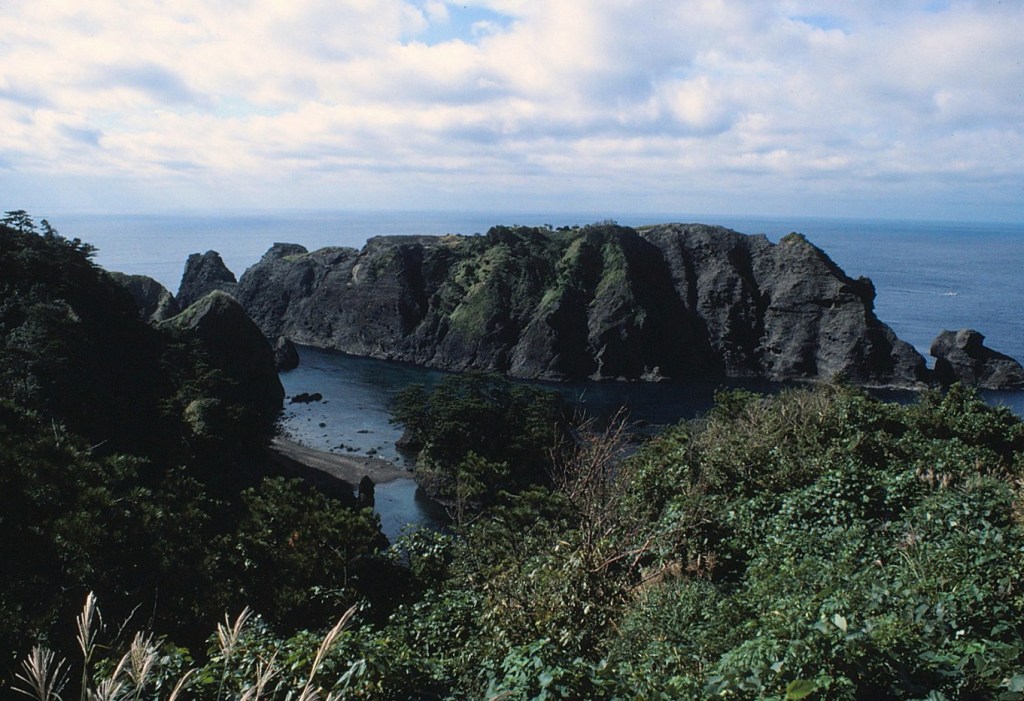
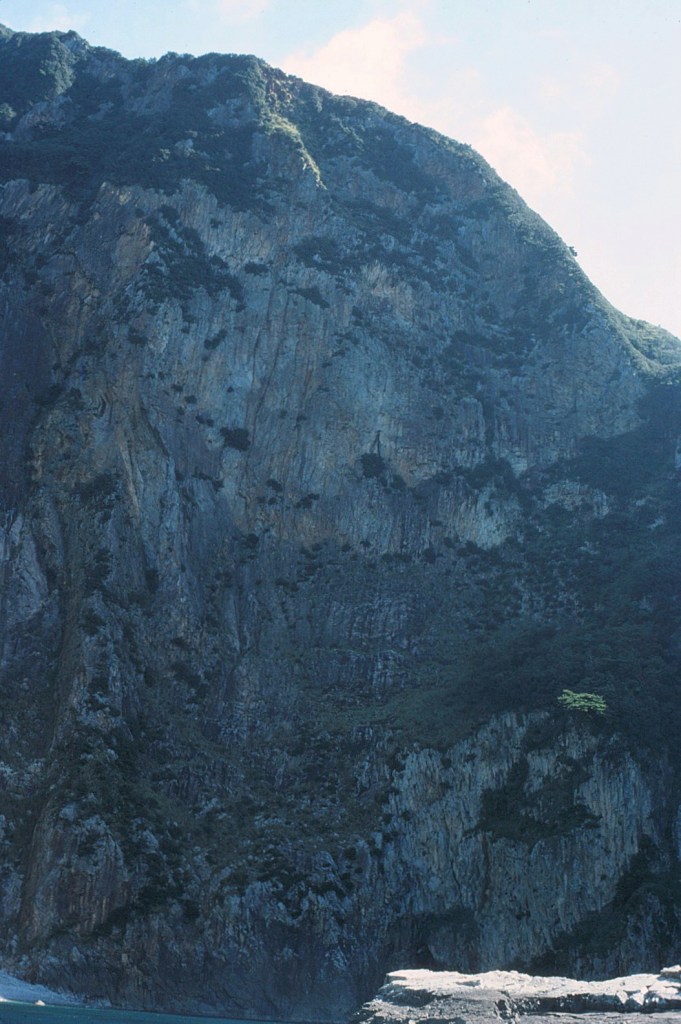
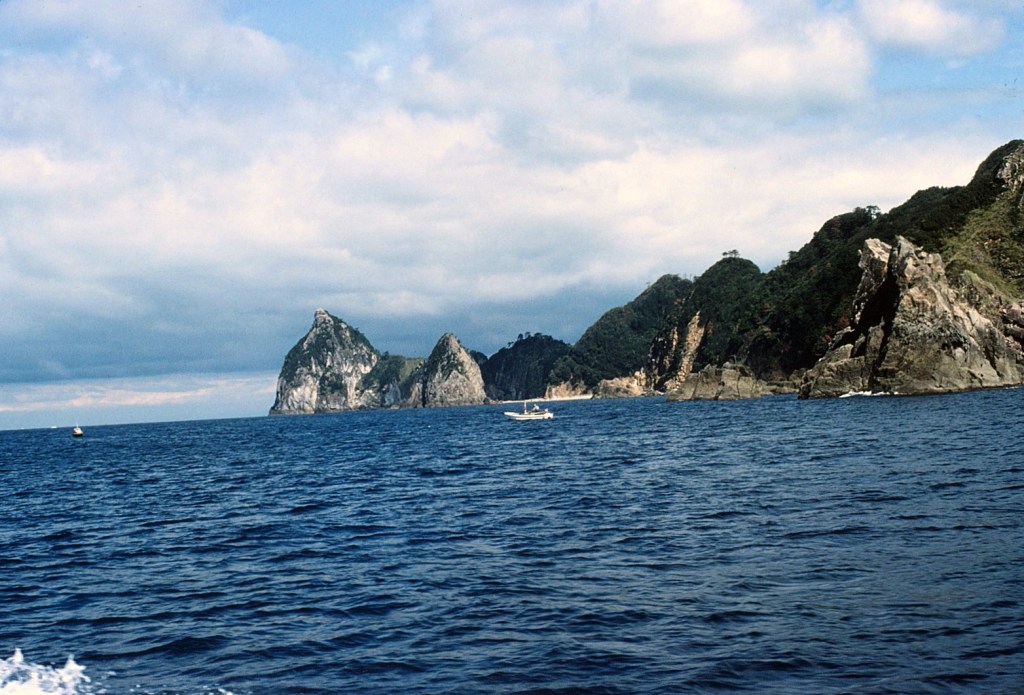
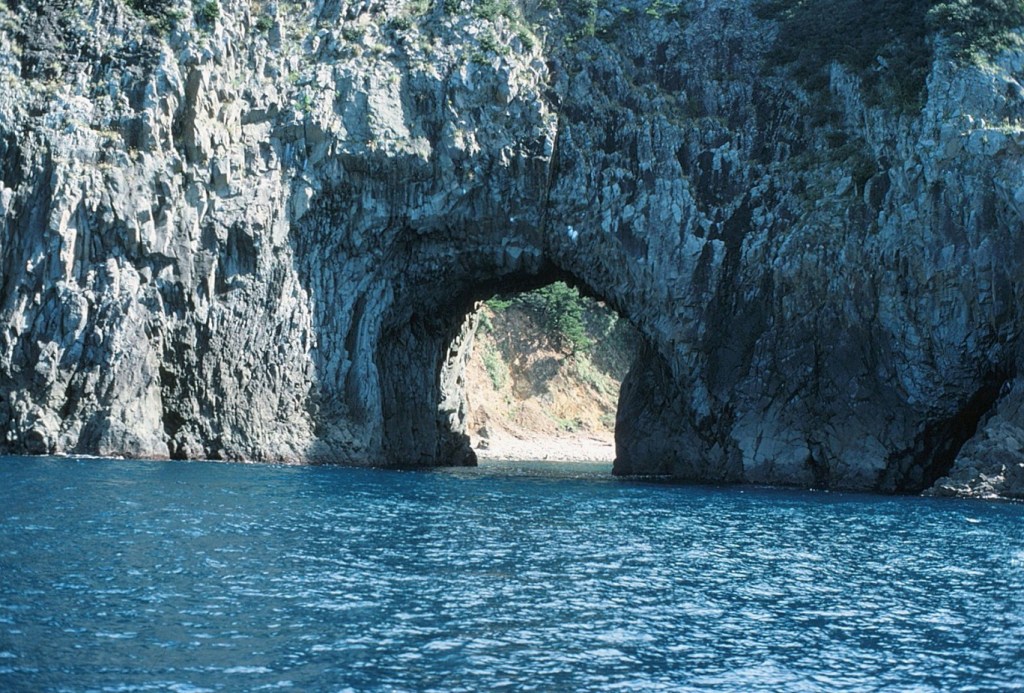
[I actually found several identical pictures, but they’re just identified as natural coastal landscape of Izu Peninsula, Shizuoka . . . ]
I was born into a very important family in Japan. My grandfather was a descendant of the Emperor, and we were very wealthy. ~ Yoko Ono
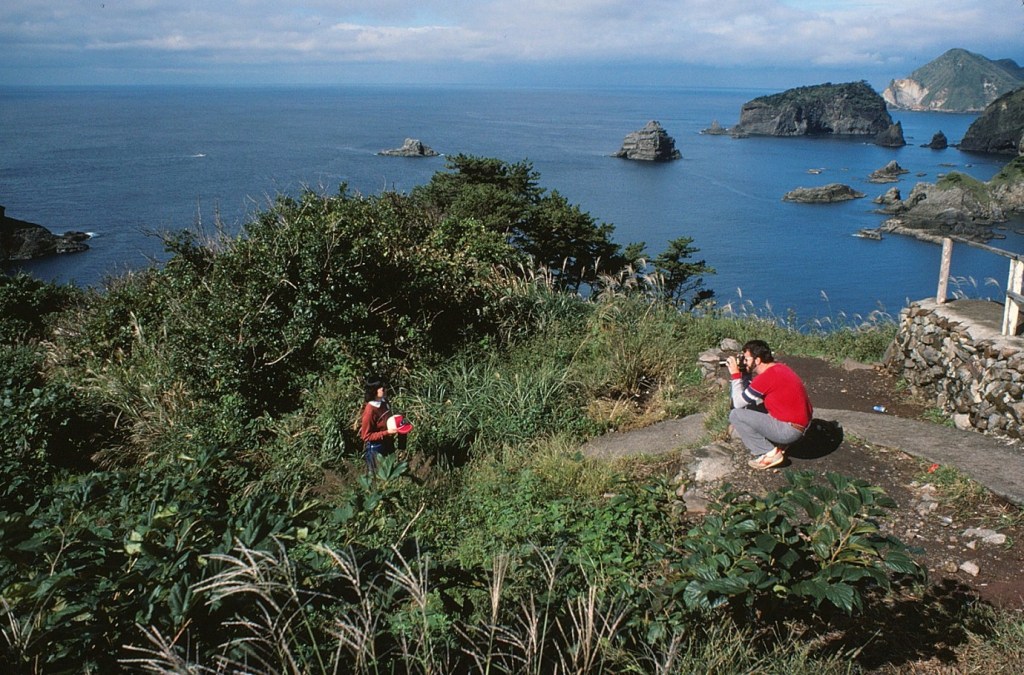
[Masha models for Randy . . . ]
[I model for Roy (or something like that) . . . ]
It is inhumane, in my opinion, to force people who have a genuine medical need for coffee to wait in line behind people who apparently view it as some kind of recreational activity. ~ Dave Barry
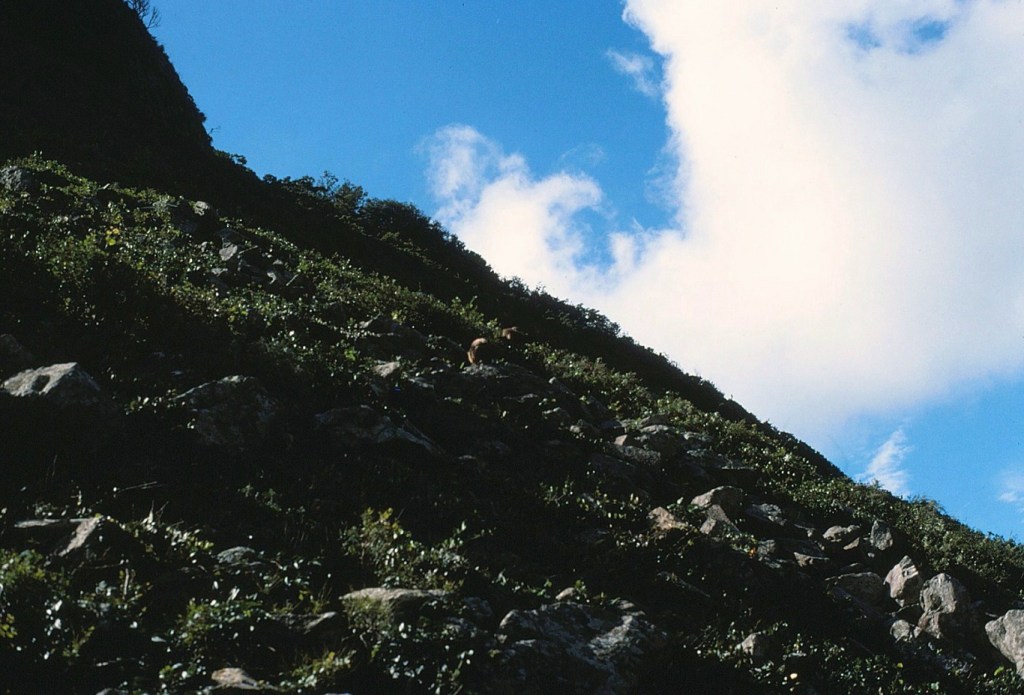
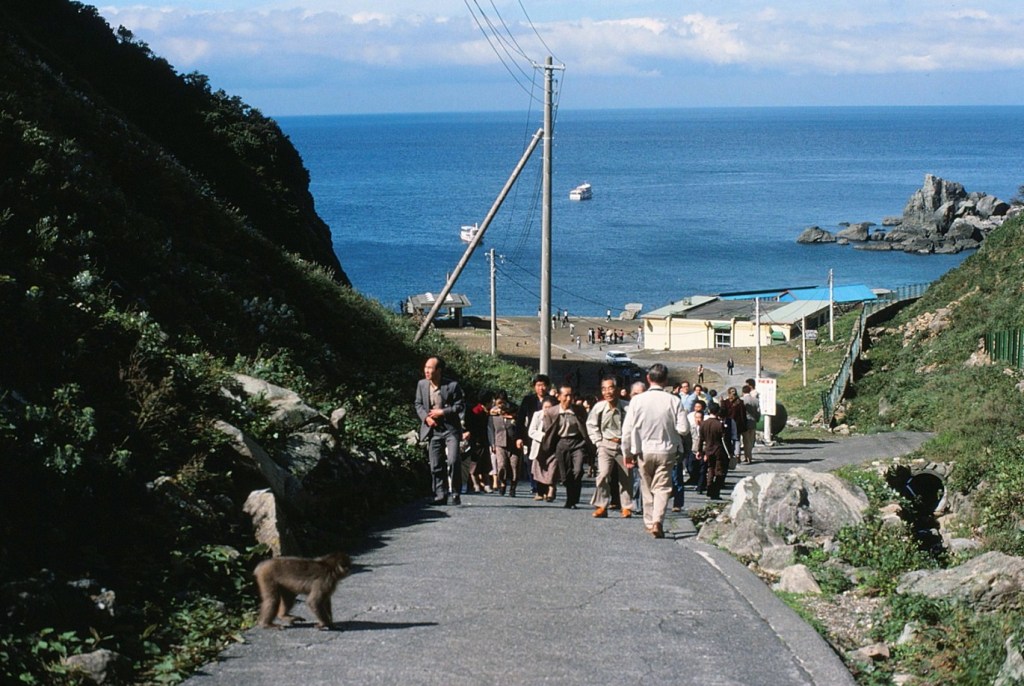
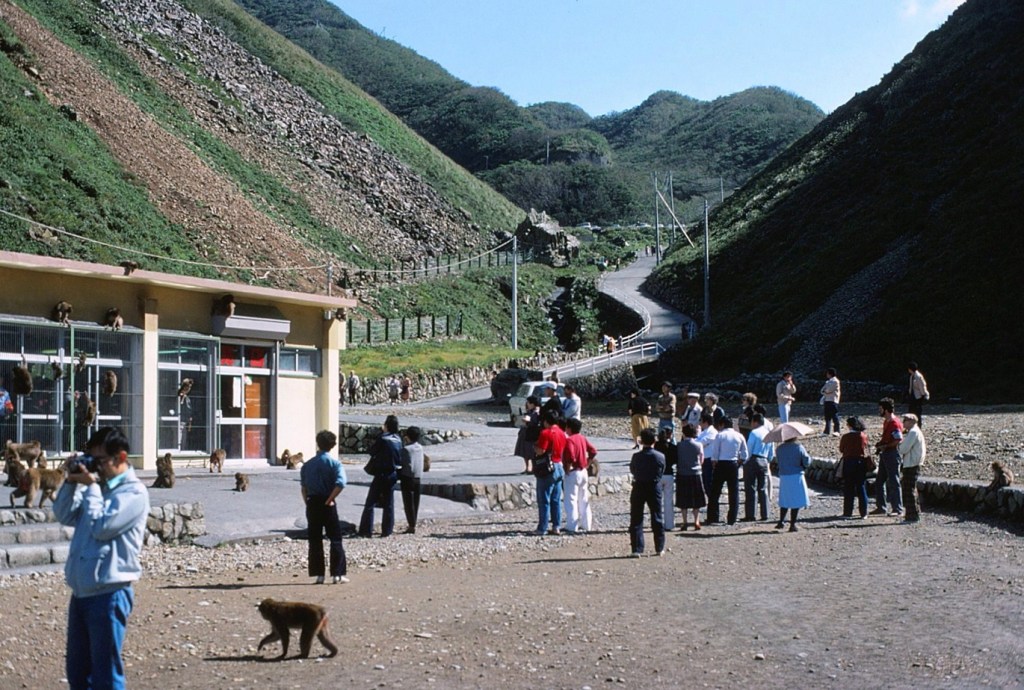
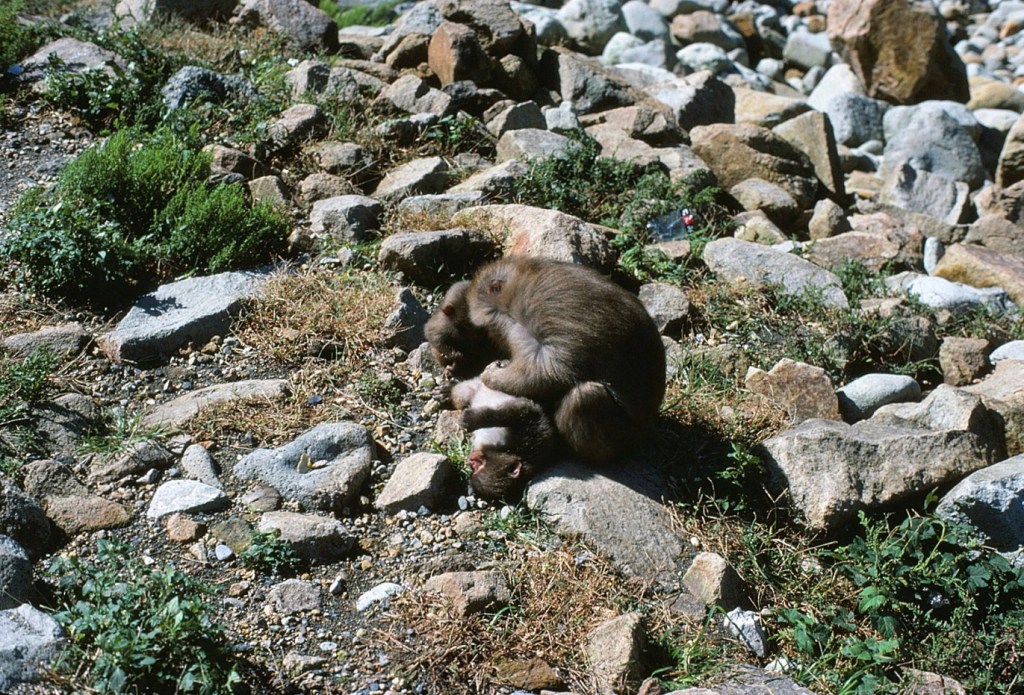
[In Nishi Izu, you can visit a park by the ocean where a troop of over 300 Japanese macaque monkeys reside. The wild monkeys play freely on their playground, groom, and feed on grains, vegetables, and fruits. Visitors can walk amongst the monkeys or feed them from behind a cage wall (en.japantravel.com).]
[And here comes a mob of homo sapiens, allegedly close personal relatives of the monkeys . . . ]
[Paradise of the overseas beauty and monkey: Because it is in the southernmost tip of theIzu Peninsula, and the Kuroshio Currentflows through the offshore, flowers bloom throughout the year because of the warmth, and the beauty spots of a precipice and the reef zone are continuing, which makes it a rich-nature area (veryjapanese.jp).]
[Said local denizens . . . ]
Despair is always rational, but hope is human. ~ Richard Flanagan
[Our taxi has arrived . . . ]
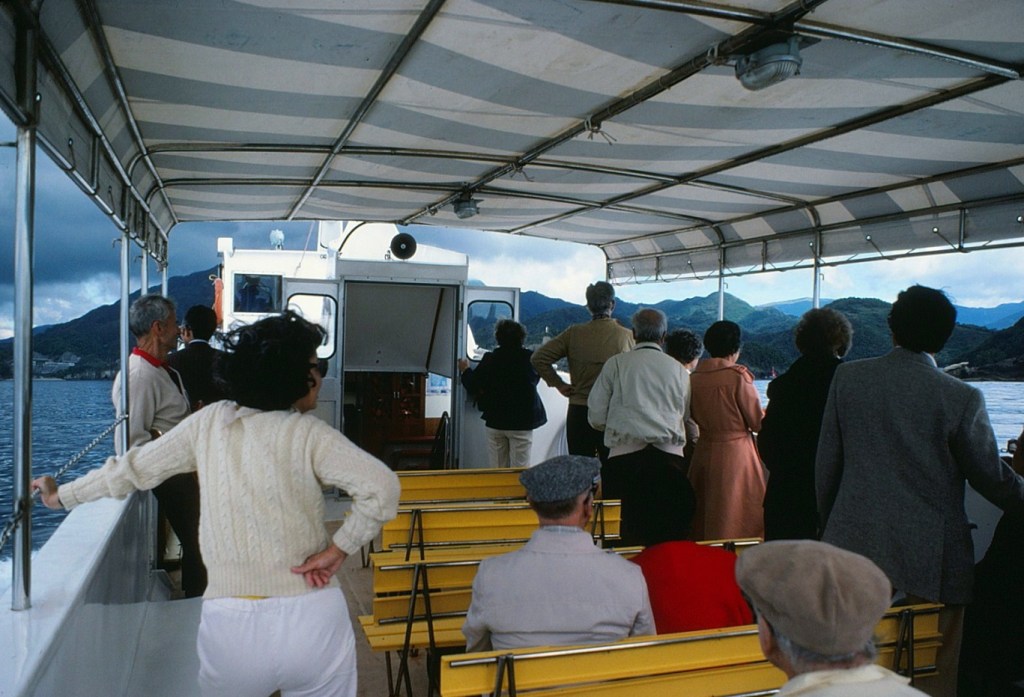
[View from the boat . . . ]
[Almost Gibraltar . . . ]
Every drop in the ocean counts. ~ Yoko Ono
There’s a long life ahead of you and it’s going to be beautiful, as long as you keep loving and hugging each other. ~ Yoko Ono
[Toku, just ahead of me . . . ]
Land ho! ~ Some sailor somewhere
When I was modeling in Japan, I could blend in a little because of my hair, but my roommates with blonde hair got harassed. People would touch their hair and grope them in the subway. Actually, a lot of groping happens in the subway in Japan, but that’s probably true of subways everywhere. ~ Emmanuelle Vaugier
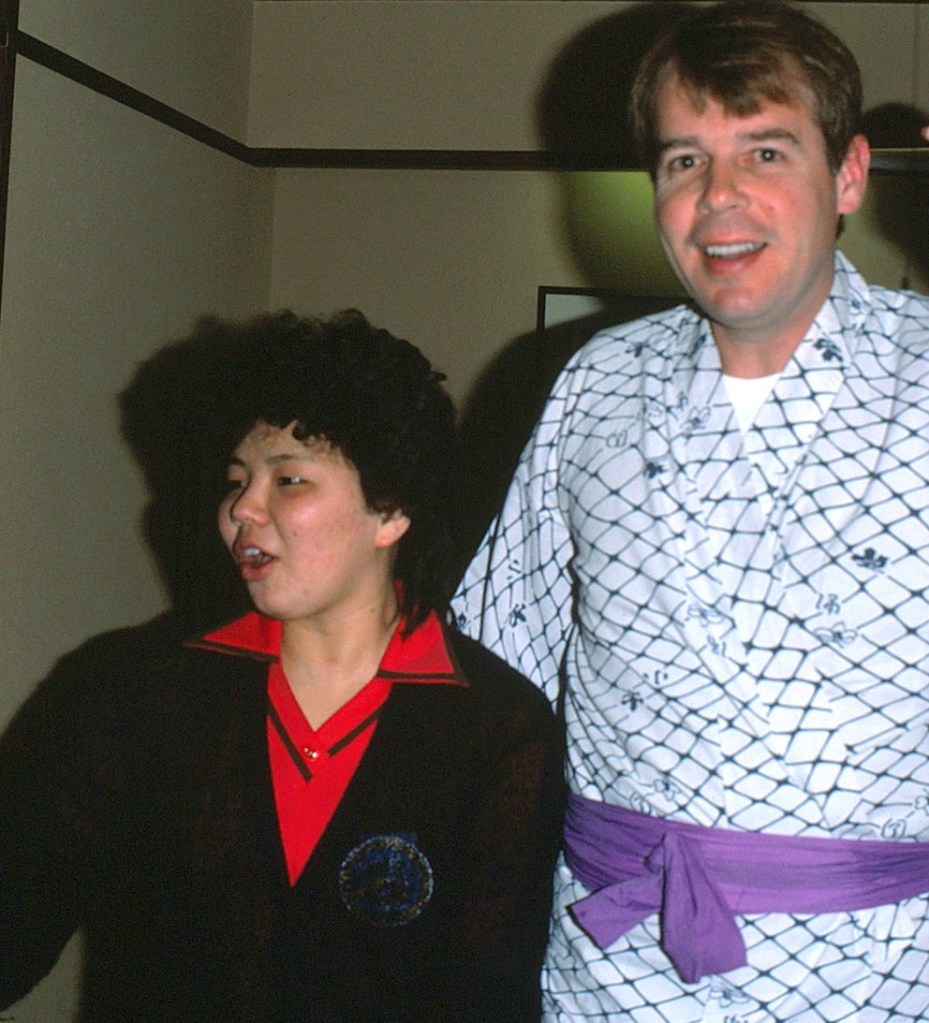
[When I undertook this undertaking (though never say “undertaking” around an older person), Roy had a specific memory of a “Shuzenji hot spring resort where we stayed in modern Ryokan (Japanese style hotel) dressed up in Kimono and had a formal Japanese meal” . . . ]
[So, I looked it up, et voila – it probably was my favorite part of the trip . . . ]
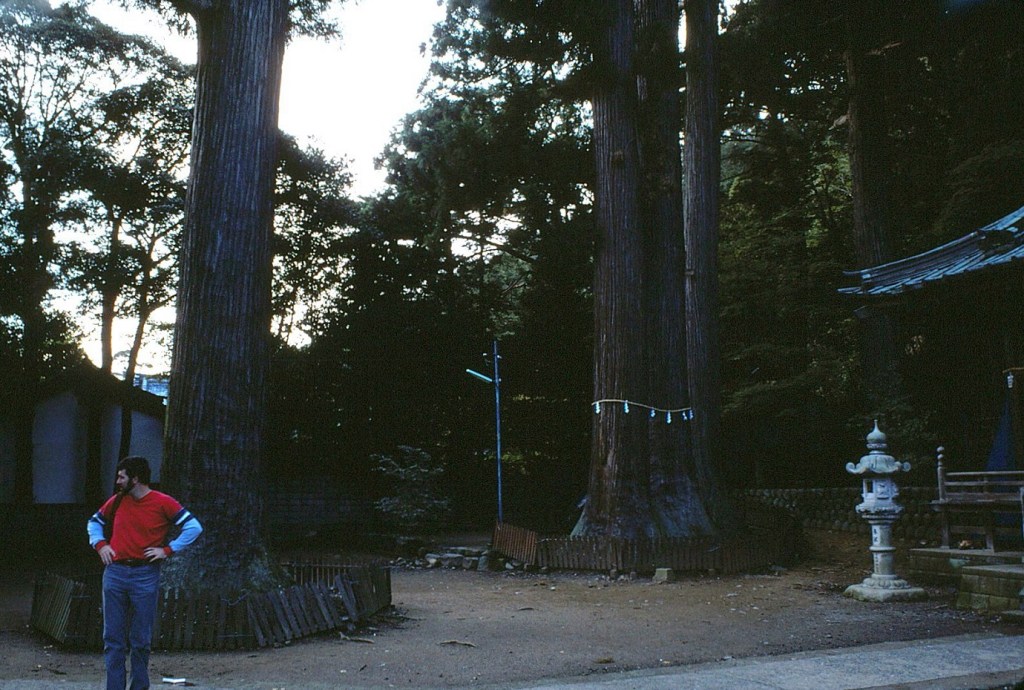
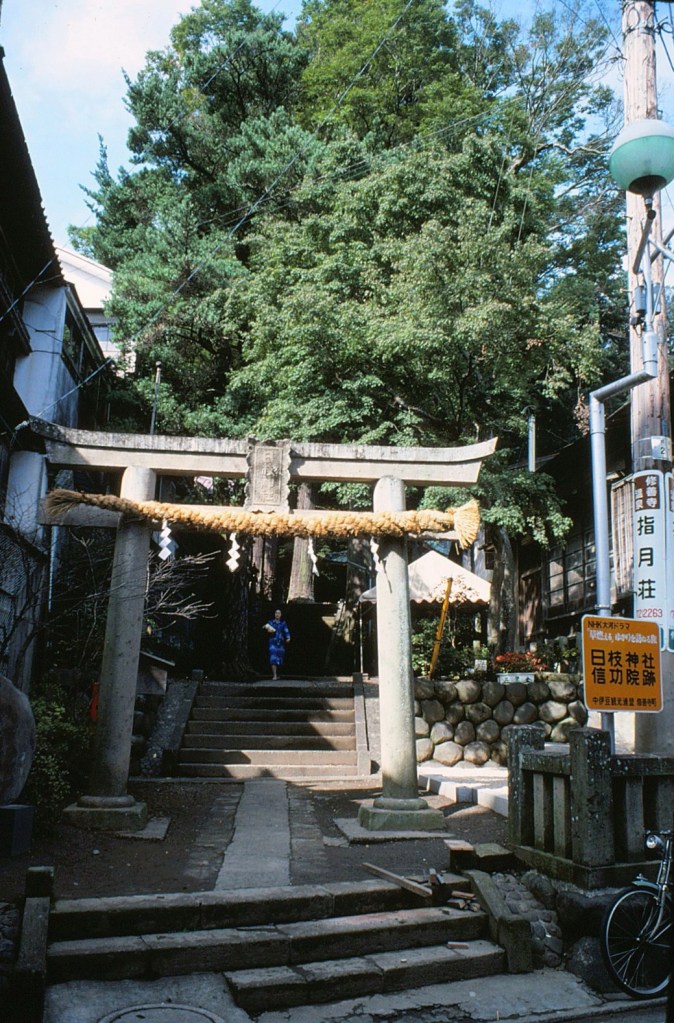
[Hie Jinja Shrine is one of the 3800 branch shrines under San-no So Honsha (The main shrine of San-no located in Hie-zan). In 807, Kukai (or Kobo Daishi) set up this shrine at the same time he established Shuzen-ji Temple. Although Hie Jinja doesn’t have a big precinct, huge trees are scattered about, and show its sacredness. Two cedar trees attached together at their roots is a symbol of blessing of children (Kodakara-no-sugi). The trees are more than 800 years old and decorated with holy straw ropes. Go through between the trees, making a wish about your children, and then you and they will be blessed (en.japantravel.com).]
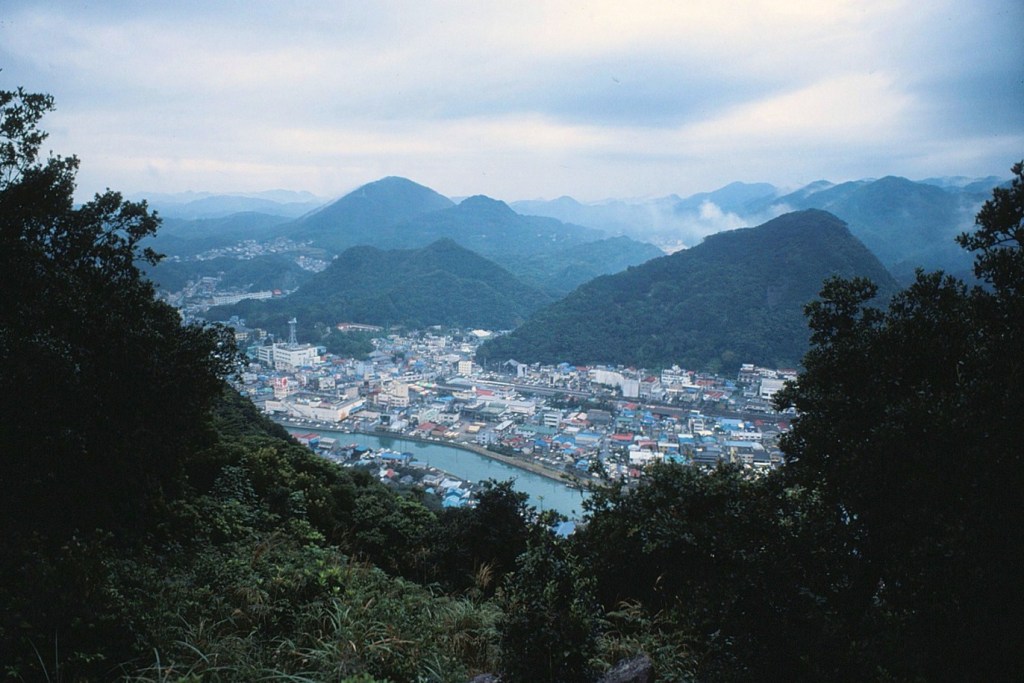
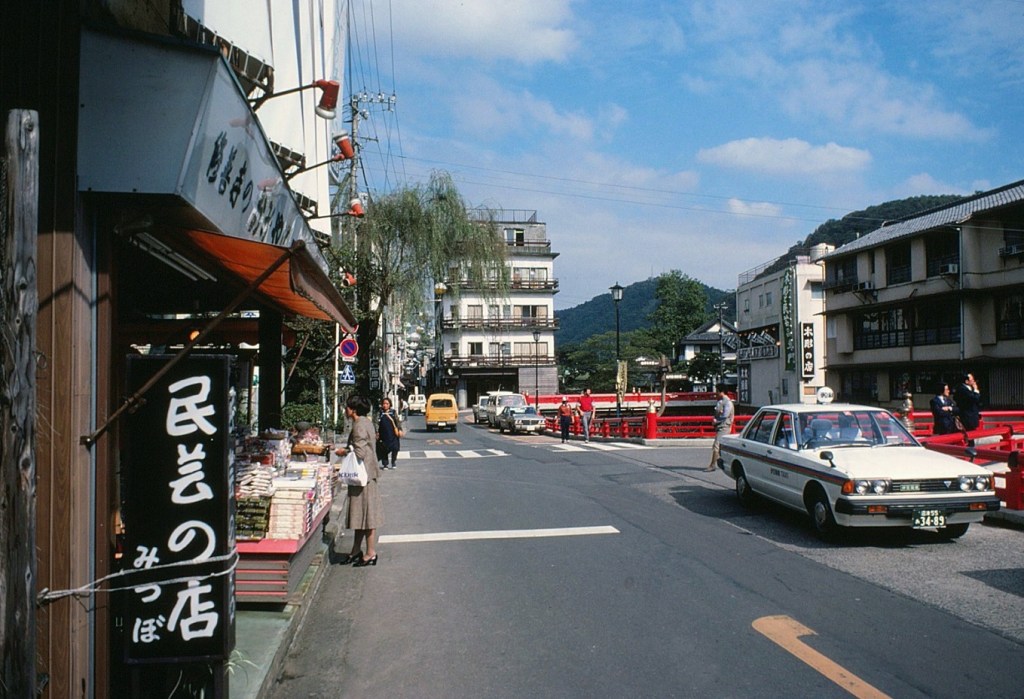
[Shuzenji, the town; the wonderful Shuzenji Onsen will be featured in the nest post . . . ]
[See the following photo . . . ]
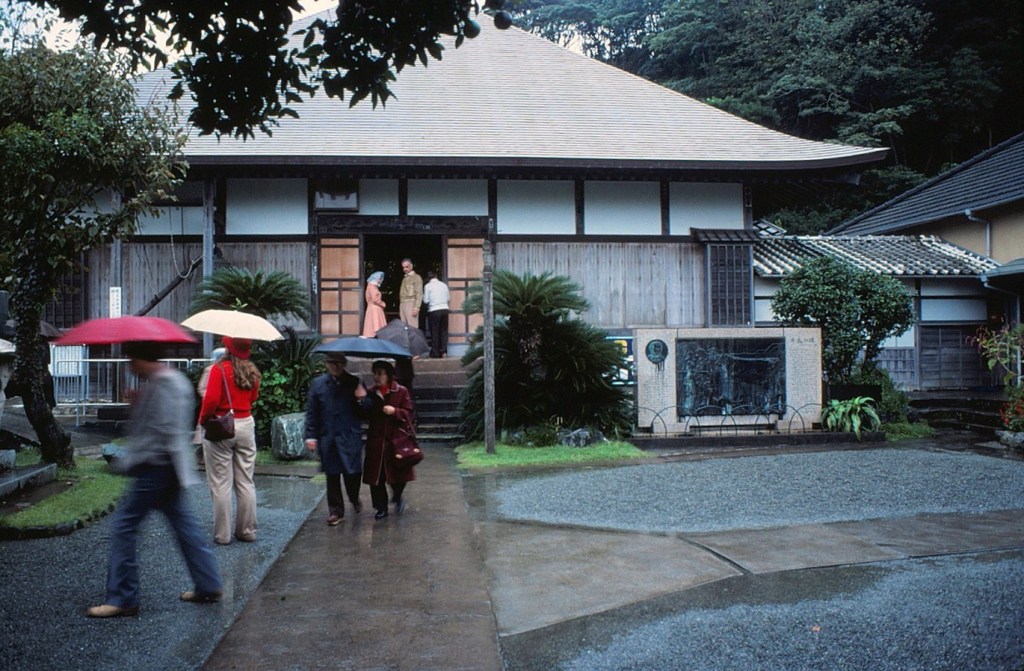
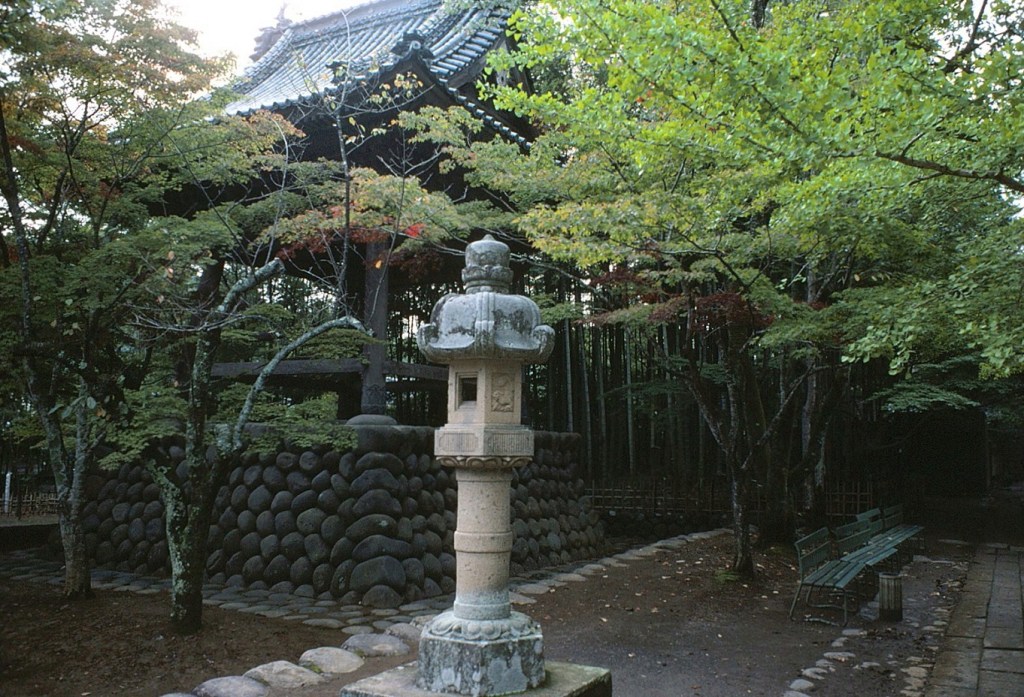
[The Shuzenji Temple is said to have been founded by Kobo Daishi in the 9th century, and became a major temple with many buildings supported by the Hojo family in the Kamakura period. In 1194, Minamoto no Noriyori was arrested and confined here by his elder brother, the shogun Minamoto no Yoritomo, and eventually committed suicide when Kajiwara no Kagetoki attacked. The second shogun Yoriie, the first son of Minamoto no Yoritomo, was also confined here because of a plot by his mother Masako and grandfather Hojo Tokimasa, and was assassinated in 1204 while taking a bath. This was the scene of tragedies caused by the bad blood in the Minamoto family, and is known as the place where the family historically met its end (shizuoka-guide.com).]
Go to any Shinto temple in Japan and you’ll see it: a simple stand from which hang hundreds of wooden postcard-size plaques with a colorful image on one side and, on the other, densely scribbled Japanese characters in black felt-tip pen, pleas to the gods for help or succor. ~ Hanya Yanagihara
Human reactions to robots varies by culture and changes over time. In the United States we are terrified by killer robots. In Japan people want to snuggle with killer robots. ~ Daniel H. Wilson
If you understand everything, you must be misinformed. ~ Japanese proverb
Depend on your walking stick, not on other people. ~ Japanese (and Fat Boys Walking Club) proverb
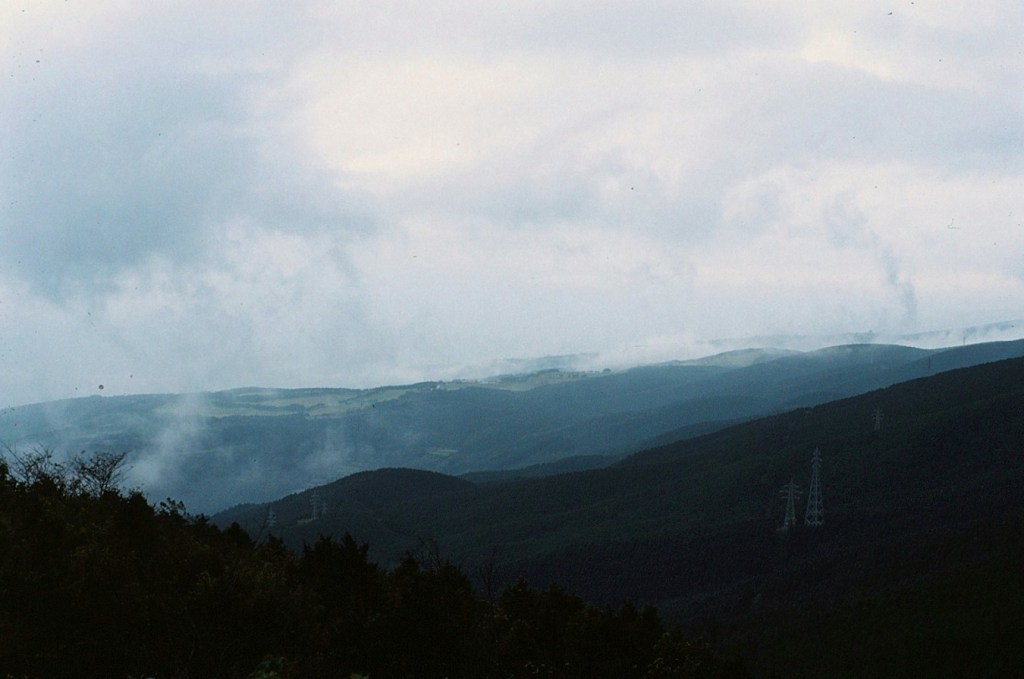
When last we left you we were in an as yet unidentified ryokan in the Japanese Alps . . .
[In my Facebook tease, I noted that I couldn’t remember what it was that I liked so much about Japan – and then I ran across these photos . . . ]
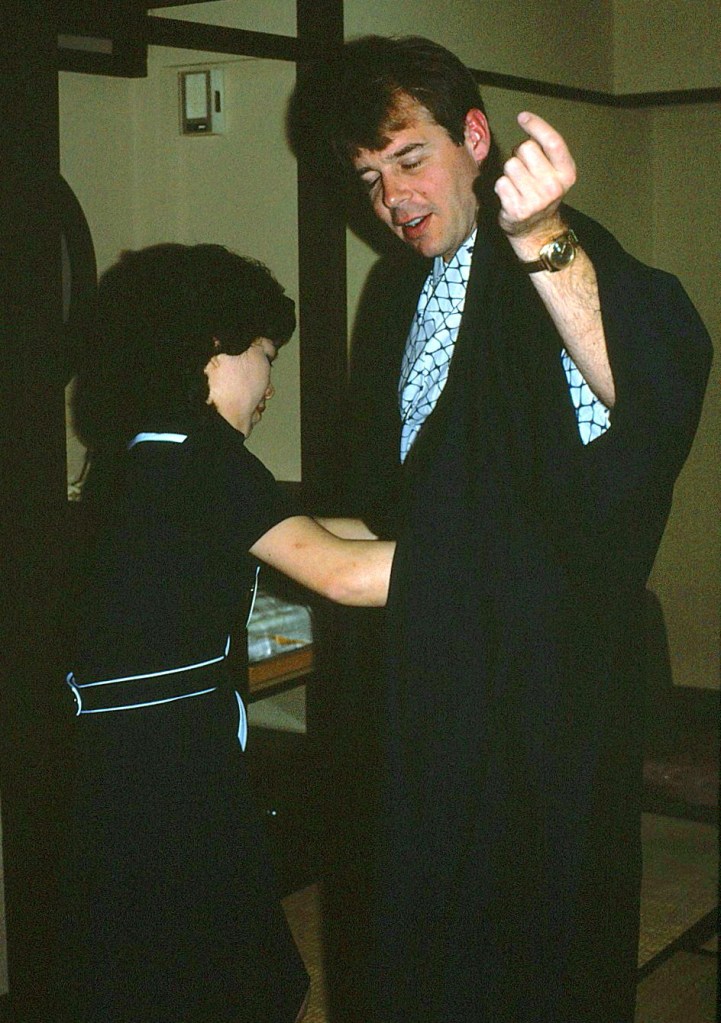
[So, what’s not to like about women valets helping you to dress before dinner?]
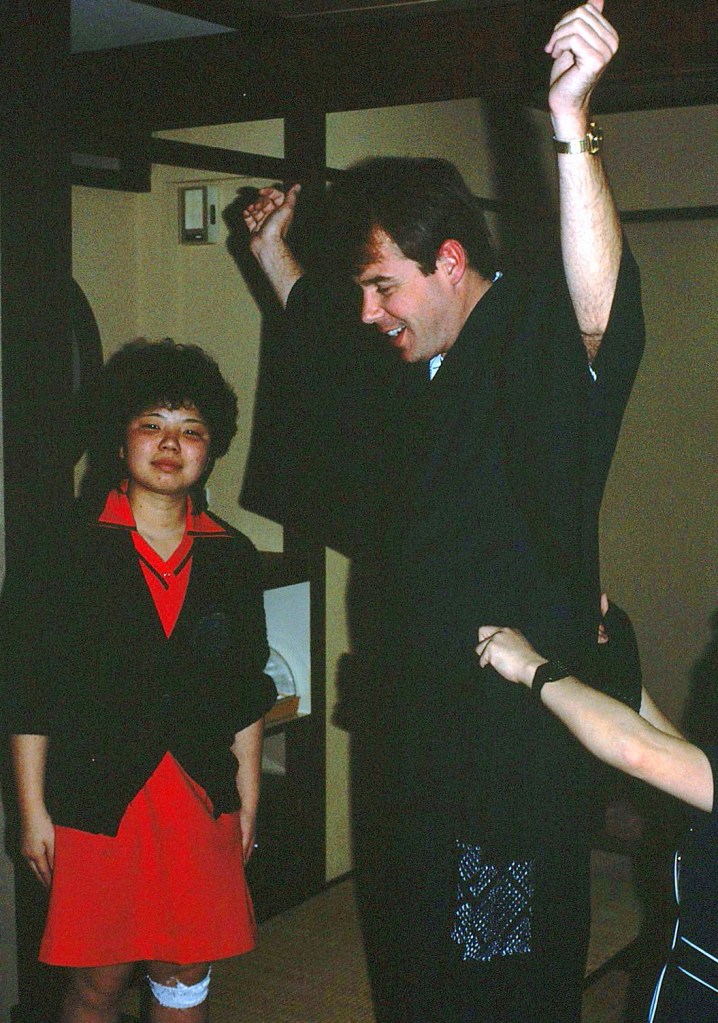
[A little tuck here, a little tuck there . . . ]
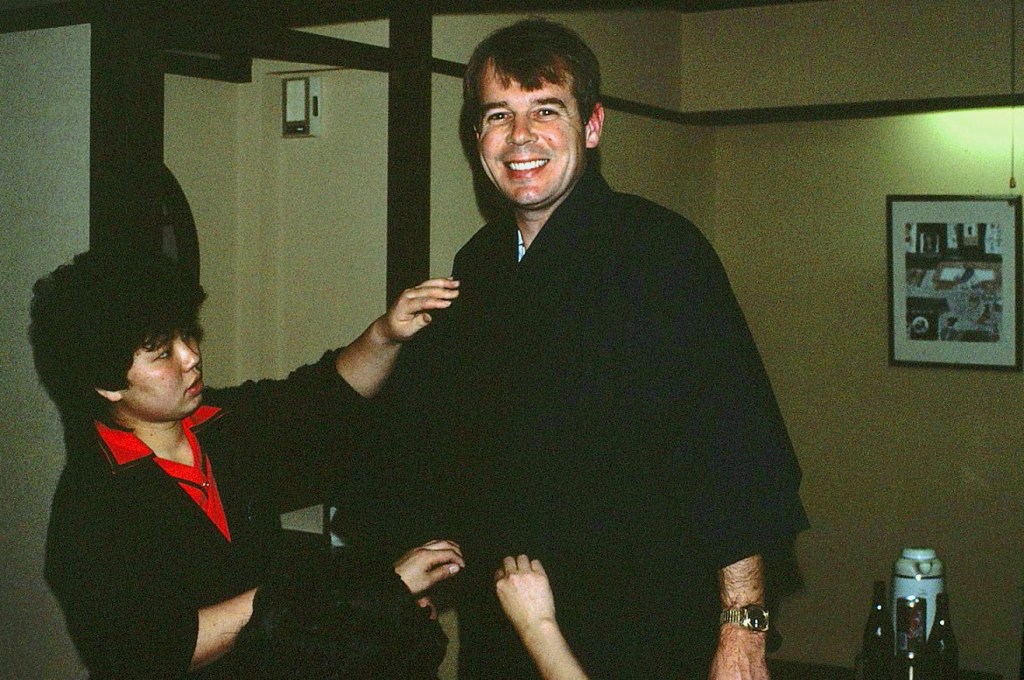
[Et voila . . . ]
[You’re good to go . . . ]
[With Randy and Marsha, guess who’s going to dinner? Your classic kimonos for men and women over the yukata tied up with an obi . . . ]
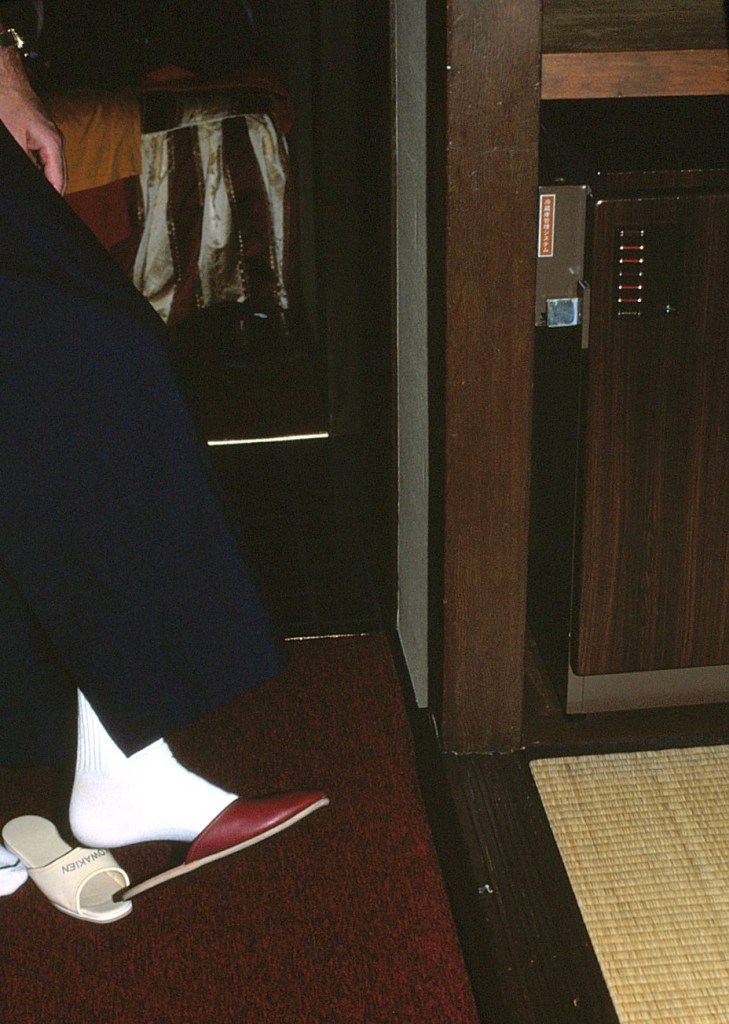
[Our valets got a big laugh out of my trying to put my size 10 1/2 gaijin (foreigner) foot into about a size 7 slipper . . . ]
[Though not always the case – chairs at the dinner table! Woo-woo!]
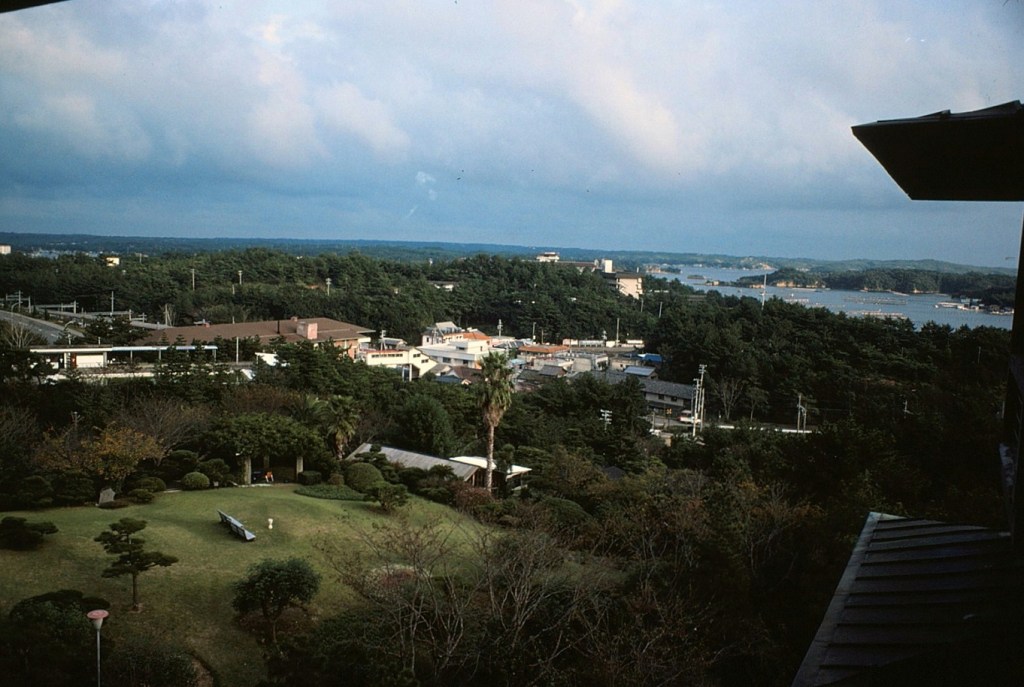
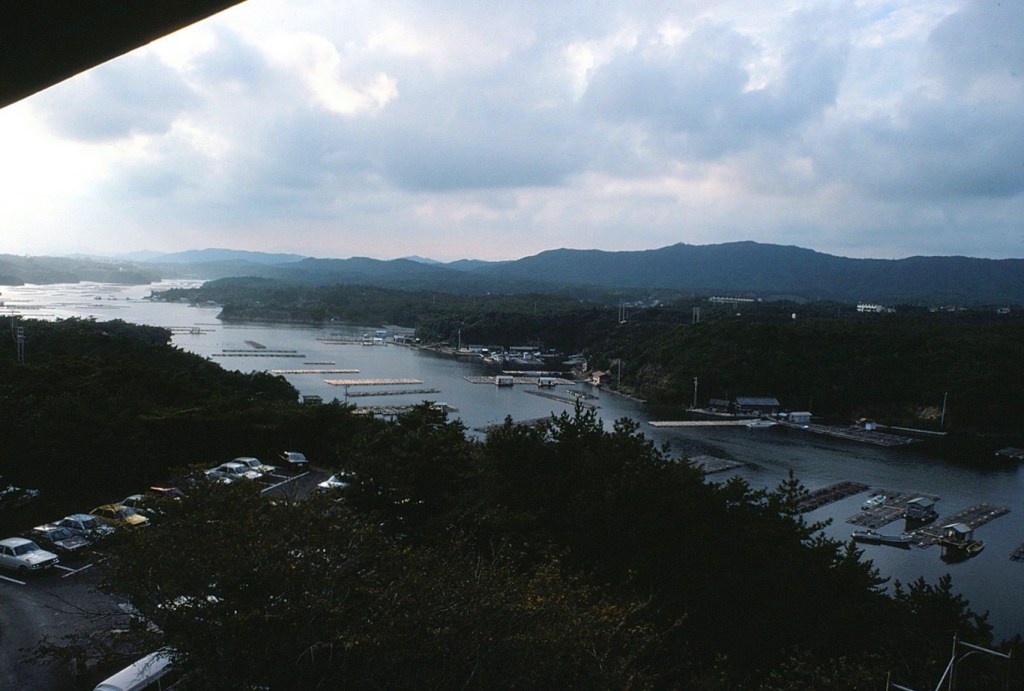
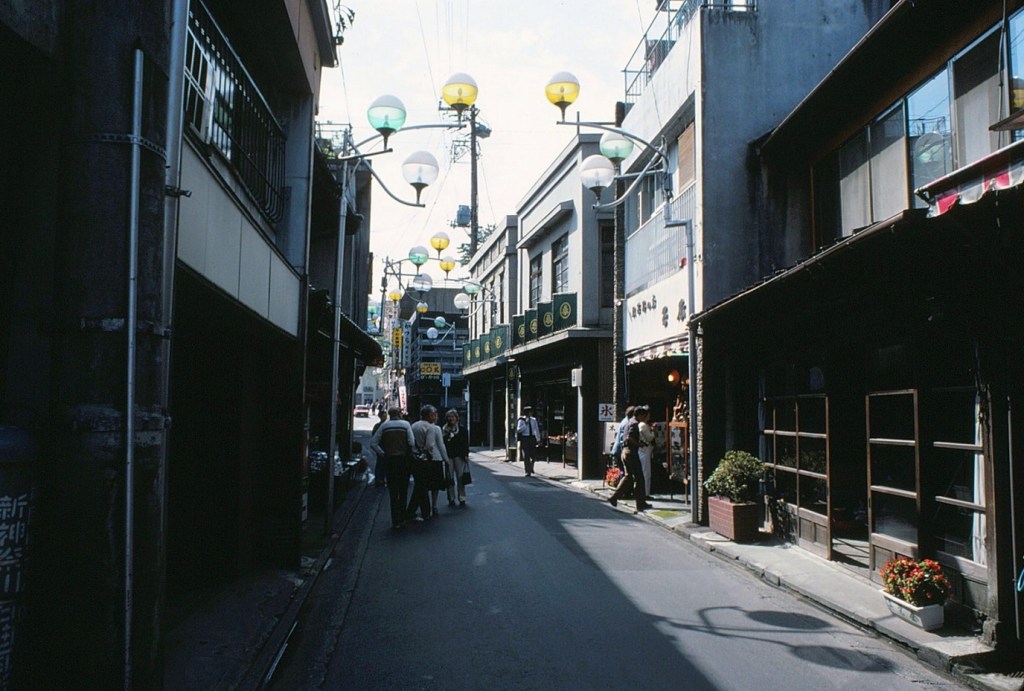
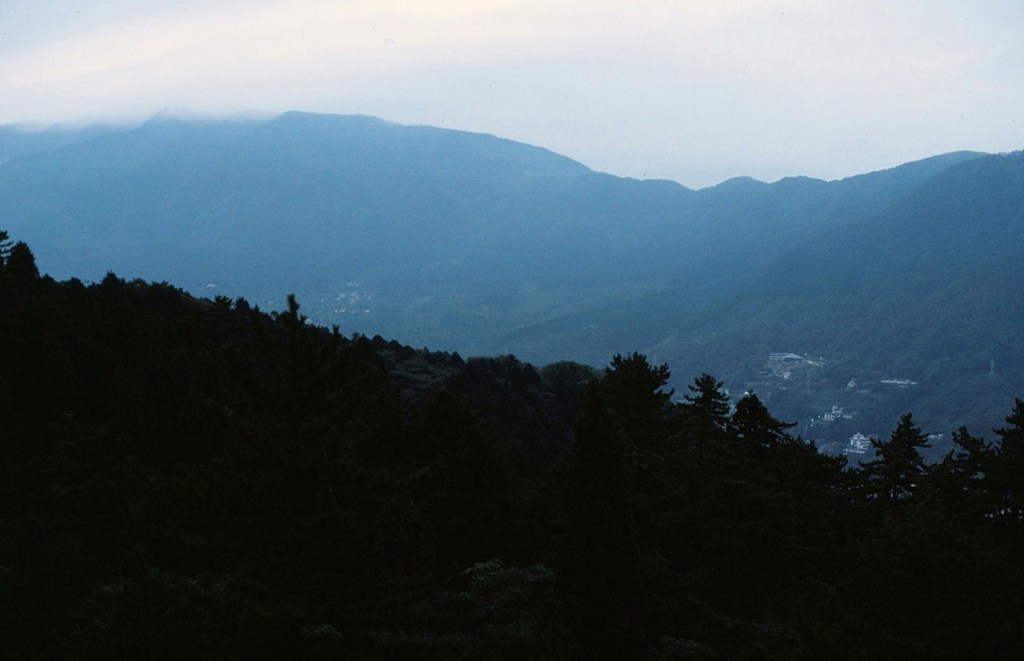
[The neighborhood from our perch . . . ]
There’s a reason that there are oodles of young Aussies, Germans, Japanese, even Chinese backpackers traipsing around the world. They are unencumbered by debilitating student loans. No such luck for the American Theater Arts major with $120,000 in loans. ~ J. Maarten Troost
[To my knowledge, I don’t recall being on a submarine though Roy looks such . . . ]
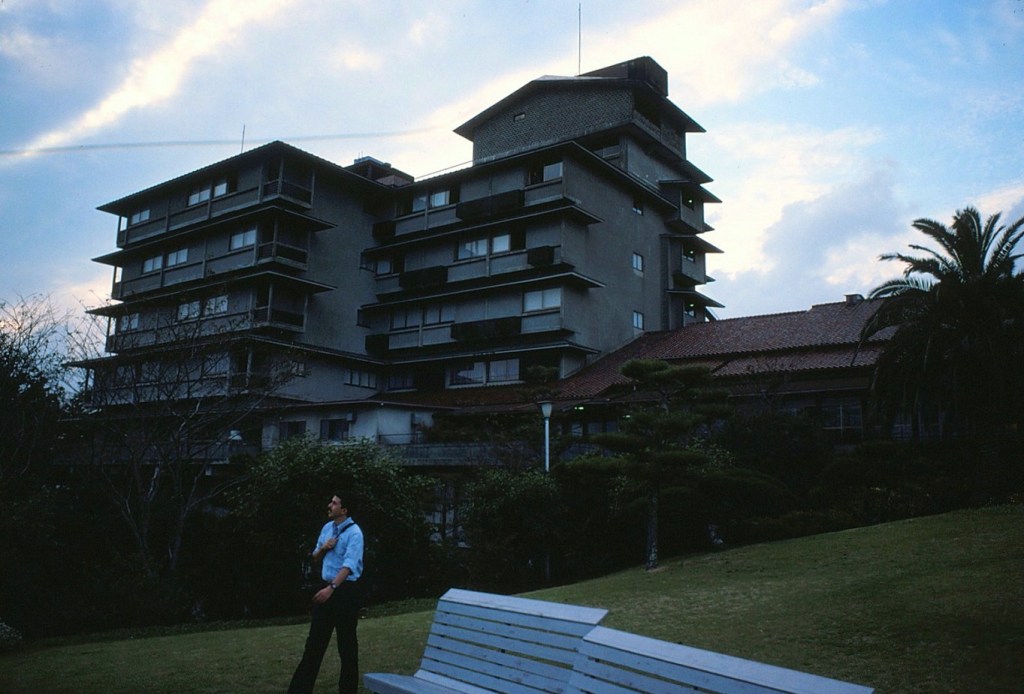
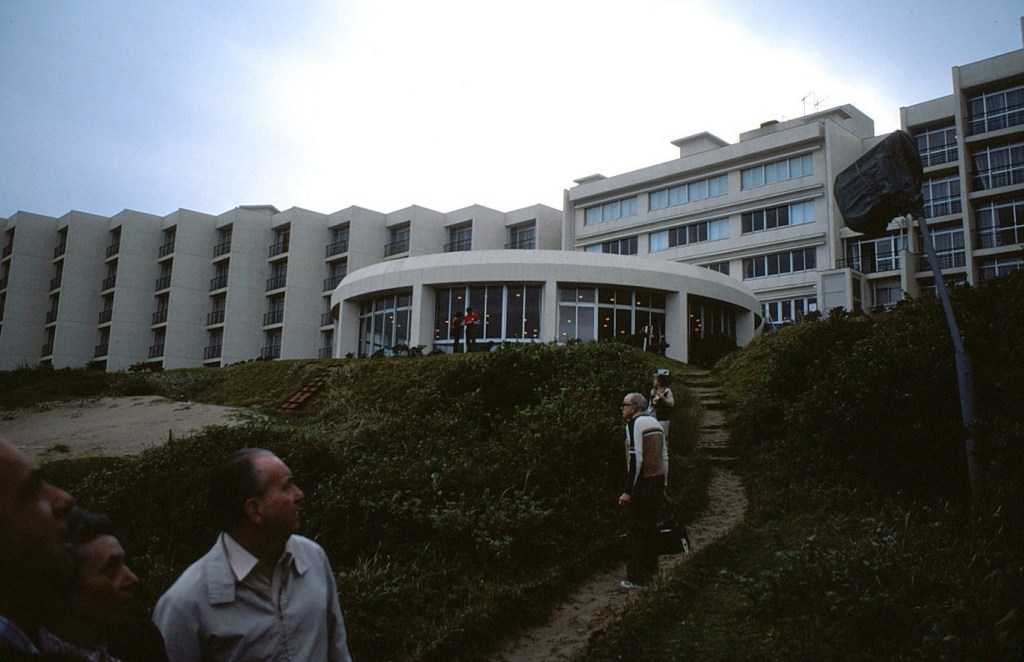
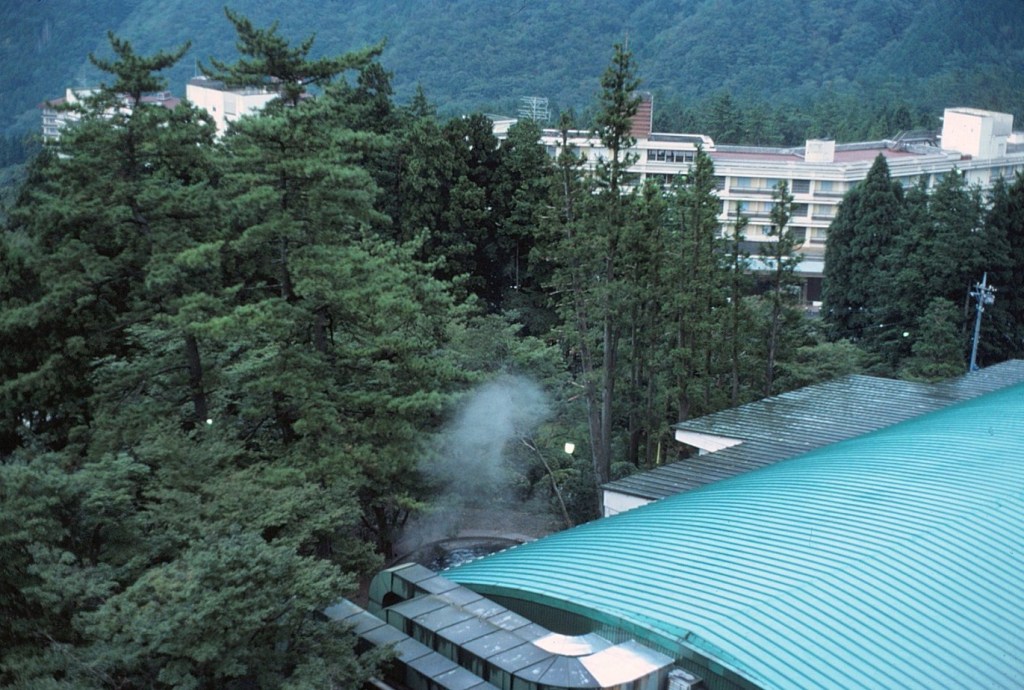
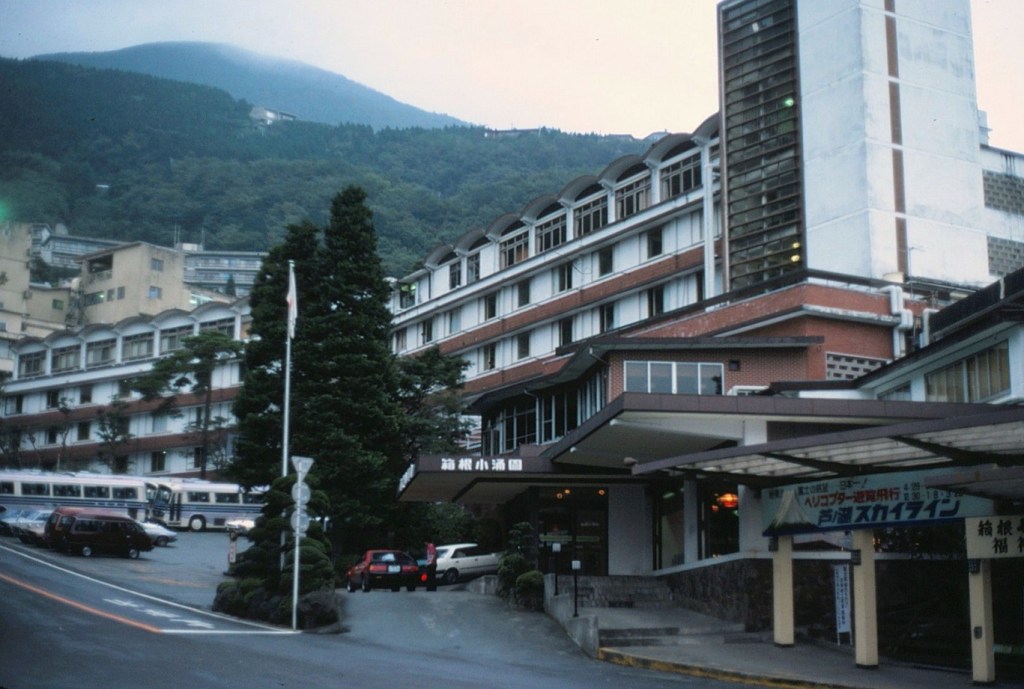
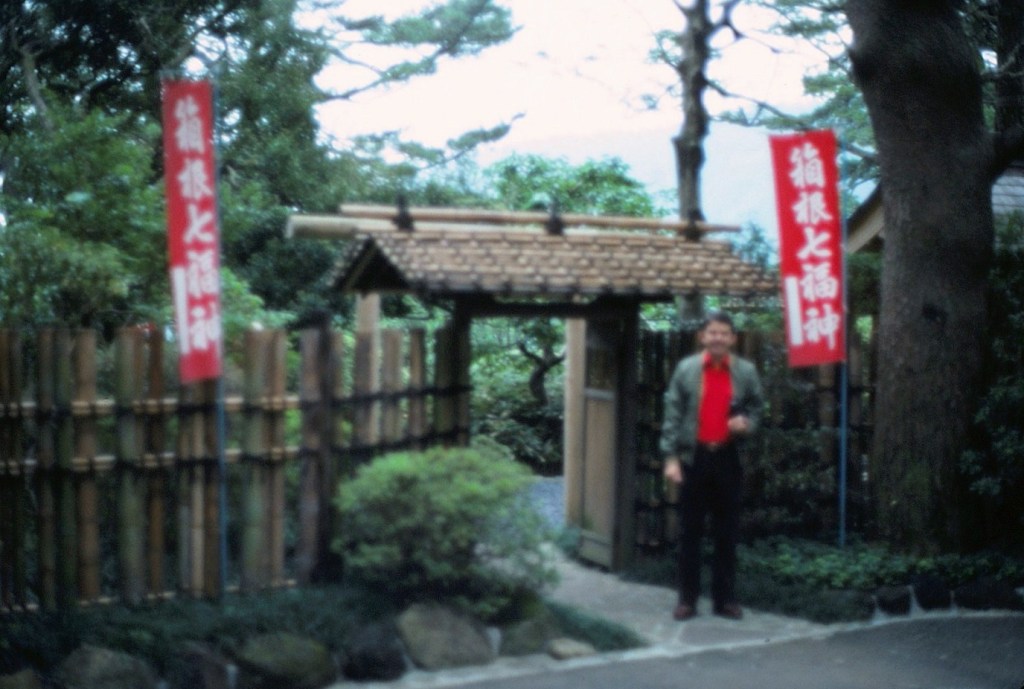
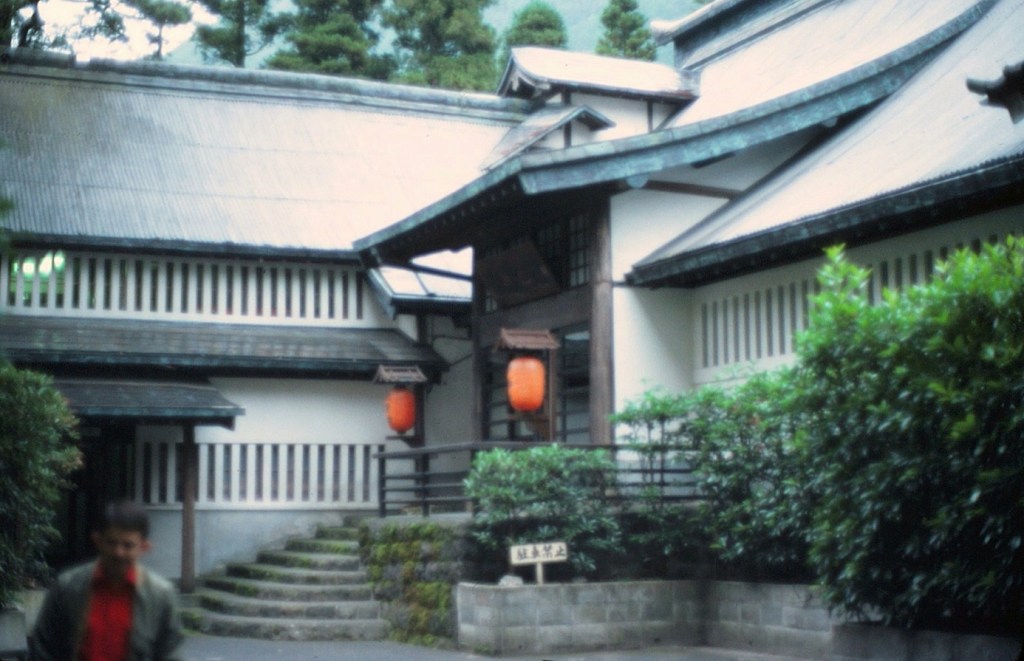
[OK, now either as a result of incredible piece of sleuthing, or more likely pure dumb like, I believe I have discovered where we were. Go back up to the slipper photo. I noticed writing on the shower footwear underneath the slipper. And from that a scouring of the Google machine led me to discover the Hakone Kowakien Ten-yu. The current hotel looks like it has had a makeover from its appearance 37 years ago . . . ]
[Roy and I both had top secret-crypto clearances in the Army. Accordingly, he is necessarily out of focus on some pictures. . . ]
It’s a myth that generally Asians are mostly vegetarians. The Japanese are the kings of red meat, but it’s expensive. The Chinese and Vietnamese love their pork. Many Indians, especially the Muslims, can’t live without their lamb. ~ Wolfgang Puck
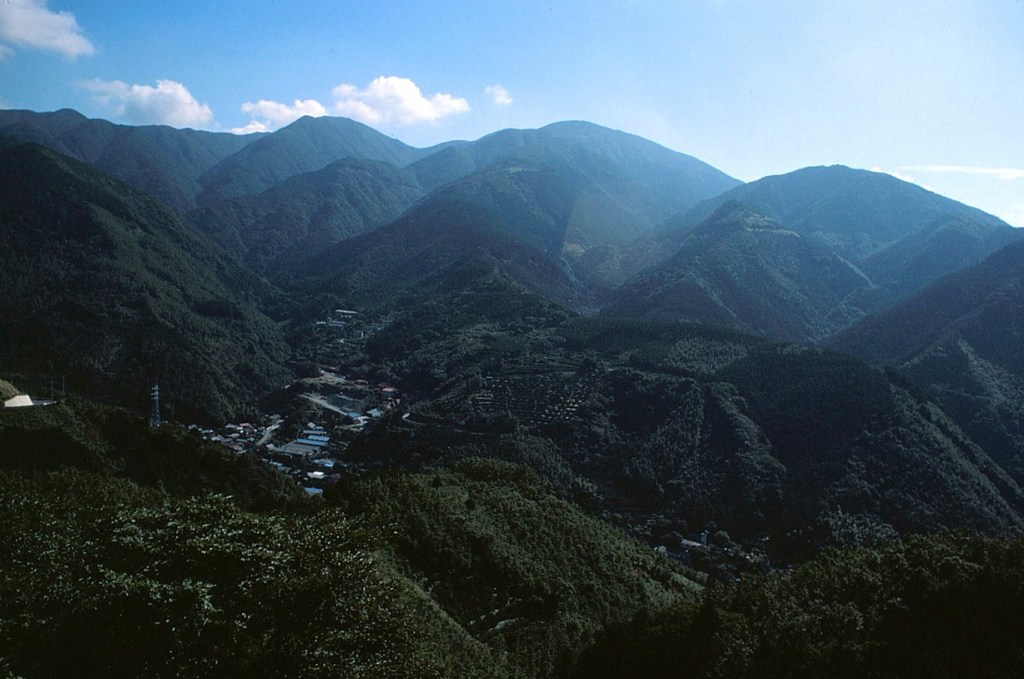
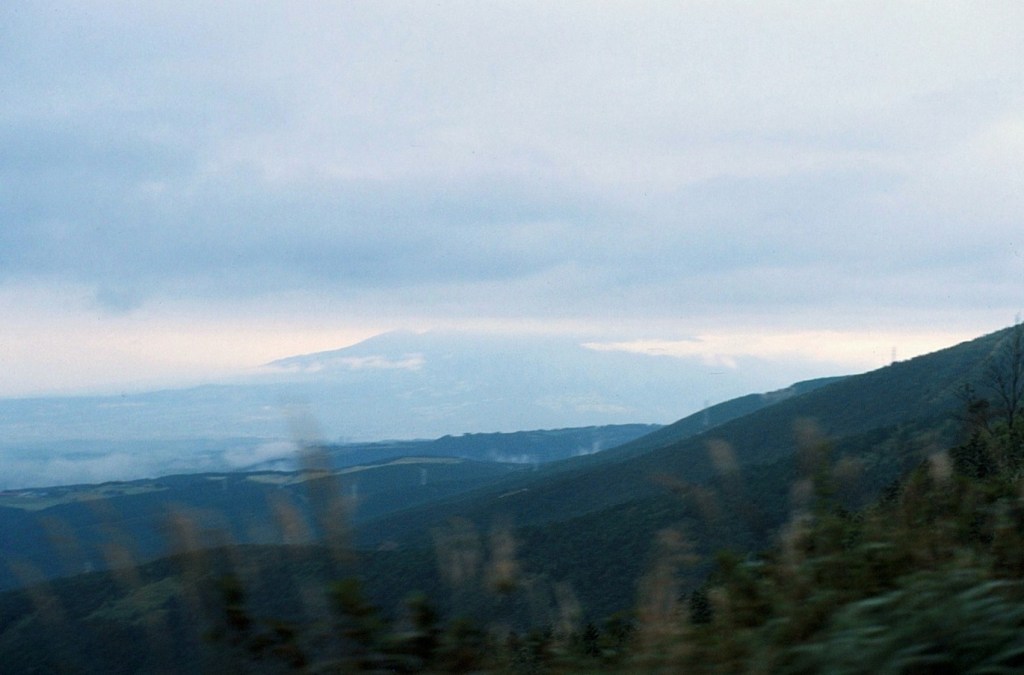
[And now we’re heading down out of the Alps . . . ]
Thanks to the Japanese and Geronimo, John Wayne became a millionaire. ~ Pat Morita
[Back at sea level . . . ]
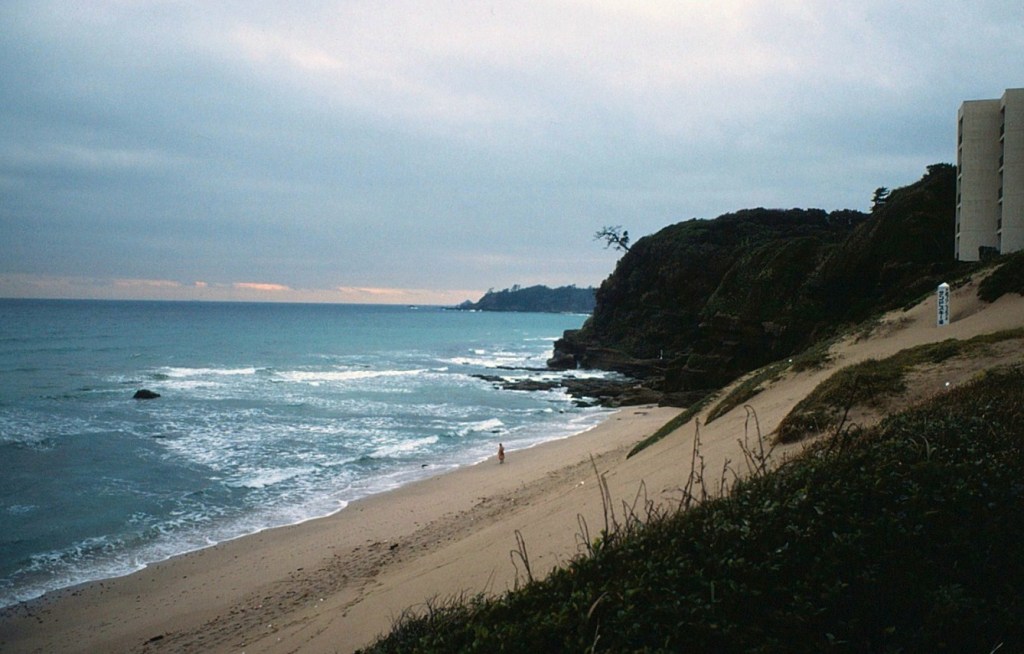
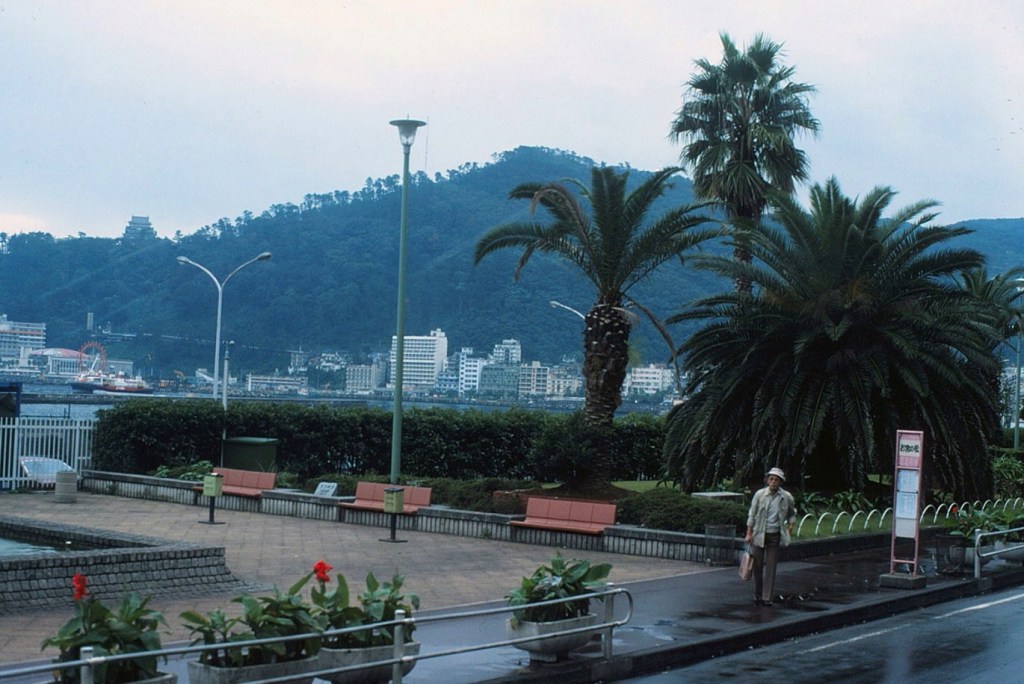
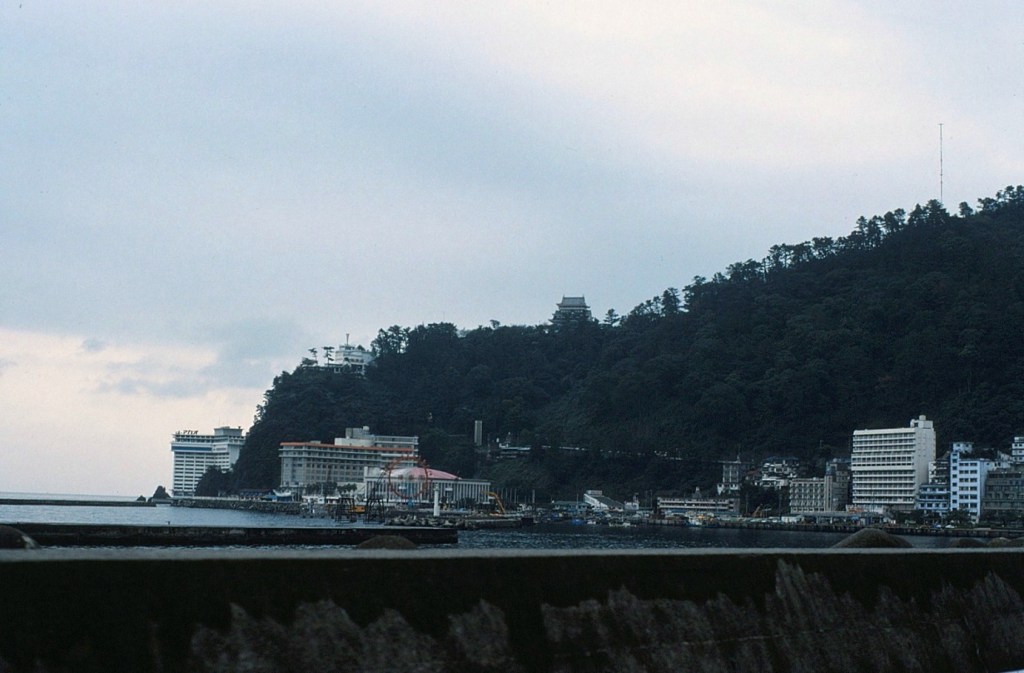
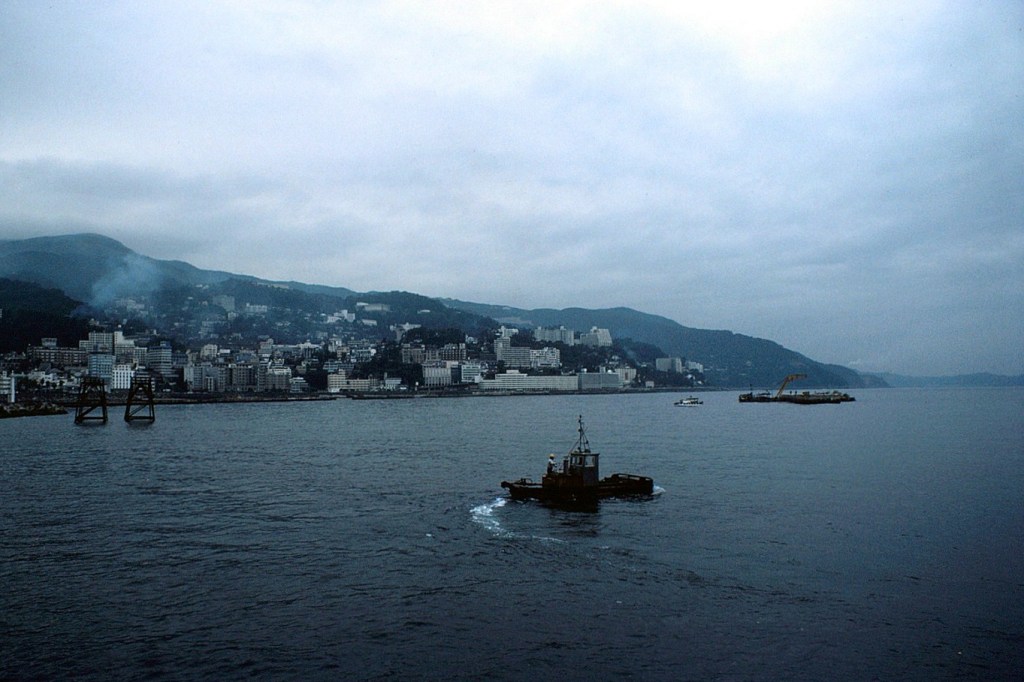
[I have reason to suspect this may be Atami City on Sagami Bay . . . ]
[But I probably wouldn’t put a lot of yen on it . . . ]
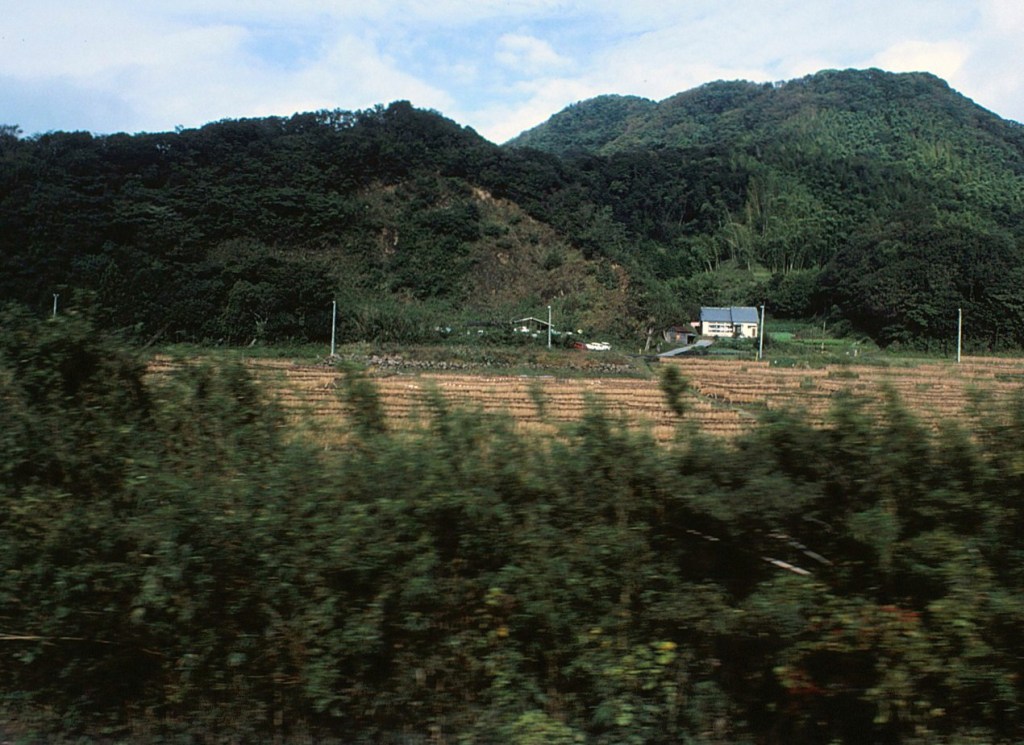
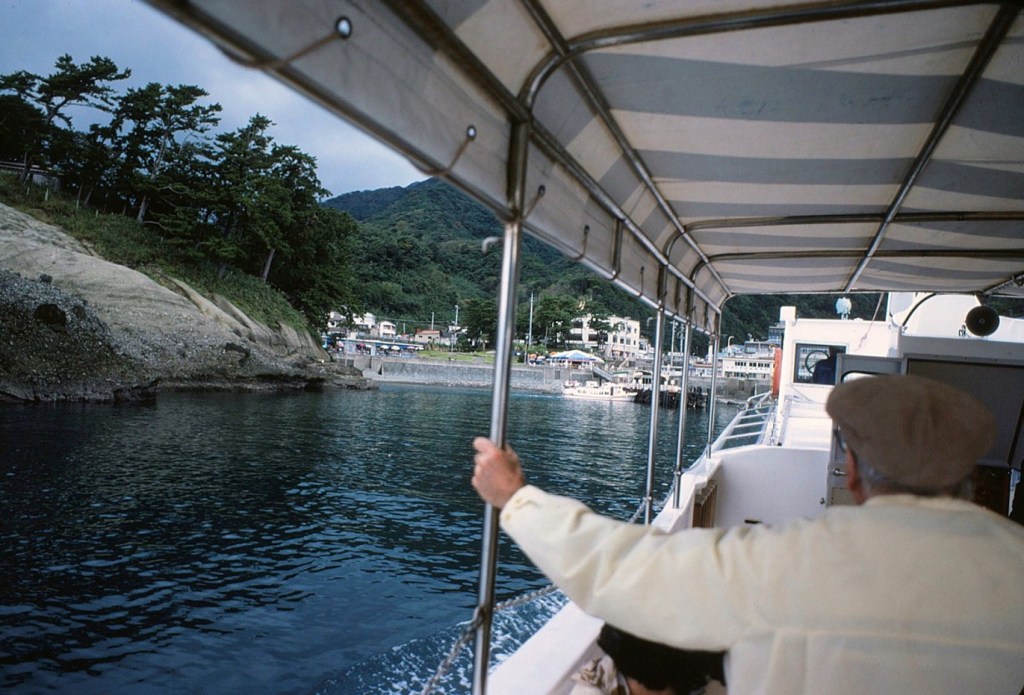
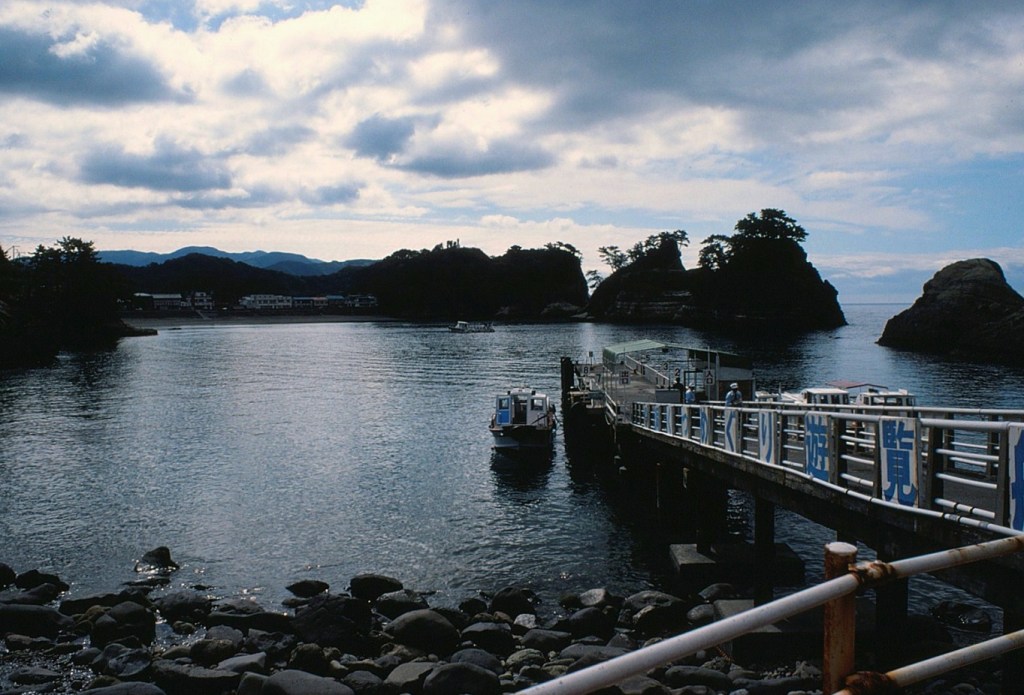
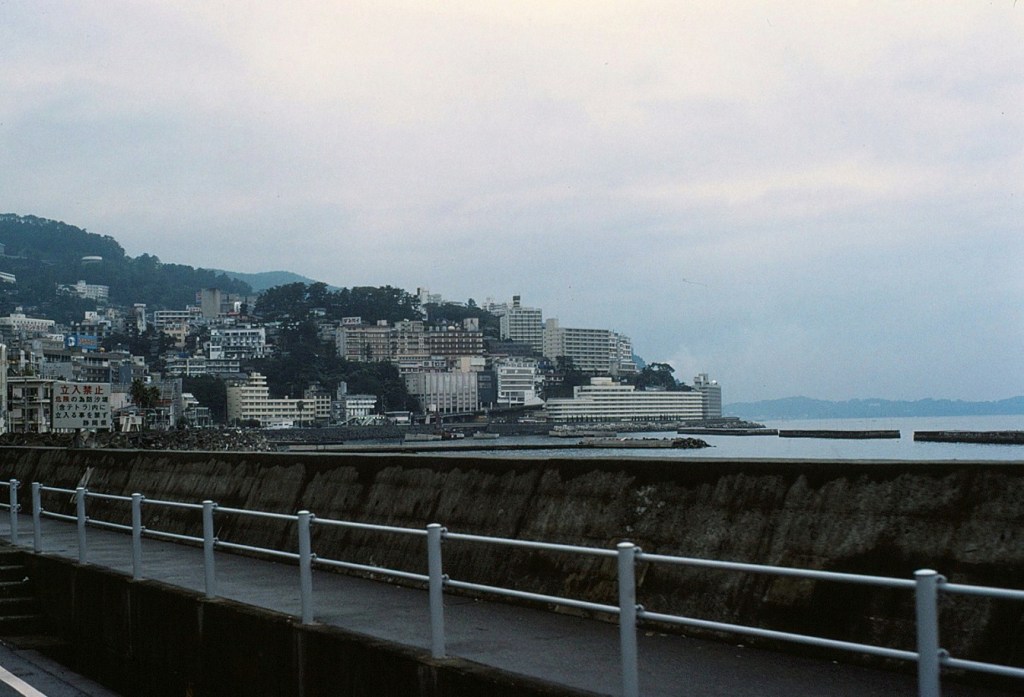
[My next best estimate is that the following photos will be along the 50-mile route from Atami to Shimoda along the eastern coast of the Izu Peninsula . . . ]
Forget sushi, yakitori and tempura, ramen is what really gets the Japanese excited. ~ Rachel Khoo
My fake Japanese was smooth enough to earn me the title of ‘The Emperor of Pleasing Graciousness’ in that country. ~ Wolfman Jack
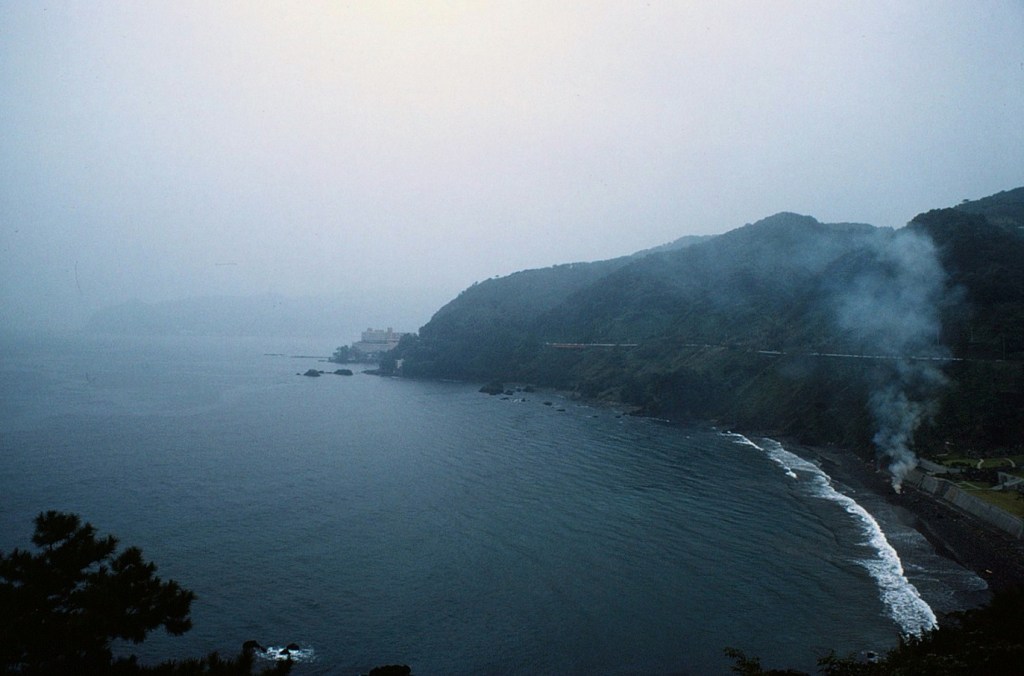
[I guess this is s’pose to be a shot of the curvy coastal road we’re on . . . ]
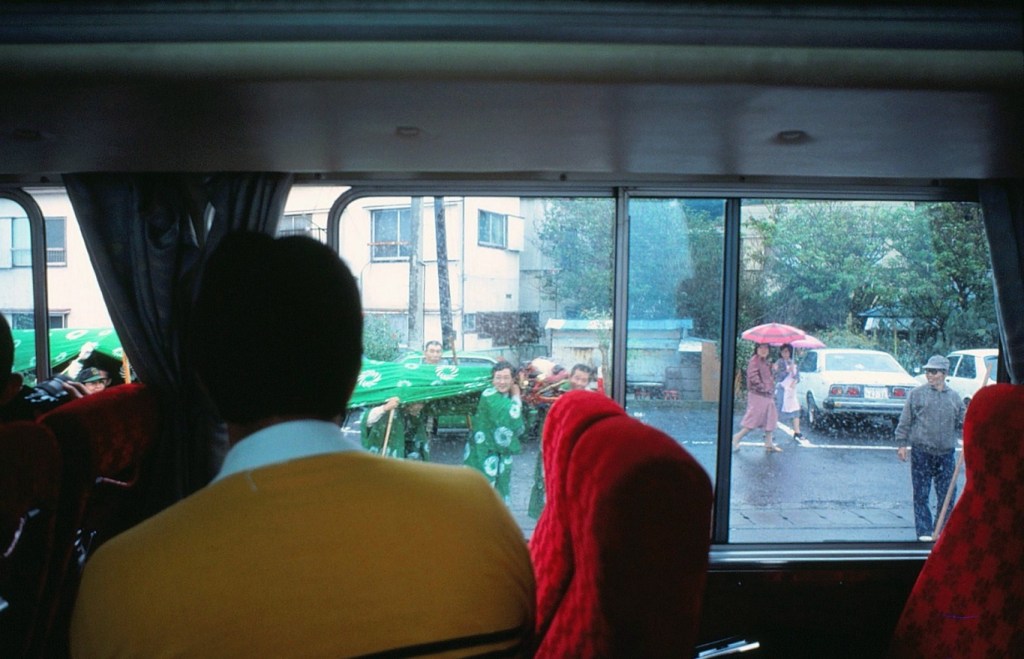
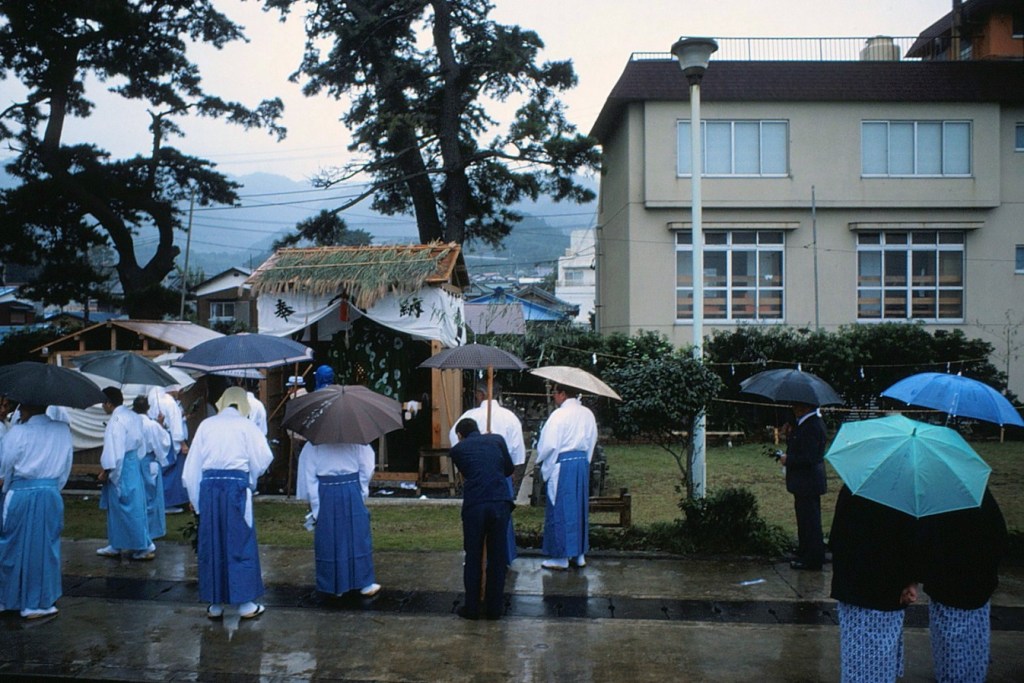
[It may be raining, but I love a parade . . . ]
[I’m not sure what this is about, but I hope it was joyously associated with the parade . . . ]
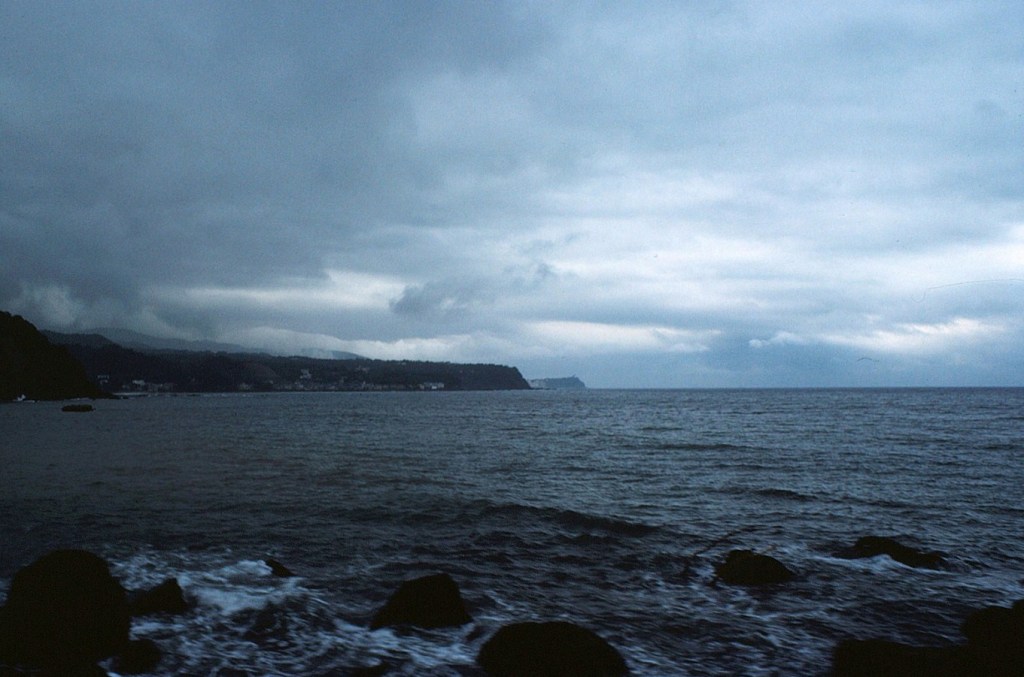
[We were probably getting a little tired of this November weather . . . ]
I didn’t understand the American fascination with the Japanese schoolgirl. No, I don’t think I can, really. ~ Chiaki Kuriyama
[It looks like we’re approaching a port city . . . ]
[Very much Japan . . . ]
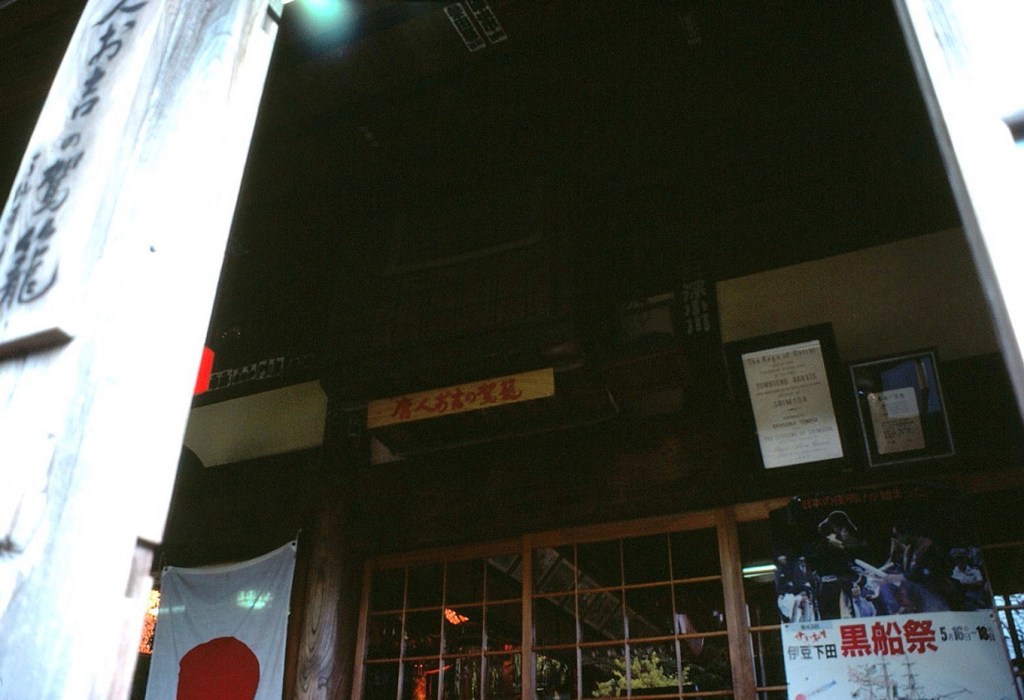
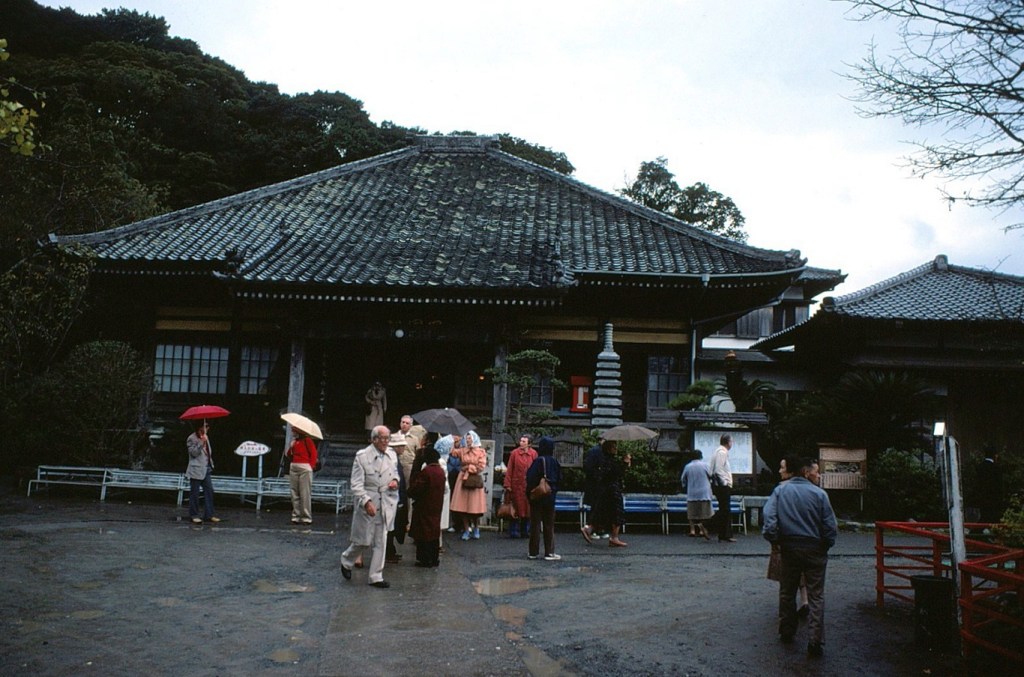
[Ryōsen-ji is a Nichiren-sect Buddhist temple in the city of Shimoda. It is noteworthy as the location of the signing ceremony for the Treaty of Amity and Commerce (also known as the Harris Treaty) between the Tokugawa shogunate of Japan and the United States of America on July 29, 1858. Due to this connection, the temple grounds and main hall have been designated as a National Historic Site by the Japanese government (Wikipedia).]
[The temple grounds . . . ]
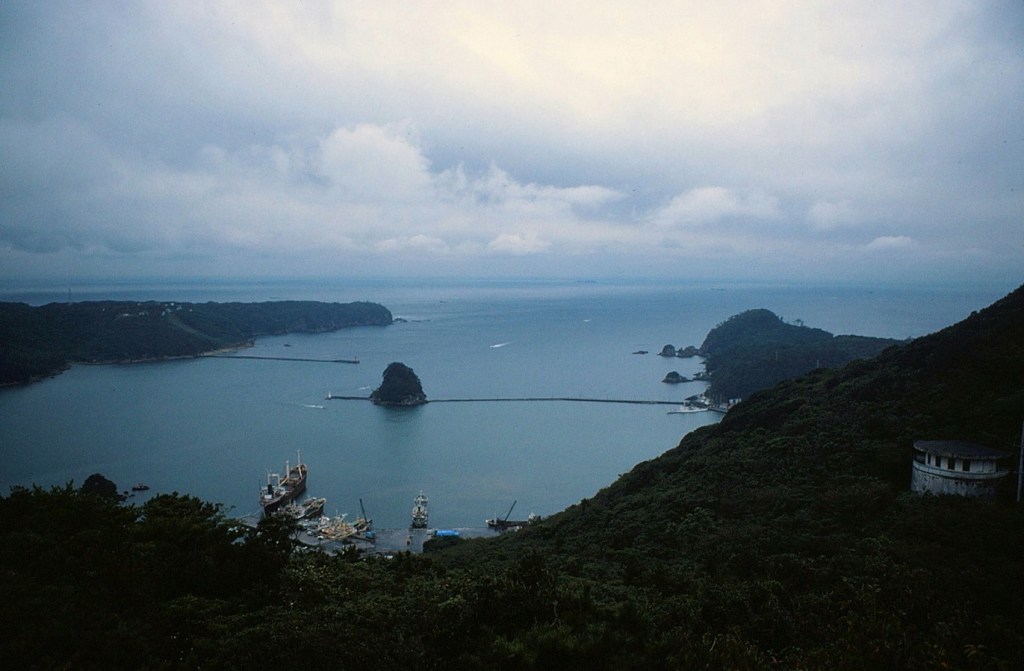
[The Shimoda Ropeway is a Japanese aerial lift in Shimoda. The line is also called Nesugatayama Ropeway as it climbs Mount Nesugata. The observatory has a view of Port of Shimoda and Pacific Ocean. The line began operation on April 1, 1961 (Wikipedia).]
[Would have been a beautiful view on a beautiful day . . . ]
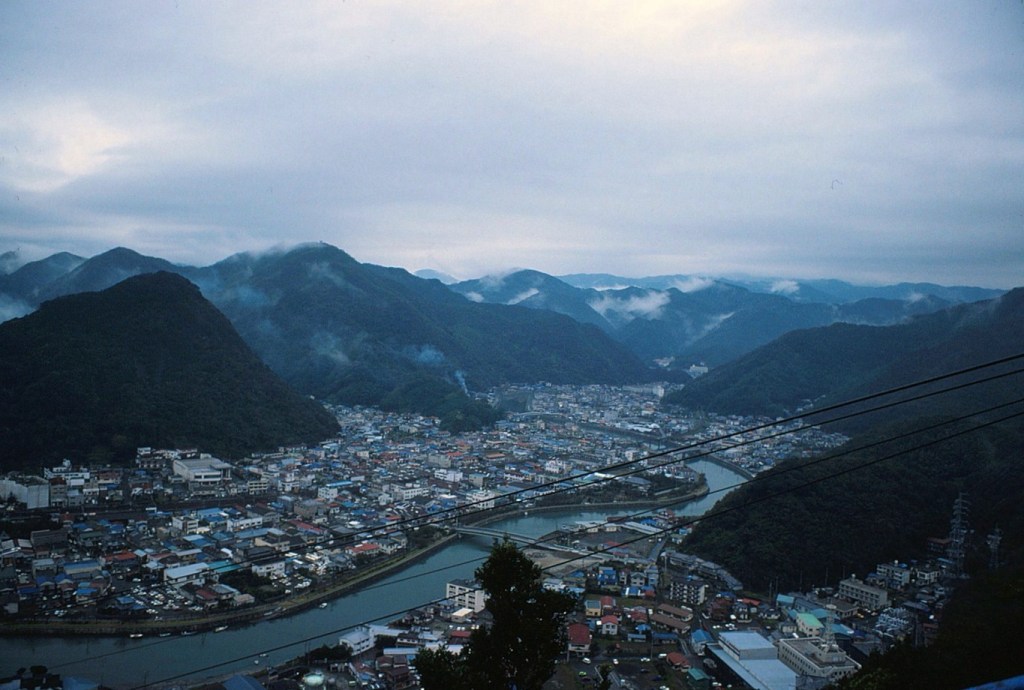
[Shimoda is a city and port located in Shizuoka Prefecture. As of 1 August 2019, the city had an estimated population of 21,402 in 10,787 households. In the 1850s, Japan was in political crisis over its increasing inability to maintain its national seclusion policy and the issue of what relations, if any, it should have with foreign powers. For a few years, Shimoda was central to this debate (Wikipedia).]
[And the Pacific beyond . . . ]
I could never understand how we could put 120,000 Japanese behind a fence in World War II. I remember being bewildered about that. ~ Phil Donahue
We’re taking a short break from blogging the Japan of the previous century to talk about . . .
In ancient times cats were worshiped as gods; they have not forgotten this. ~ Terry Pratchett
[Our story began a decade ago, give or take, when we first met Jess Lourey. Although Jess had taught at Alexandria Technical College, I seem to recall we didn’t meet her until she had taken a similar position in St. Cloud. And that was when she was on a book signing tour on behalf of her murder-by-month mystery novels. I believe the first time was at Cherry Street books in 2012 (below), though we had become pen pals (email, FB) prior to that . . . ]
[And this was at Cherry Street in 2014. Jess, of course, subsequently went on to international stardom as a full-time writer living in Minneapolis. Nevertheless, in her spare time, she is a foster parent for the Golden Valley Humane Society. And Jess sells them well . . . by cheating! How can anyone not get addicted when she continuously posts videos of the kitties in her charge? The Super finally caved . . . ]
[So, on October 2 we trundled down to Golden Valley to pick up Guinevere and Galahad, two 2-pound siblings born on July 28 . . . ]
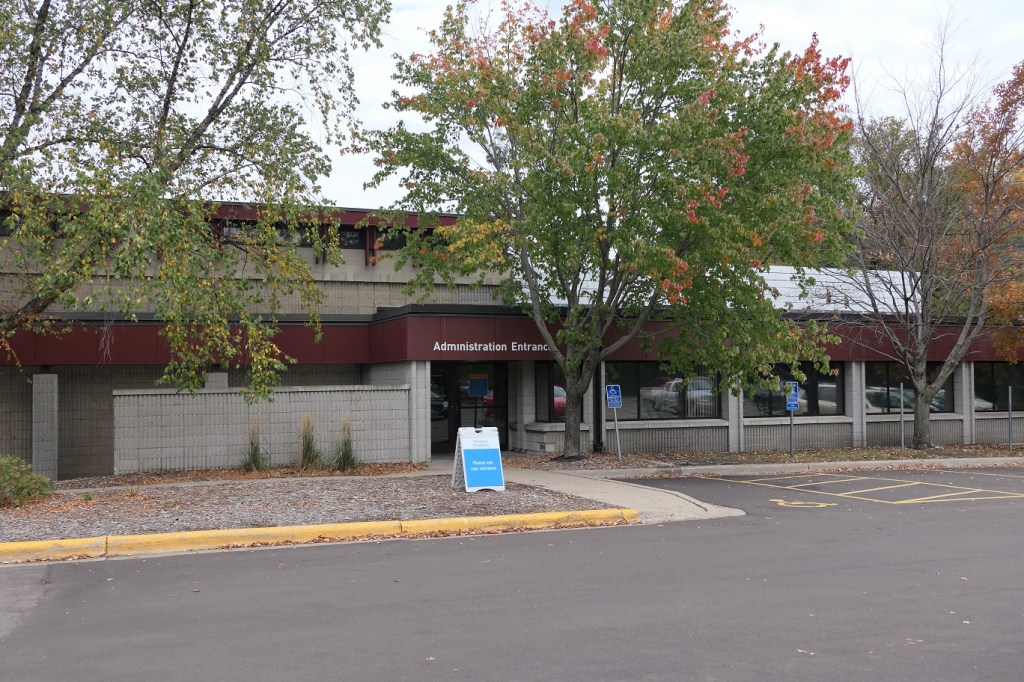
[This is quite an operation, but because of COVID visits are by appointment only . . . ]
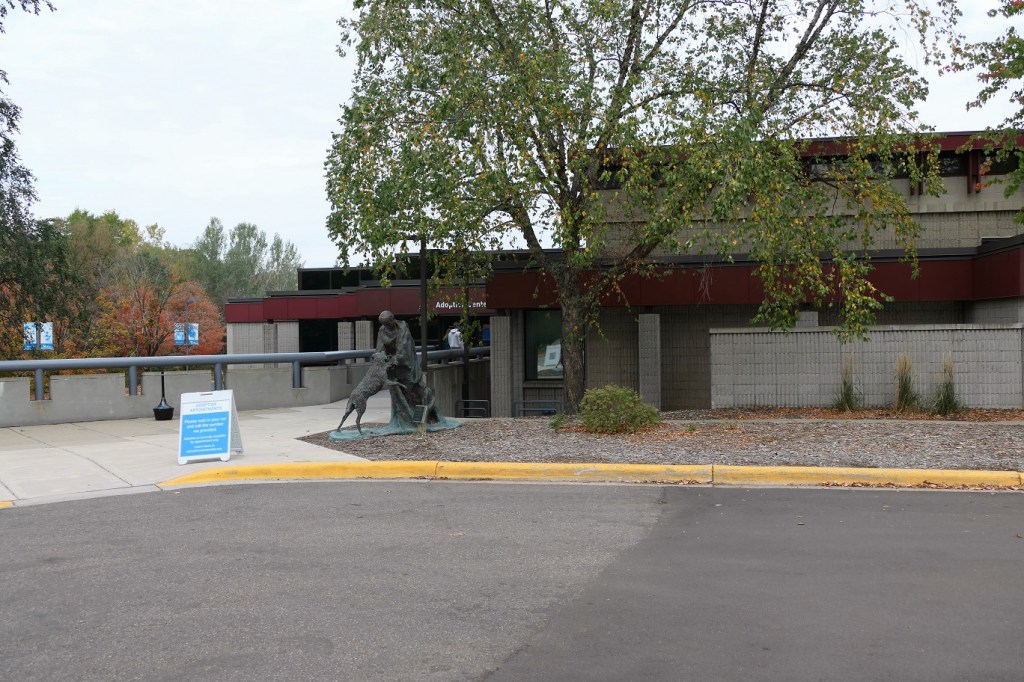
[Ordinarily, I might have only given this sculpture a passing glance . . . ]
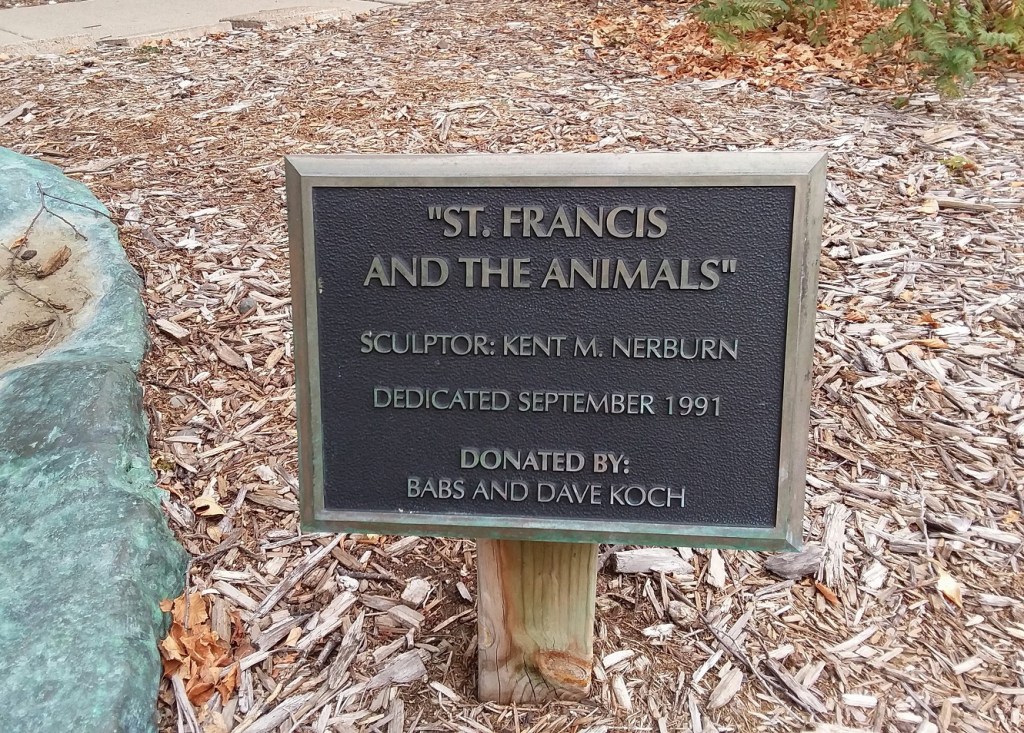
[But then I noticed the sculptor . . . ]
[This is Kent Nerburn with a coupla babes. He has also written such books as the Wolf at Twilight, Neither Wolf nor Dog, The Girl Who Sang to the Buffalo . . . ]
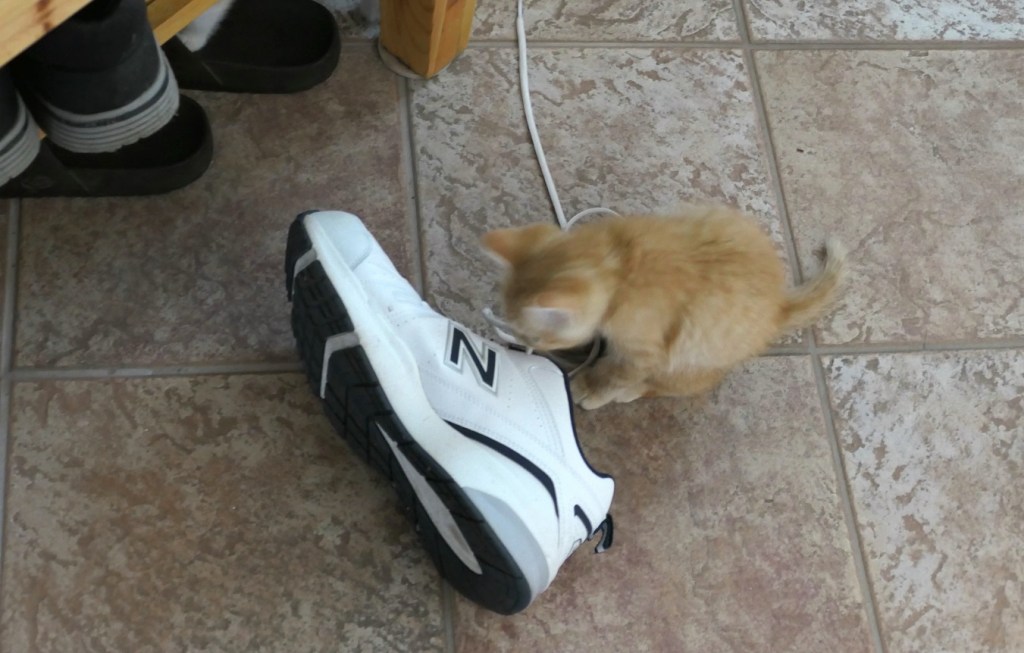
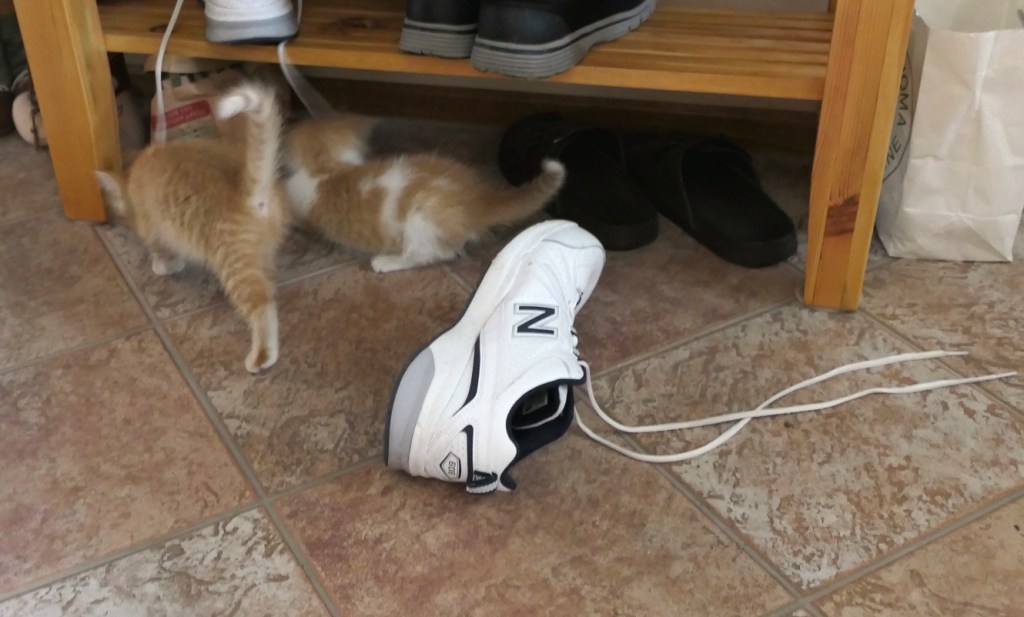
[After the trip down through the bomb-cratered I-94, we decided to come home on 169 until we hit 10 which we took all the way to Clear Lake before cutting back to the interstate – much better. Then the kitties in their new home immediately went for the laces on my walking shoes, pulling the shoes off the bench shelf. Let the excitement begin . . . ]
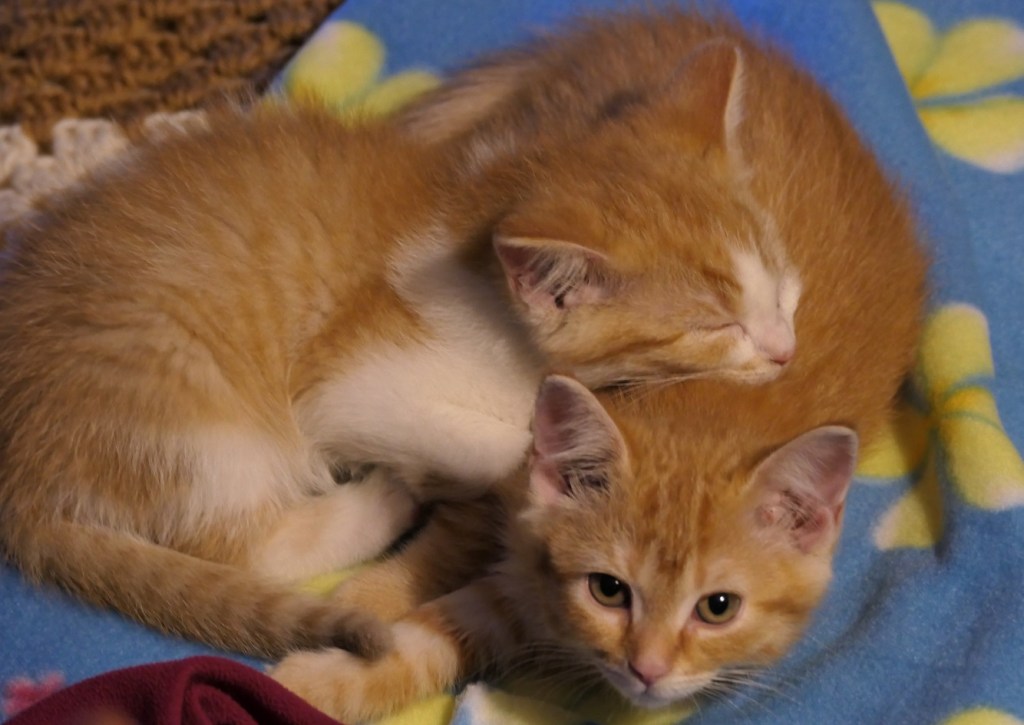
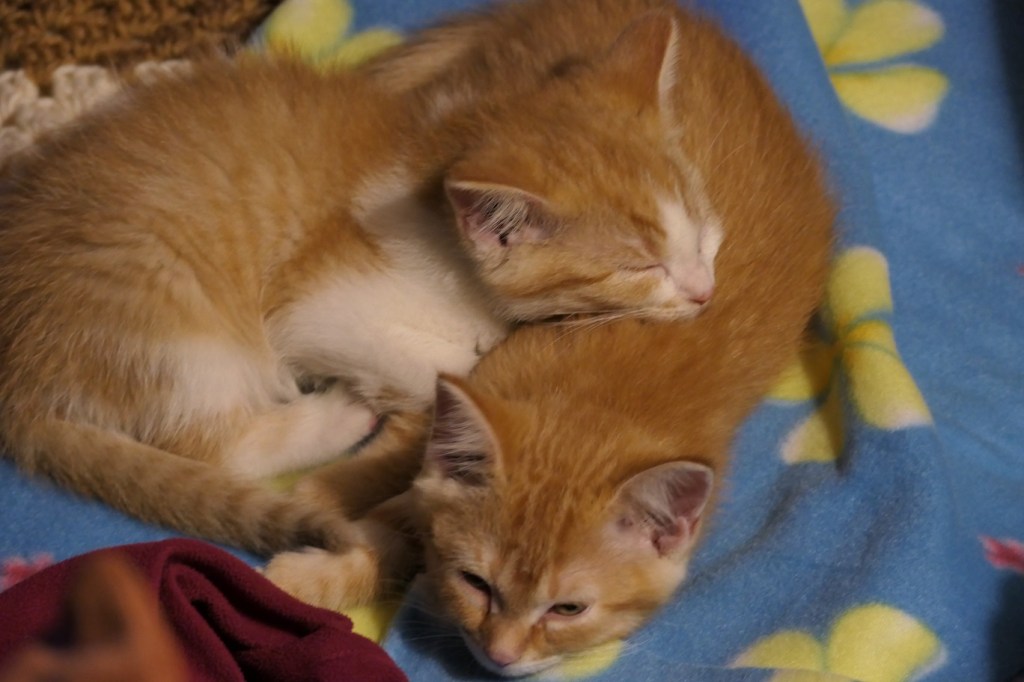
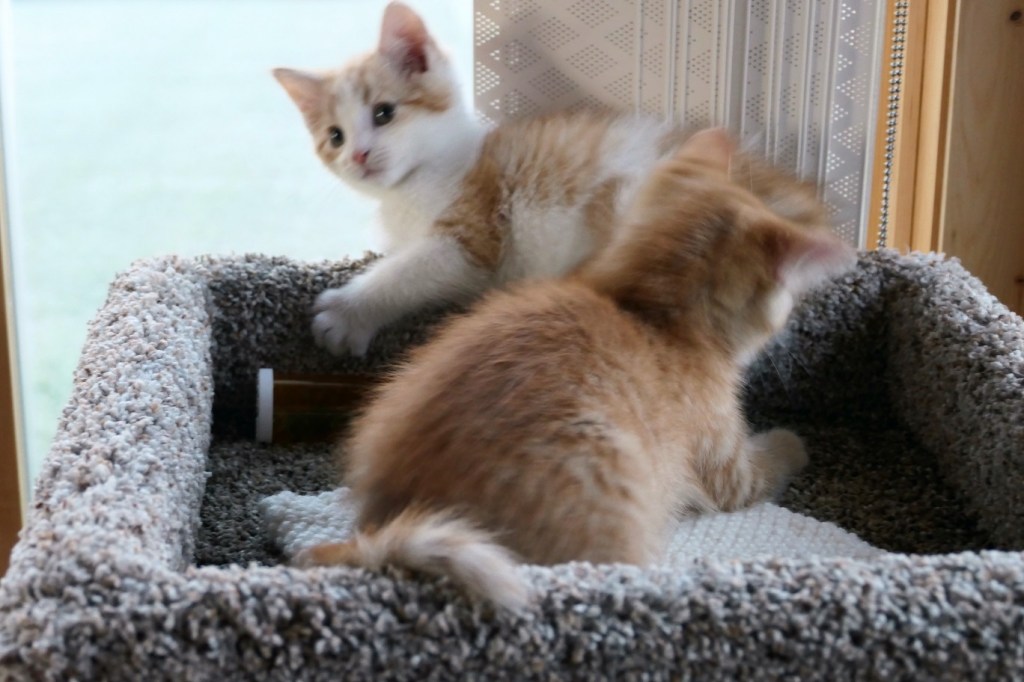
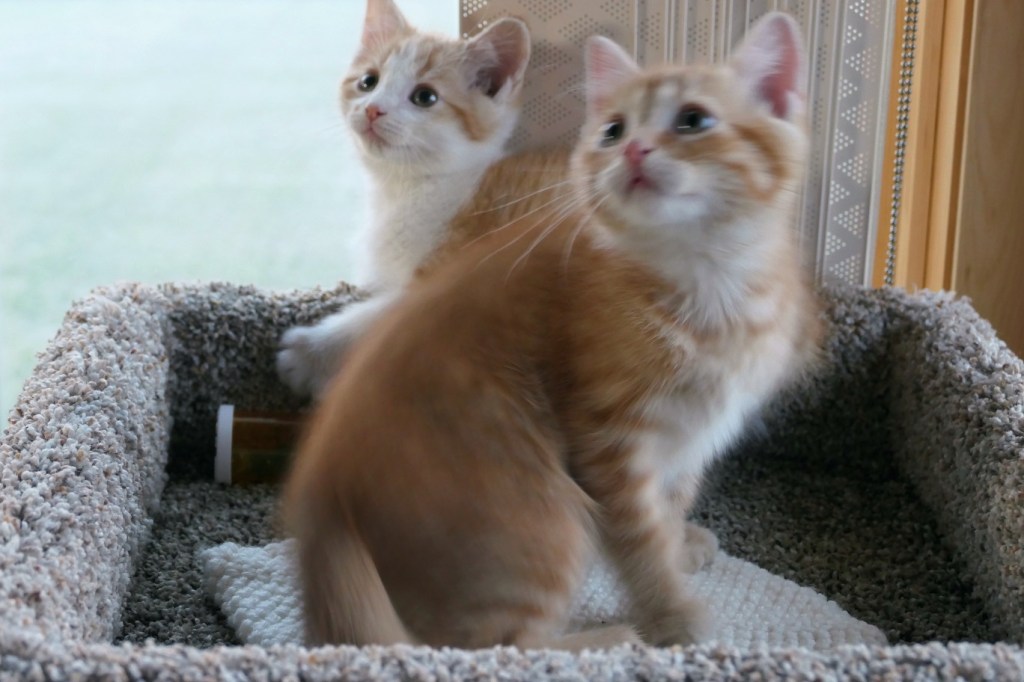
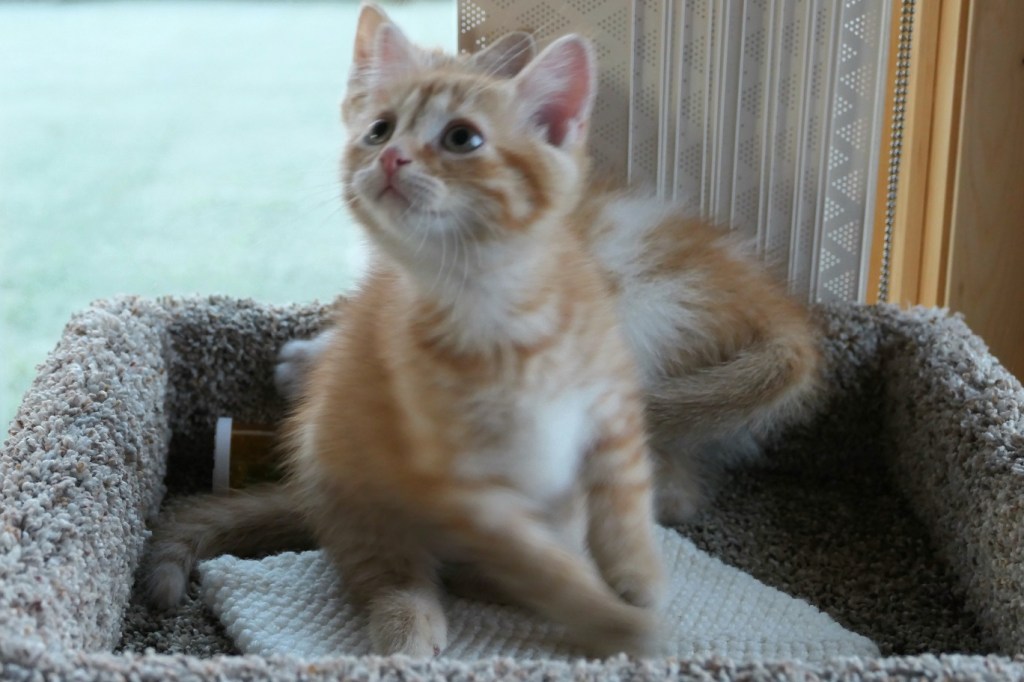
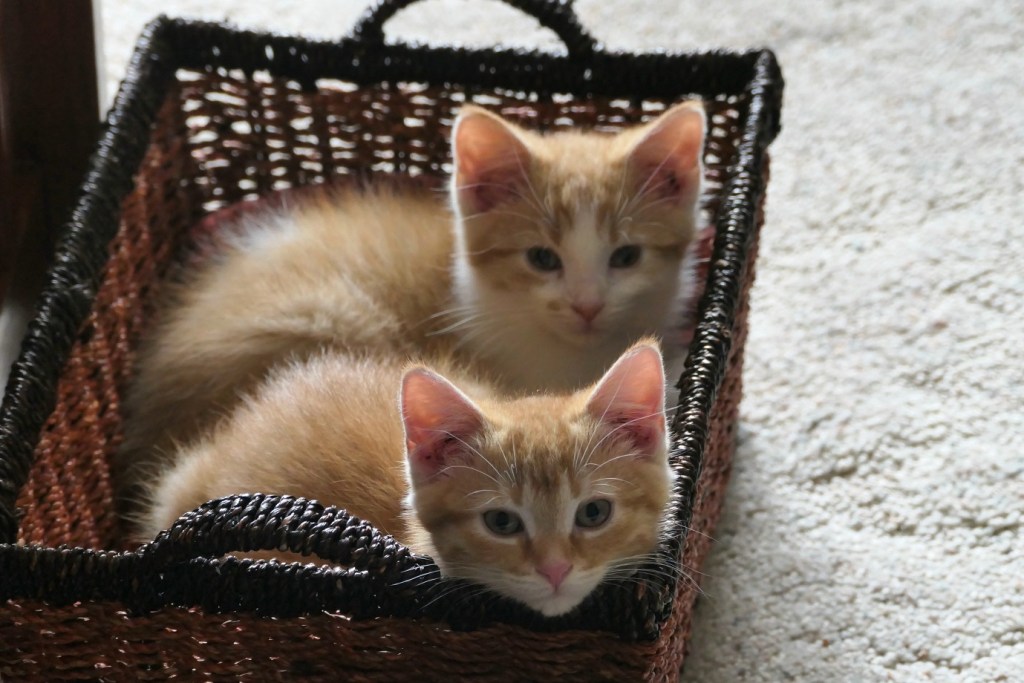
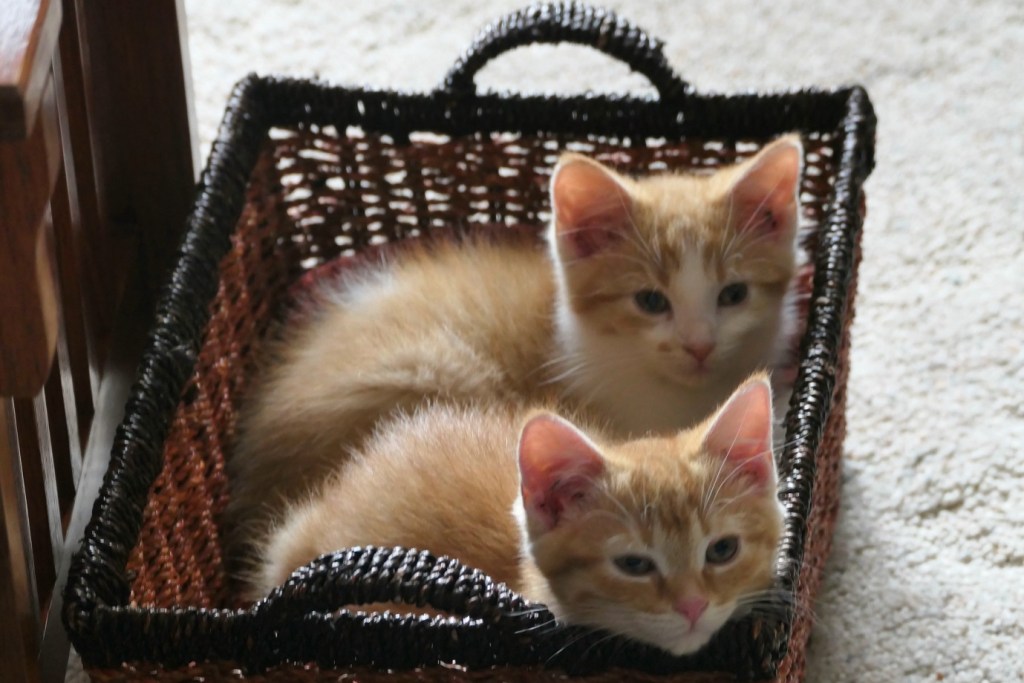
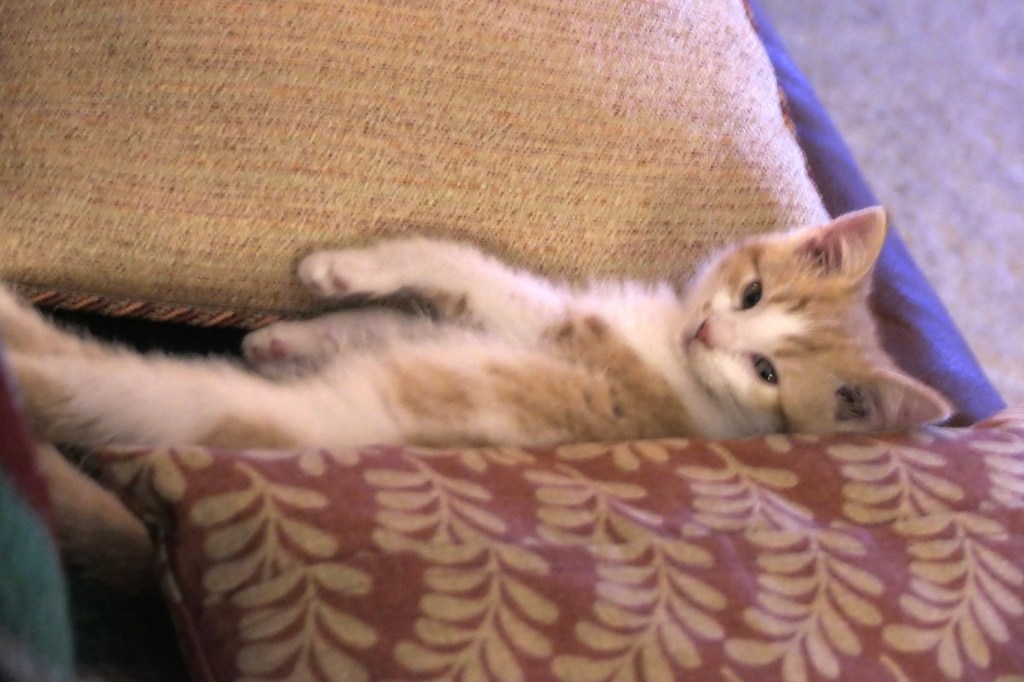
[Guinevere is mostly all ginger, and Galahad has white splotches and mostly white front legs. My shoe is mostly white, though totally defeated . . . ]
[Guinie on a search mission in her new home. . . ]
[The best thing about cats, particularly kitties, is that they peter out in a hurry . . . ]
Cats can work out mathematically the exact place to sit that will cause most inconvenience. ~ Pam Brown
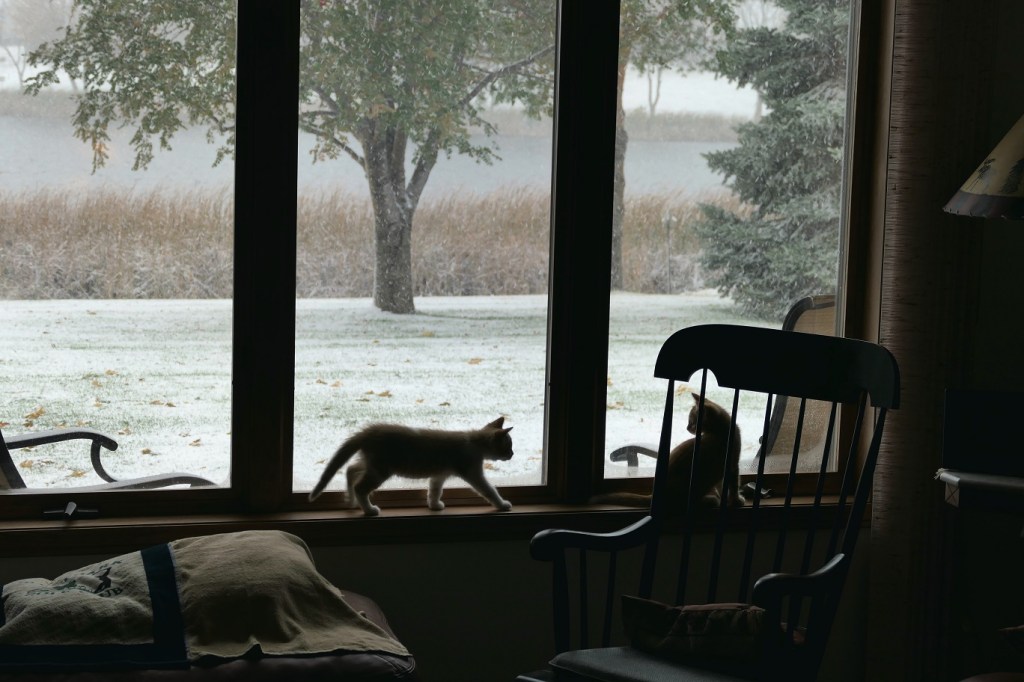
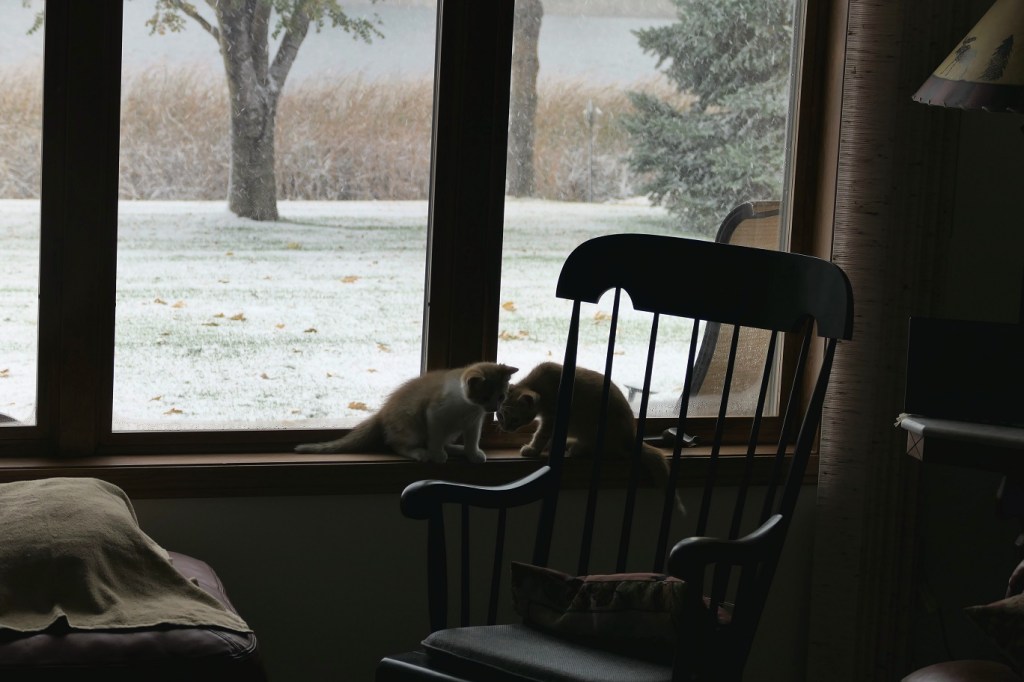
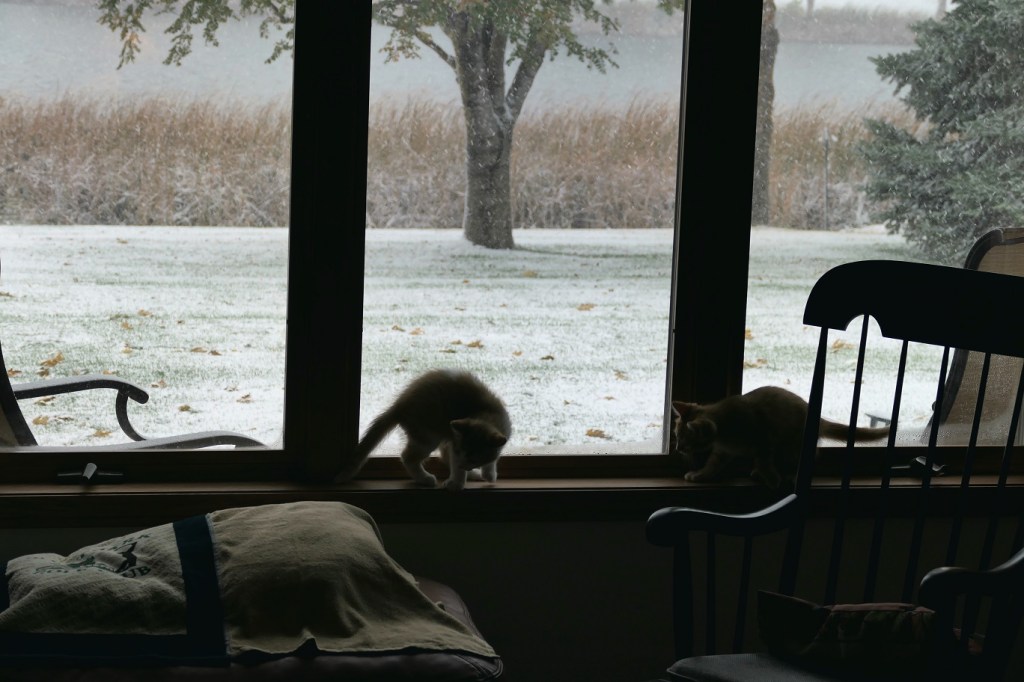
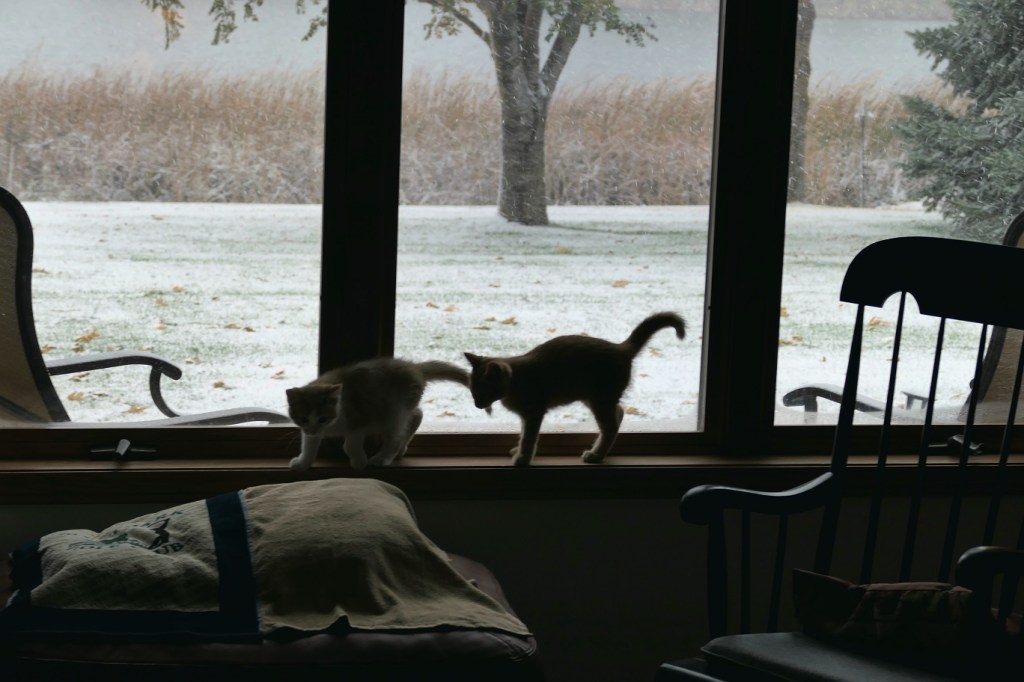
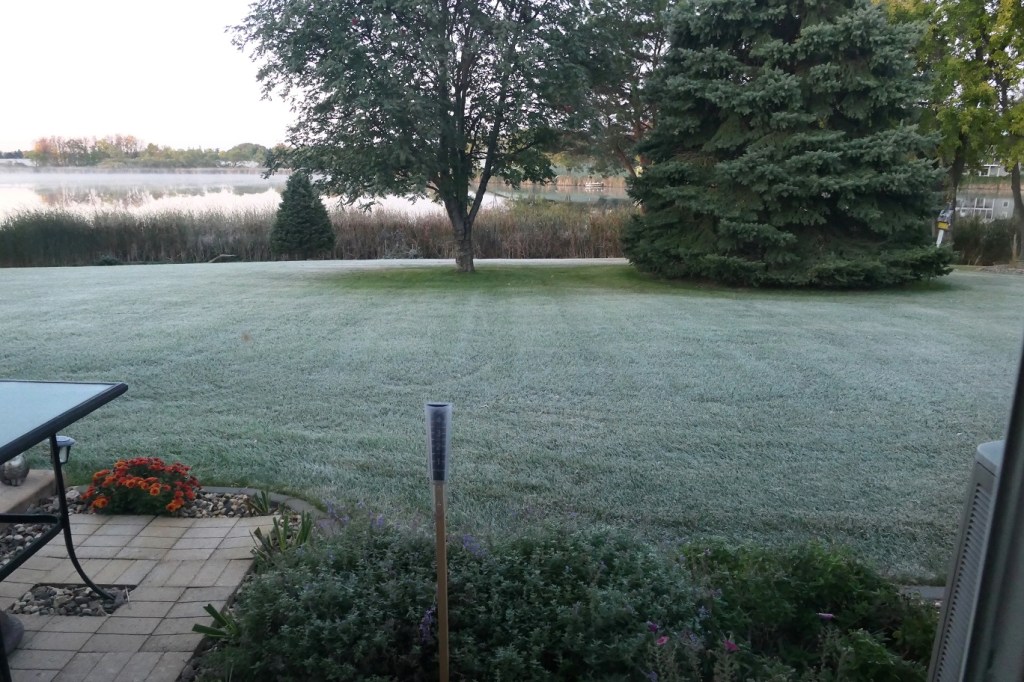
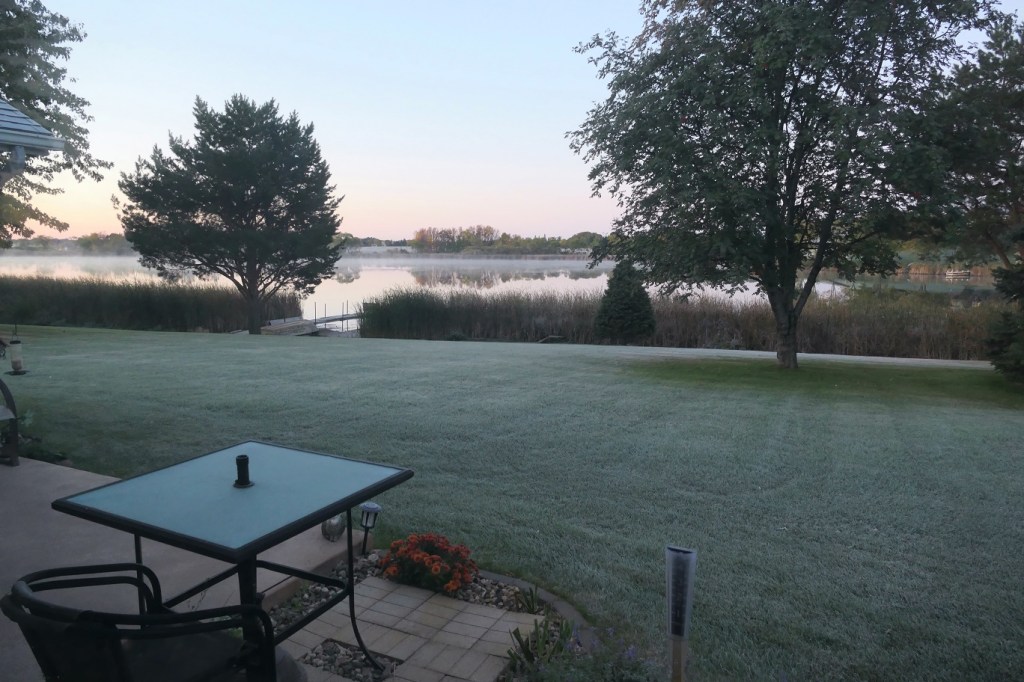
[Waking to their first morning here, we had our first frost . . . ]
Cats’ hearing apparatus is built to allow the human voice to easily go in one ear and out the other. ~ Stephen Baker
[Their first wake up, wondering does this guy always get up this early?]
The problem with cats is that they get the same exact look whether they see a moth or an ax-murderer. ~ Paula Poundstone
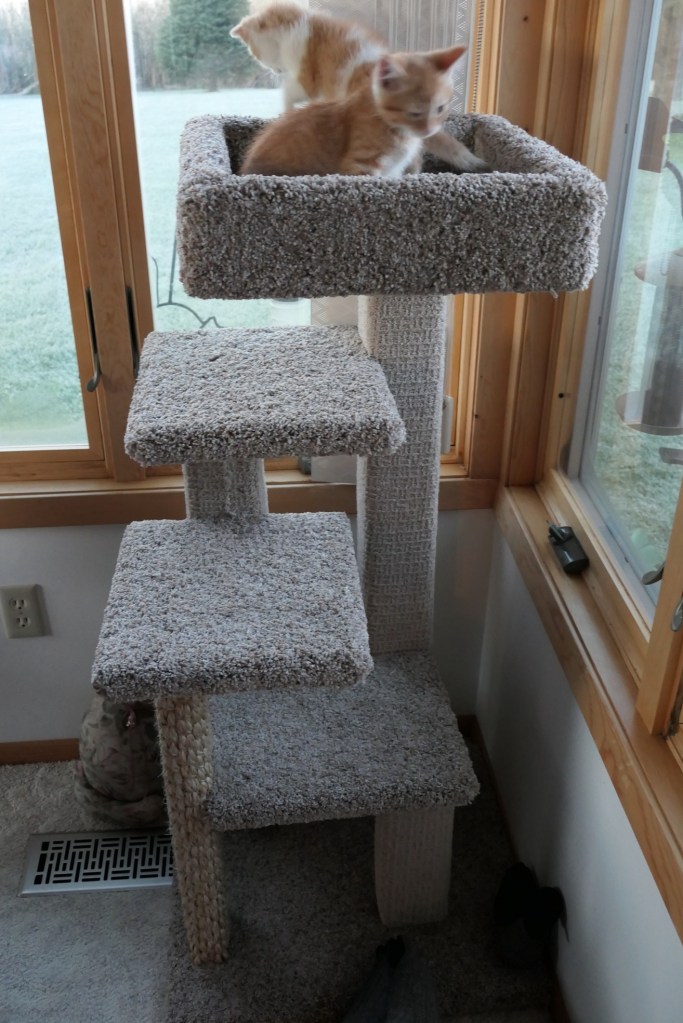
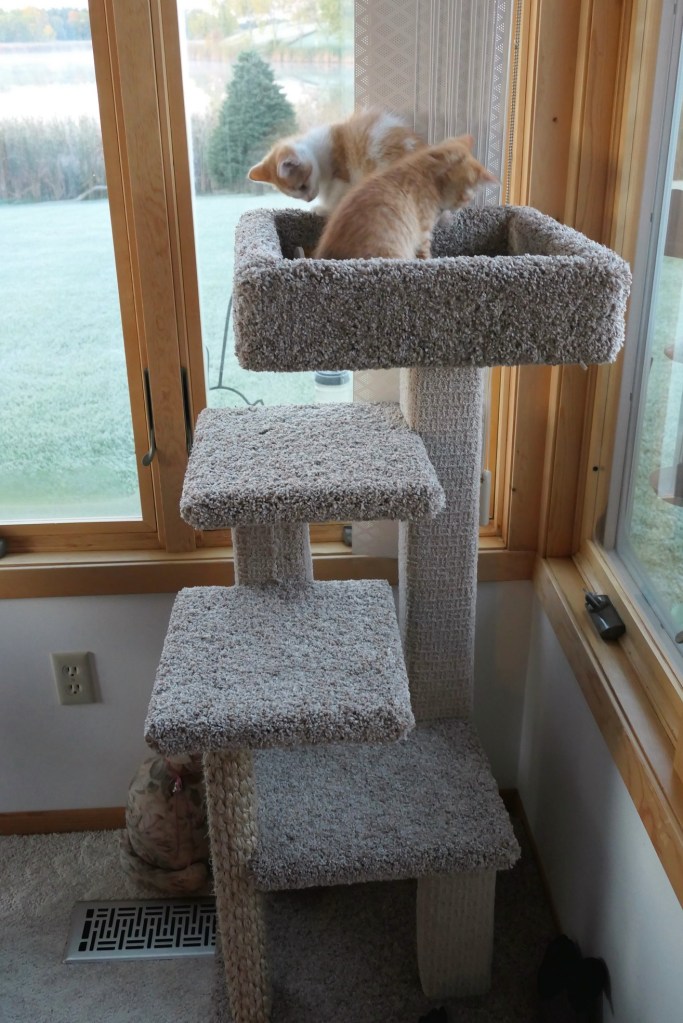
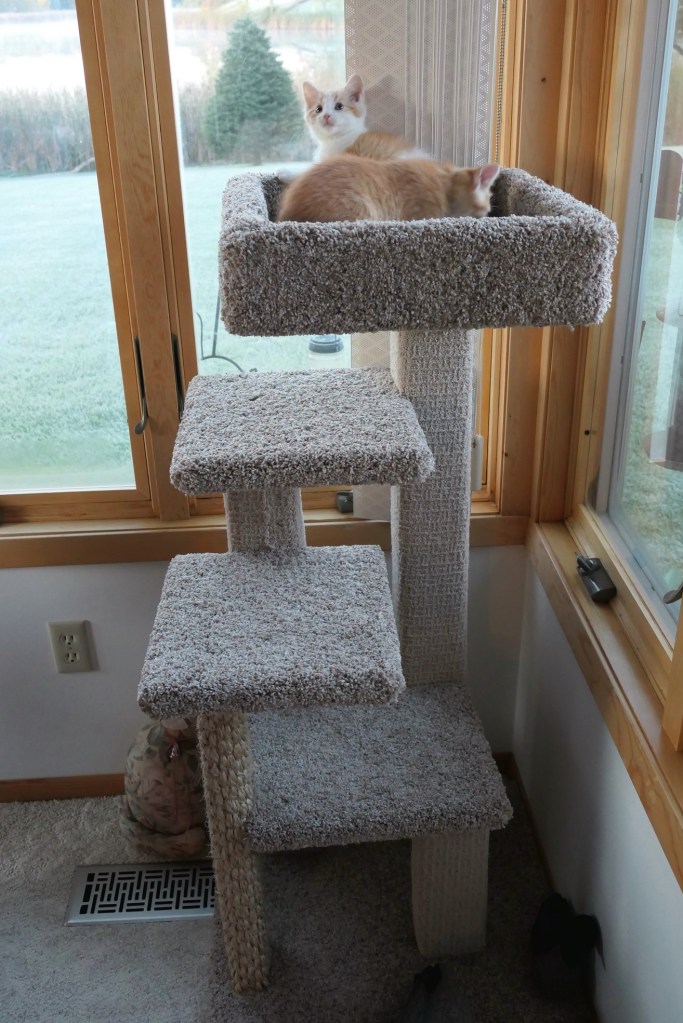
[The requisite tower – the Super put them up there, but they soon discovered they could do it themselves . . . ]
There is, incidentally, no way of talking about cats that enables one to come off as a sane person. ~ Dan Greenberg
Dogs come when they’re called; cats take a message and get back to you later. ~ Mary Bly
No amount of time can erase the memory of a good cat, and no amount of masking tape can ever totally remove his fur from your couch. ~ Leo Dworken
Dogs have owners, cats have staff. ~ Unknown
Women and cats will do as they please, and men and dogs should relax and get used to the idea. ~ Robert A. Heinlein
Cats do care. For example they know instinctively what time we have to be at work in the morning and they wake us up twenty minutes before the alarm goes off. ~ Michael Nelson
If only cats grew into kittens. ~ R. Stern
[Well, I had been looking for a codpiece . . . ]
[(Can you say codpiece on TV?)]
Kittens are born with their eyes shut. They open them in about six days, take a look around, then close them again for the better part of their lives. ~ Stephen Baker
Cats have it all – admiration, an endless sleep, and company only when they want it. ~ Rod McKuen
I gave my cats a bath the other day … they love it. He sat there, he enjoyed it, it was fun for me. The fur would stick to my tongue, but other than that… ~ Steve Martin
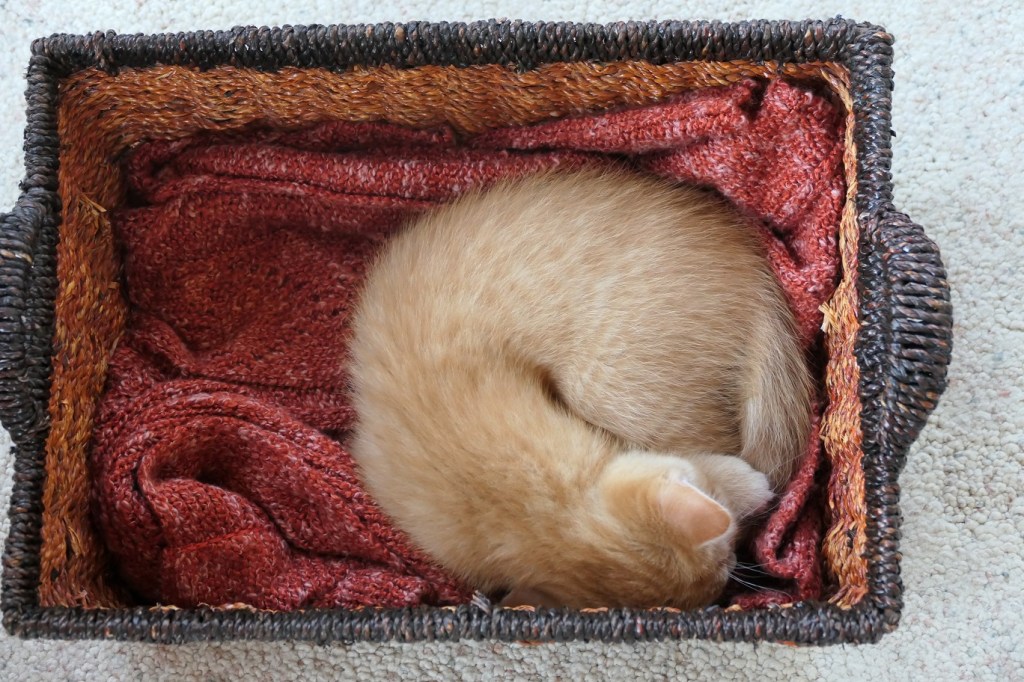
[The Doughnut . . . ]
[There always comes a time when it’s time to refuel, even while being photographed . . . ]
[Going . . . ]
[Going . . . ]
[Gone!]
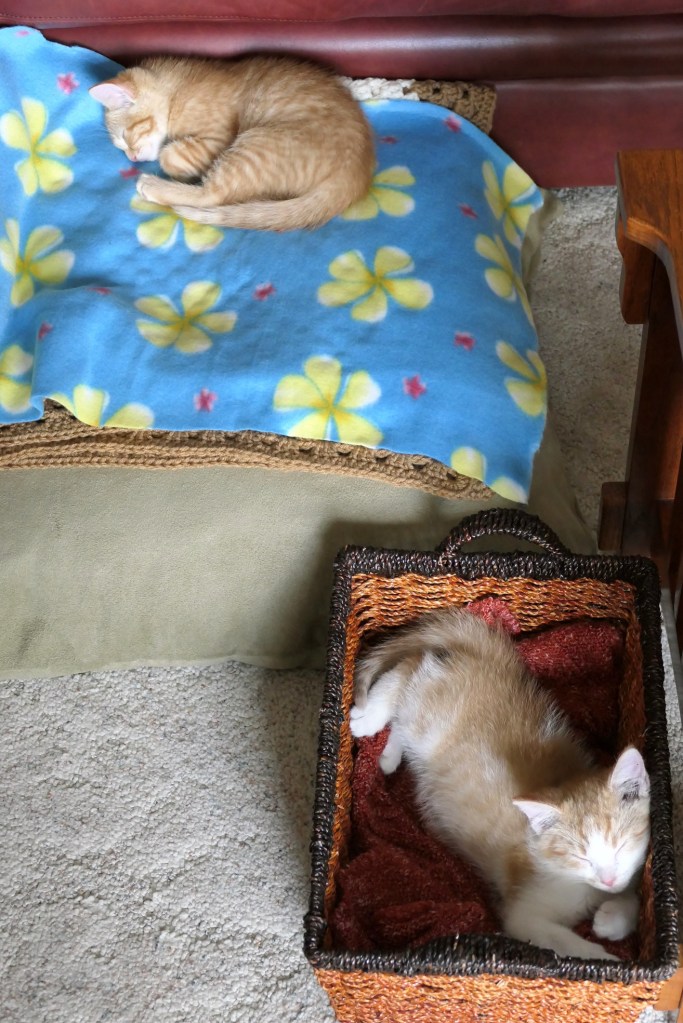
[Then separate beds . . . ]
Everything I know I learned from my cat: When you’re hungry, eat. When you’re tired, nap in a sunbeam. When you go to the vet’s, pee on your owner. ~ Gary Smith
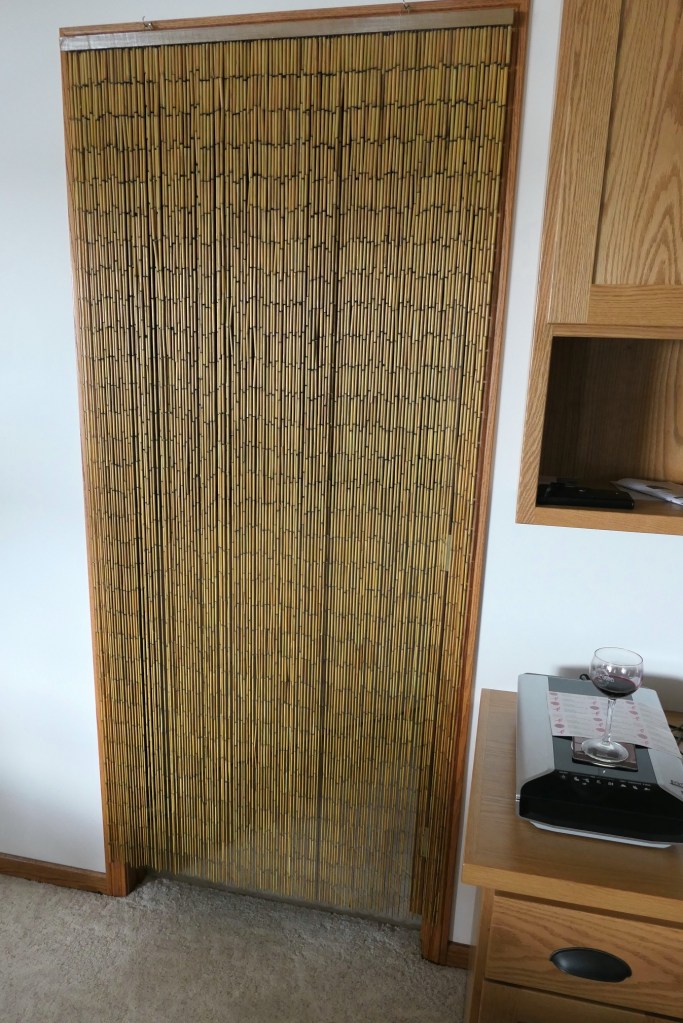
[A concession to our down-sized house. The laundry room opens into the living room. The cat’s unisex bathroom is in the laundry room. The laundry room door, accordingly, must remain open. It’s not a pretty sight, particular from my office there on the right. Thus, we decided this bamboo curtain would work for all parties involved . . . ]
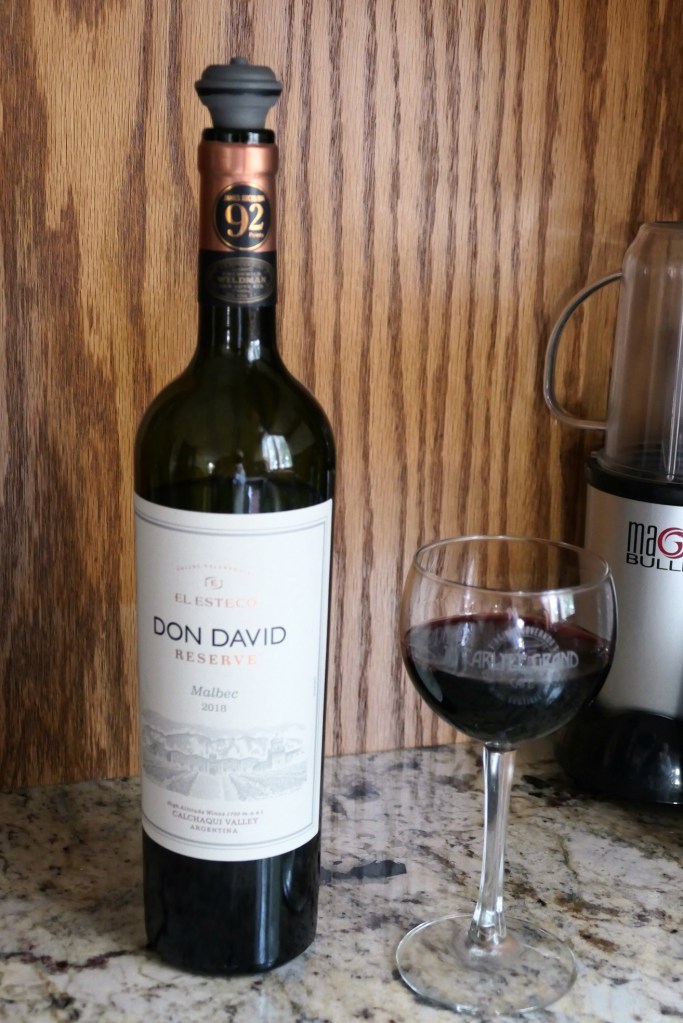
[Nothing to do with cats. It’s just that it’s Don David Reserve Malbec poured into a Carlyle Grand Cafe wine glass!]
[This morning (October 7) by the Super . . . ]
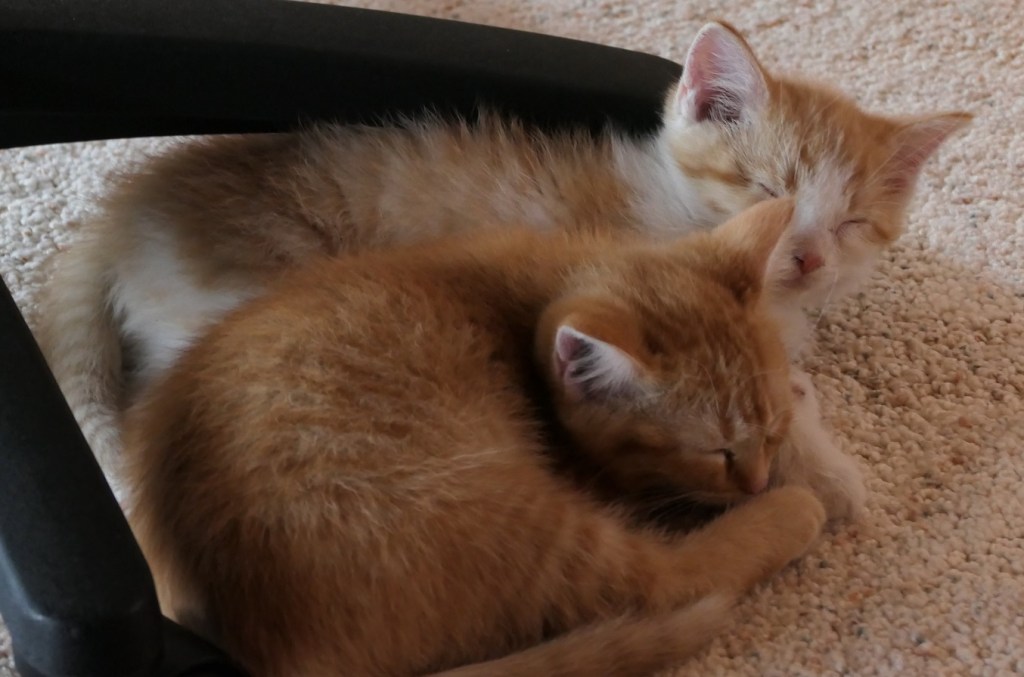
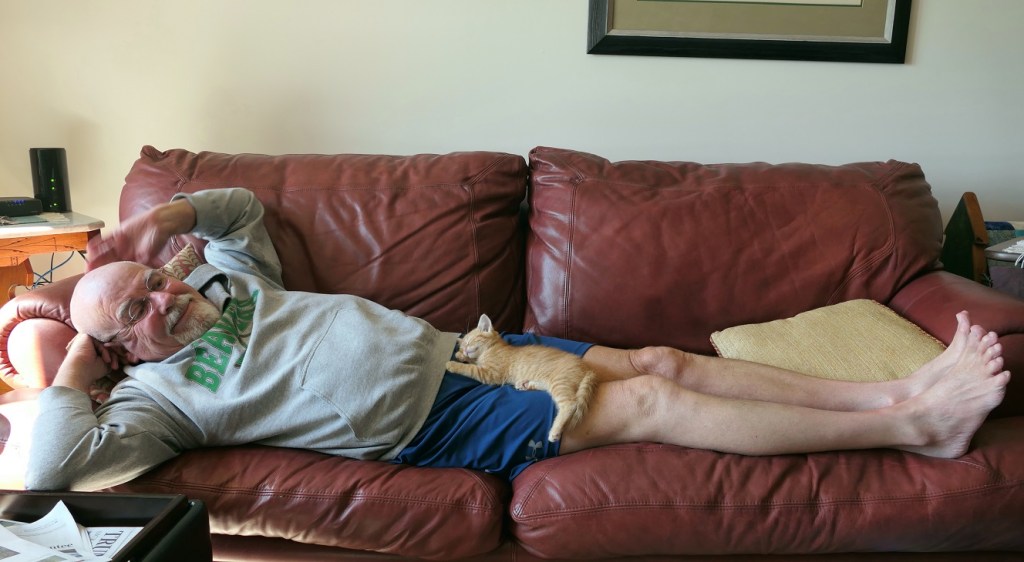
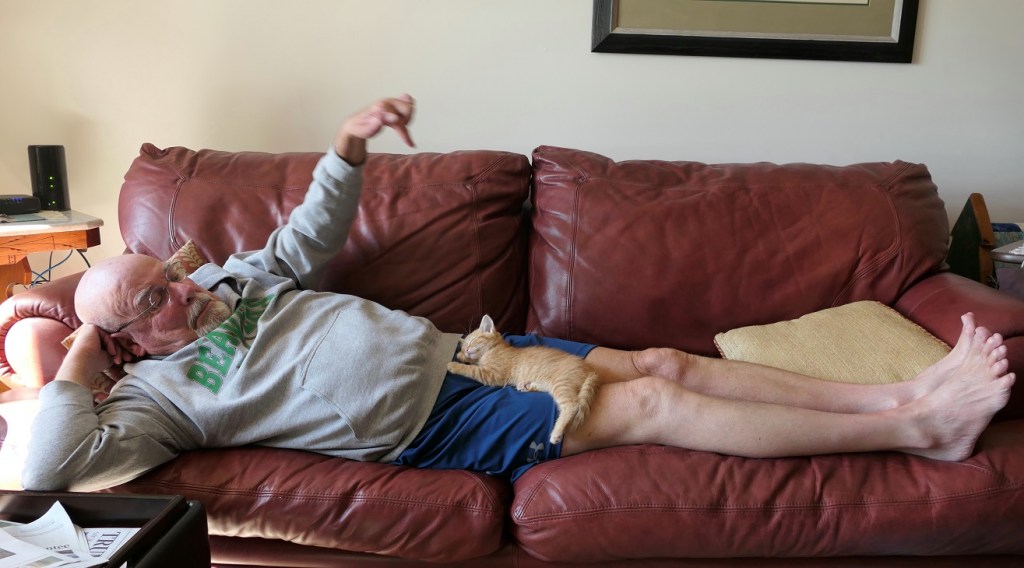
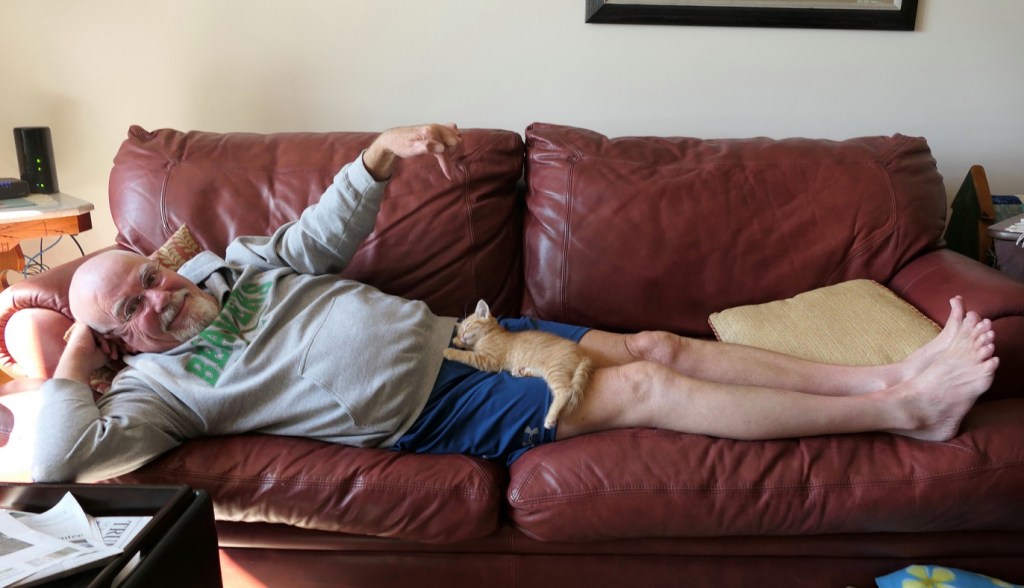
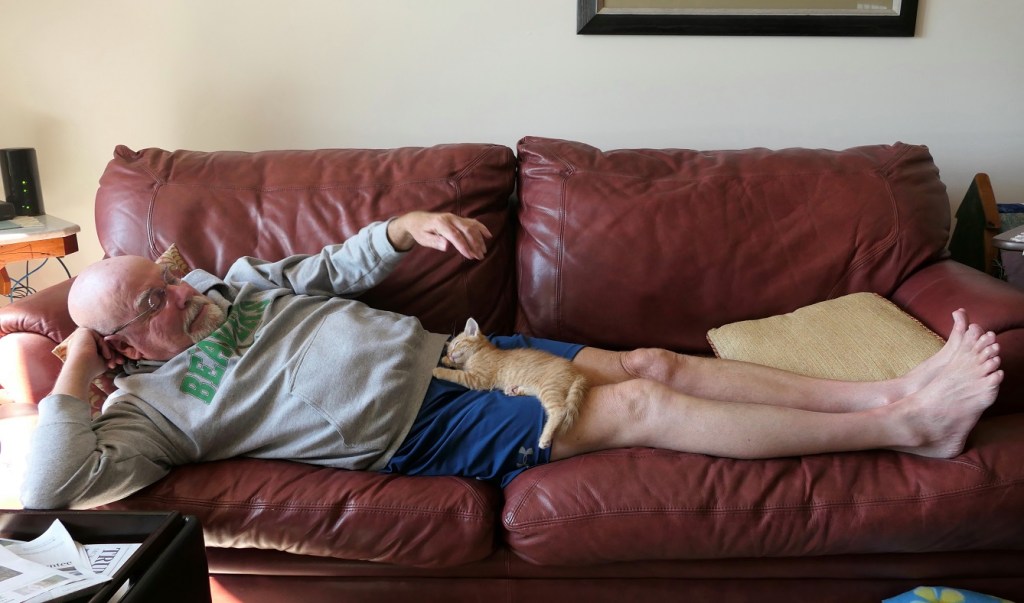
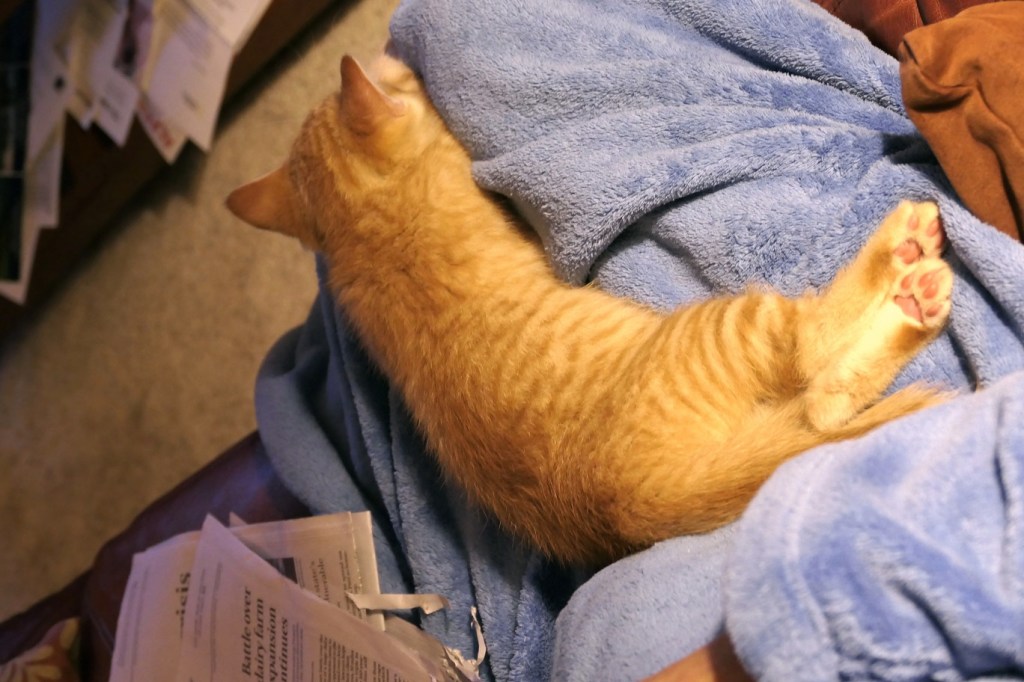
[But previous to that, napping on or next to Mom . . . ]
It is impossible to keep a straight face in the presence of one or more kittens. ~ Cynthia E. Varnado