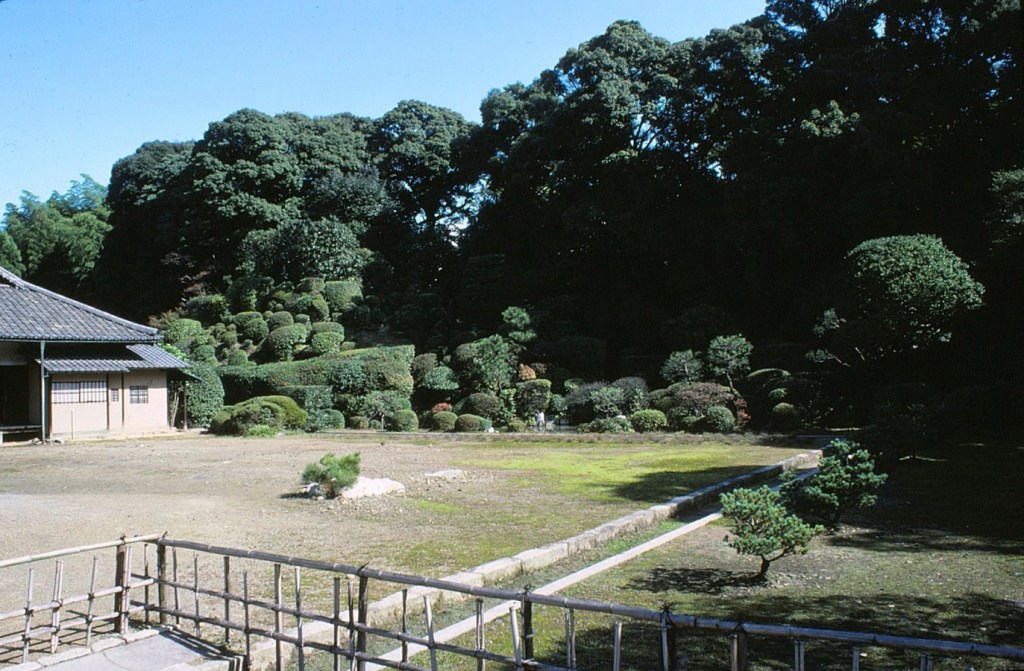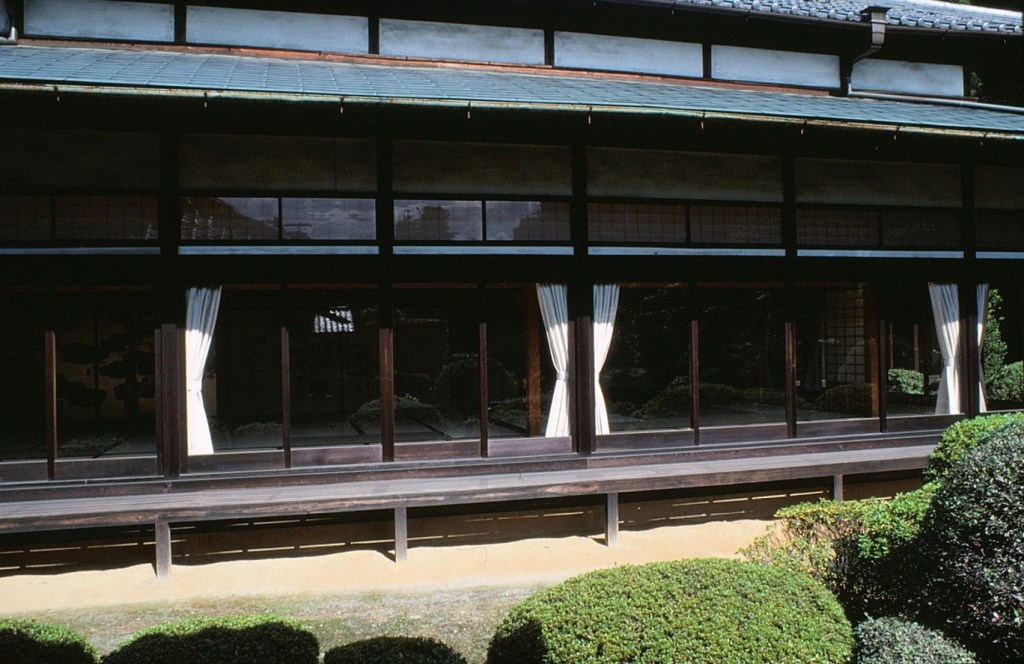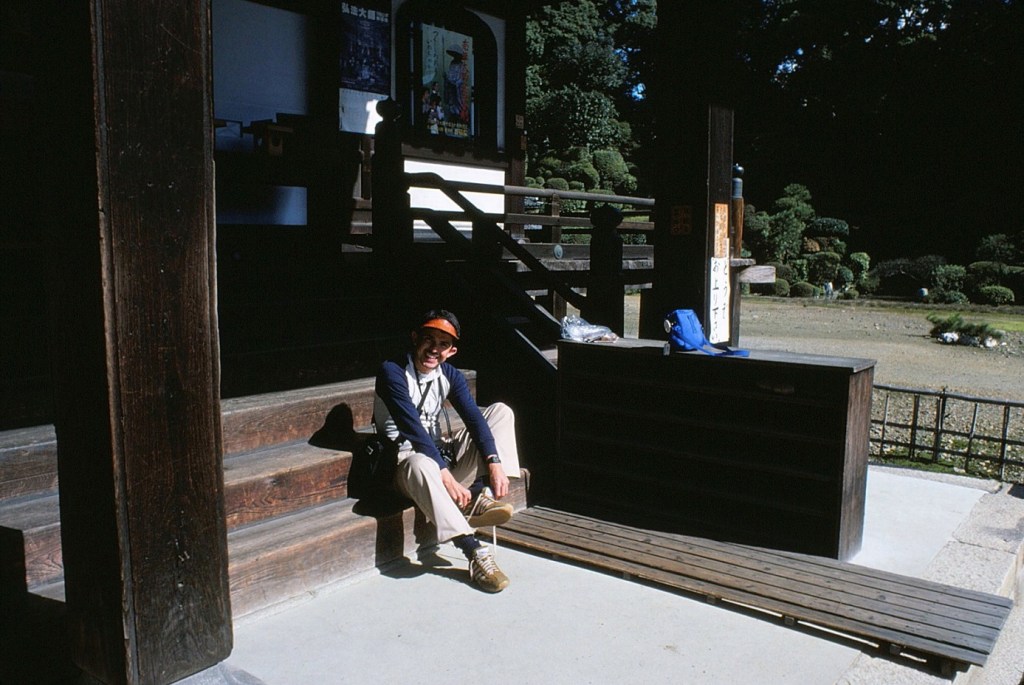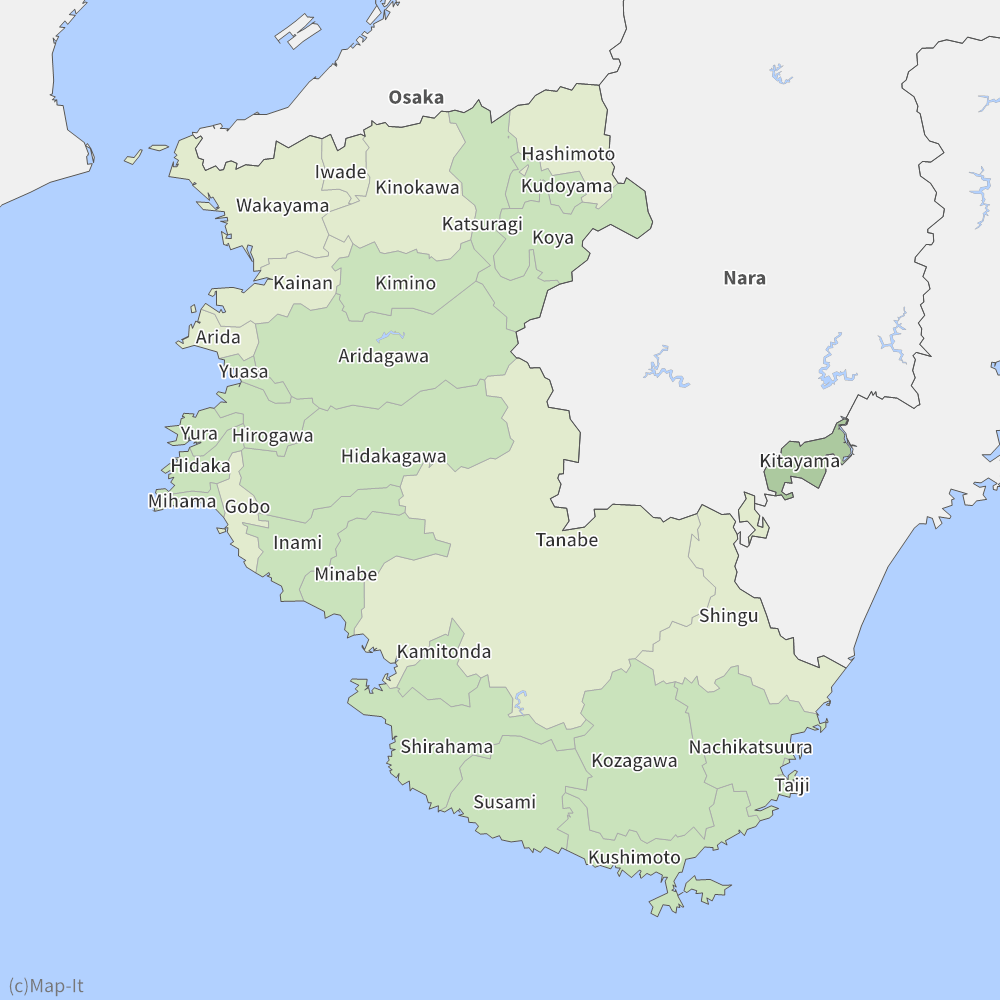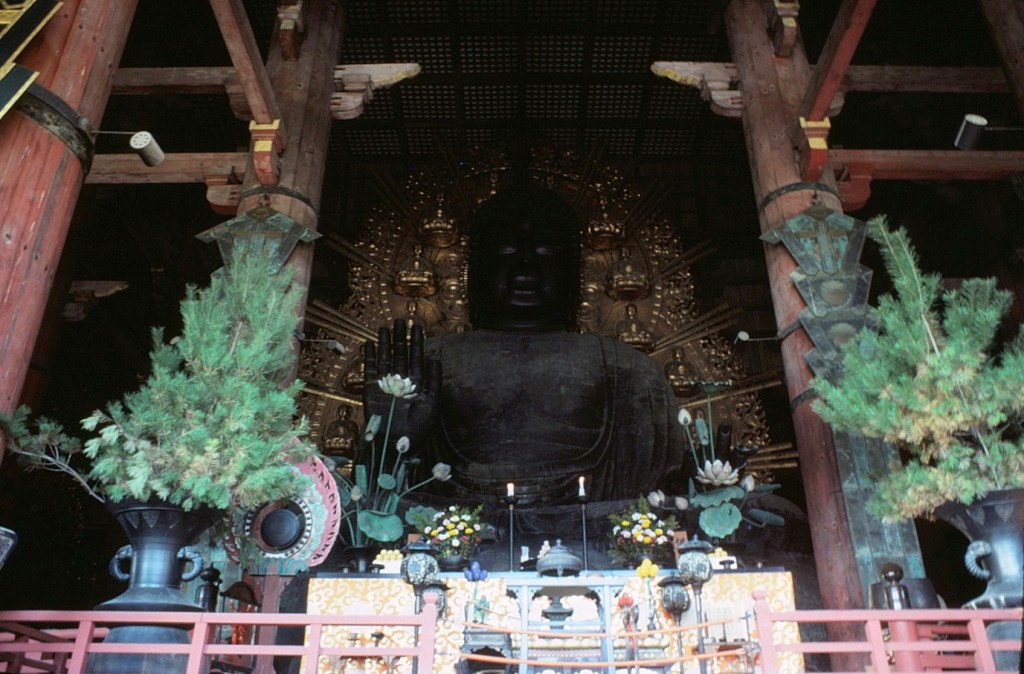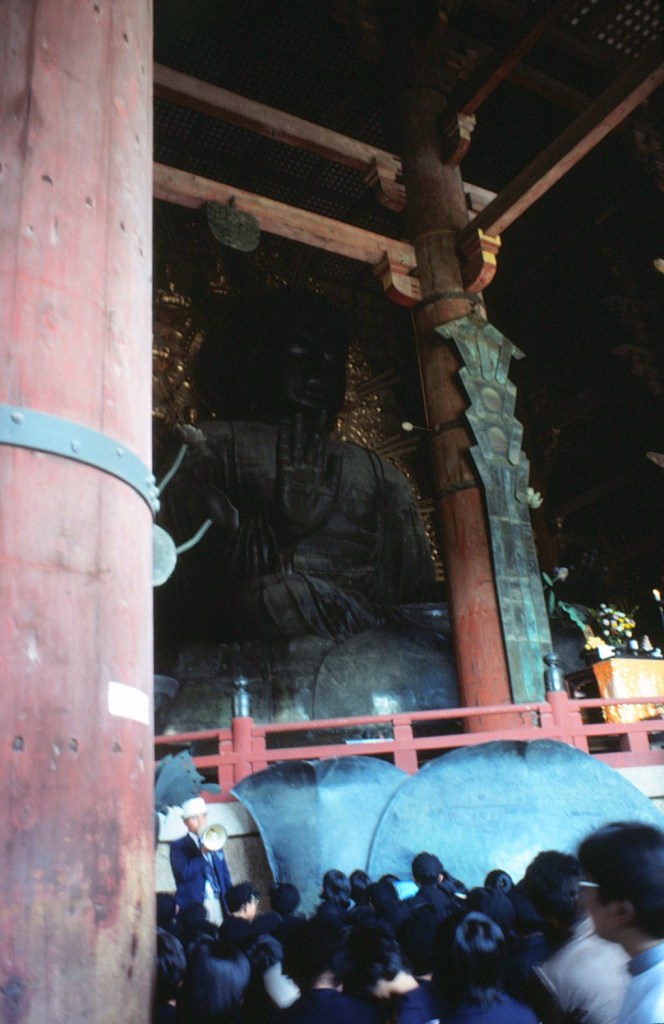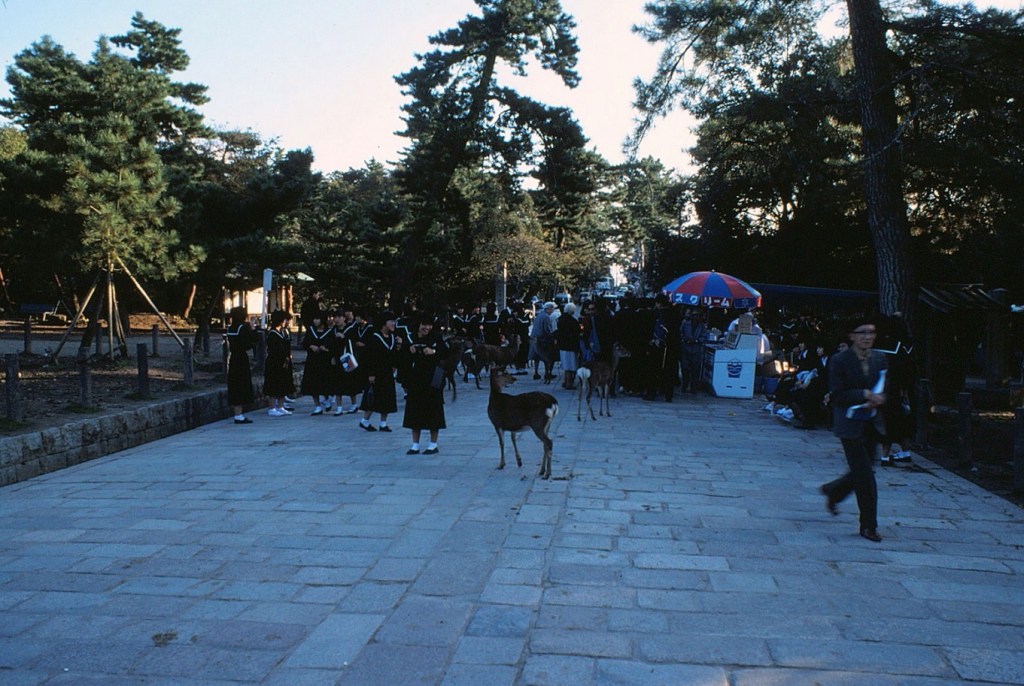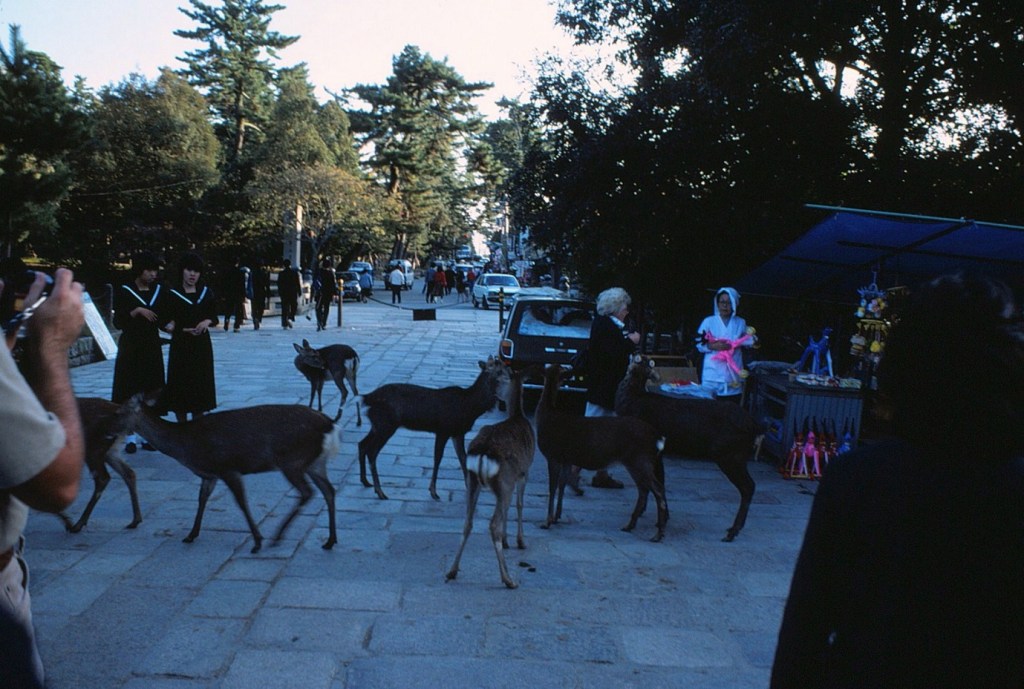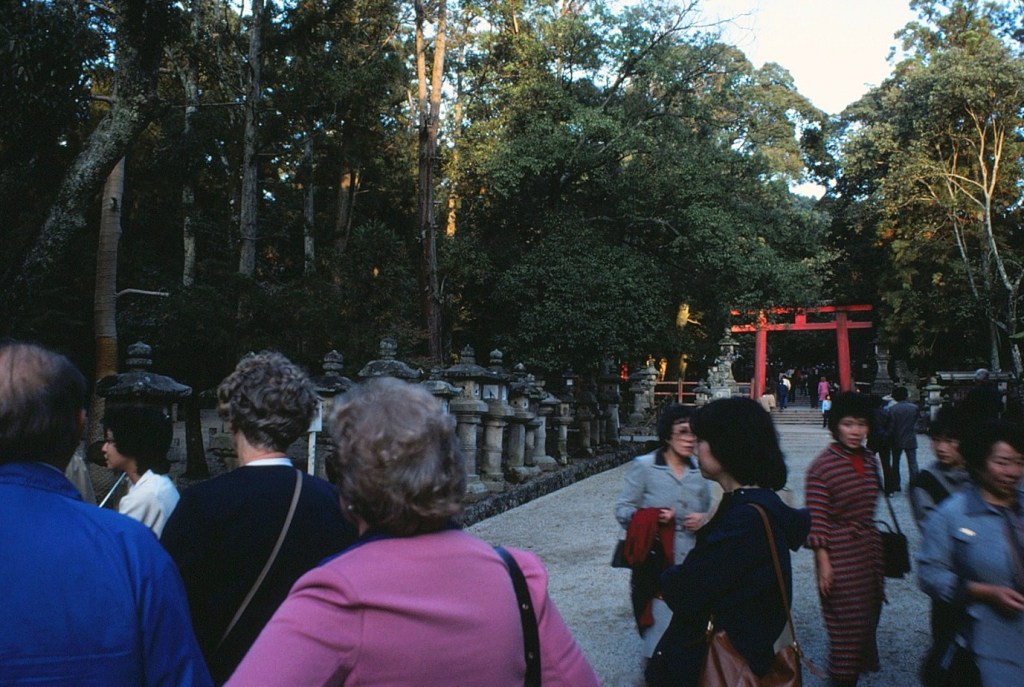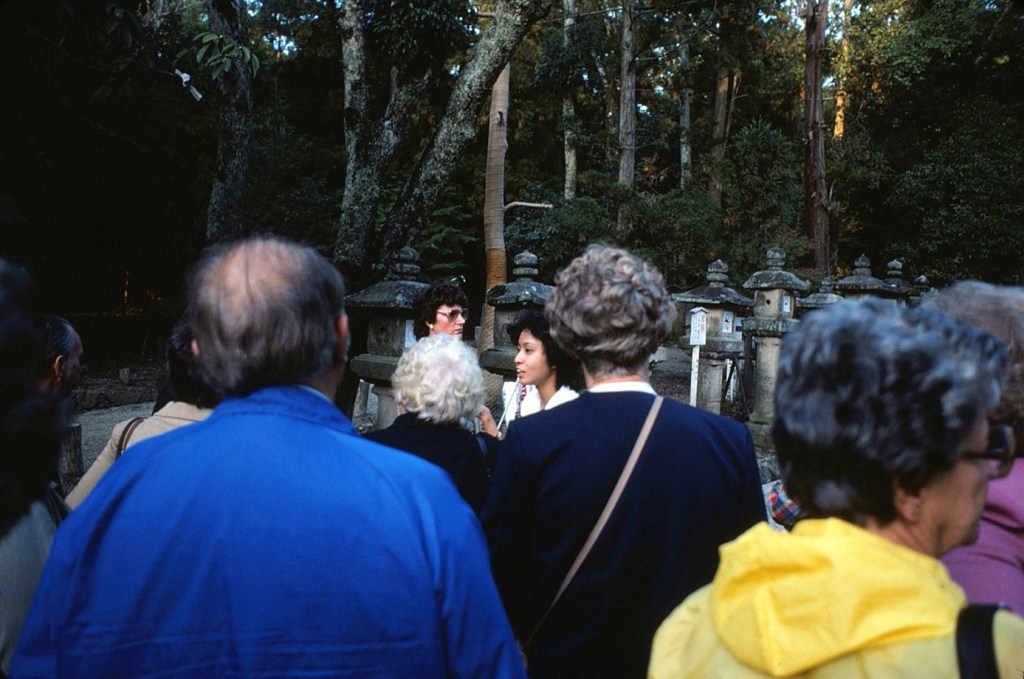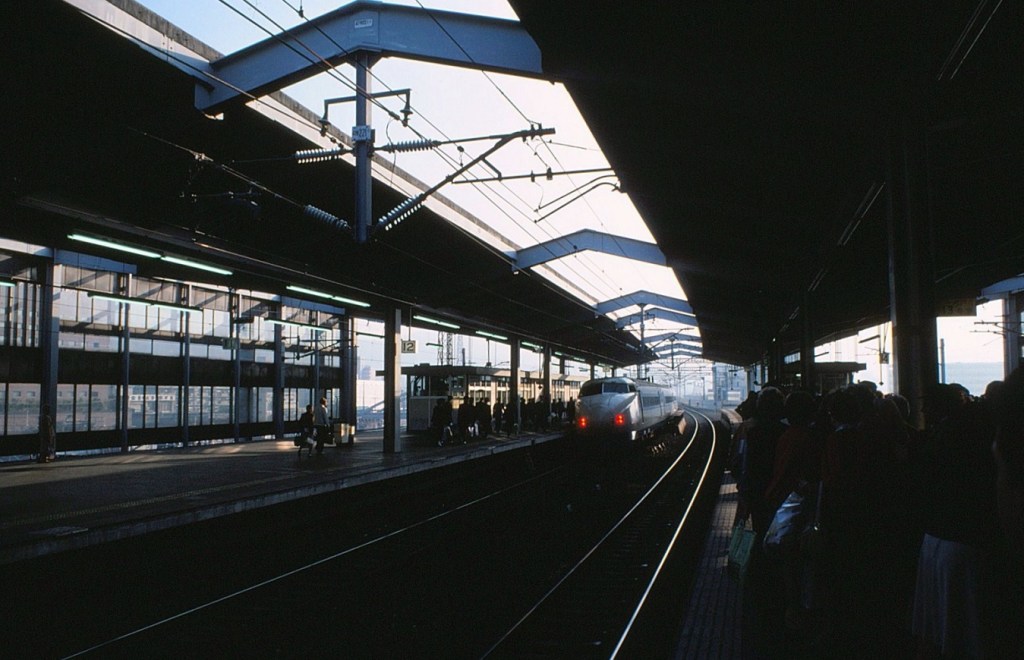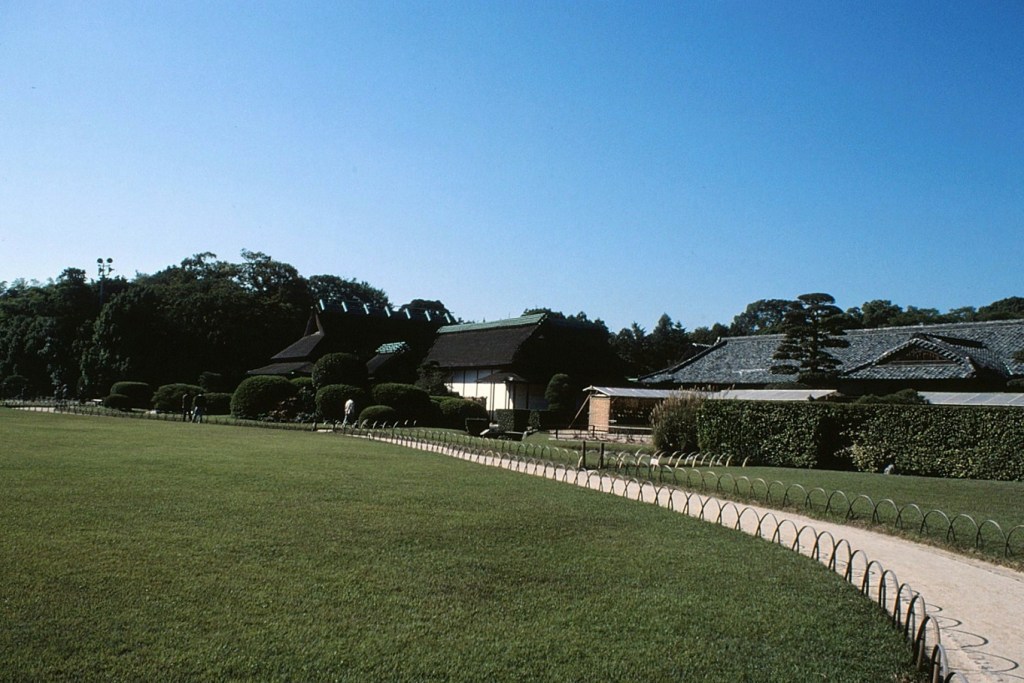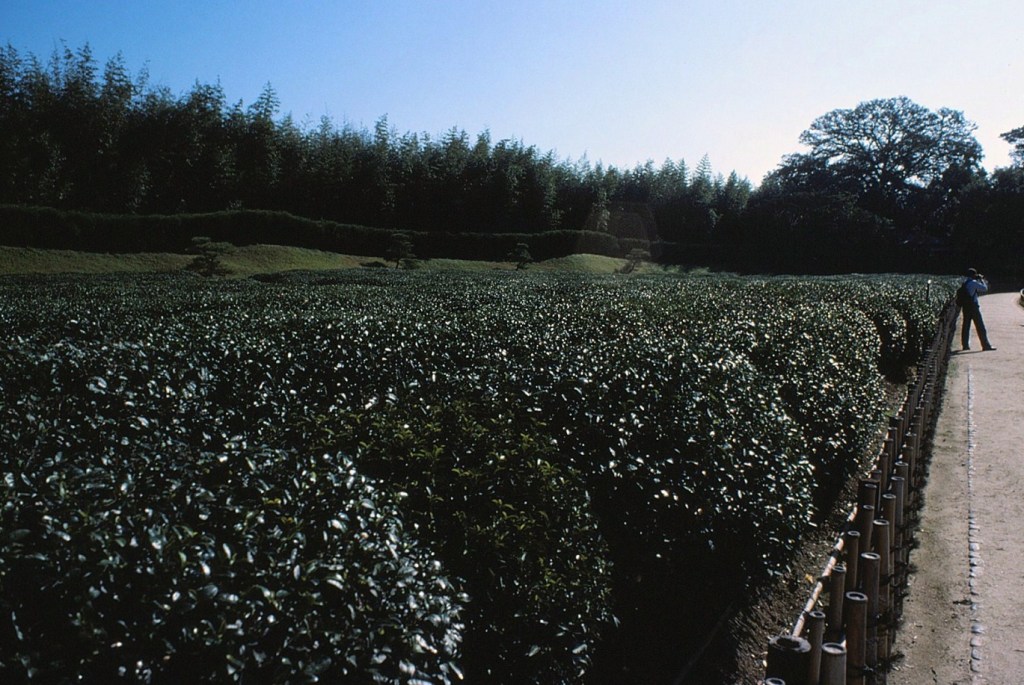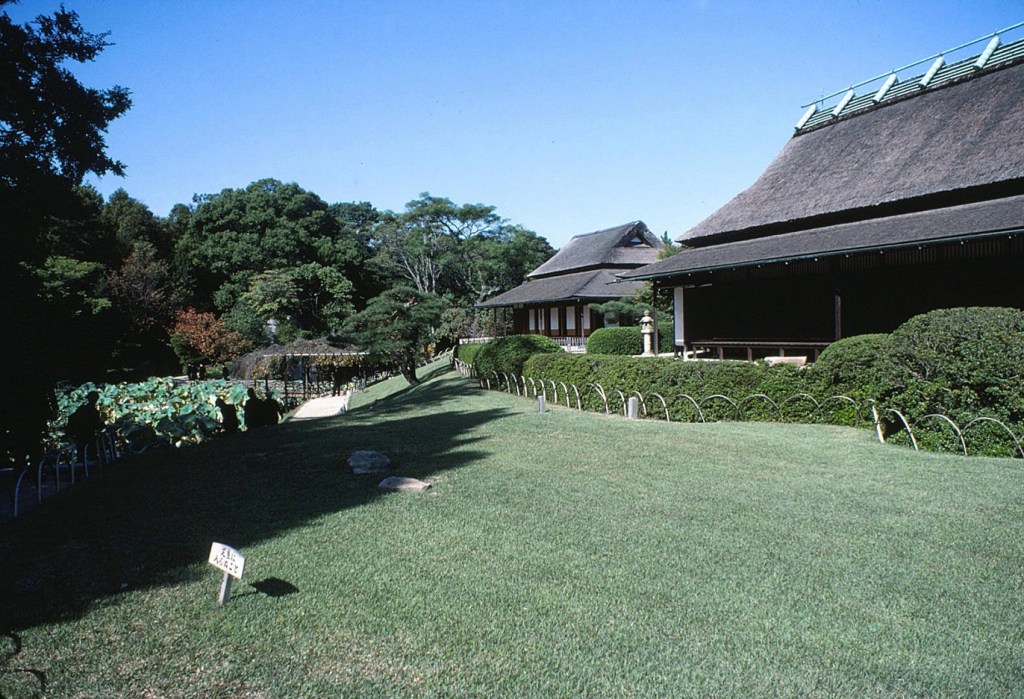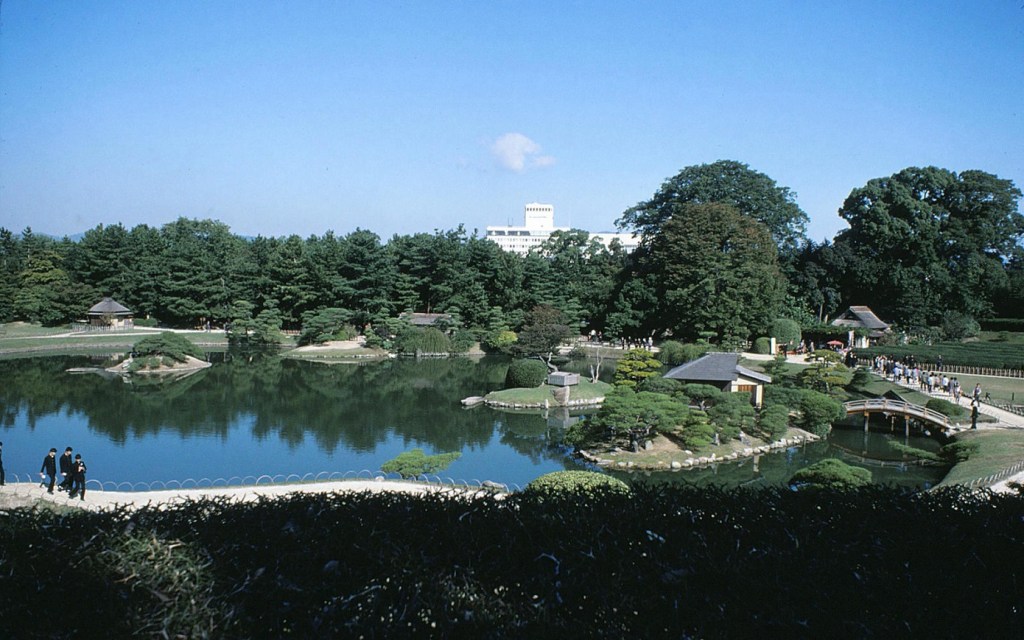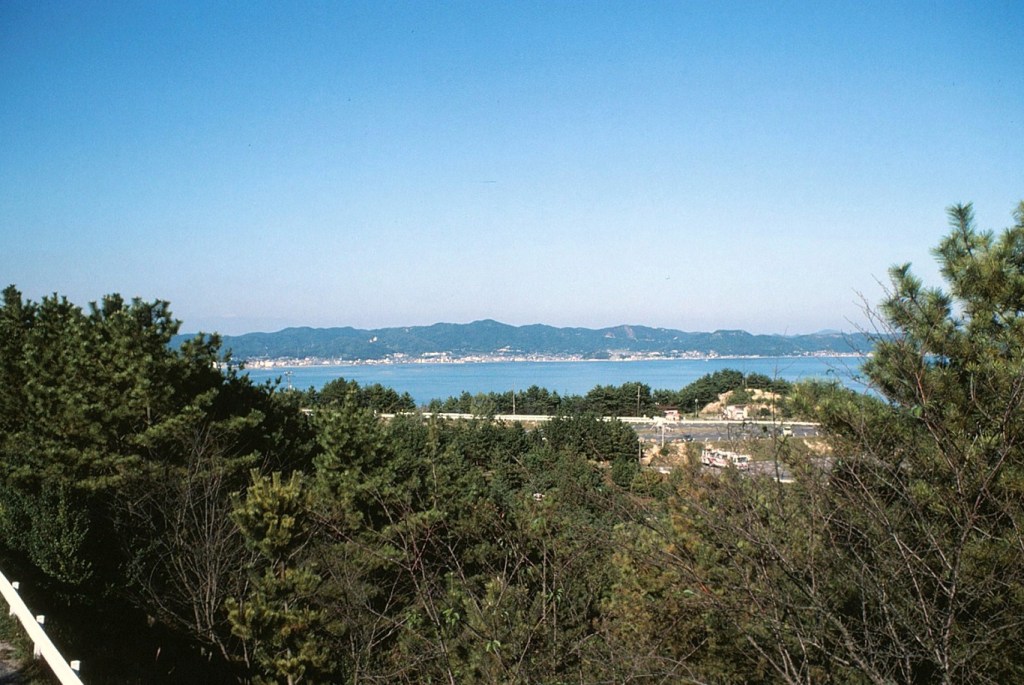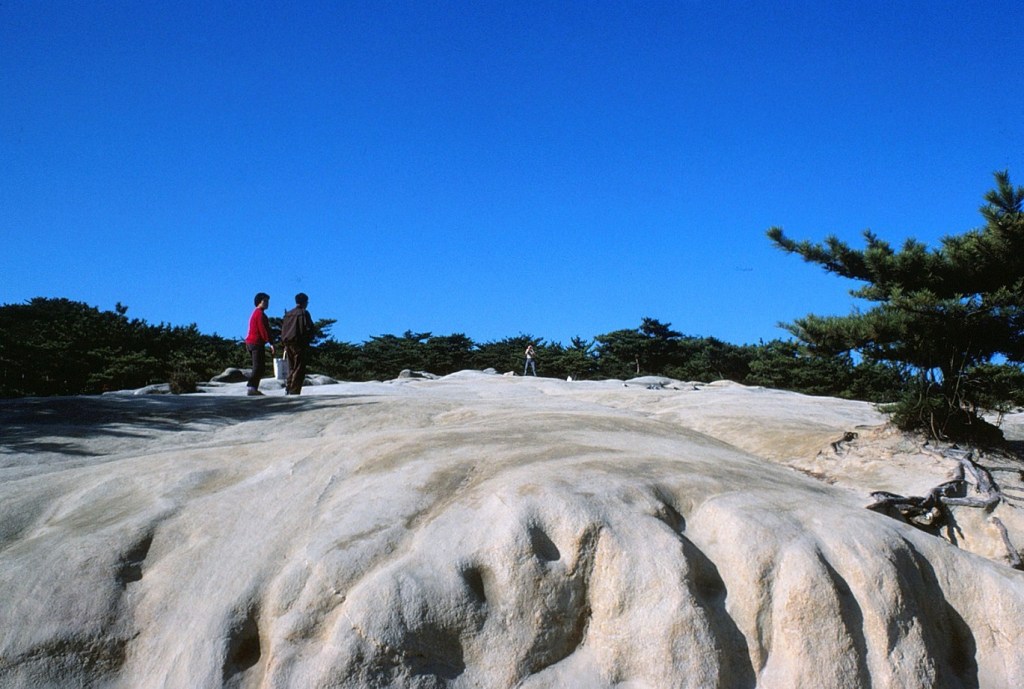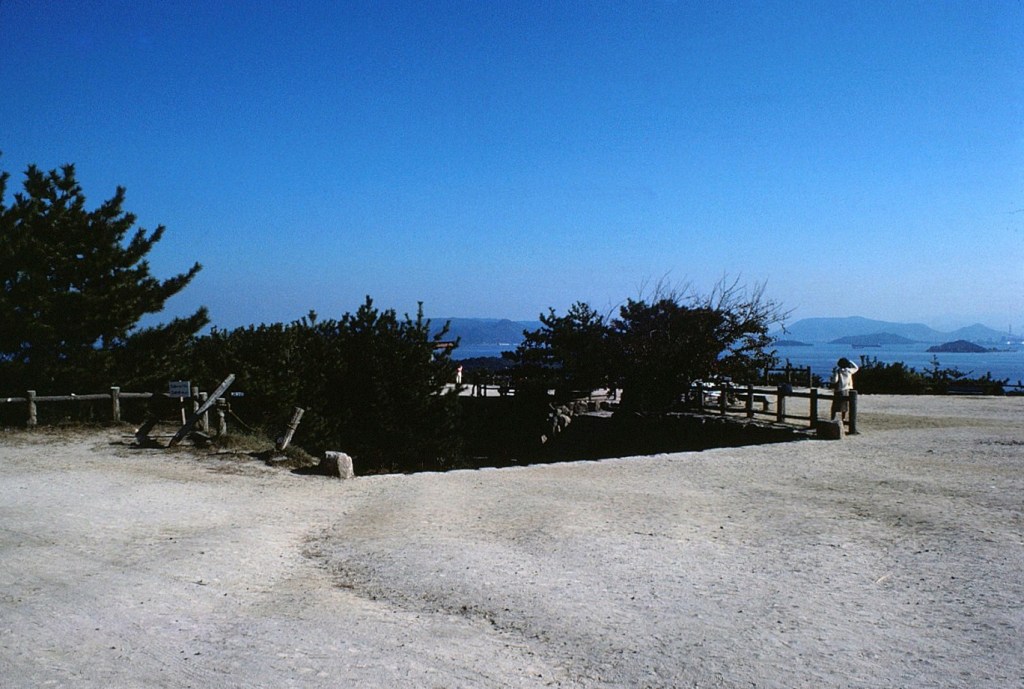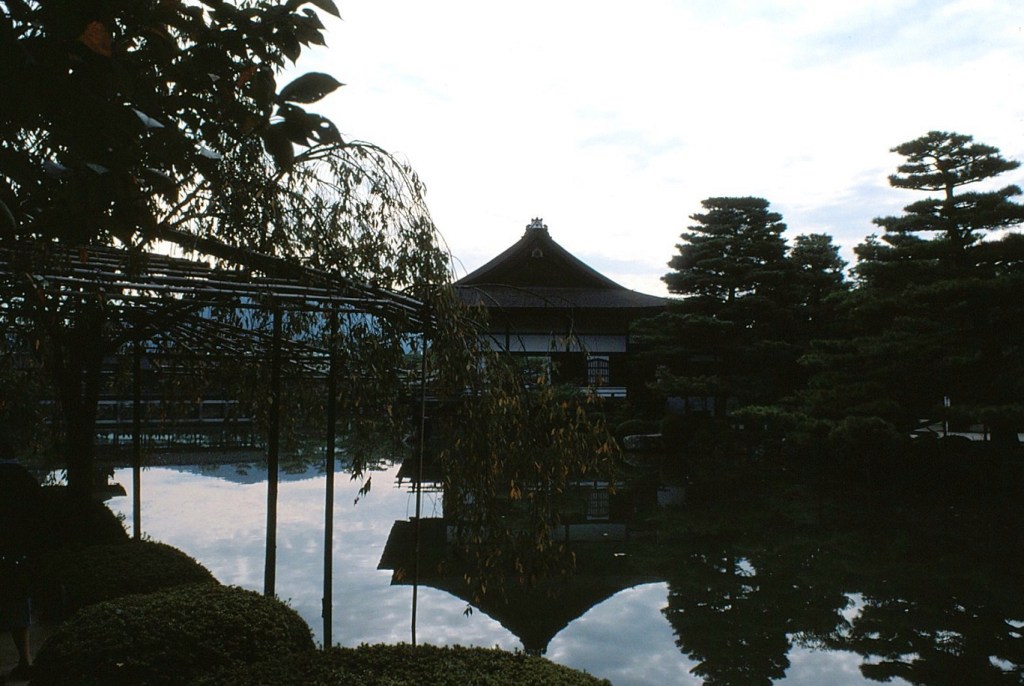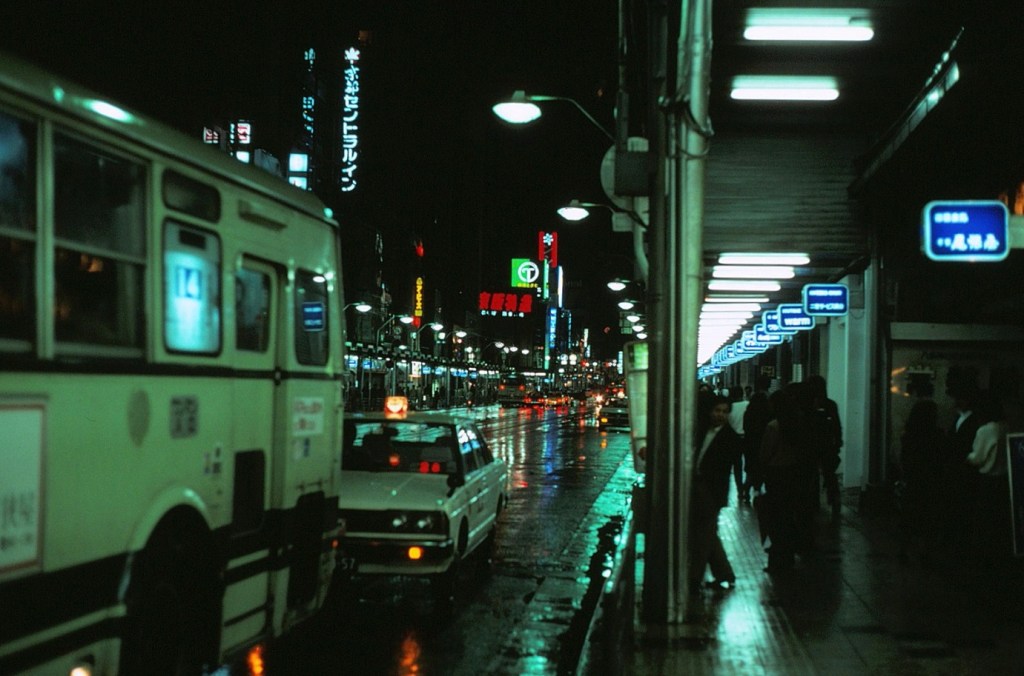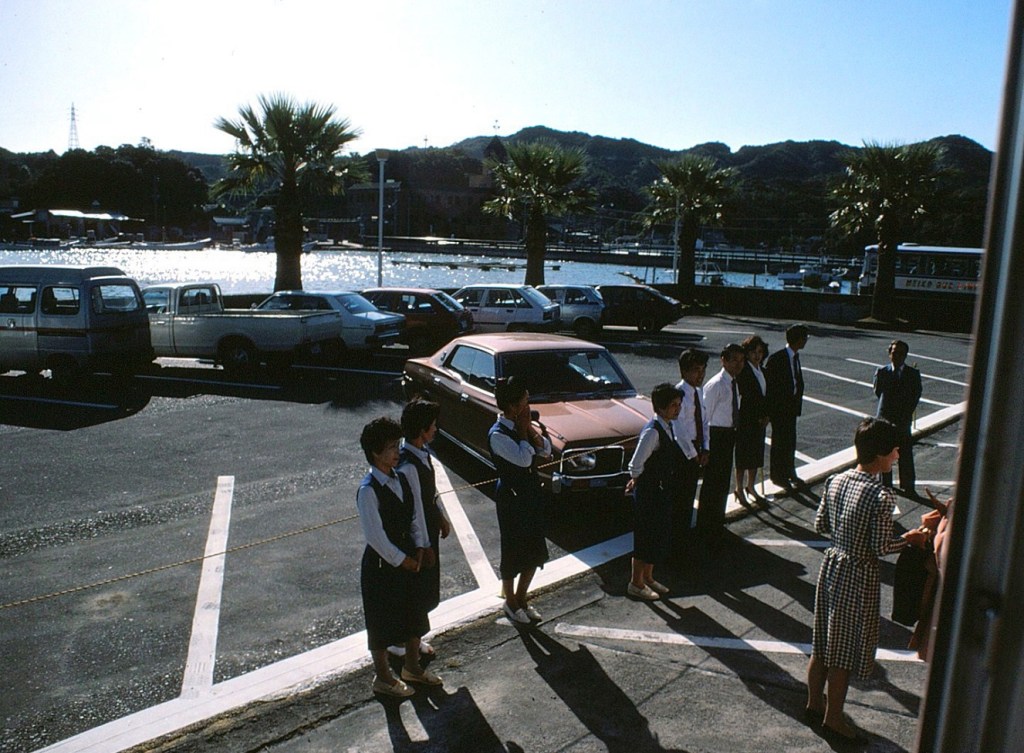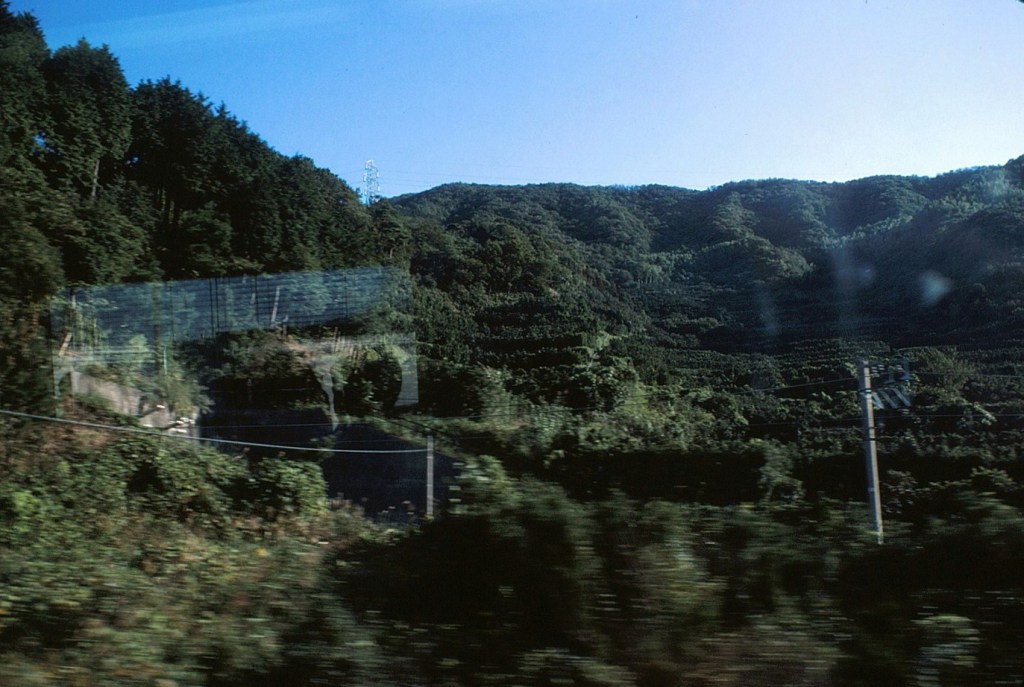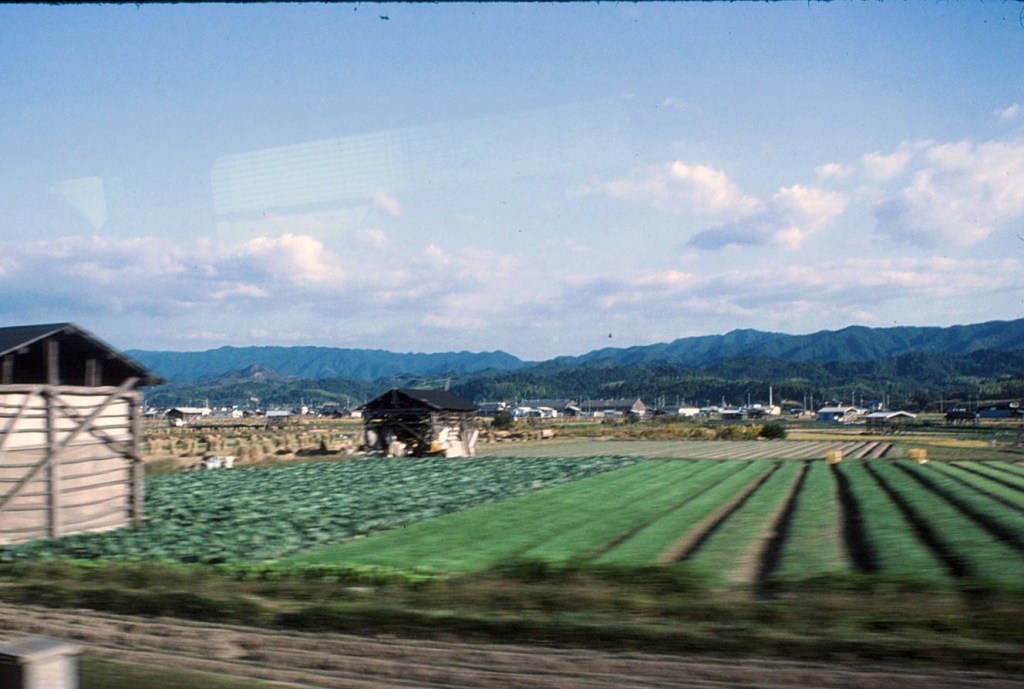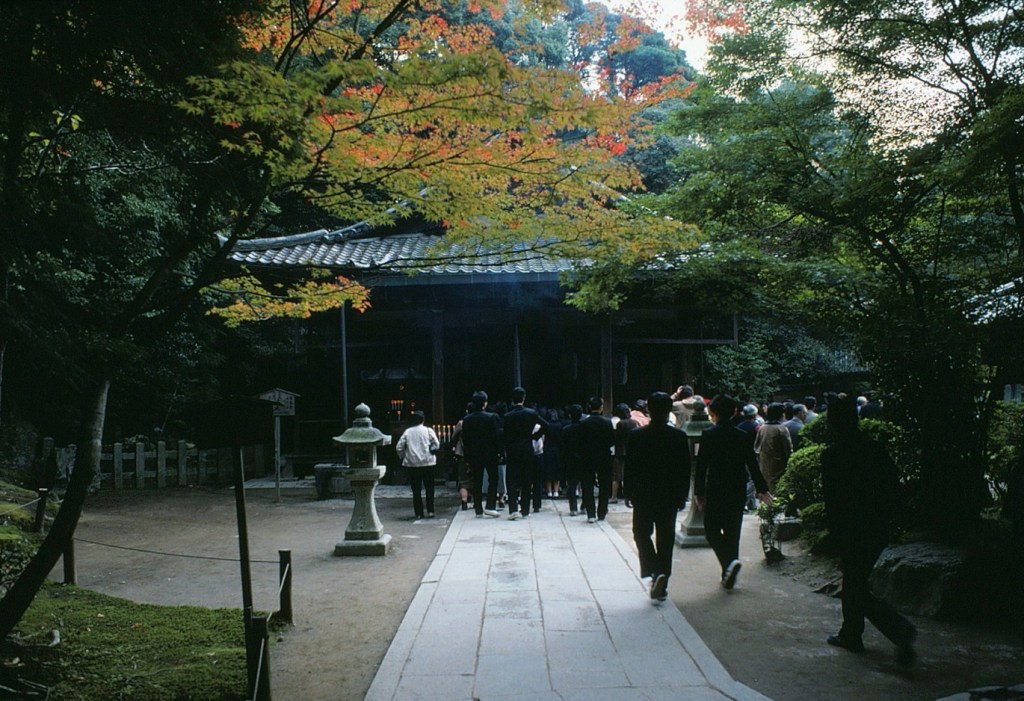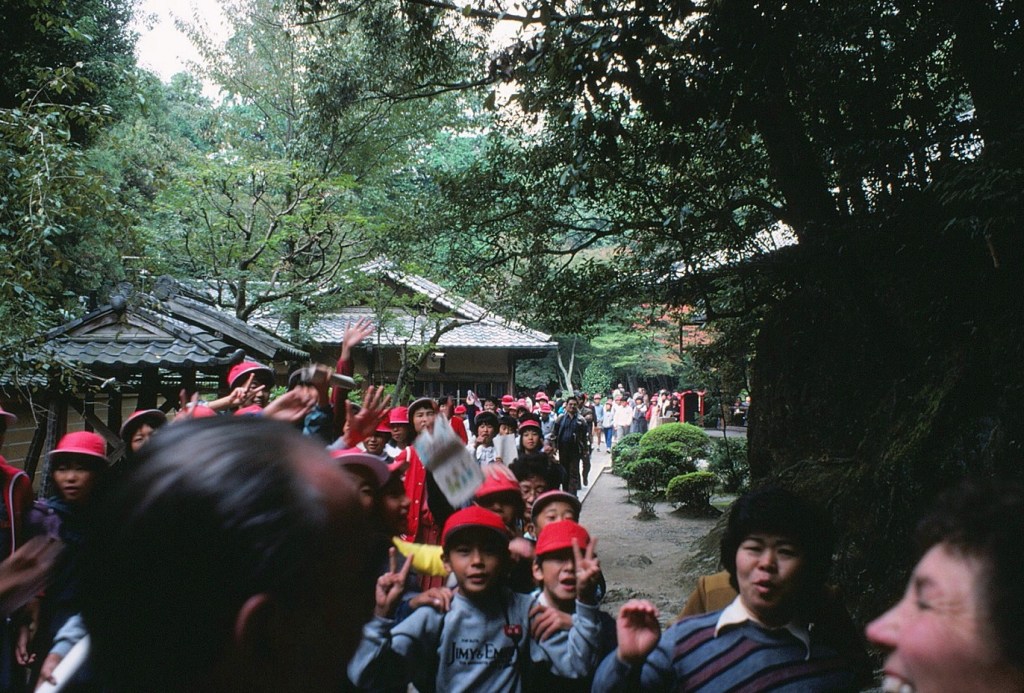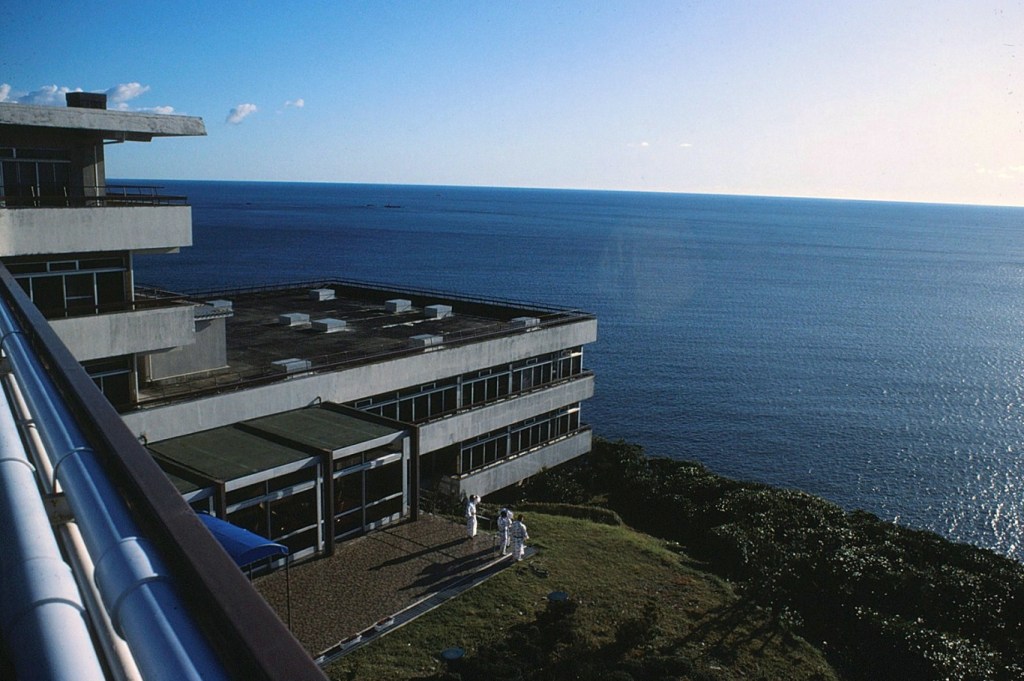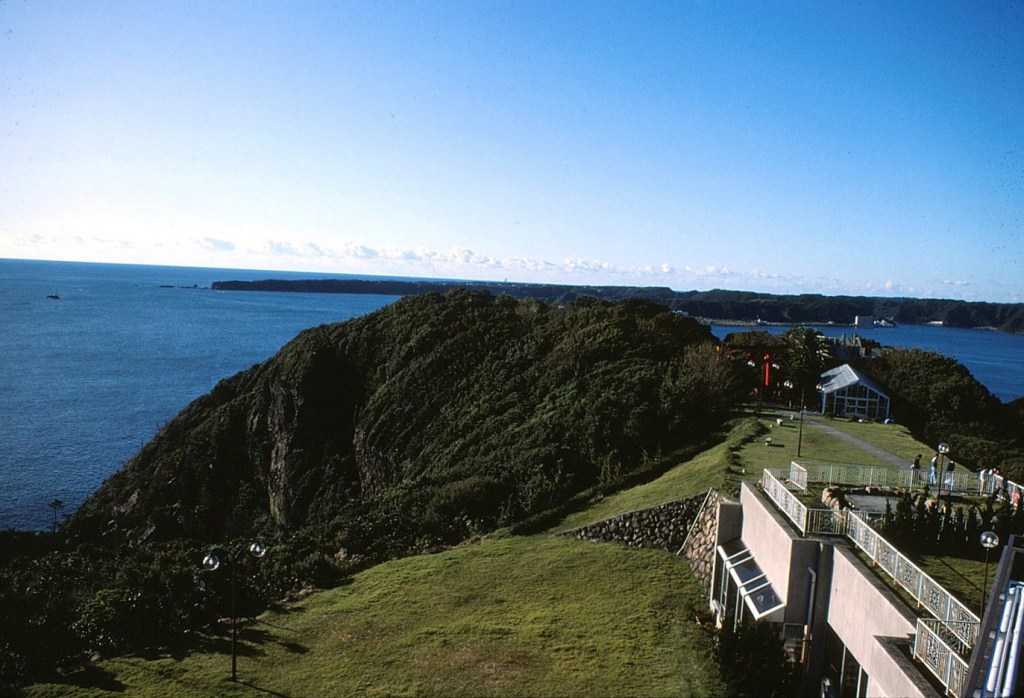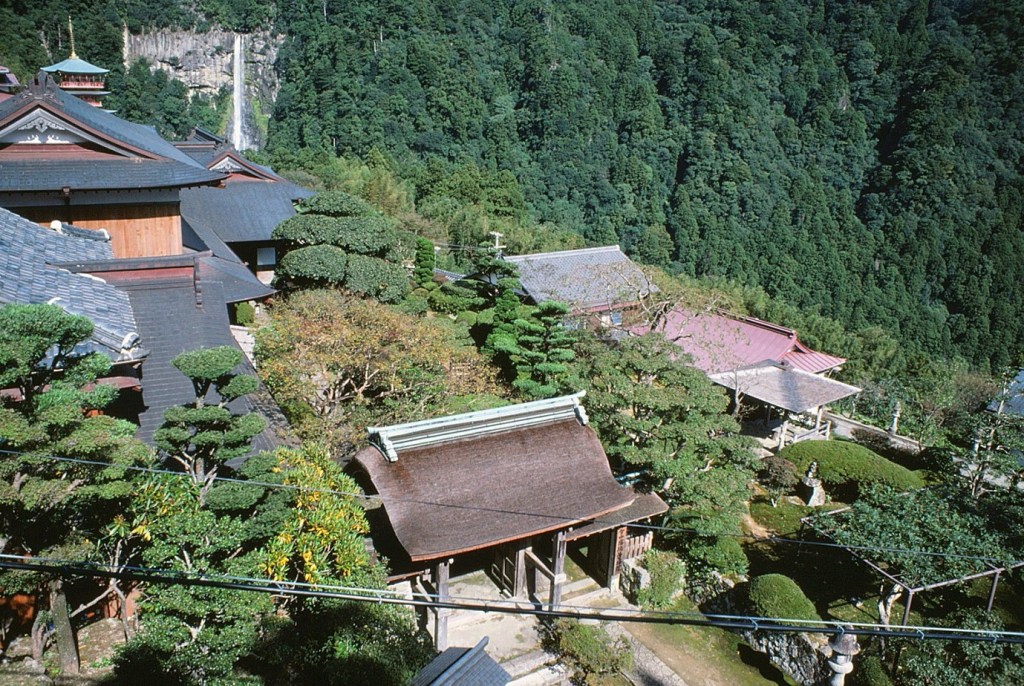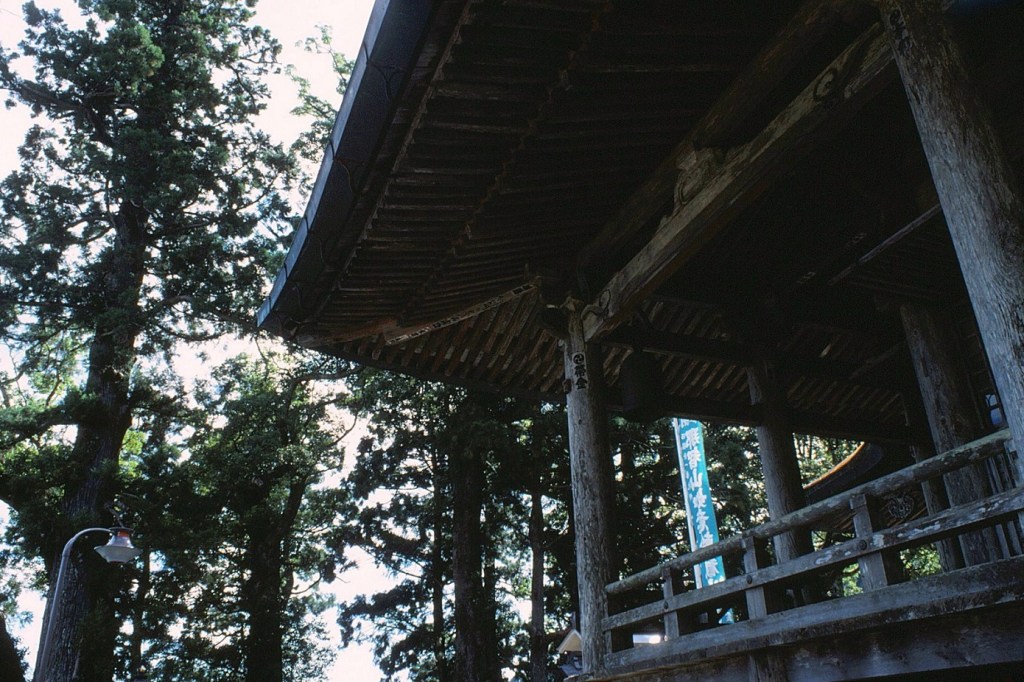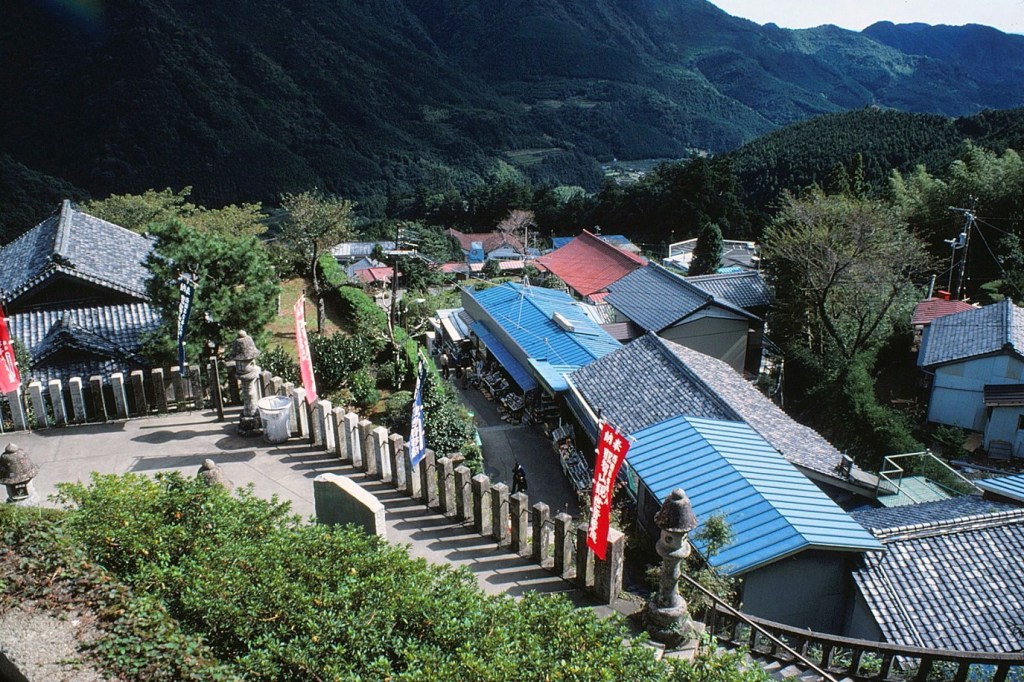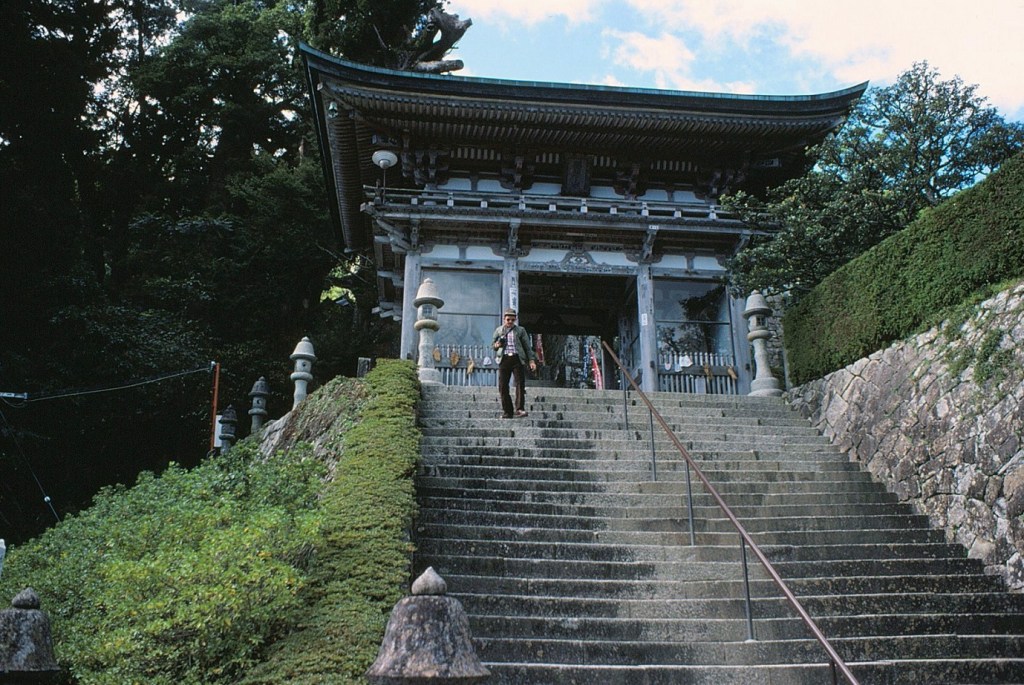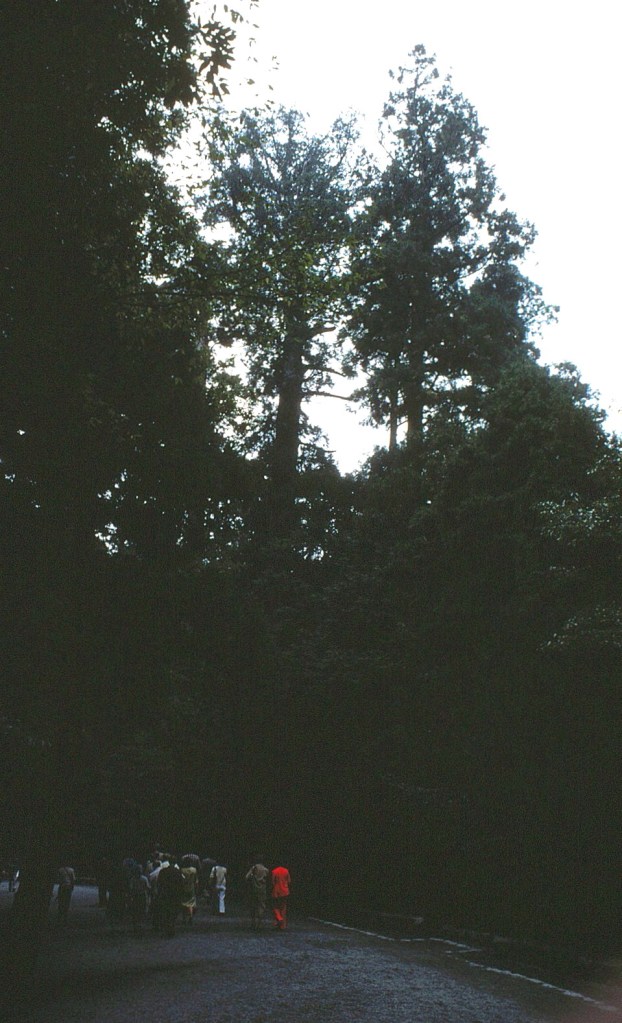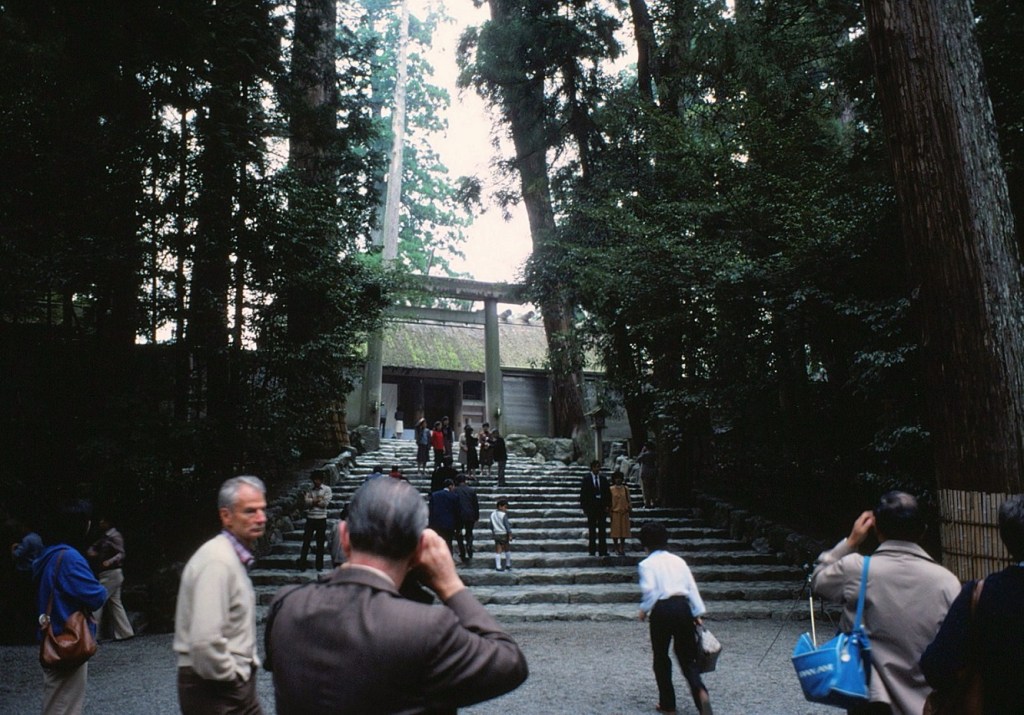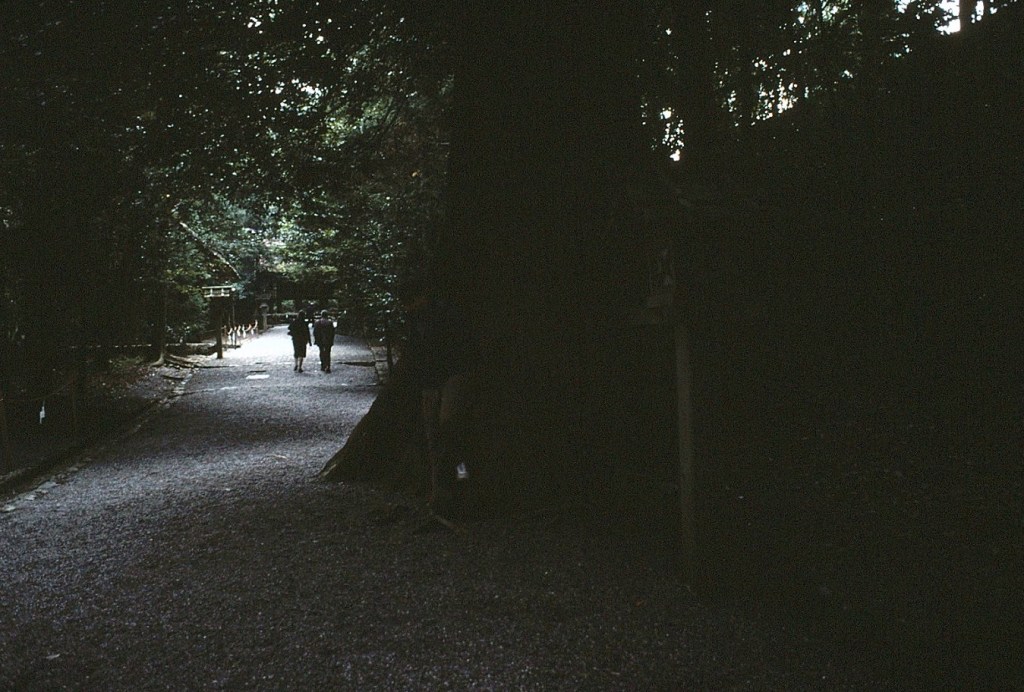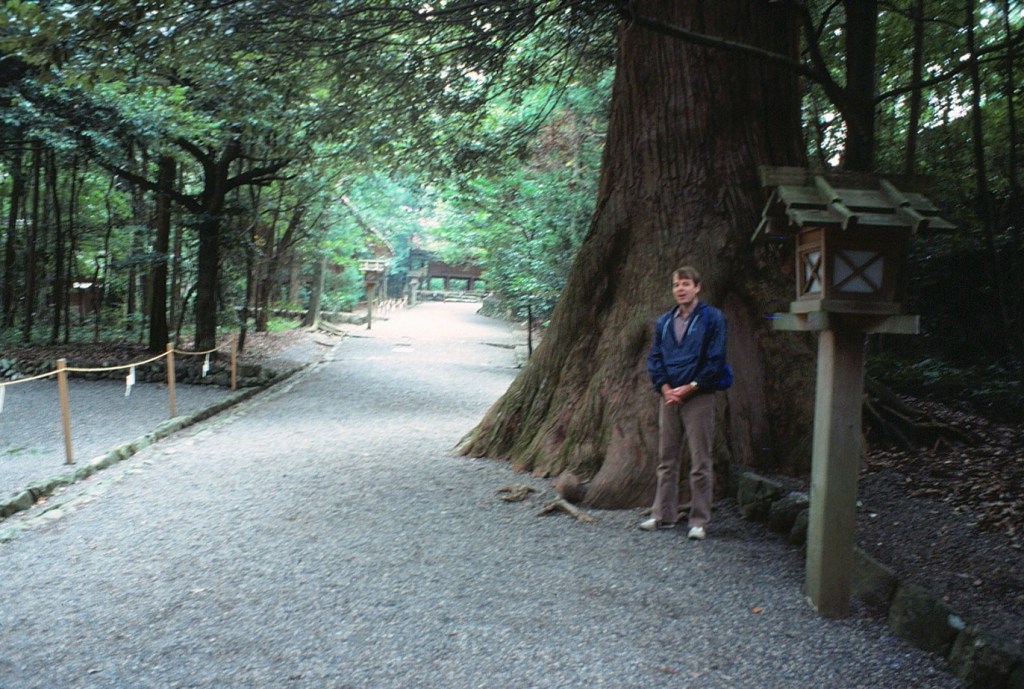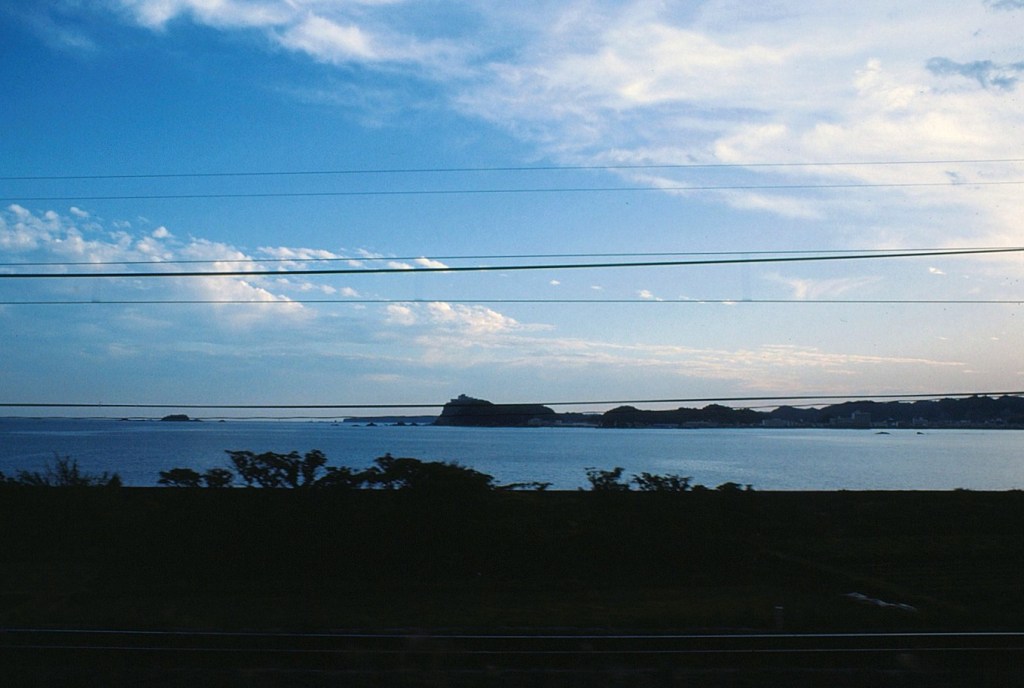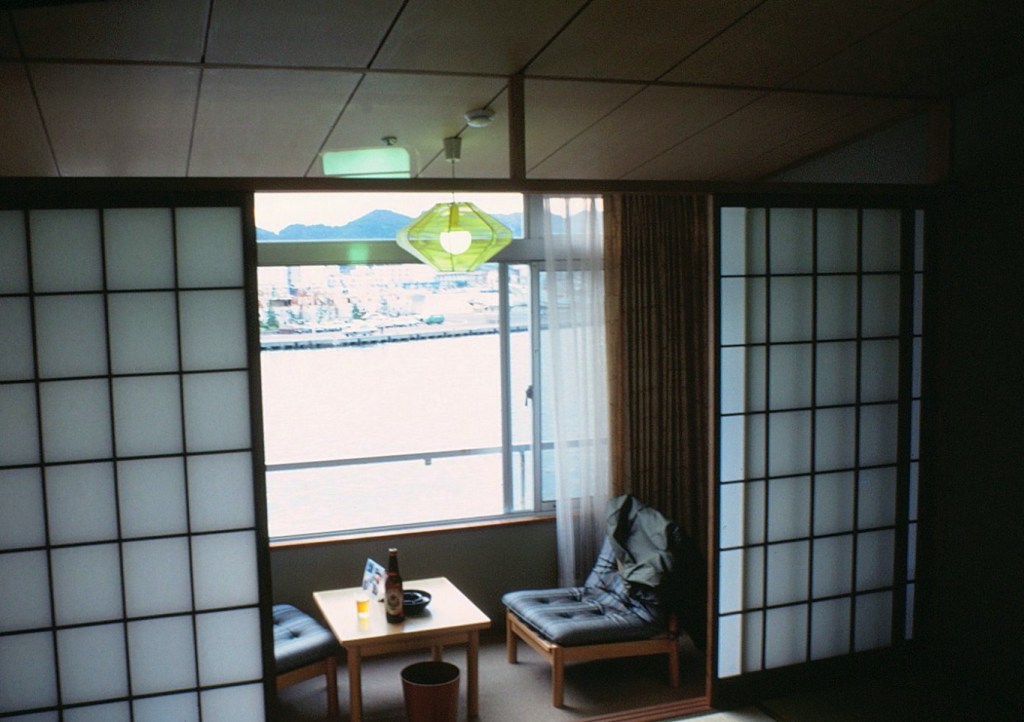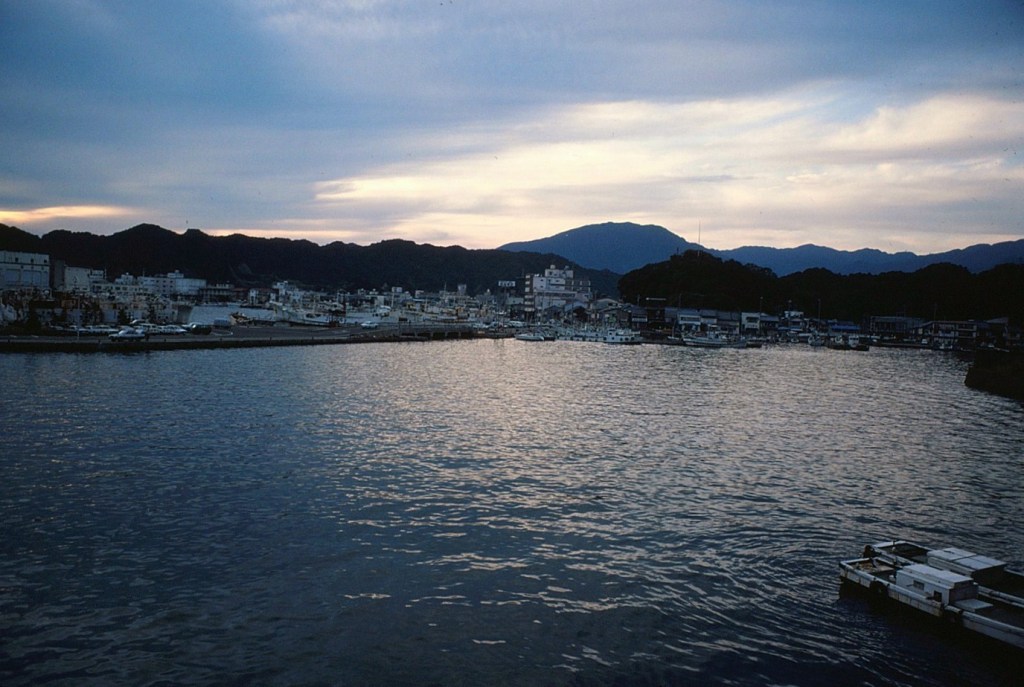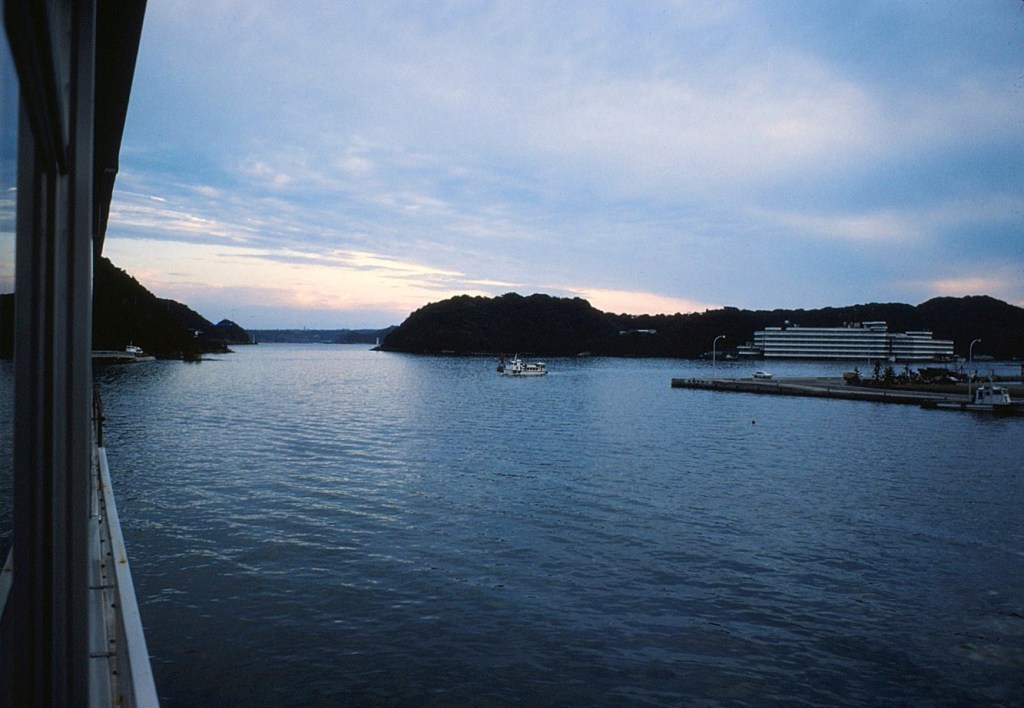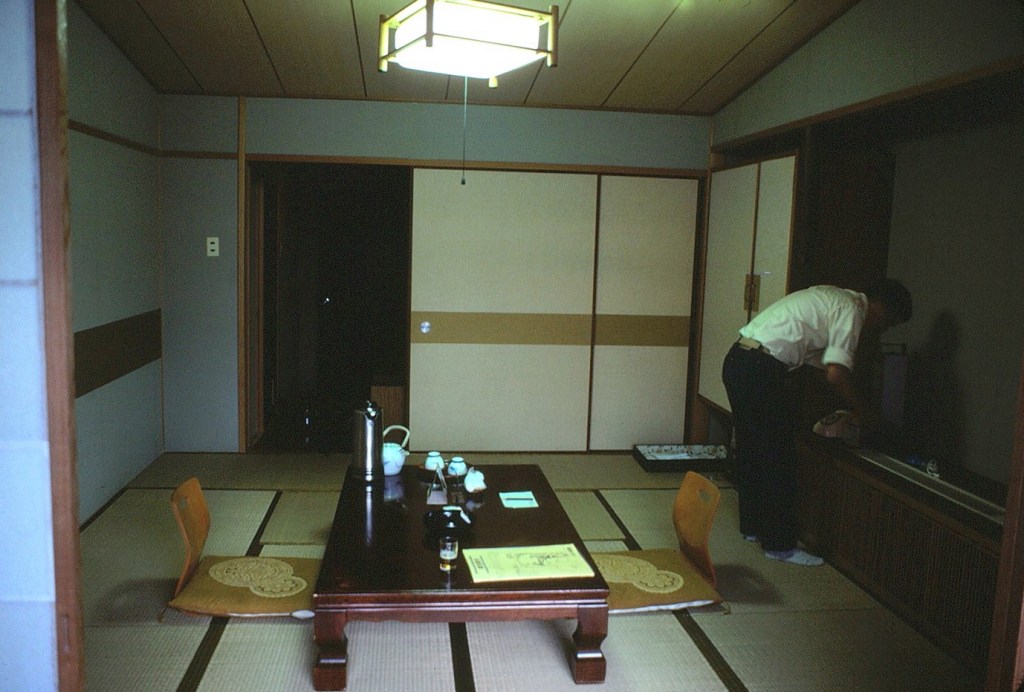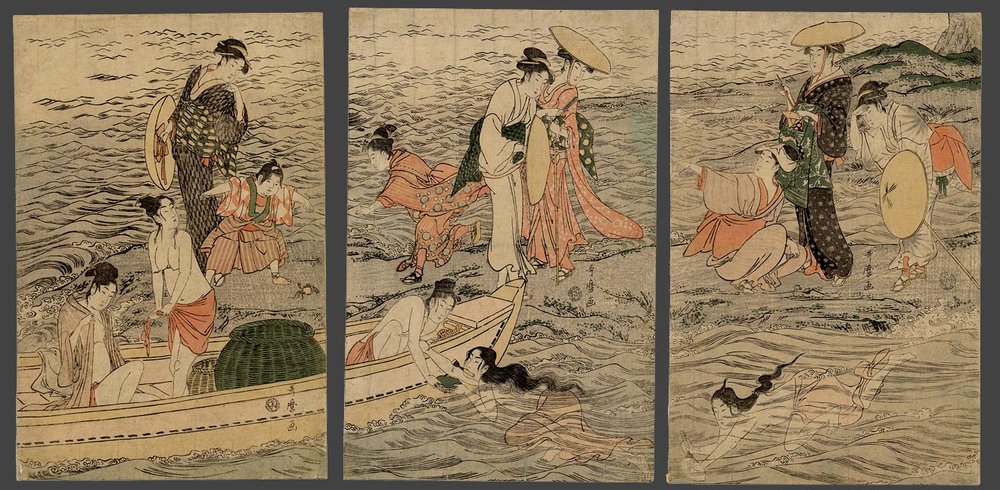
Japan 1983 (Part 10)

November 17

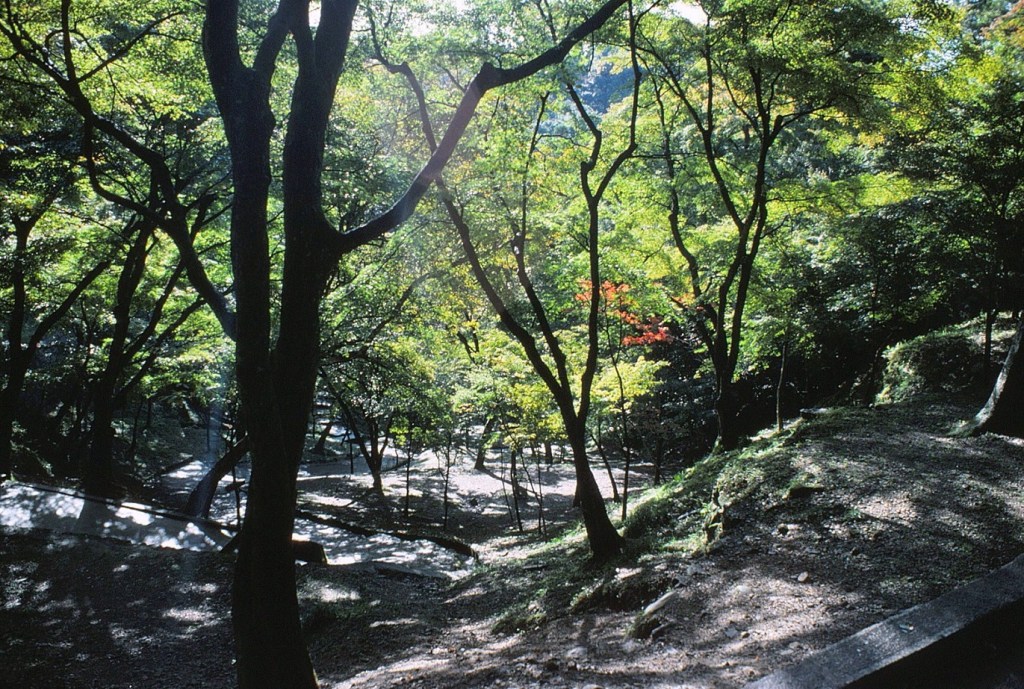
The culture’s reverence for nature accentuates Kyoto’s innate beauty. Designs on fabric, pottery, lacquer, and folding screens depict swirling water, budding branches, and birds in flight. Delicate woodcuts and scrolls celebrate the moonlight, rain, and snow. Elegant restaurant dishes arrive with edible garnishes of seasonal flora. ~  Victoria Abbott Riccardi

Highlighting Kyoto. As I’ve said before (somewhere), my favorite city. I always wanted to go back to do this trip again, but I could never bring myself to do another trans-Pacific plane ride. Roy, on the other hand, made several trips back, and after his retirement to Hawaii he was half way there . . .

I told him there was one city that they must not bomb without my permission and that was Kyoto. ~ Henry L. Stimson

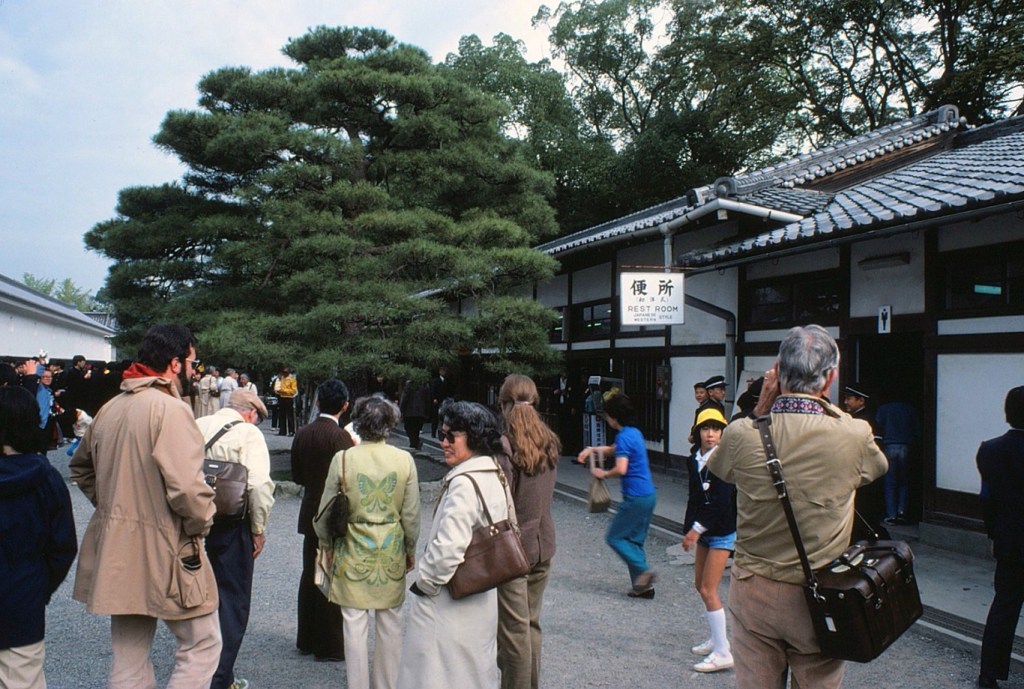
[A highlight of any foreign trip, of course, are the public rest rooms, especially when they’re well identified . . . ]

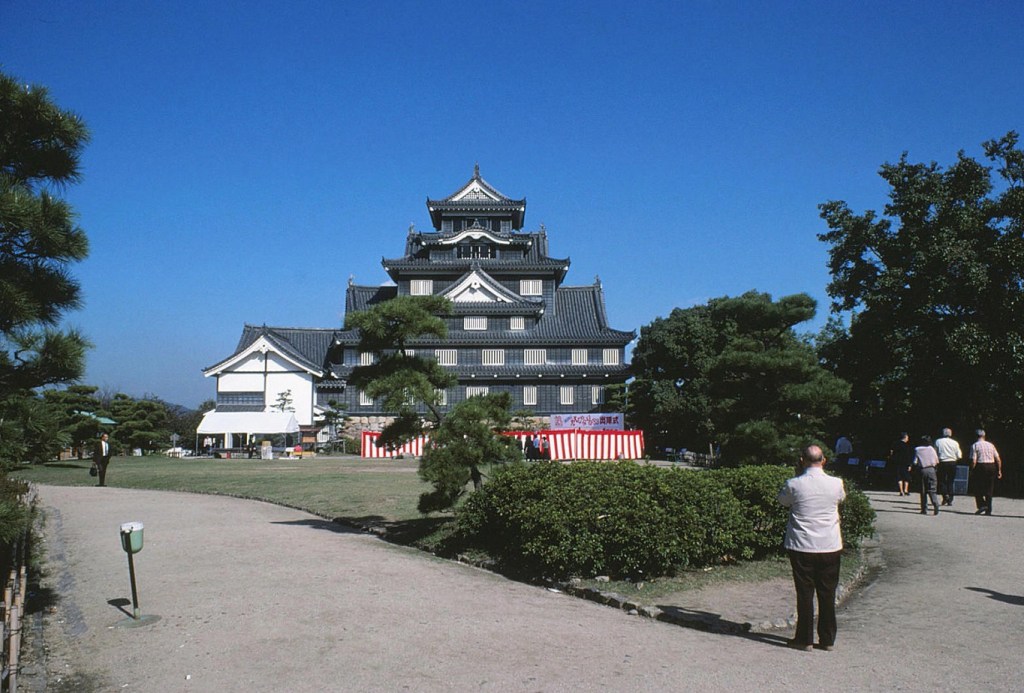
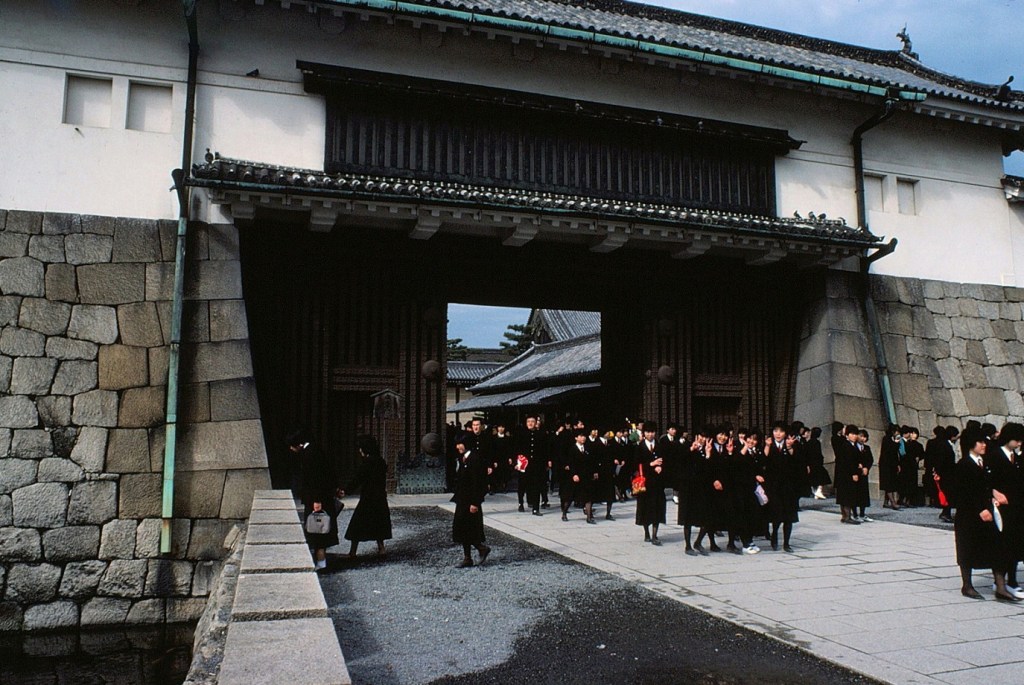
[Nijō Castle is a flatland castle in Kyoto. The castle consists of two concentric rings (Kuruwa) of fortifications, the Ninomaru Palace, the ruins of the Honmaru Palace, various support buildings and several gardens. The surface area of the castle is 275,000 square metres (27.5 ha; 68 acres), of which 8,000 square metres (86,000 sq ft) is occupied by buildings. It is one of the seventeen Historic Monuments of Ancient Kyoto which have been designated by UNESCO as a World Hertiage Site (Wikipedia).]

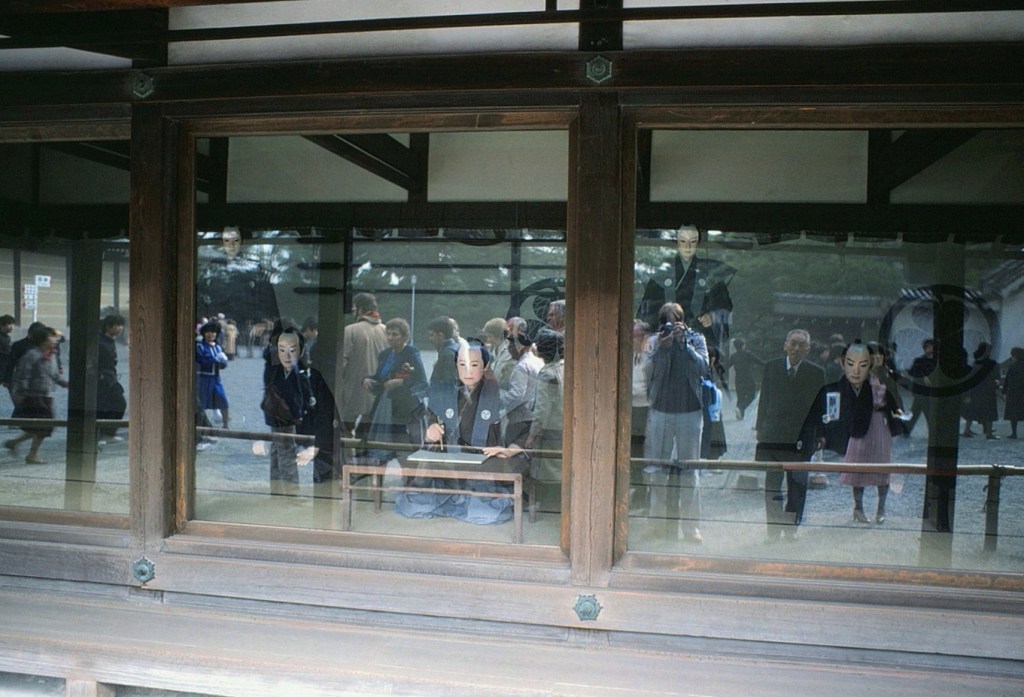
[The Ninomaru Palace in the castle was the residence and office of the shogun during his visits to Kyoto. And here he is. He was protected here by the “nightingale floors” (see 3 photos down) which I recall thinking at the time was something really cool . . . ]

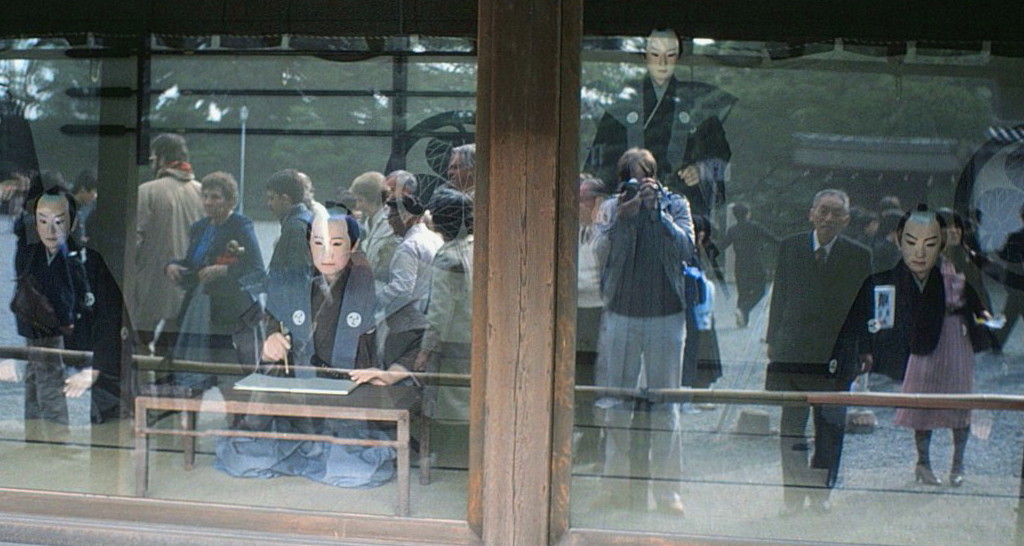
[Now I remember. I invented the selfie 37 years ago . . . ]

[Heaven only knows what this is suppose to be . . . ]

[Ninomaru Palace of Nijo Castle is 3,300 square meters and consists of five connected separate buildings and is built almost entirely of Hinoki cypress. The decoration includes lavish quantities of gold leaft and elaborate wood carvings, intended to impress visitors with the power and wealth of the ‘shōguns’. The sliding doors and walls of each room are decorated with wall paintings by artists of the Kano school. The castle is an excellent example of social control manifested in architectural space. Low-ranking visitors were received in the outer regions of the Ninomaru, whereas high-ranking visitors were shown the more subtle inner chambers. Rather than attempt to conceal the entrances to the rooms for bodyguards (as was done in many castles), the Tokugawas chose to display them prominently. Thus, the construction lent itself to expressing intimidation and power to Edo-period visitors. The building houses several different reception chambers, offices and the living quarters of the shōgun, where only female attendants were allowed. One of the most striking features of the Ninomaru Palace are the “nightingale floors” (uguisubari) in the corridors that make a chirping sound when walked upon. Some of the rooms in the castle also contained special doors where the shogun’s bodyguard could sneak out to protect him (Wikipedia).]

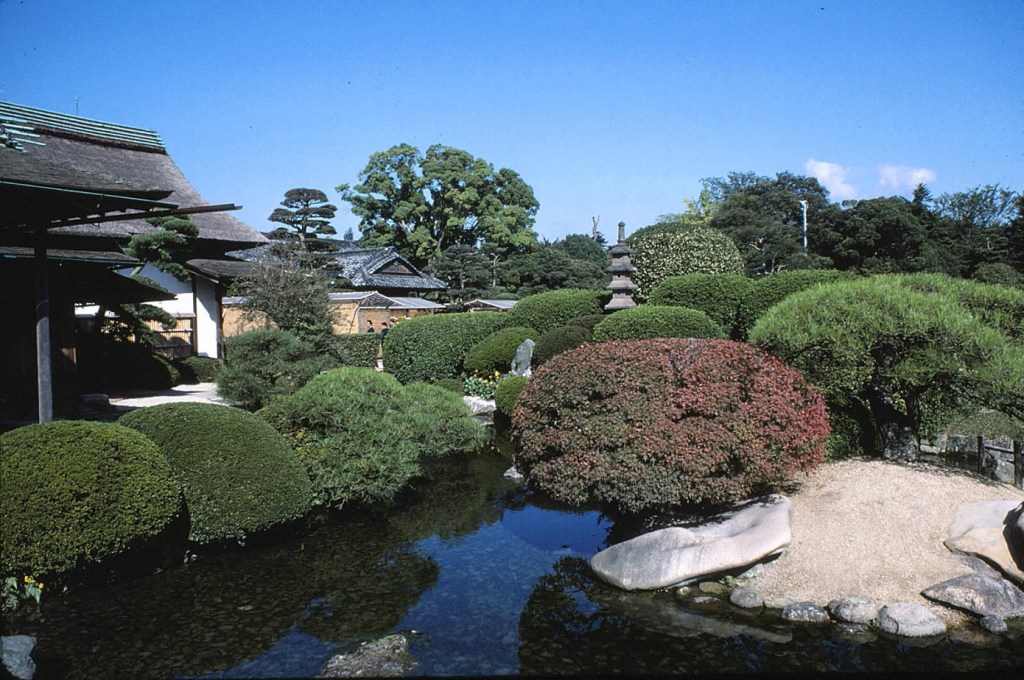
[The pond of the Ninomaru Garden . . . ]

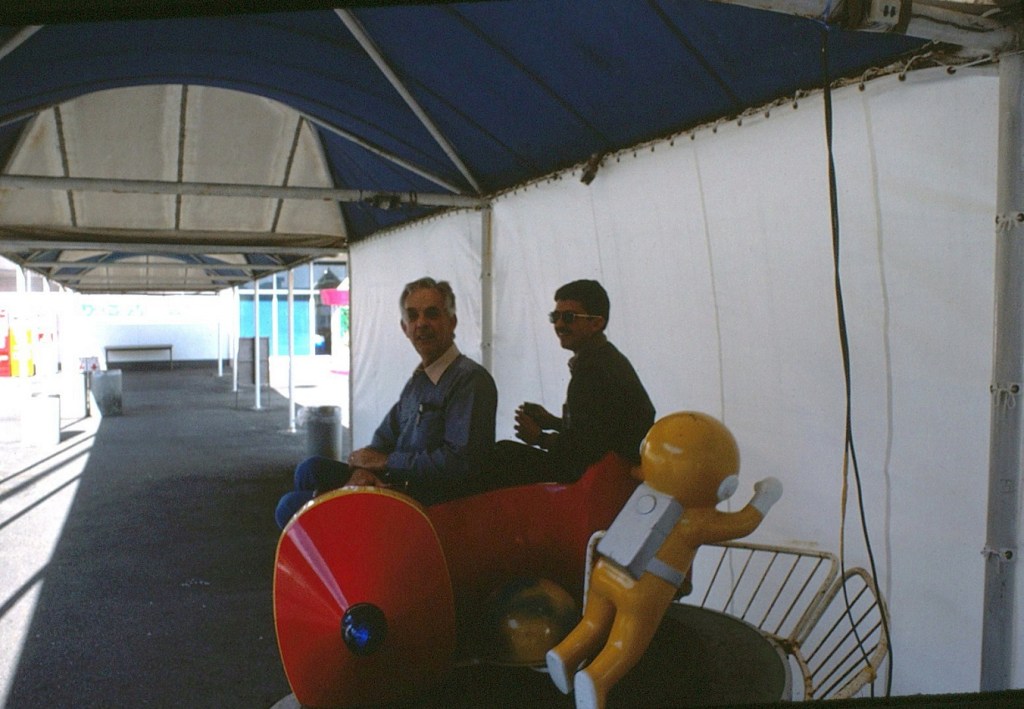
[And we tourists attack . . . ]

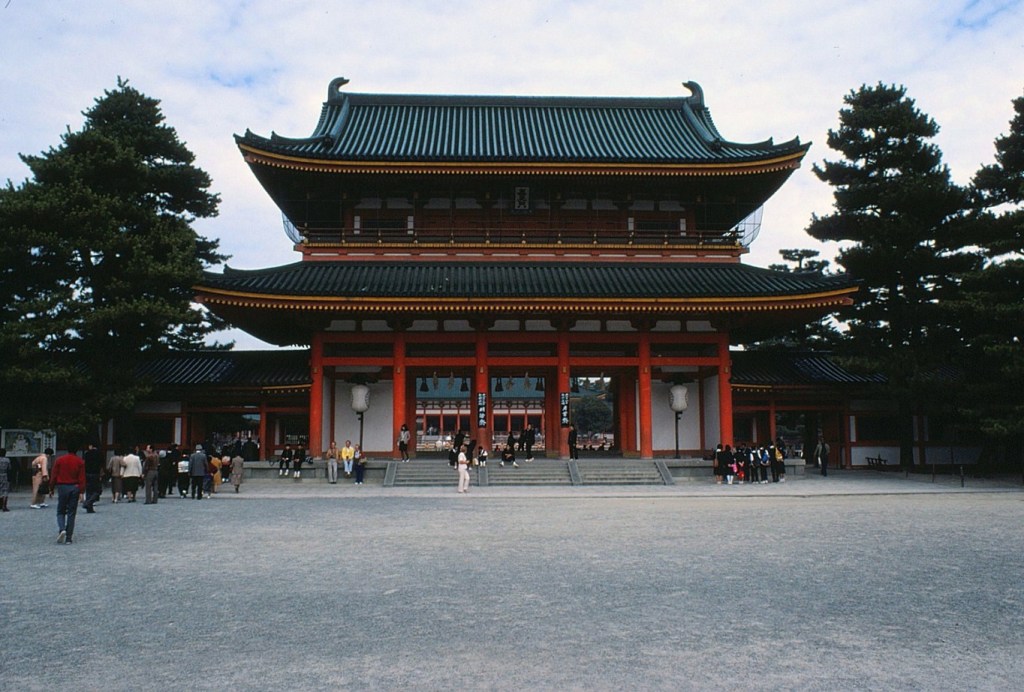
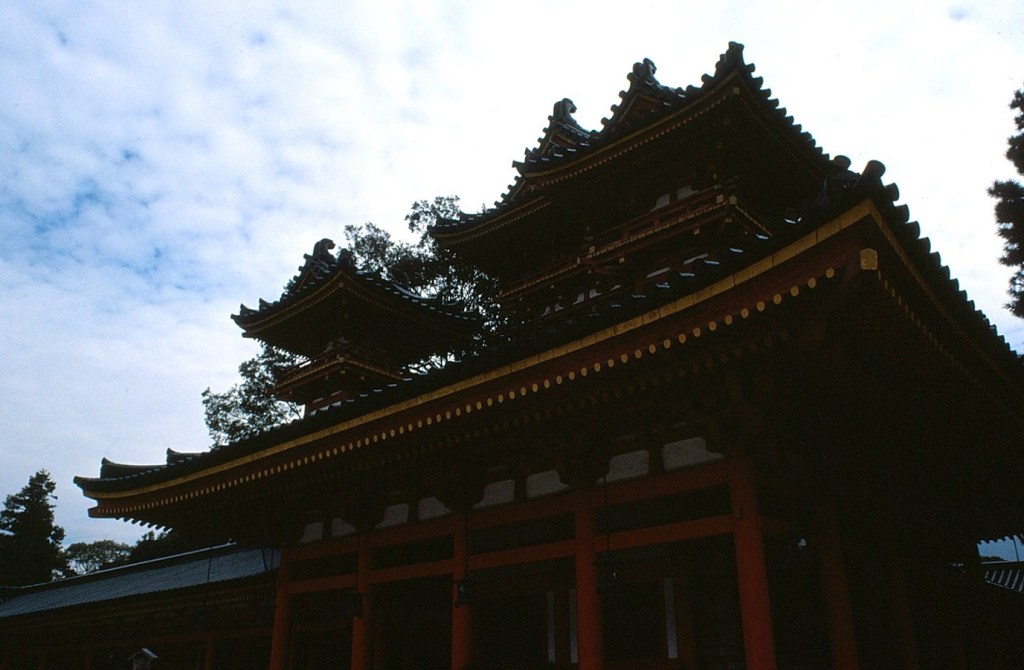
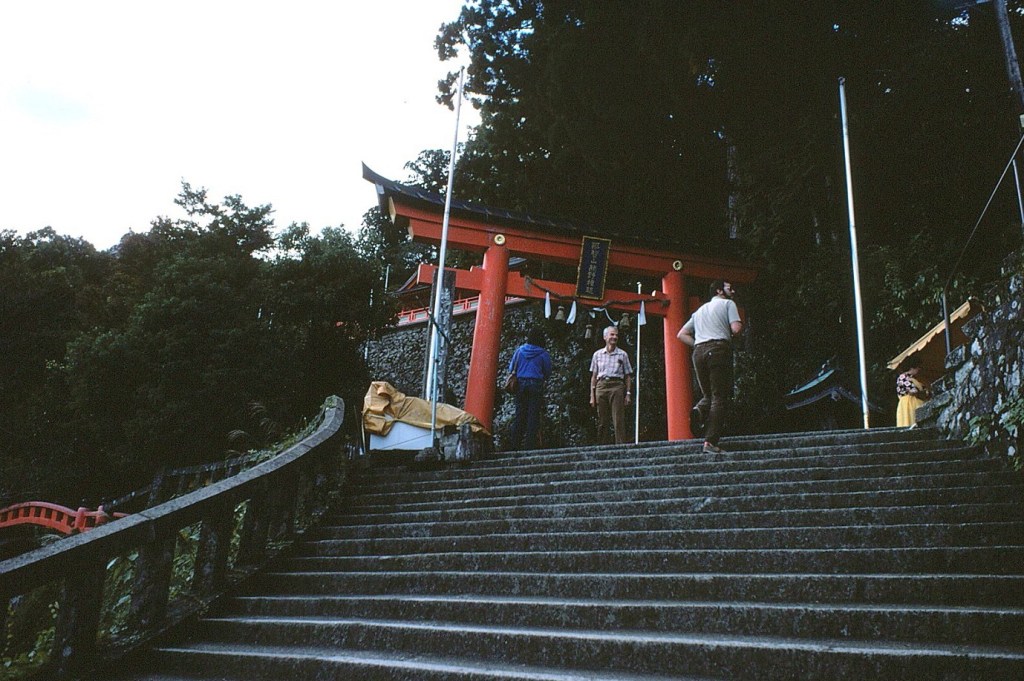
[The Heian Shrine is a Shinto shrine located in Sakyō-ku, Kyoto. The Shrine is ranked as a Beppyō Jinja (the top rank for shrines) by the Association of Shinto Shrines. It is listed as an important cultural property of Japan (Wikipedia).]

[Heian-jingū’s torii, one of the largest in Japan . . . ]

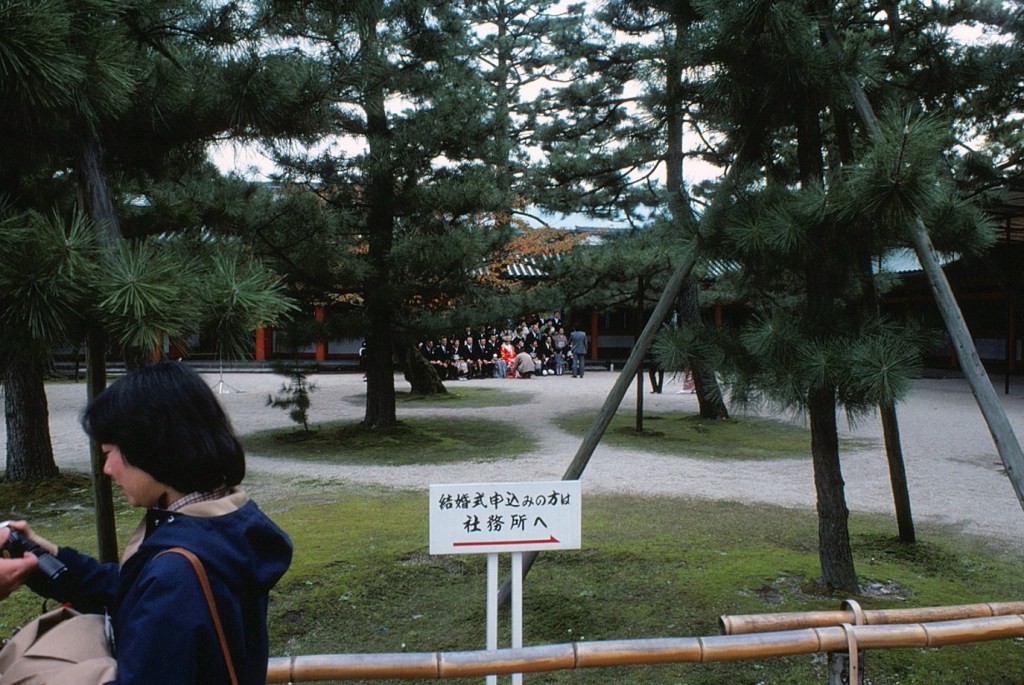
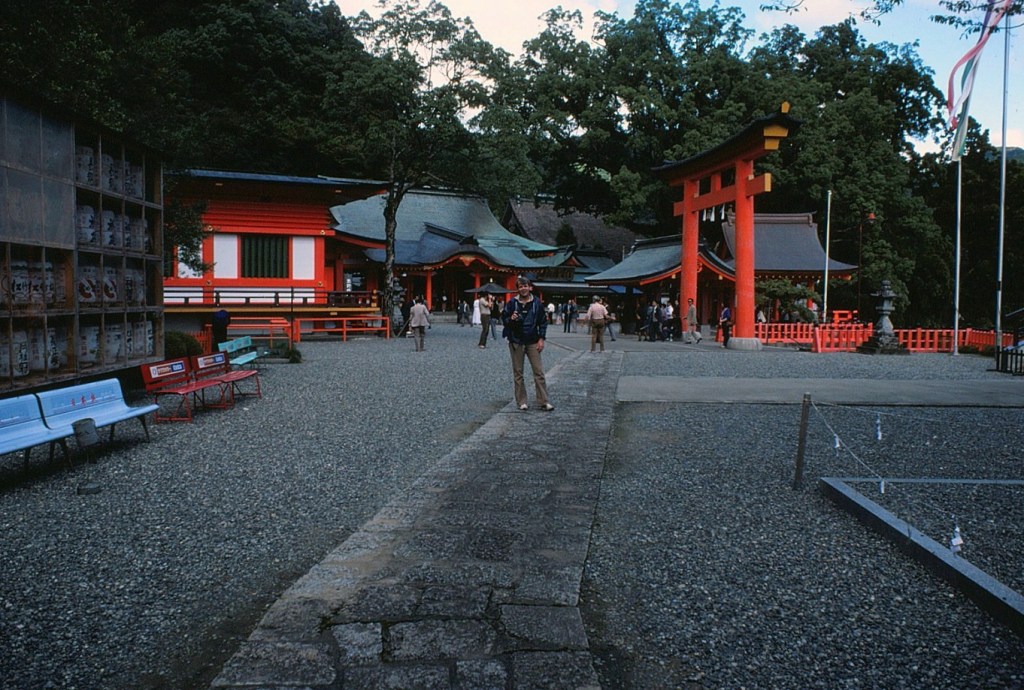
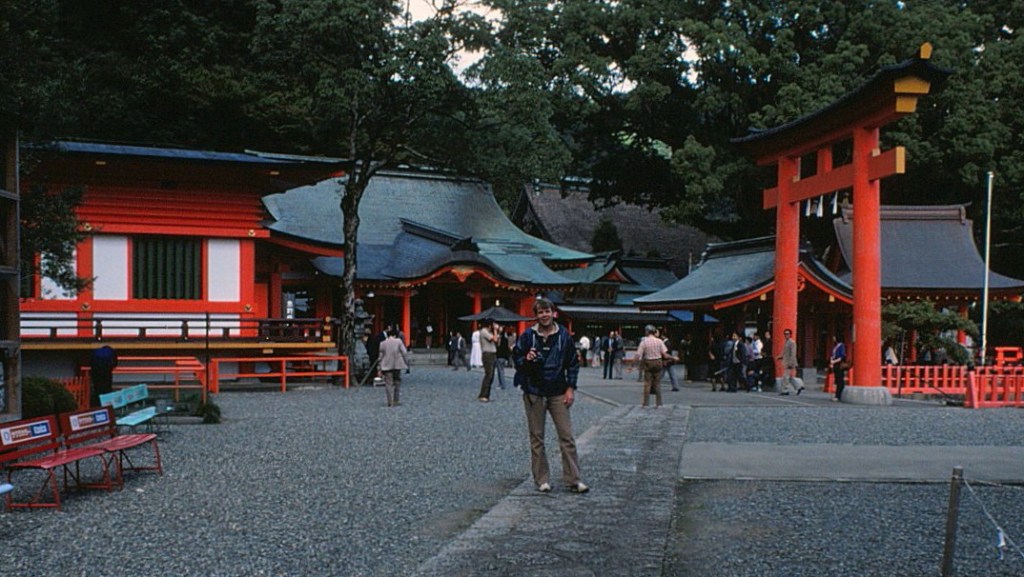
[Marsha on the Heian shrine grounds . . . ]

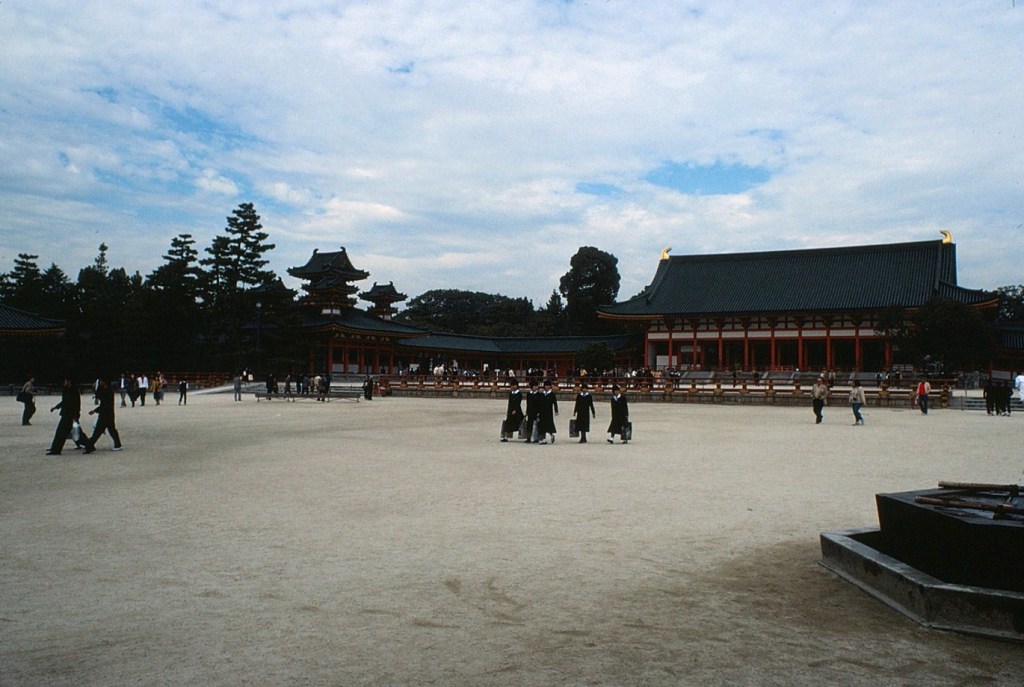
[The actual shrine grounds themselves are very spacious, with a wide open court at the center. The shrine’s main buildings are a partial replica of the original Imperial Palace from the Heian Period, built on a somewhat smaller scale than the original (japan-guide.com).]

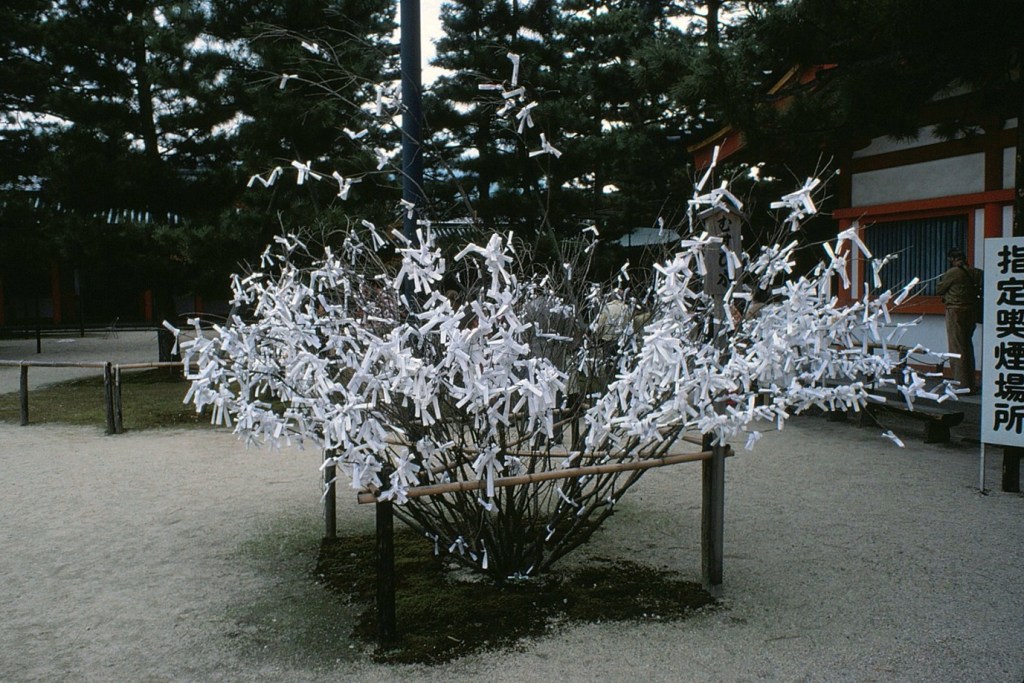
[Tanabata is a celebration which occurs every year in Japan. It is associated with people of all ages making a wish, writing it on colorful strips of paper (tanzaku) and tying them to a bamboo tree. This tree may be at a shrine or simply tastefully put in your front garden (japan-forward.com).]

In the 18th century Japan had the world’s largest city, and world’s most literate population. ~  Kenneth Henshall

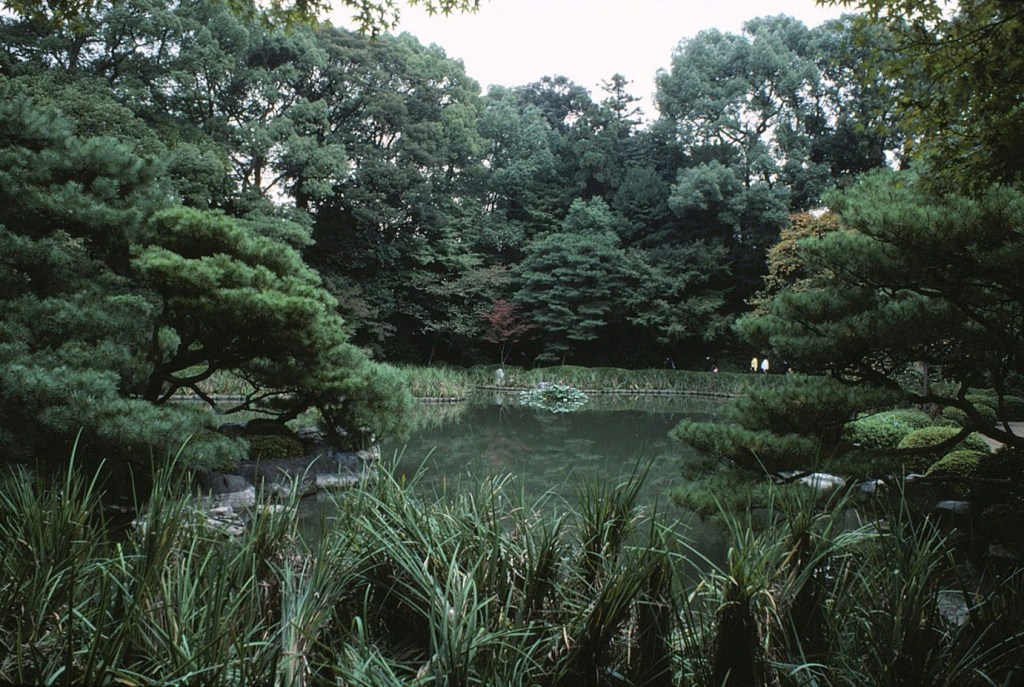
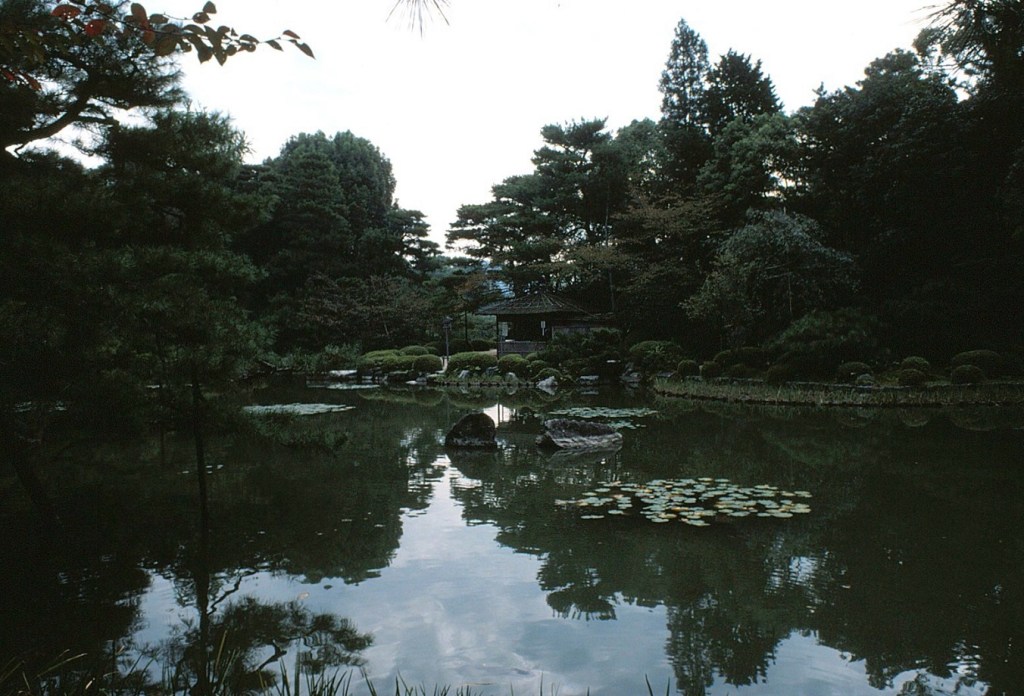
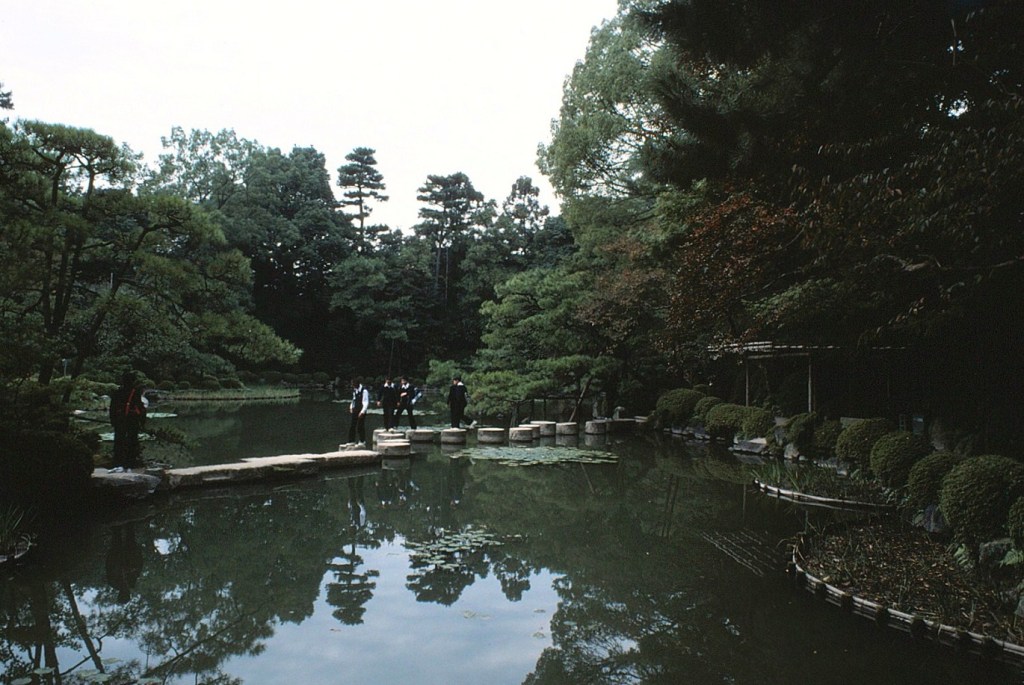
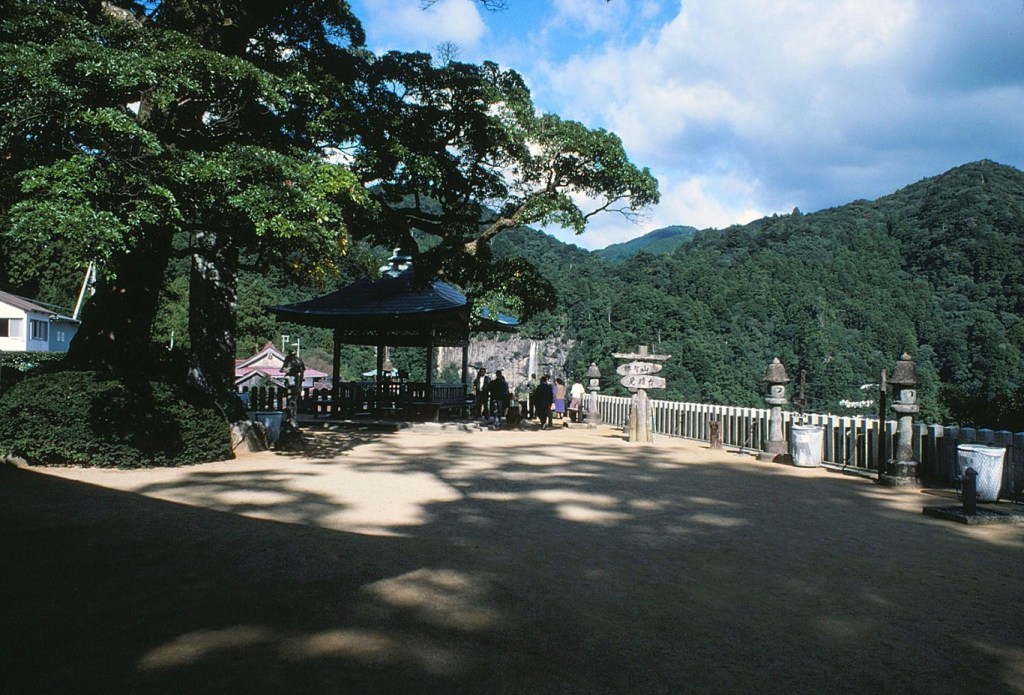
[This, and the following five photos, in the Heian shrine gardens . . . ]

I was not prepared for the feel of the noodles in my mouth, or the purity of the taste. I had been in Japan for almost a month, but I had never experiences anything like this. The noodles quivered as if they were alive, and leapt into my mouth where they vibrated as if playing inaudible music. ~  Ruth Reichl

Just beyond the gate, a neat yellow hole—someone pissed in the snow. ~  Kobayashi Issa

Regarding video games, Nintendo has had a huge influence on young people around the world. The company is in fact much older than many might imagine. It started in 1889 as a card company, exactly a 100 years before it produced the Gameboy. ~  Kenneth Henshall

News from Japan doesn’t travel and hardly ever gets reported abroad. It is almost as if Japan’s winds do not travel far. ~  Kanji Hanawa

The Heian court gave the world some of its finest early literature. For example, around 1004 the court lady Murasaki Shikibu wrote the world’s first novel, Genji Monogatari (Tale of Prince Genji). Many of its thousand pages reveal a life of exquisite refinement. ~  Kenneth Henshall

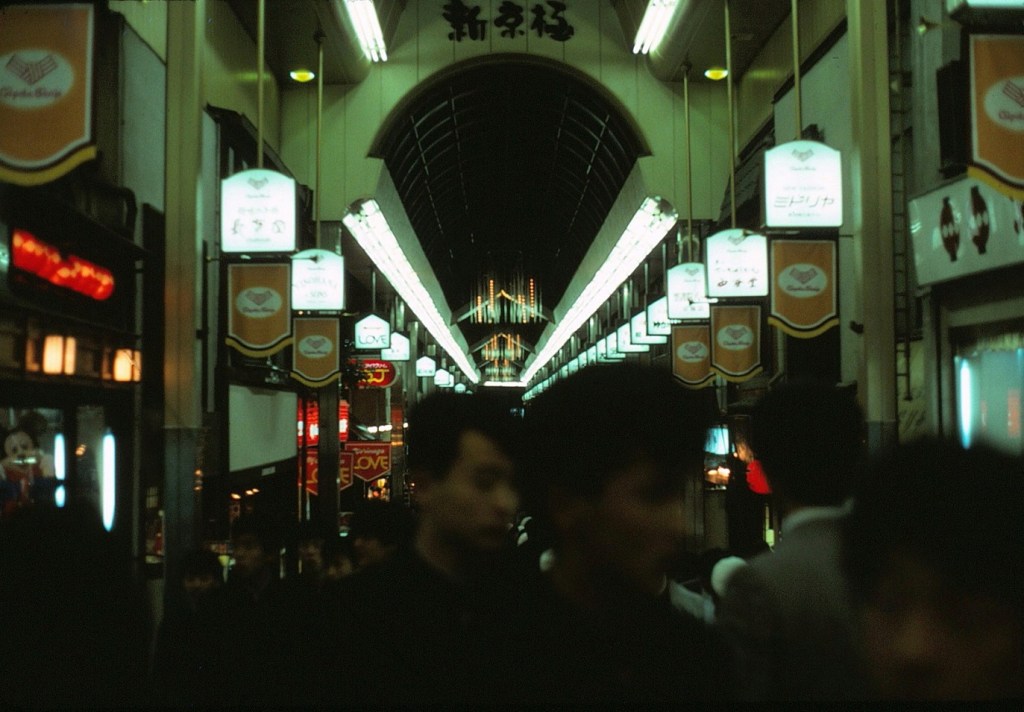
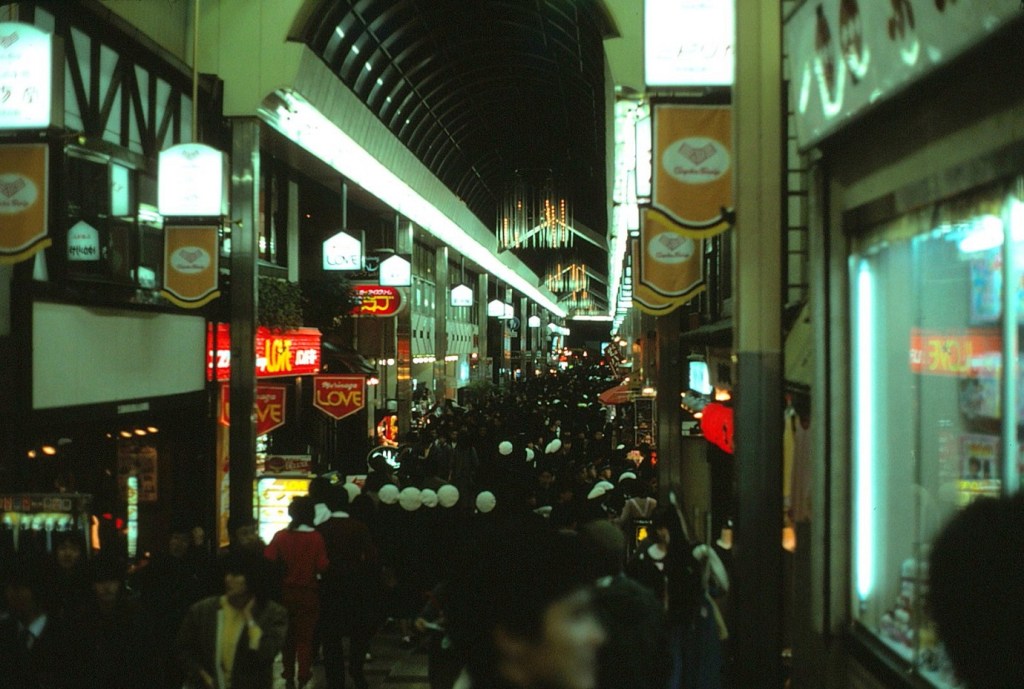
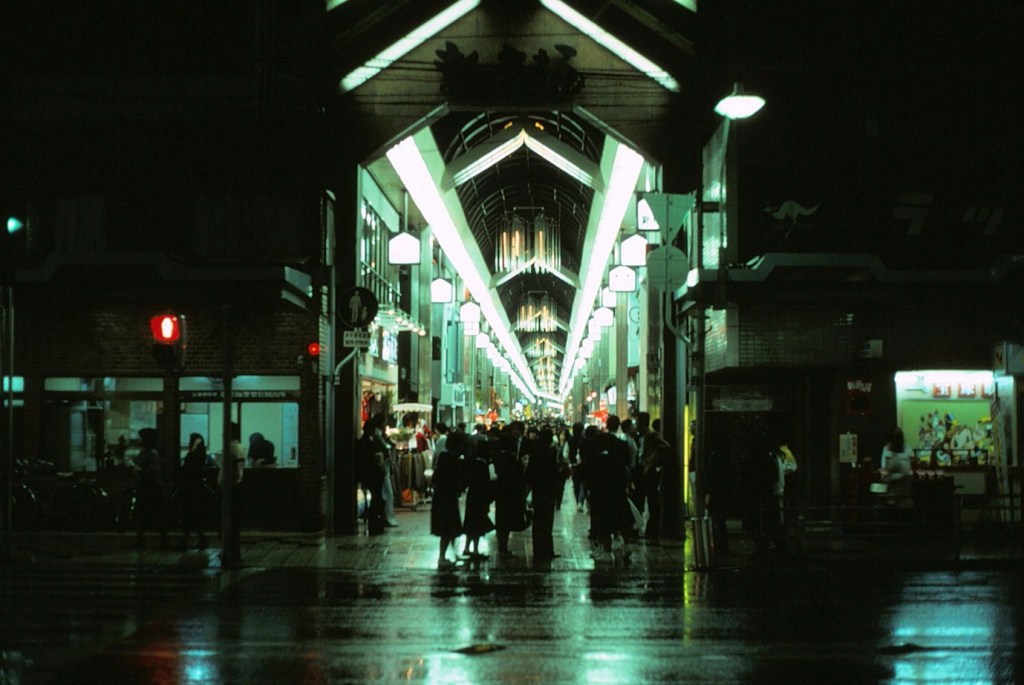
[The covered shopping arcades of downtown Kyoto. I’m not sure which is which but . . . ]

[One is likely Nishiki Market, where you’ll find dozens of food vendors selling mostly things that are considered typical “Kyoto” foods – pickled vegetables, tea, tofu – as well as an assortment of other seasonal goods and cookware (jackieoshiro.com) . . . ]

[Or at the end of the market, you’ll emerge into a covered shopping arcade. This street (Teramachi) and the street that runs parallel to it (Shinkyogoku) are the core of Kyoto’s shopping district. They span several blocks each and are filled with boutiques, cafes, restaurants, and souvenirs aplenty (jackieoshiro.com).] 

This lowly view of women was on reason why so many – if not most – samurai preferred homosexual relationships. ~  Kenneth Henshall

I think onstage nudity is disgusting, shameful, and damaging to all things American. But if I were 22 with a great body, it would be artistic, tasteful, patriotic, and a progressive religious experience. ~ Shelley Winters

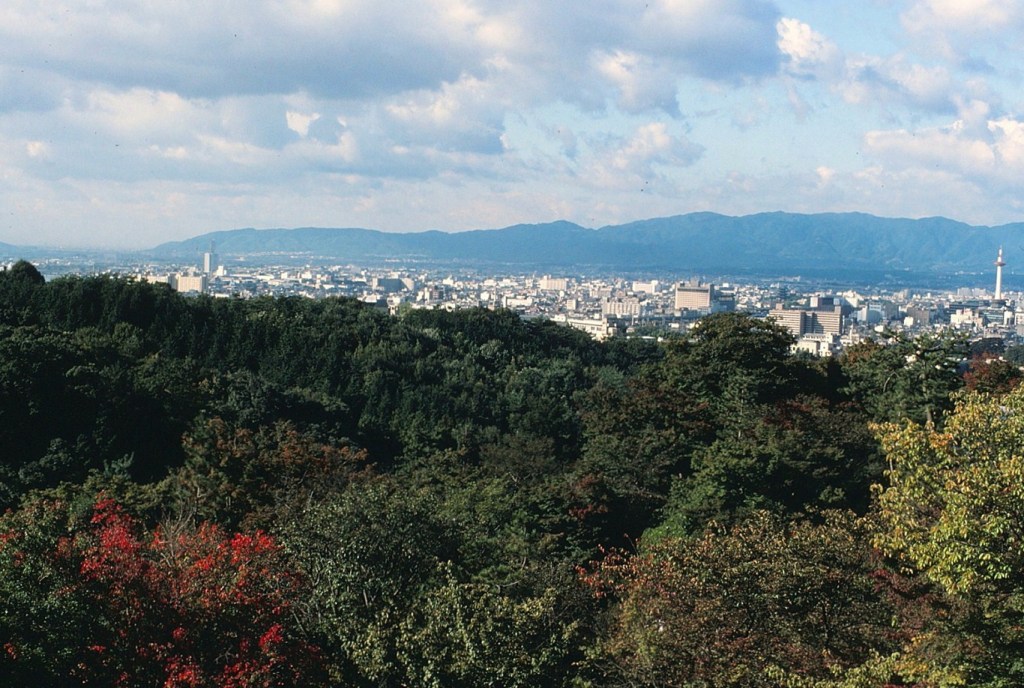
[KYOTO . . . ]

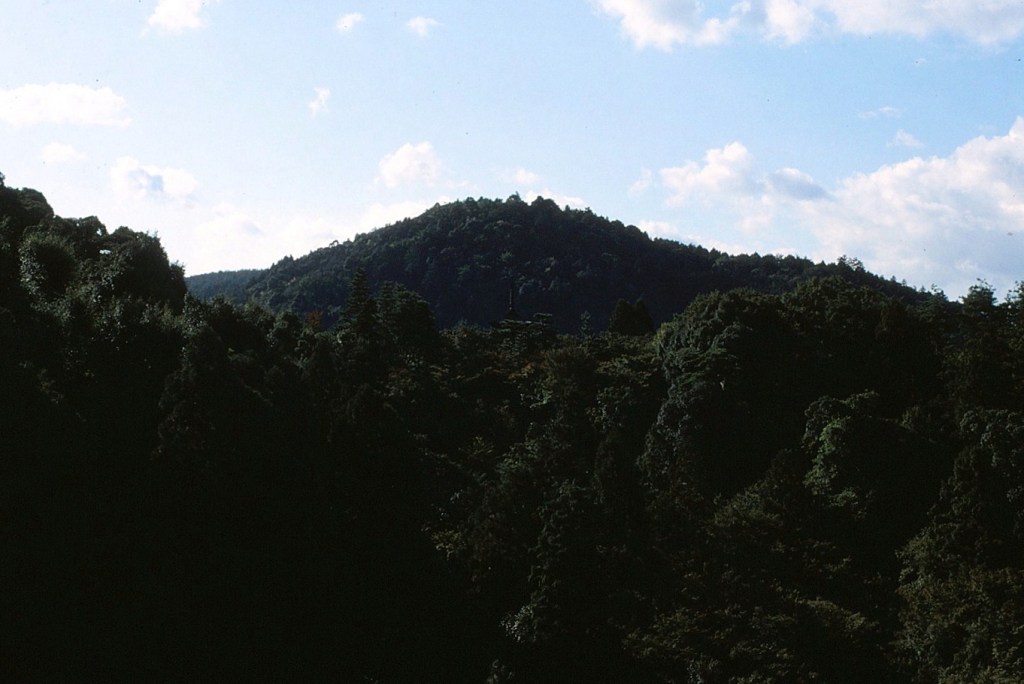
[The general area from which the previous photo was taken . . . ]

[In the distance below, a cheerful beacon of 1960’s optimism, Kyoto Tower stands at 131 meters high from its base to the tip of its spire, and it is the tallest structure in Kyoto. As such it dominates the skyline and can be spotted from many of the sightseeing locations around the city. For a little over 50 years this curious structure has split opinion between those who see it as a symbol of modern Kyoto, and others who see it as a tacky and inappropriate folly (kyotostation.com).]

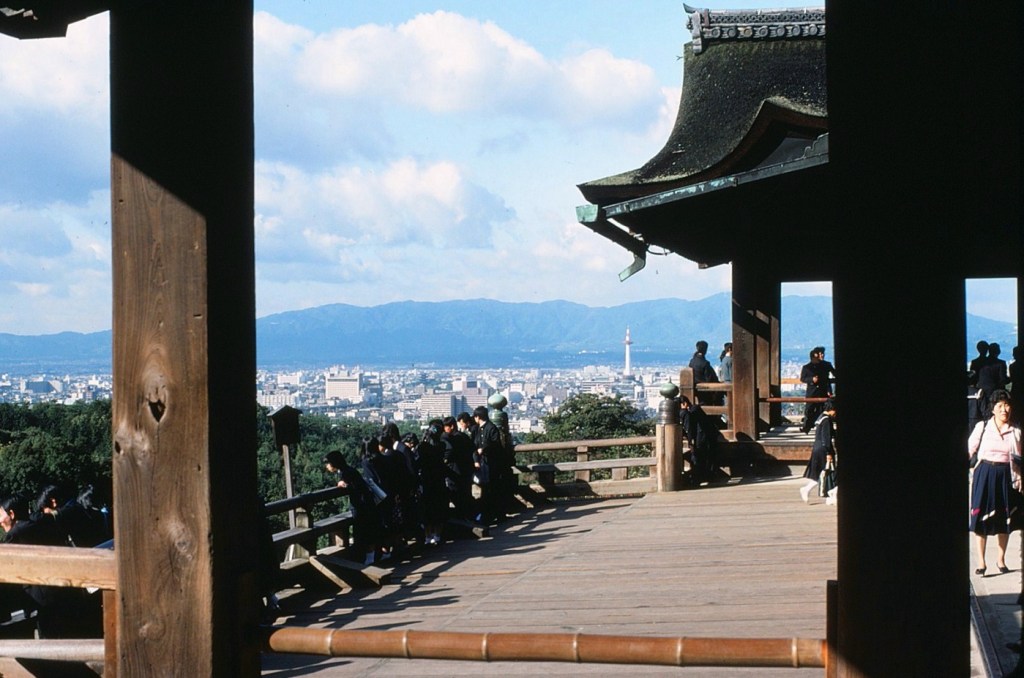
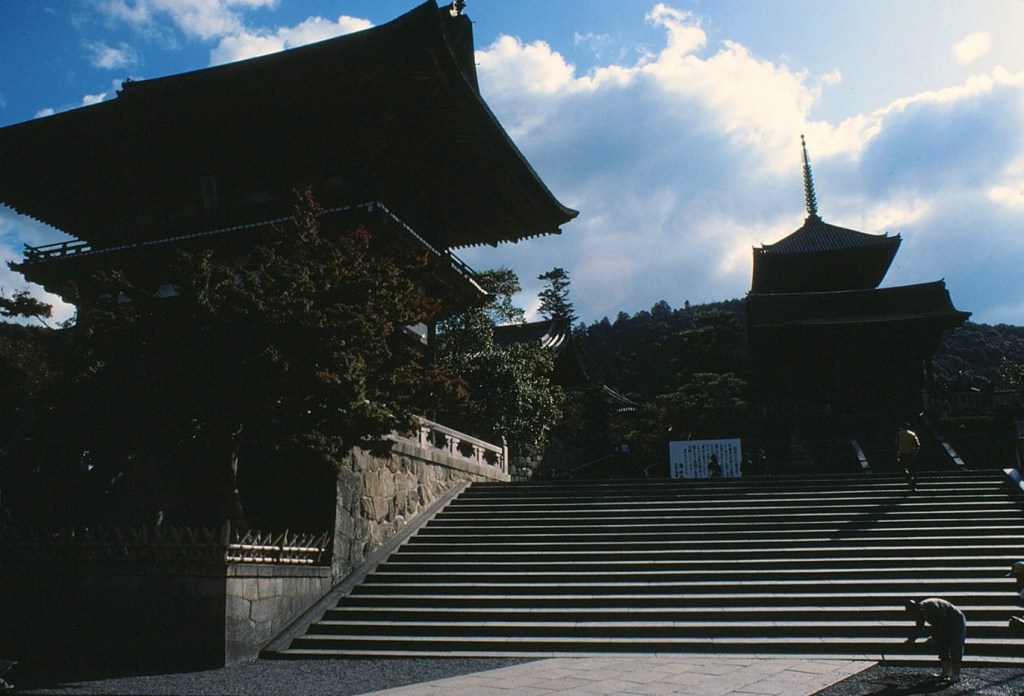
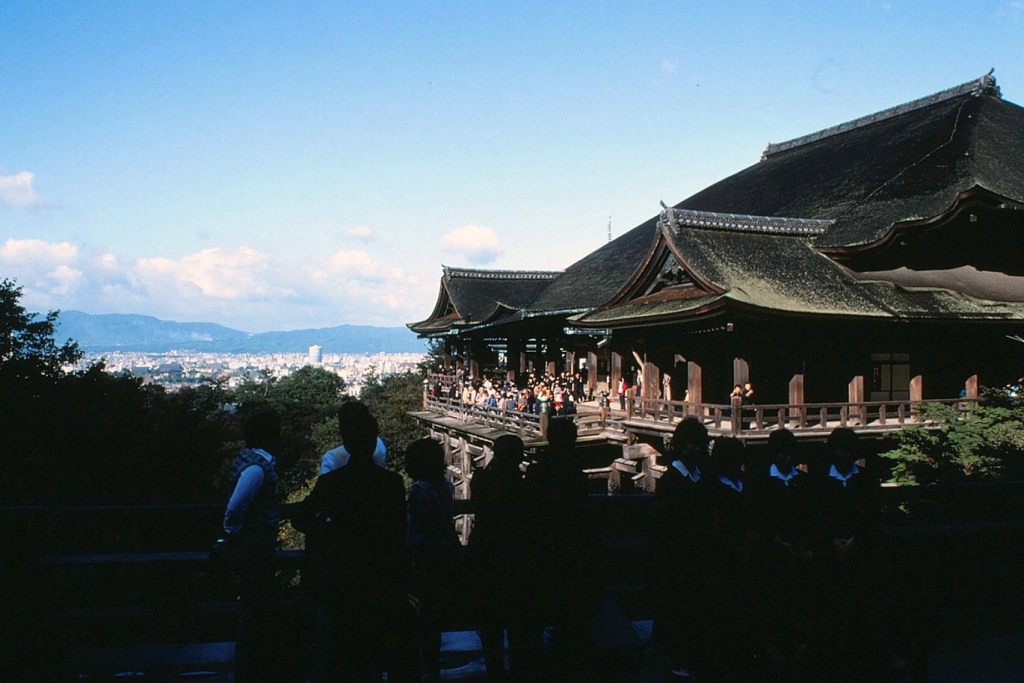
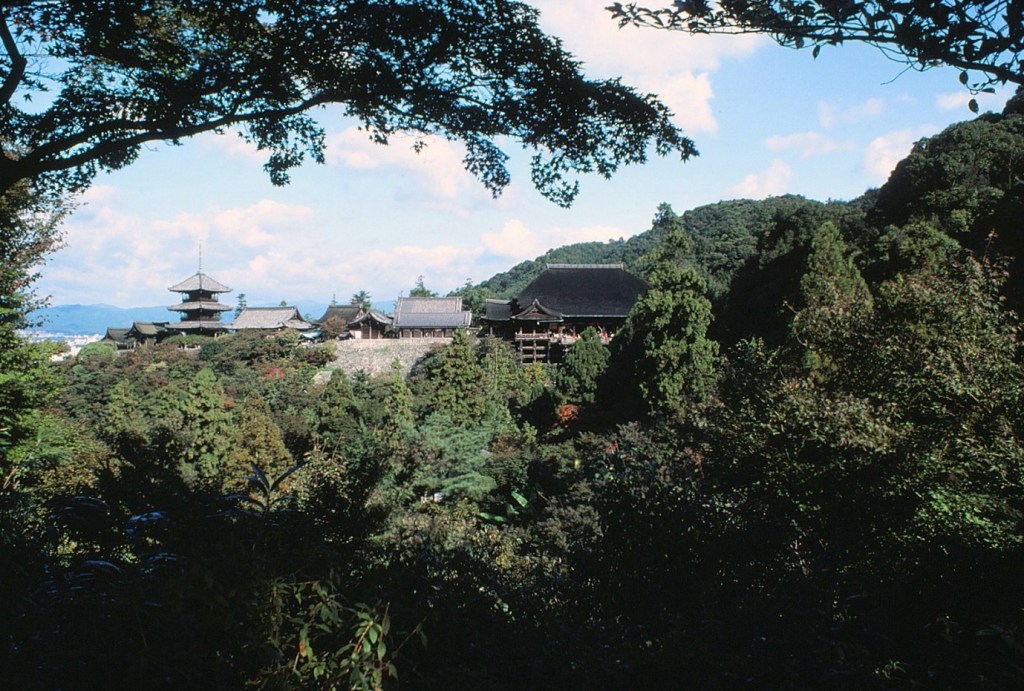
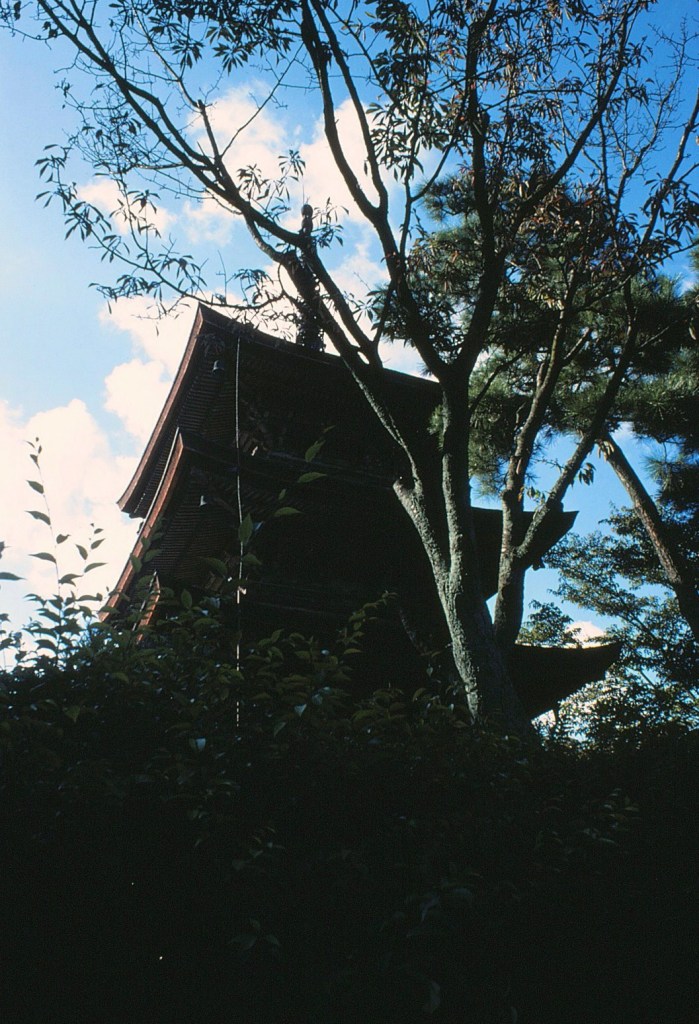
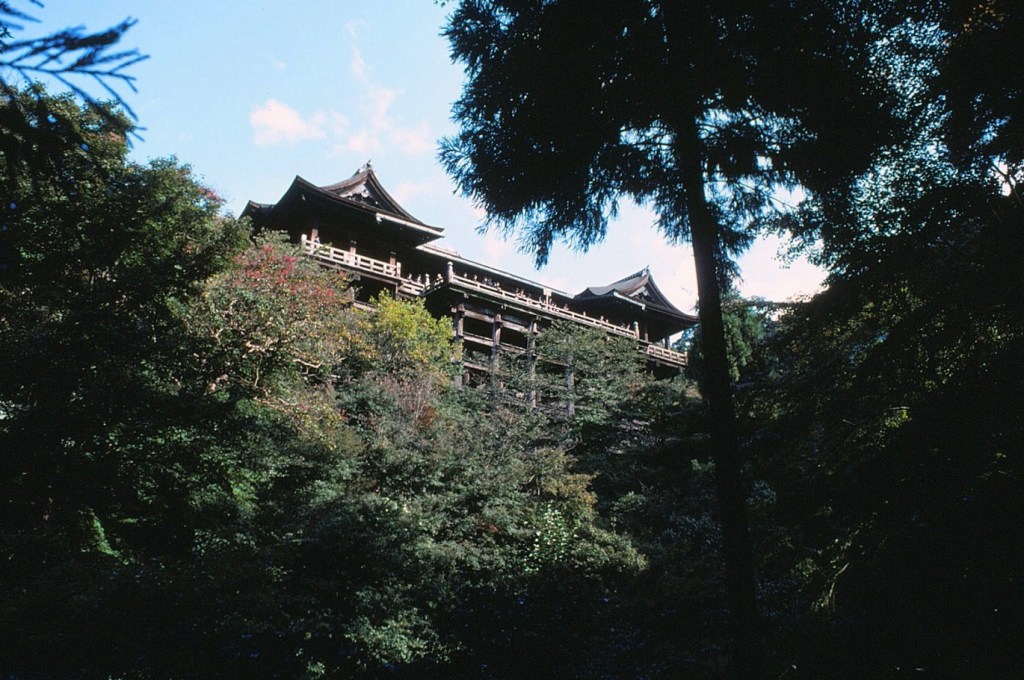
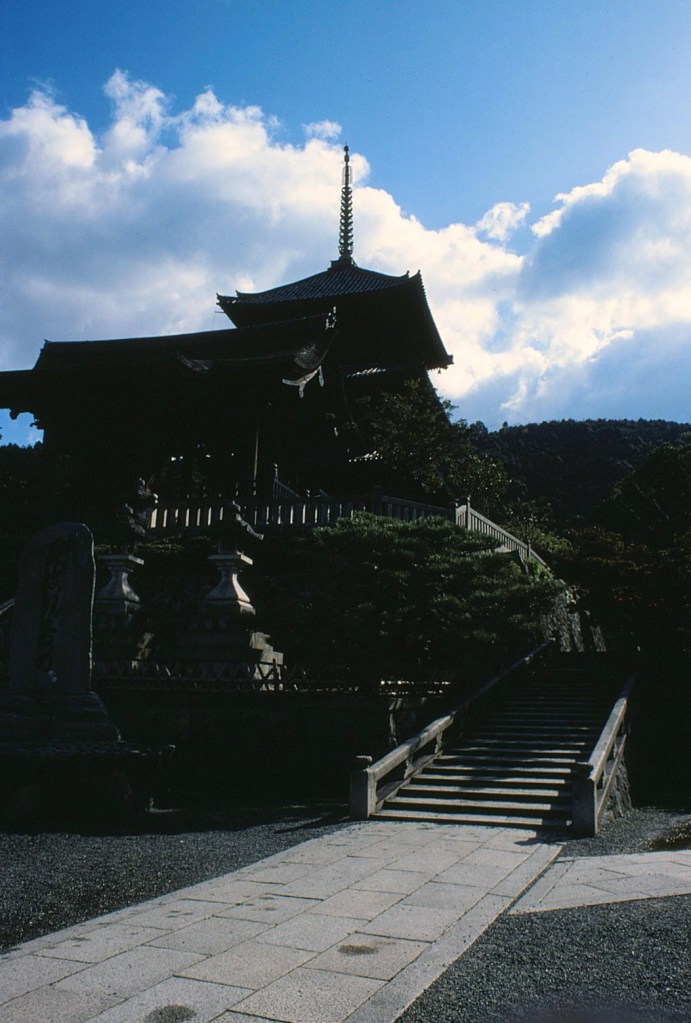
[Kiyomizu-dera, formally Otowa-san Kiyomizu-dera,  is a Buddhist temple in eastern Kyoto. The temple is part of the Historic Monuments of Ancient Kyoto (Kyoto, Uji and Otsu Cities) UNESCO World Heritage site. Kiyomizu-dera was founded in the early Heian period.  The temple was founded in 778, and its present buildings were constructed in 1633.  There is not a single nail used in the entire structure. It takes its name from the waterfall within the complex, which runs off the nearby hills.  Kiyomizu means clear water, or pure water. The main hall has a large veranda, supported by tall pillars, that juts out over the hillside and offers impressive views of the city. Large verandas and main halls were constructed at many popular sites during the Edo period to accommodate large numbers of pilgrims. In 2007, Kiyomizu-dera was one of 21 finalists for the New Seven Wonders of the World, but was not picked as one of the seven winning sites (Wikipedia).]

[This place was strikingly awesome and well due consideration as a wonder of the world . . . ]

[The temple complex includes several other shrines, among them the Jishu Shrine, dedicated to Okuninushi, a god of love and “good matches”.  Jishu Shrine possesses a pair of “love stones” placed 10 meters (30 feet) apart, which lonely visitors can try to walk between with their eyes closed. Success in reaching the other stone with their eyes closed implies that the pilgrim will find love, or true love.  One can be assisted in the crossing, but this is taken to mean that a go-between will be needed. The person’s romantic interest can assist them as well (Wikipedia).]

How much does he lack himself who must have many things? ~  Sen no Rikyū

Japan knows the horror of war and has suffered as no other nation under the cloud of nuclear disaster. Certainly Japan can stand strong for a world of peace. ~  Martin Luther King Jr.

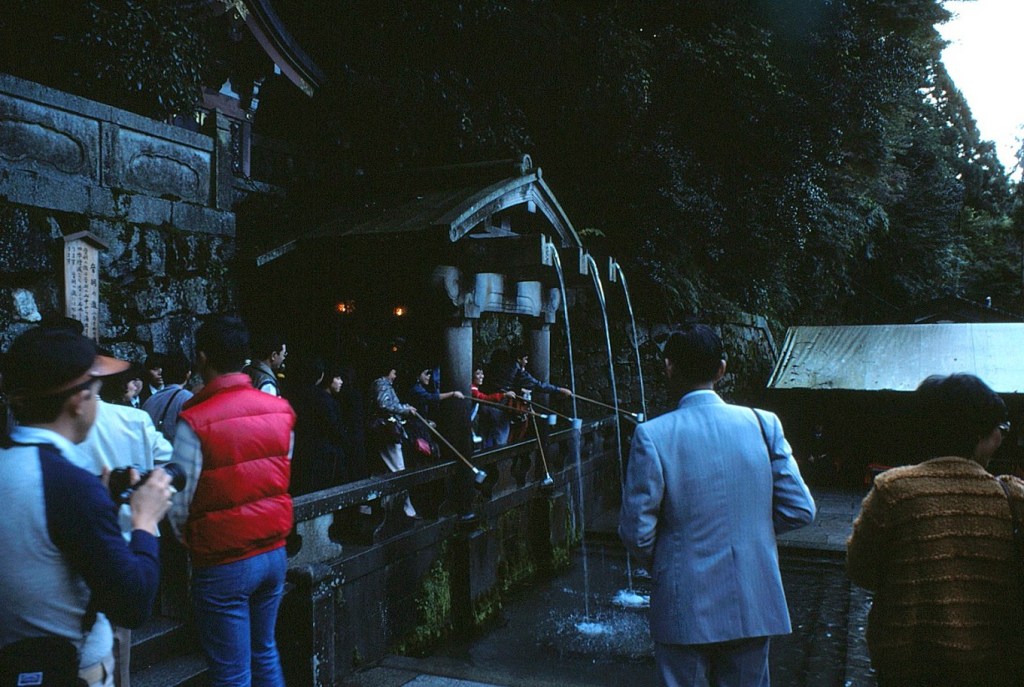
[‘Otowa-no-taki,’ the waterfall where visitors drink for health, longevity, and success in studies (Wikipedia).]

Whereas, in the west, individuality and drive are considered positive qualities, they are not seen the same way, in Japan. In that country, if you are too much of a rugged individualist, it might actually indicate that you are a weak, unreliable character and that you are selfish, in a childish, willful kind of way. ~  Alexei Maxim Russell

Japanese are one of the most punctual people he had ever worked with. They could, he imagined, put the Germans to shame in their high expectation for timeliness. ~  Vann Chow

The peasant is the foundation of the state and must be governed with care. He must be allowed neither too much, nor too little, but just enough rice to live on and keep for seed in the following year. The remainder must be taken from him in tax. ~ Honda Masanobu

[Sayonara to Otowa-san Kiyomizu-dera]

I do not believe there is an atheist in the world who would bulldoze Mecca-or Chartres, York Minster or Notre Dame, the Shwe Dagon, the temples of Kyoto or, of course, the Buddhas of Bamiyan. ~ Richard Dawkins

I loved the quiet places in Kyoto, the places that held the world within a windless moment. Inside the temples, Nature held her breath. All longing was put to sleep in the stillness, and all was distilled into a clean simplicity.The smell of woodsmoke, the drift of incense; a procession of monks in black-and-gold robes, one of them giggling in a voice yet unbroken; a touch of autumn in the air, a sense of gathering rain. ~ Pico Iyer

Up Next: Part 11

Japan 1983 (Part 9)
November 16

Japan has somehow managed to achieve the ideal attitude to eating: an obsession with culinary pleasure that is actually conductive to health. ~  Bee Wilson

Johnny awoke with a start. He had had another nightmare. Oh, he’d had the standard nightmares through the years – falling from a high place, unable to run from the monster, or the bar had run out of malbec – but this one was the worst. He was in a cold, clammy sweat, thinking he was trending toward becoming a . . . Republican?

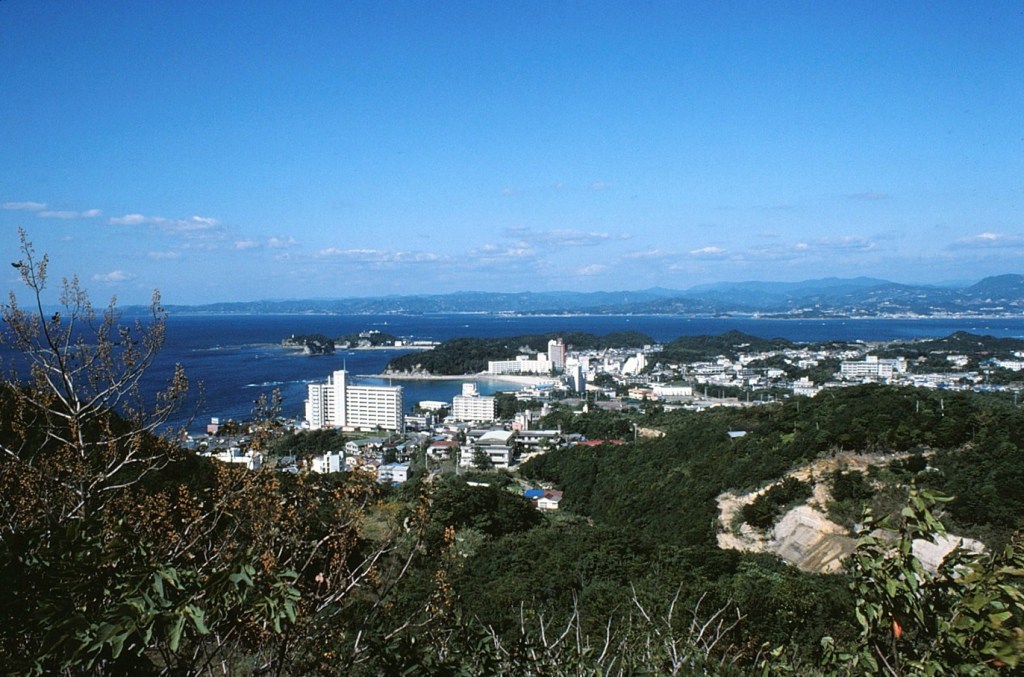
[I suspect we were in Shirahama . . . ]

[ISO . . . an ama?]

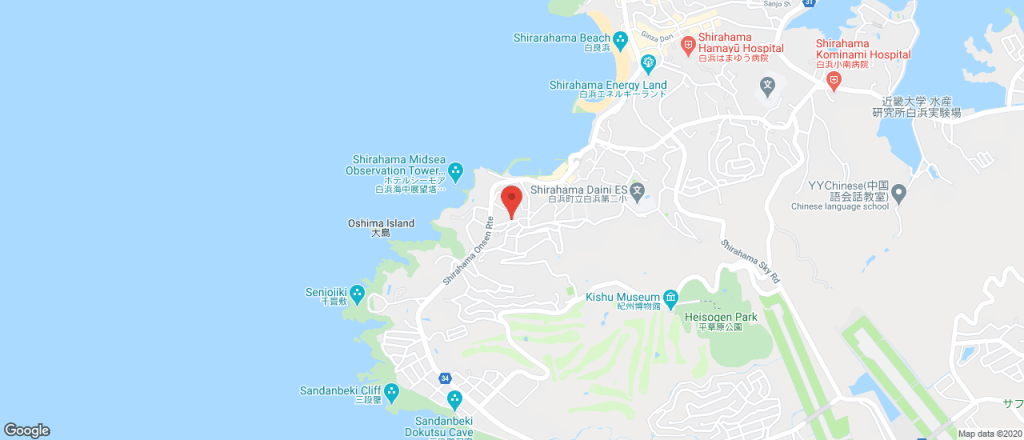
[In the above photo, we were obviously in a glass bottom boat somewhere in open water. Yet, this next photograph we were at our next hotel overlooking an oyster farm in Shirahama (I believe) . . . ]

[Shirahama Onsen area is considered one of Japan’s top three hot spring areas. It has a history dating back over 1300 years, but the town saw a boom in popularity as a hot spring destination from the early 1920s onwards (japanpropertycentral.com).]

[Shirahama, a beach destination . . . ]

I want to go to Japan. I feel like they love blonde girls. ~ Gigi Gorgeous

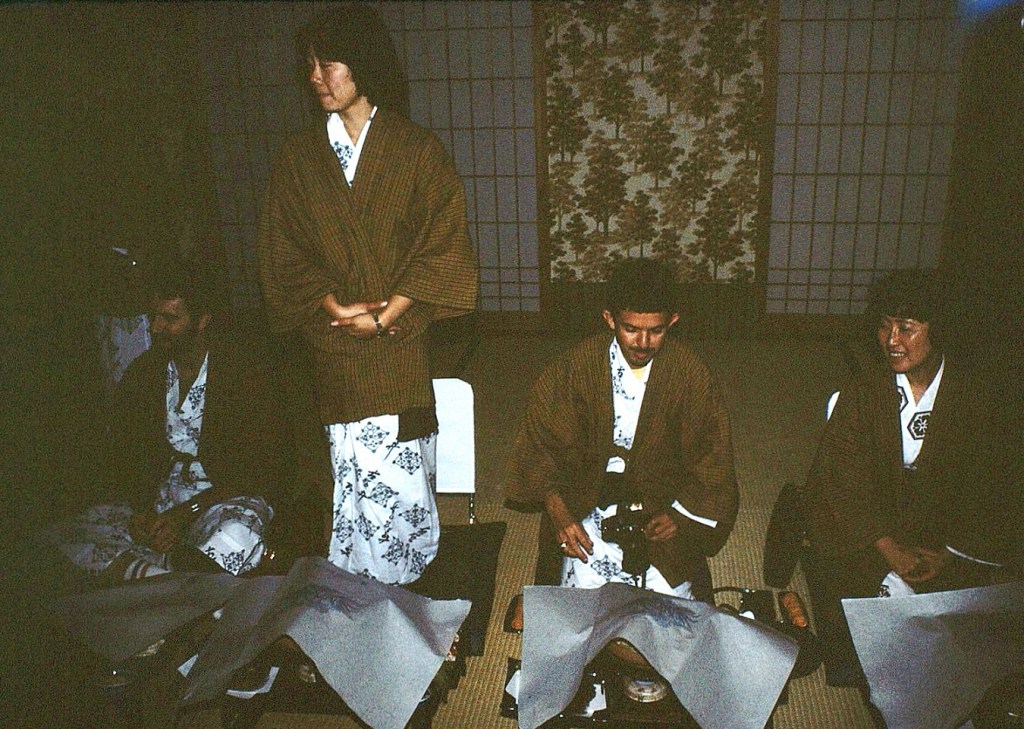
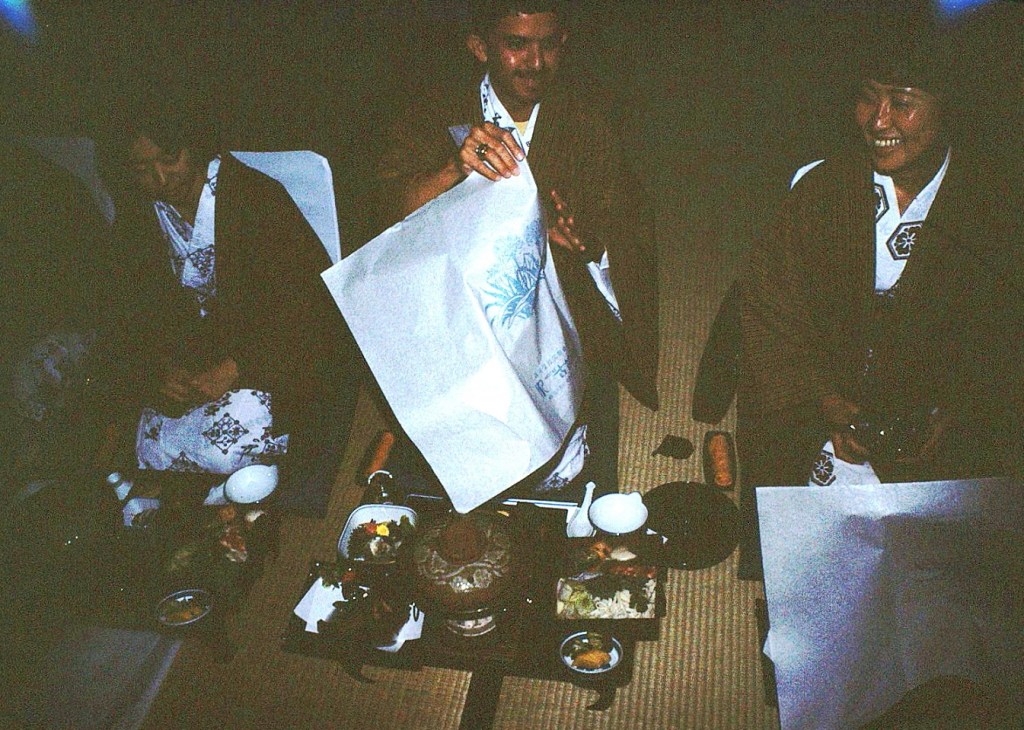
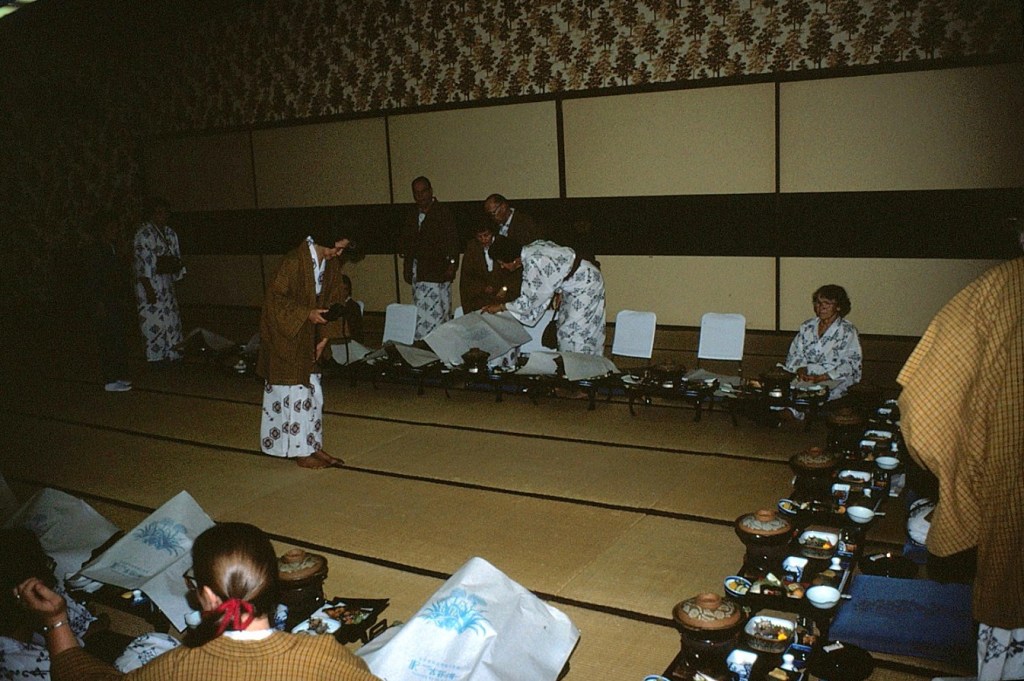
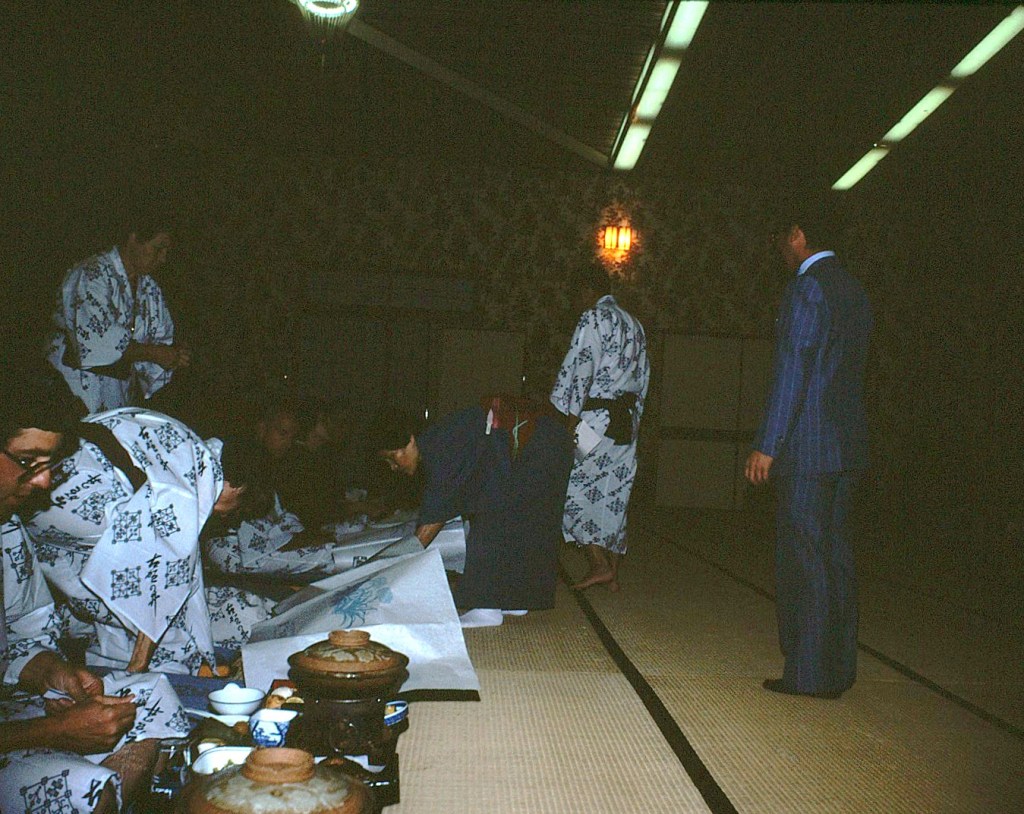
[Marsha, Roy, and Toku as we settle into another traditional Japanese dinner . . . ]

Maitake mushrooms are known in Japan as ‘the dancing mushroom.’ According to a Japanese legend, a group of Buddhist nuns and woodcutters met on a mountain trail, where they discovered a fruiting of maitake mushrooms emerging from the forest floor. Rejoicing at their discovery of this delicious mushroom, they danced to celebrate. ~ Paul Stamets

One glass of water doesn’t equal another. One may just appease the thirst, the other you may enjoy thoroughly. In Japan, people know about this difference. ~ Jil Sander

As far as food goes, I’m pretty easy. I love Japanese food. I loved meat loaf and mashed potatoes. I love spaghetti. I’m pretty easy. ~ Frank Oz

Sushi is something very exclusive. It is not like a McDonald’s, not like a hot dog, not like a French fry. It’s very high-class cooking in Japan. ~ Nobu Matsuhisa

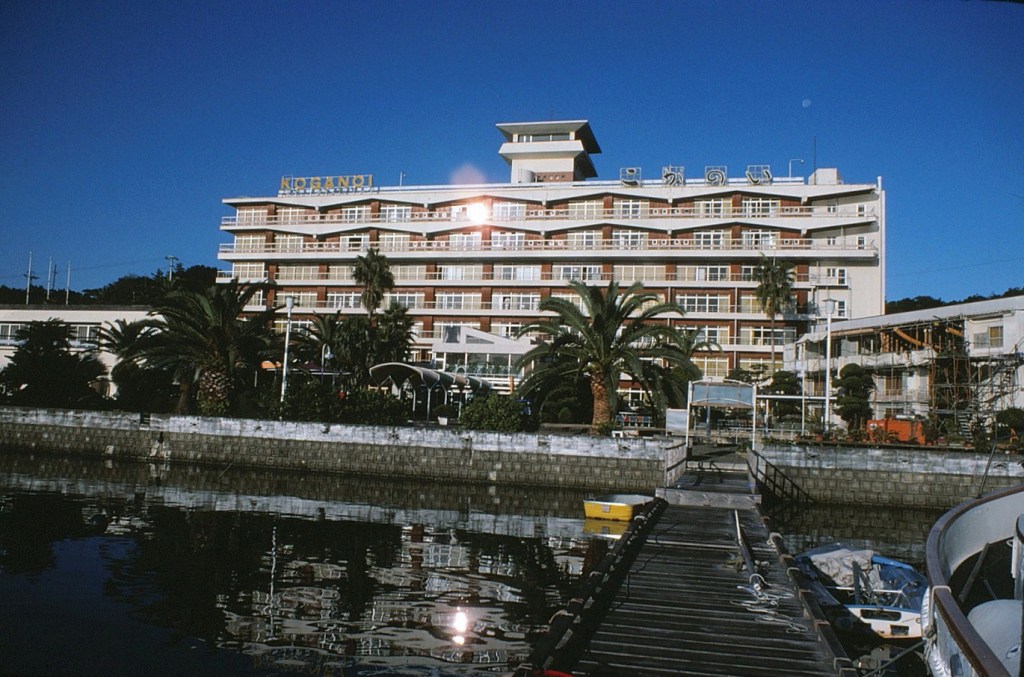
[Hotel [K]oganoi (103 rooms) and the Shirahama Seaside Hotel (91 rooms) were both built in 1961. Despite having operating ratios of around 70% between April and August this year, the continued operation of the hotels has proven difficult due to their age and the fact that they were built to the old and out-dated earthquake codes. The company had considered retrofitting the buildings, but the 1 billion Yen (8.4 million USD) cost was considered too high. Both hotels will close at the end of March 2016 (japanpropertycentral.com).

Tempura-style batters were originally brought to Japan by Portuguese missionaries in the 16th century. ~ J. Kenji Lopez-Alt

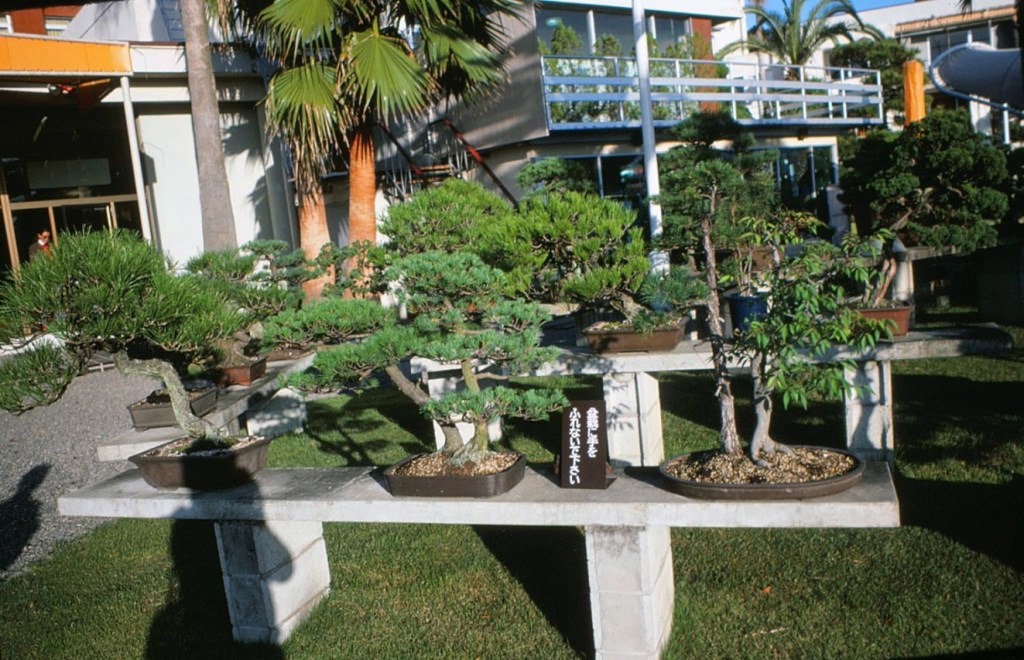
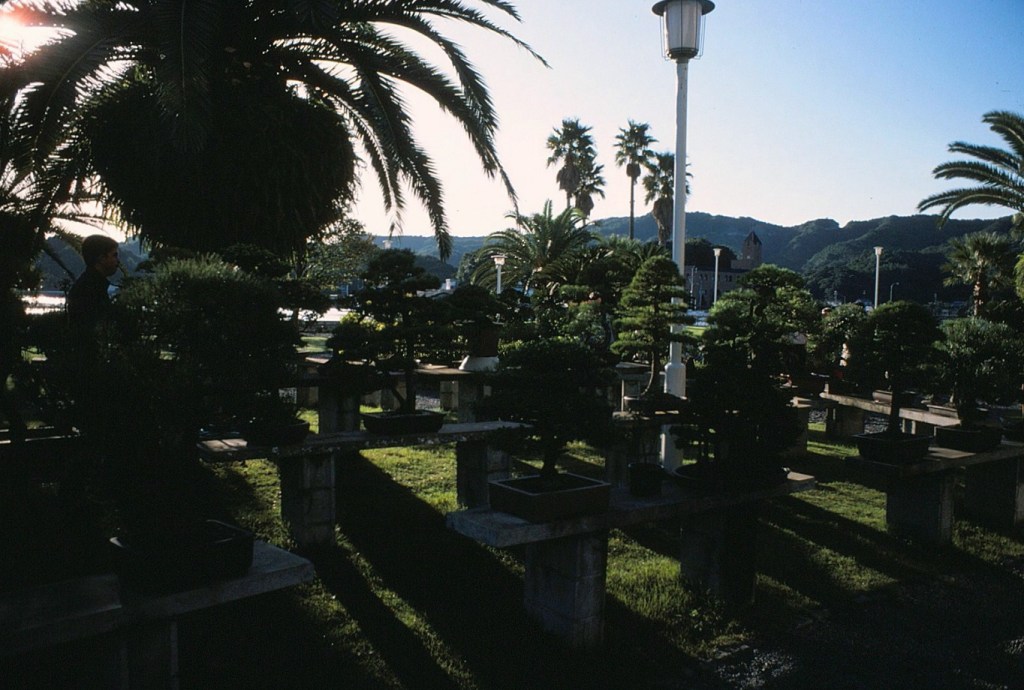
[Did I mention before that Roy (i.e., Roy-san) became a real Nipponophile after this trip, turned his backyard into a Japanese garden, and developed a fine collection of bonsai trees (as below) . . . ]

[Bonsais on display . . . ]

[So typically Japanese, the staff from the hotel come out to say sayonara to tour groups . . . ]

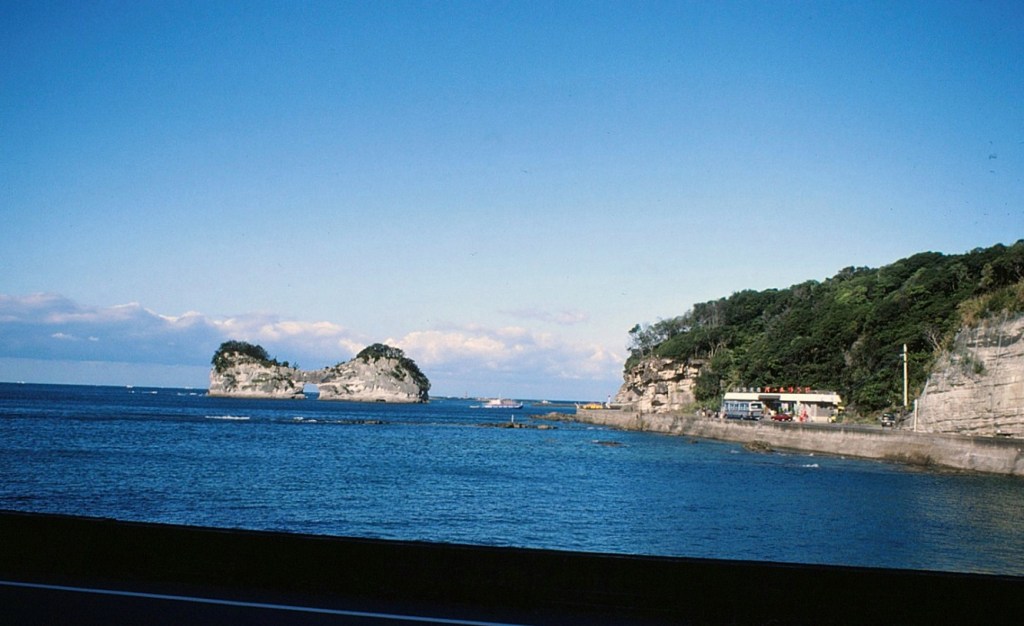
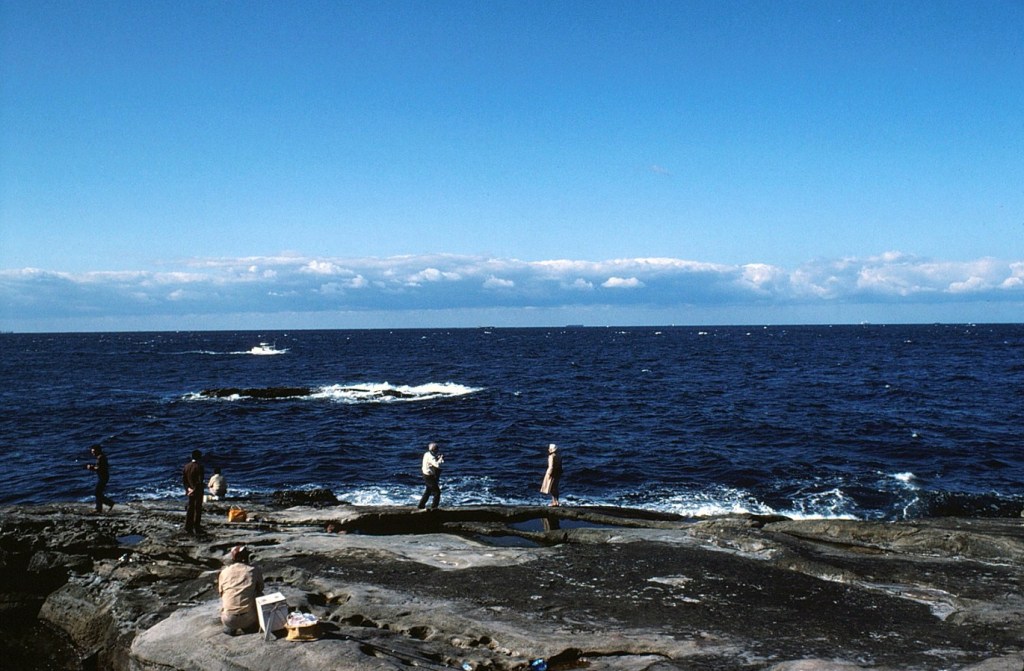
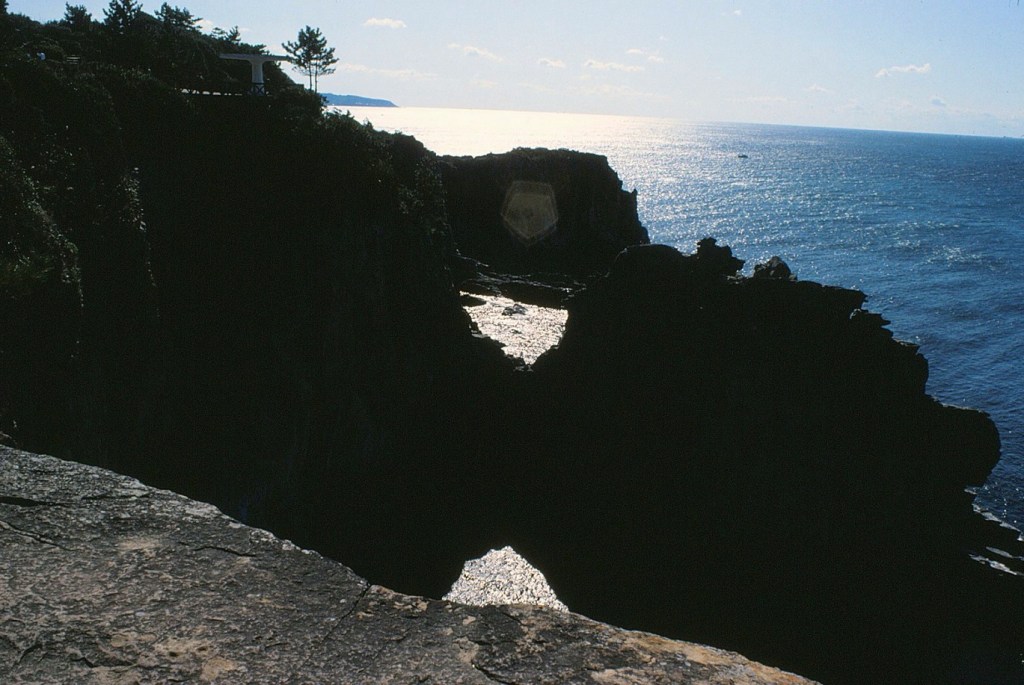
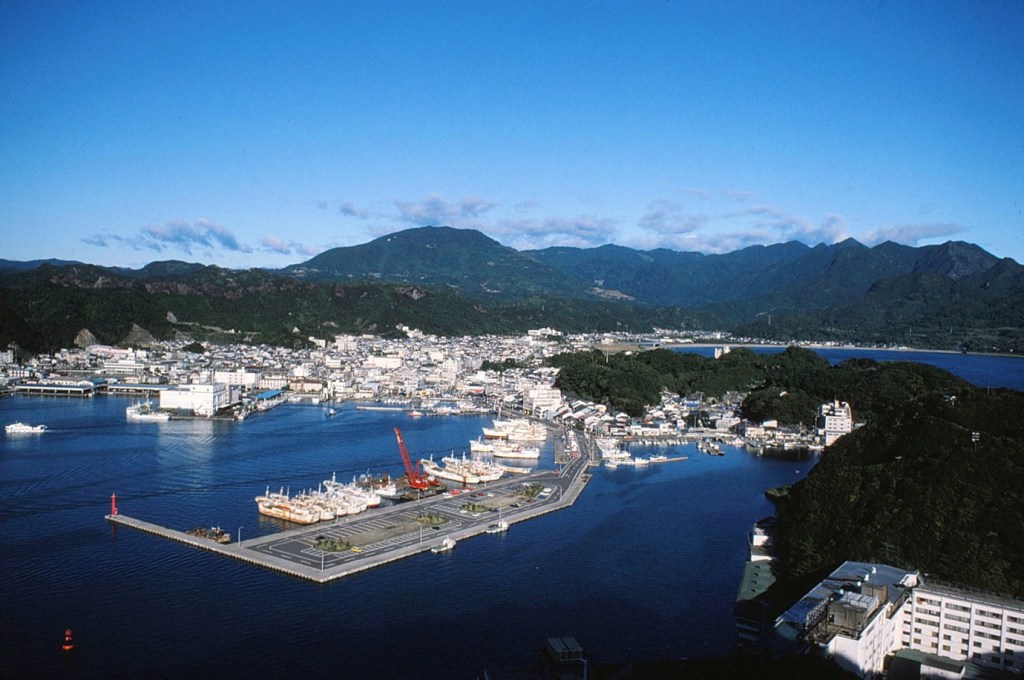
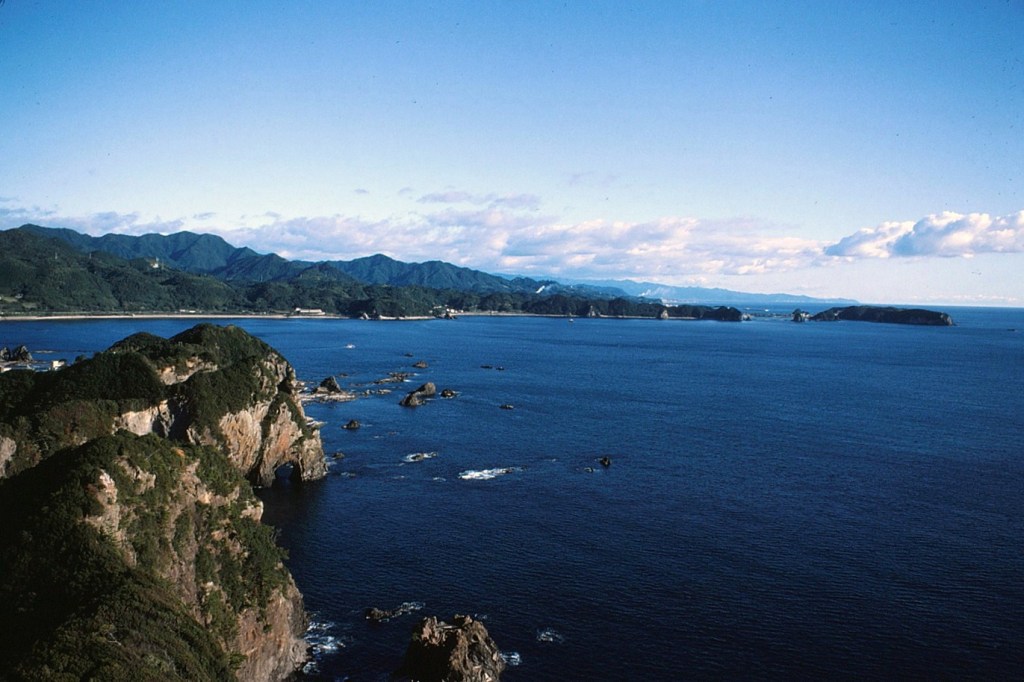
[“Engetsuto” is a small island in Rinkai-ura Ocean in Shirahama-cho. The name “Engetsuto” means “Island of the full moon”, and is a nickname given to the island, inspired by the moon-like round hole in the center of the island. The island’s official name is “Takashima”. The island measures 130 meters (from south to north), 35 meters (from east to west), and 25 meters (in height). The hole measures 9 meters (in height) and 8 meters (in width) (thegate12.com).]

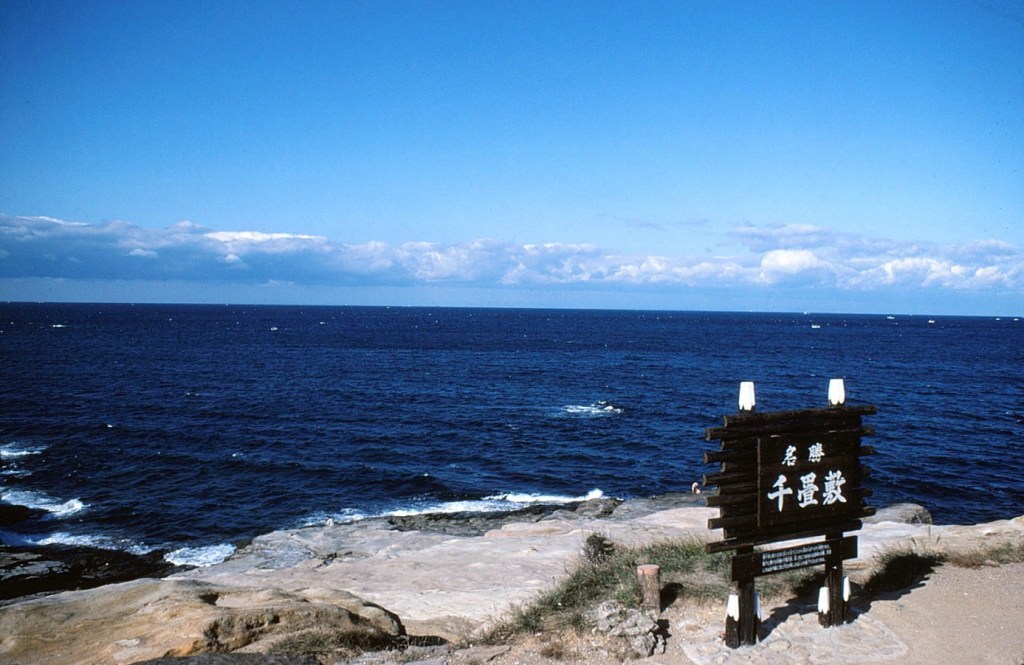
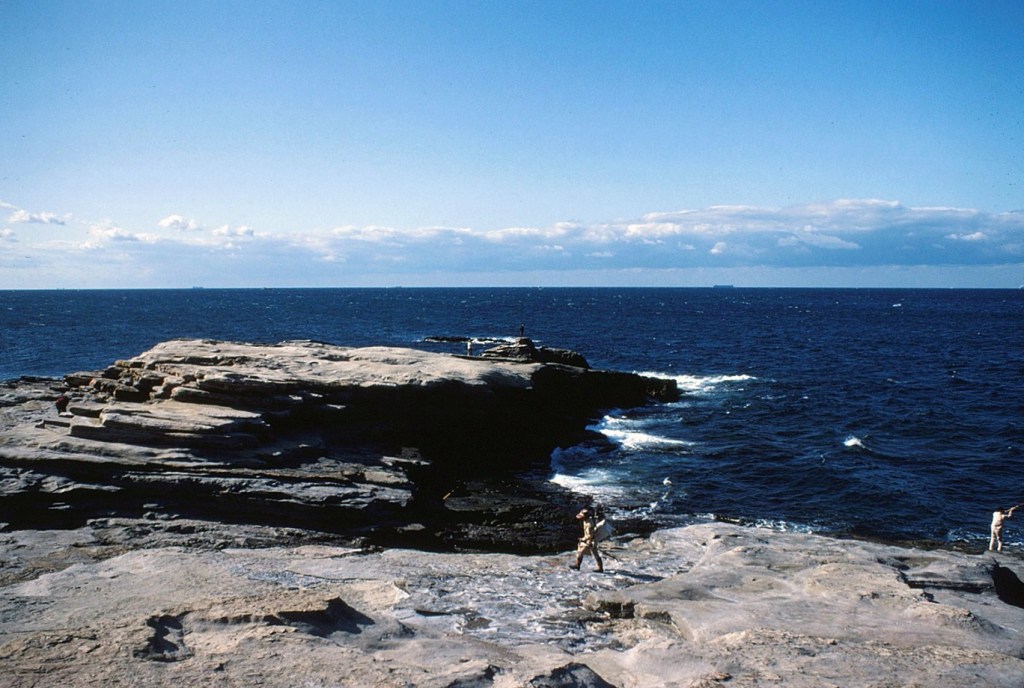
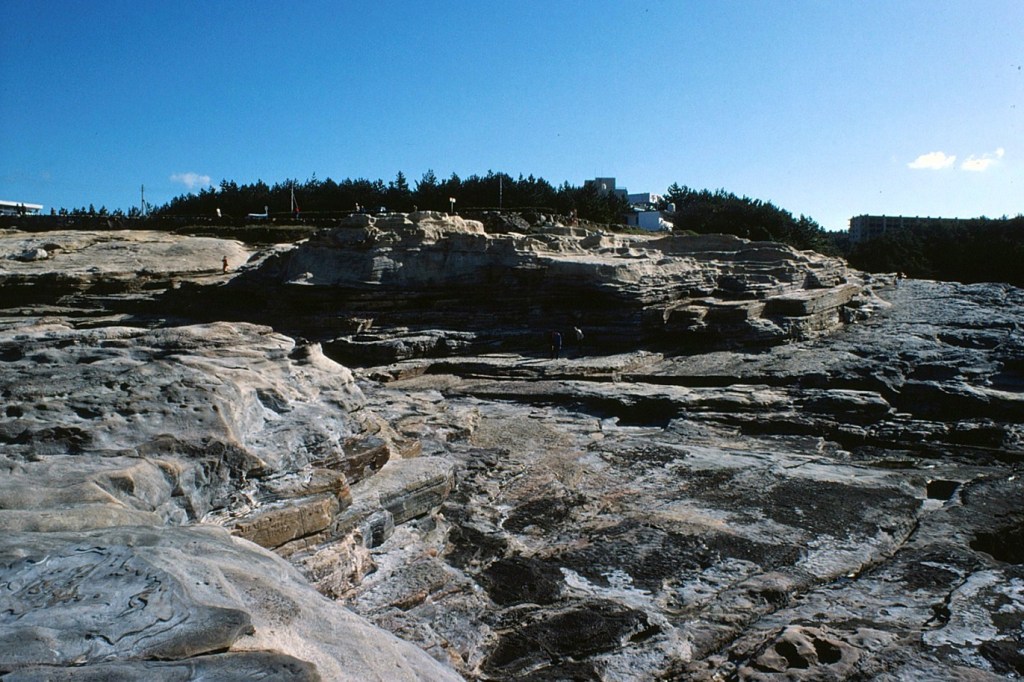
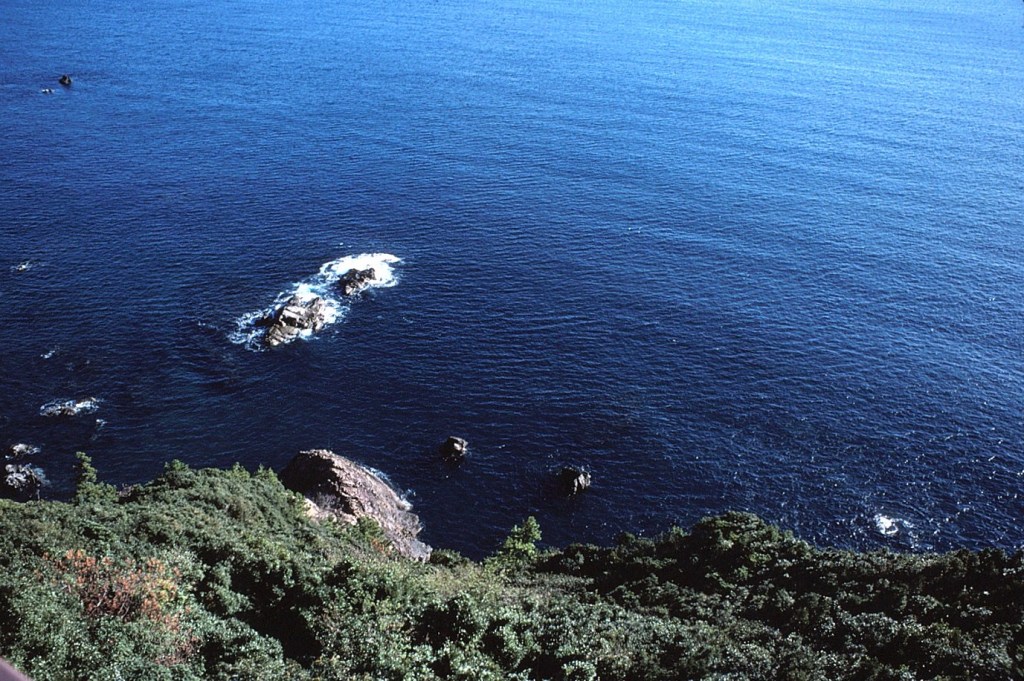
[You can closely experience the stunning steep coast at “Senjojiki”. Facing the Pacific Ocean, Senjojiki was denuded by raging waves and boasts a magnificent view. The rock of Senjojiki was formed about 1.8 million to 65 million years ago when the stratum was gradually eroded by the waves. This place took its current form over a long period of time, and boasts a superb view of nature (thegate12.com).]

[The sign above indicates this area is Yoshino-Kumano National Park . . . ]

One of the things that slaps you in the face when you arrive in Japan is their obsession with everything cute. ~ Stacey Dooley

King of the Mountain . . .

Ocean, n. A body of water occupying about two-thirds of a world made for man – who has no gills.  ~  Ambrose Bierce

I couldn’t imagine living in a state that didn’t reach the ocean. It was a giant reset button. You could go to the edge of the land and see infinity and feel renewed. ~ Avery Sawyer 

The sea, once it casts its spell, holds one in its net of wonder forever. ~ Jacques Cousteau

[Looking very much like the north coast of Okinawa . . . ]

What would an ocean be without a monster lurking in the dark? It would be like sleep without dreams. ~ Werner Herzog

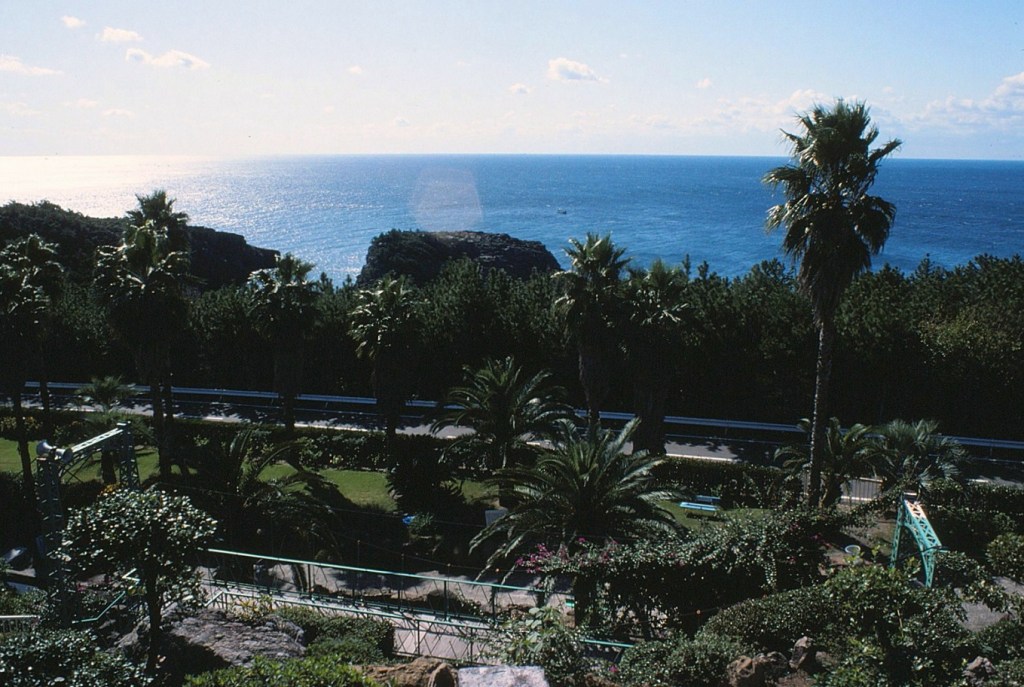
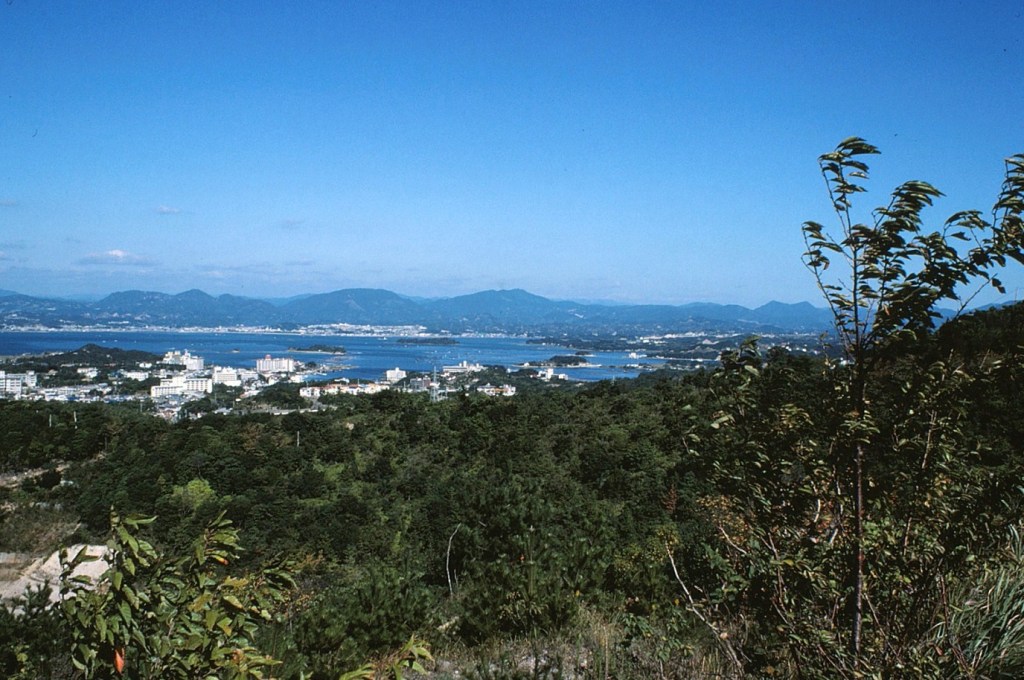
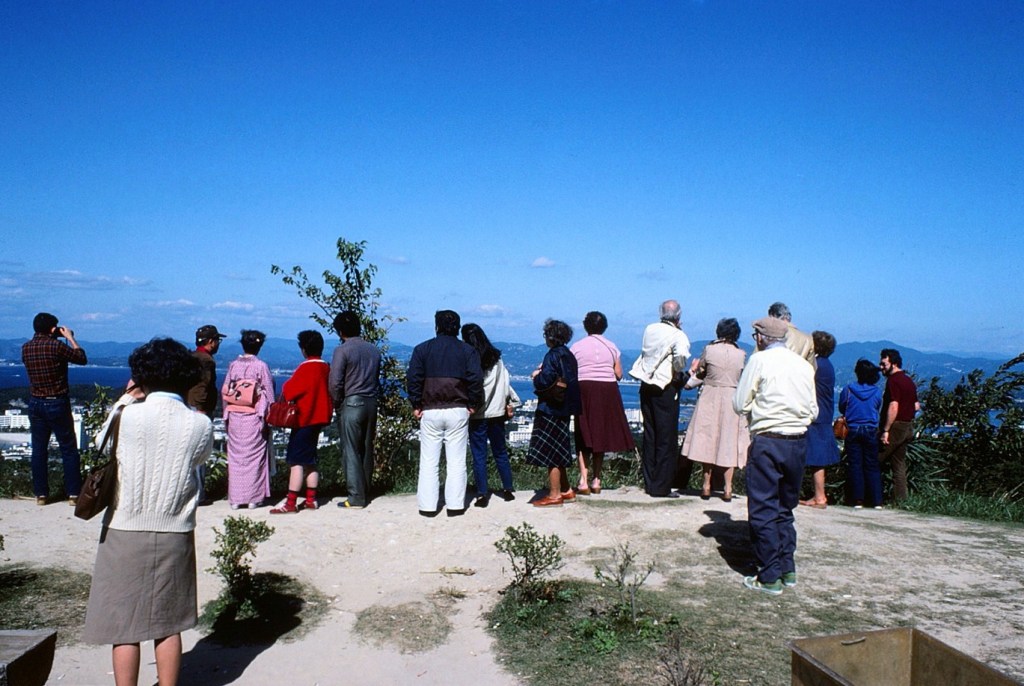
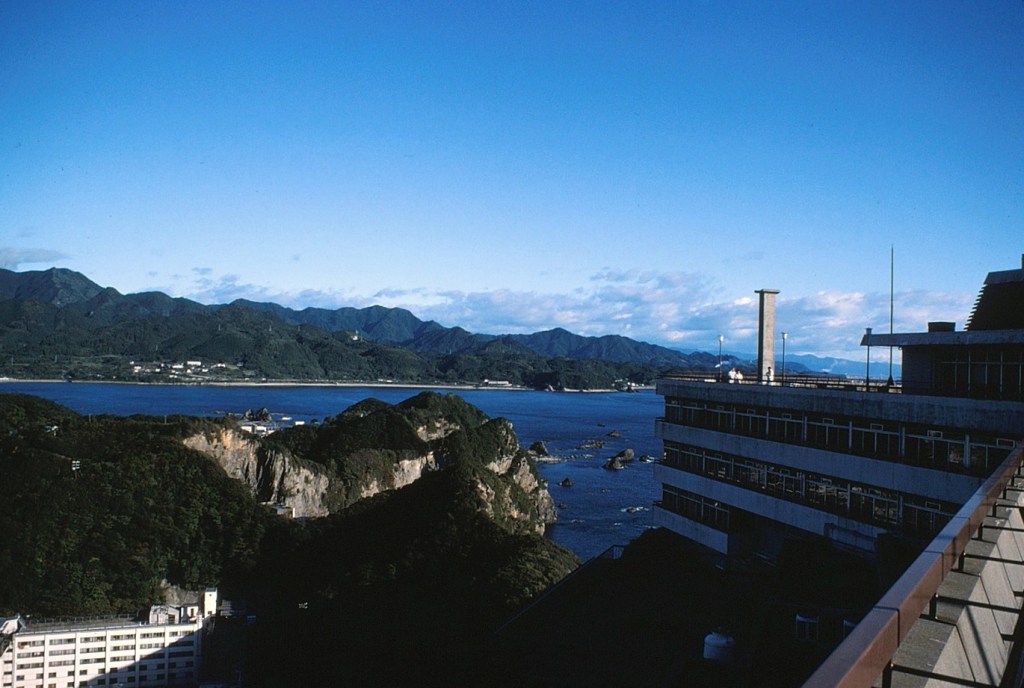
[A Shirahama overlook . . . ]

[Likely just a pan to the right . . . ]

Sayonara, Shirahama!

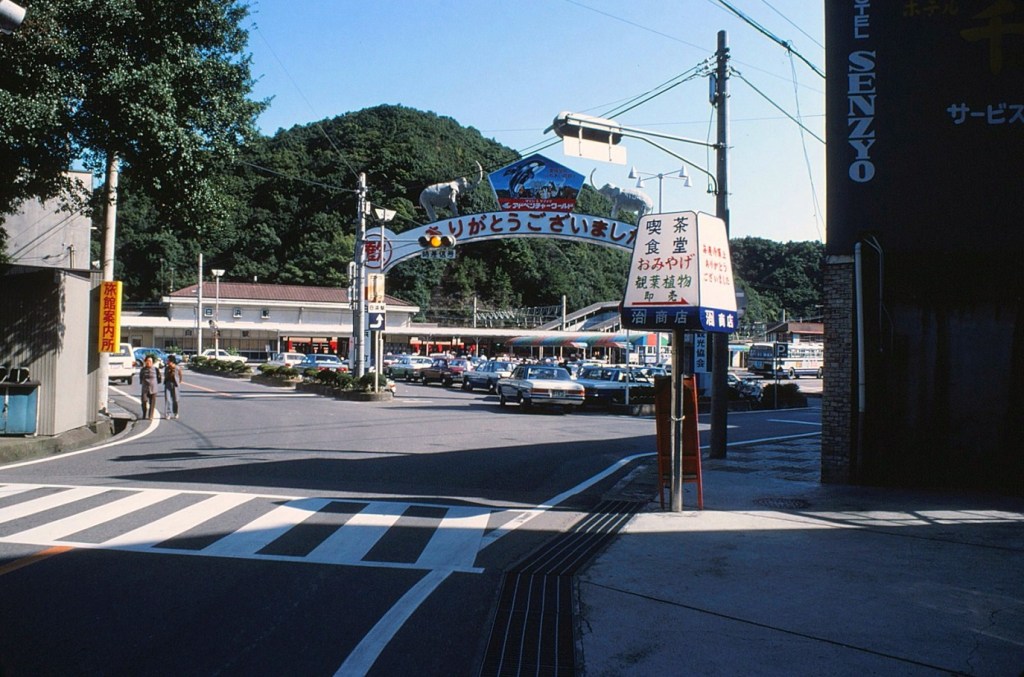
[Either the bus or train station – who can recall . . . ]

[On the road again . . . ]

[Little did I realize at the time, but we were on the road to . . . ]

[What would become my favorite city – Kyoto . . . ]

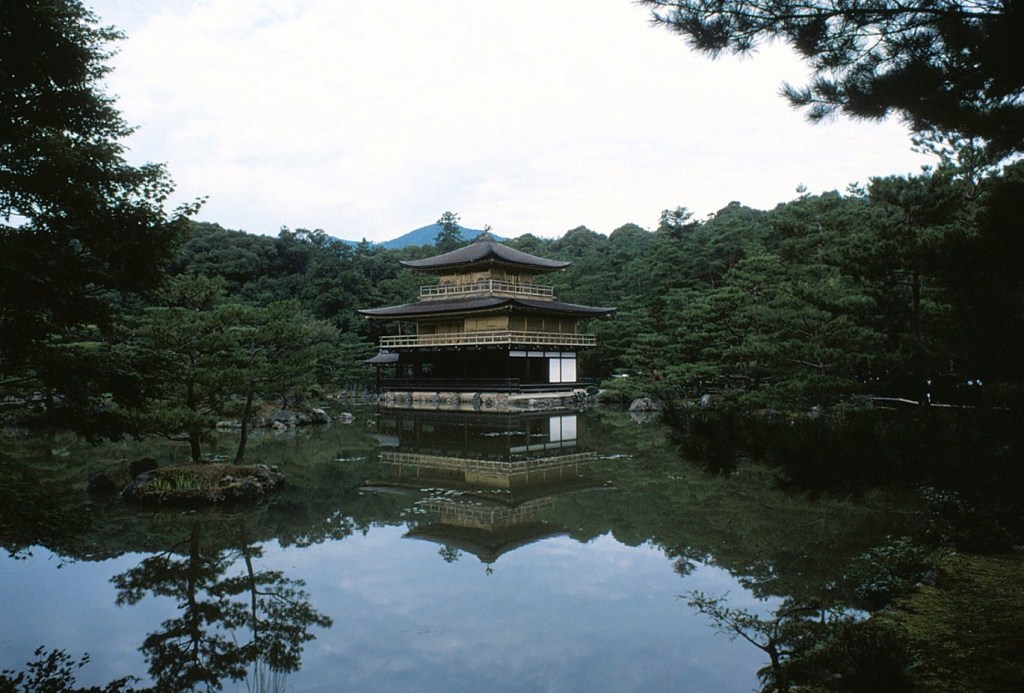
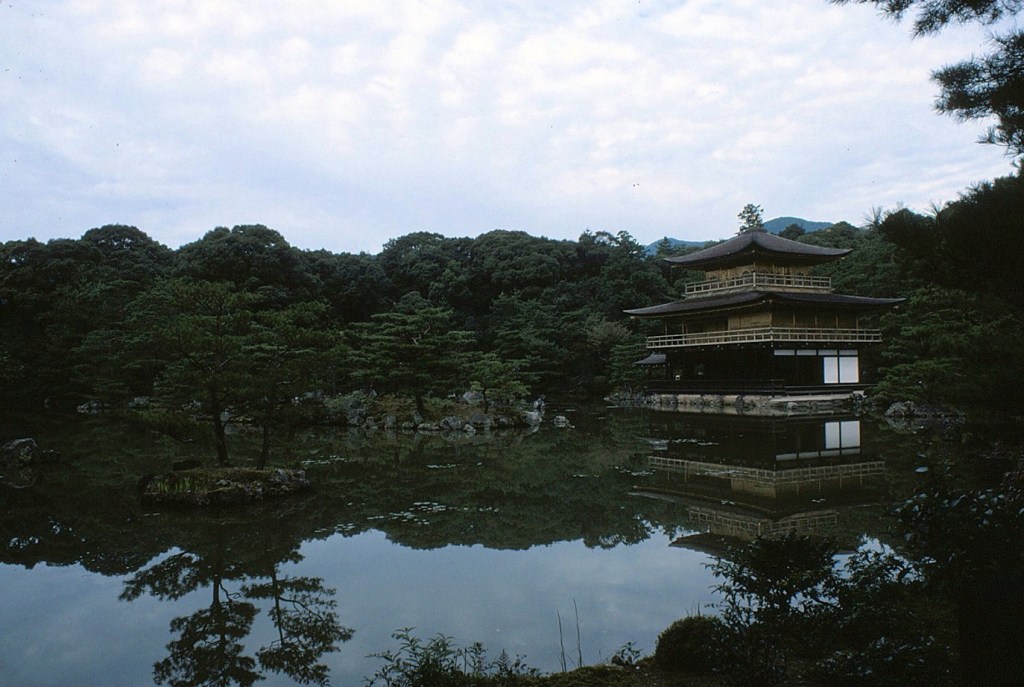
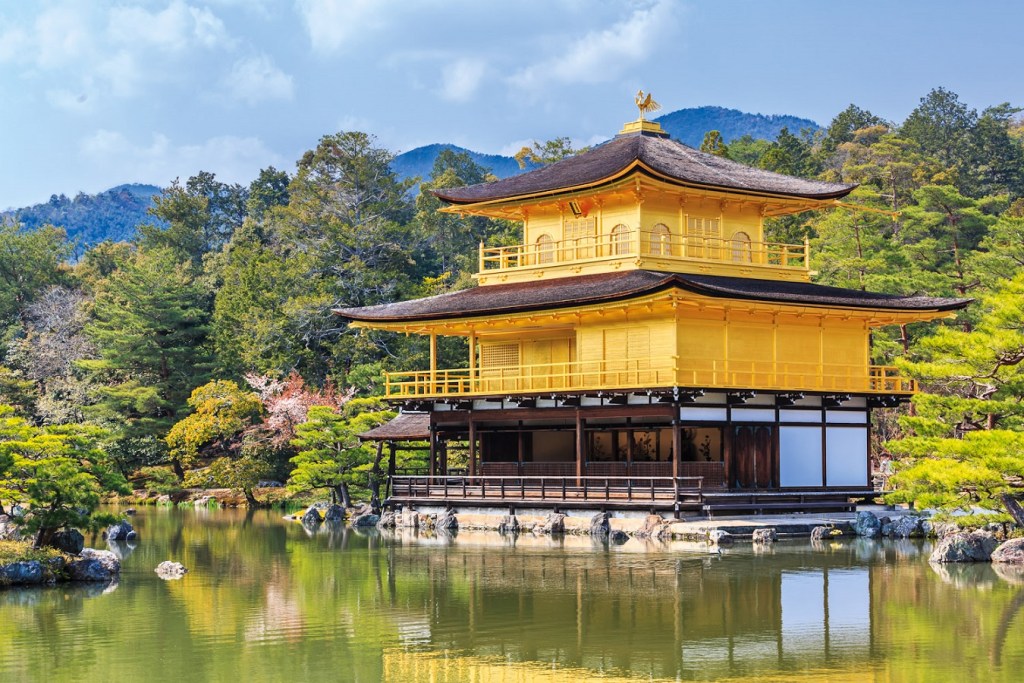
[Kinkaku-ji (literally “Temple of the Golden Pavilion”), officially named Rokuon-ji (literally “Deer Garden Temple”), is a Zen Buddhist temple in Kyoto.  It is one of the most popular buildings in Kyoto, attracting many visitors annually. It is designated as a National Special Historic Site, a National Special Landscape and is one of 17 locations making up the Historic Monuments of Ancient Kyoto which are World Heritage Sites. The name Kinkaku is derived from the gold leaf that the pavilion is covered in. Gold was an important addition to the pavilion because of its underlying meaning. The gold employed was intended to mitigate and purify any pollution or negative thoughts and feelings towards death. Other than the symbolic meaning behind the gold leaf, the Muromachi period heavily relied on visual excesses.  With the focus on the Golden Pavilion, the way that the structure is mainly covered in that material creates an impression that stands out because of the sunlight reflecting and the effect the reflection creates on the pond. (Wikipedia).]

[Unfortunately, we had a cloudy day. So . . . ]

[I borrowed one off the internet so you could see it in the sunshine . . . ]

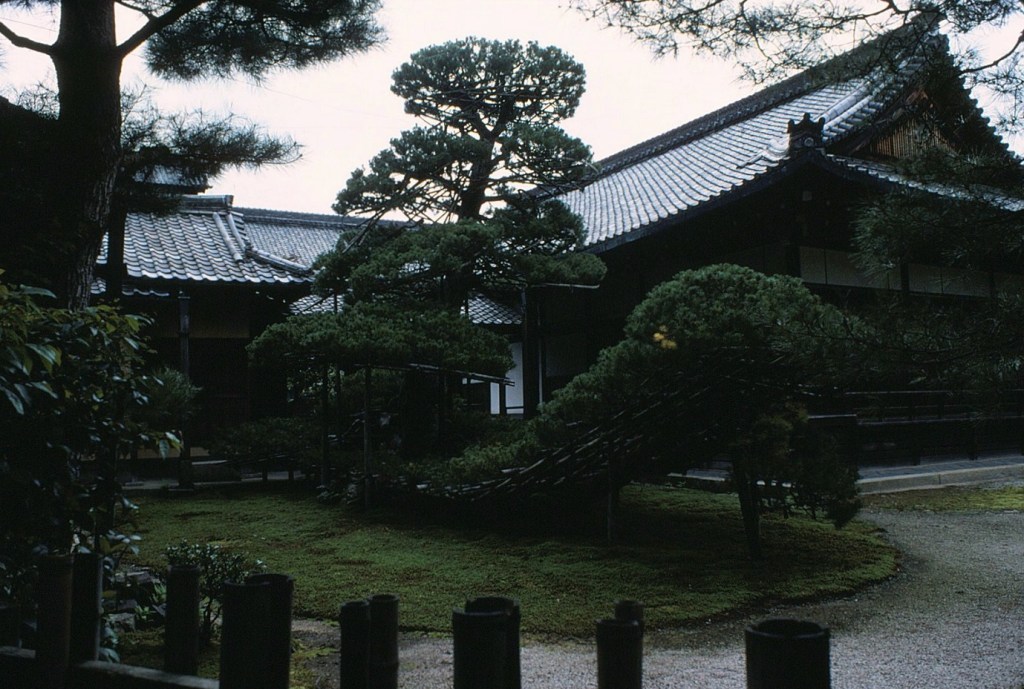
[The Ship of Pine of Kyoto (with lattice work supporting the prow): Kyoto was the capitol of Japan from A.D. 794to 1185. Even after the government moved first to Kamakura and then Tokyo, Kyoto remained important to Japanese society for its many important Buddhist temples which are still in active use and frequently visited by foreign tourists. The most well known of these is Kinkakuji Temple, also known as the Golden Temple because of the stunning metallic-yellow color of its main shrine. A small pond acts as mirror in front of the temple, creating an added effect and rocks are positioned deliberately to create a seacoast effect. This coastal imagery is further enhanced by the nearby Ship Pine, a white pine, known in Japanese as the “Rikushu-no-matsu”, and is one of three famous pines in Kyoto. This tree was originally a bonsai trained in the shape of a ship, and belonged to the Shogun, or military ruler, Ashikaga, who was a great patron of the Temple (arnoldia.arboretum.harvard.edu/).]

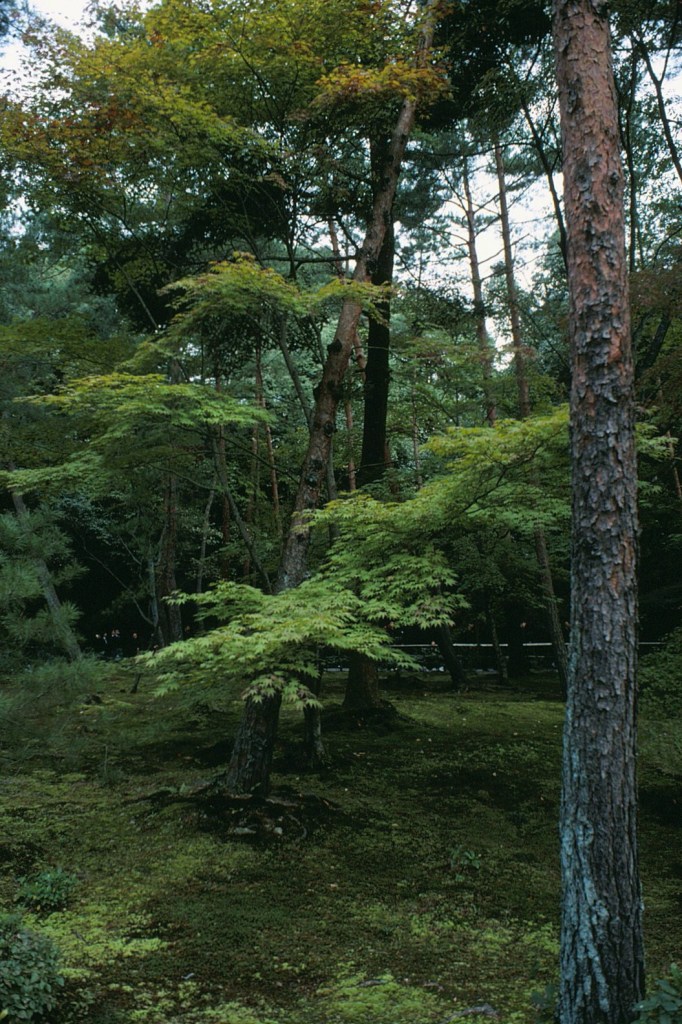
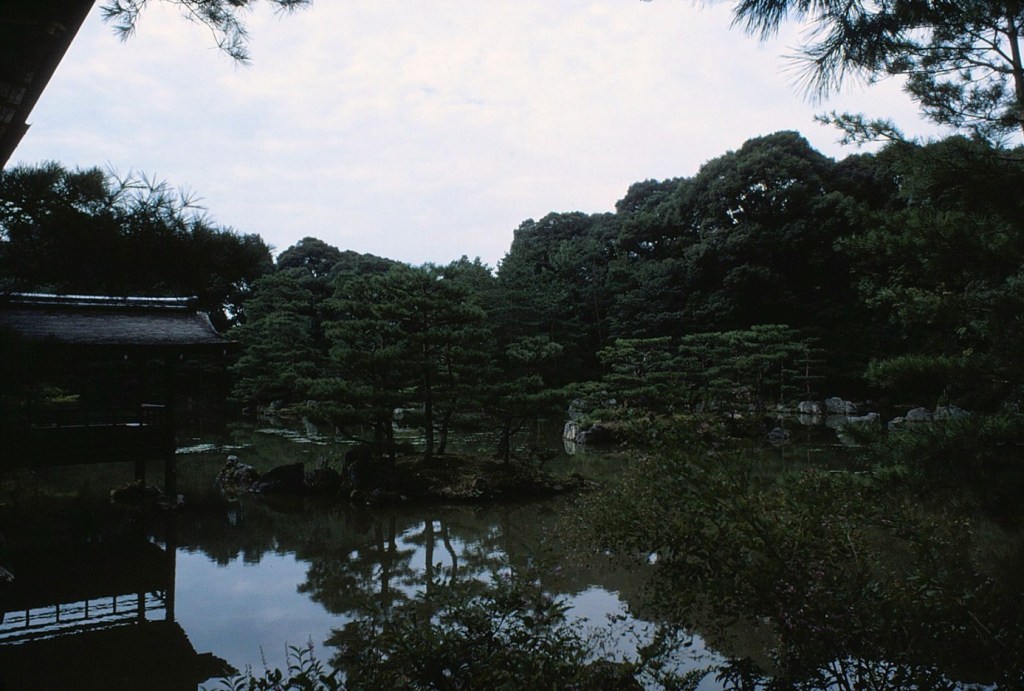
[I suspect the rest of these photos are in the Golden Pagoda complex . . . ]

Psychologically, Japanese women depend largely on each other. In their sex-segregated society, they could be criticized for living in a female ghetto, and yet they have what some American feminists are trying to build, a ”women’s culture” with its own customs, values and even language. ~  Kittredge Cherry

While he mused on the effect of the flowing sands, he was seized from time to time by hallucinations in which he himself began to move with the flow. ~  Kōbō Abe

Life itself is your teacher, and you are in a state of constant learning. ~ Bruce Lee

The concept of “delicious” was born in Japan in 1908 when a chemist called Ikeda discovered a “fifth taste” called umami that was neither bitter nor salty nor sweet nor sour but something more wonderful and compelling than any of these. ~ Bee Wilson

Up Next: Part 10 . . .

Japan 1983 (Part 8)
November 11

Japan is the only country I know where a flower can bring an entire nation to a state of near-sexual excitement. ~ Karen Muller

Continuing our misadventures from 37 years ago, you’ve probably noted there seems to be no logical date breaks between the blog “parts.” And that would be because there isn’t. These photos were taken back in the magical days of film, so each “part” consists of an entire roll of film. And the end of a roll, requiring insertion of a new roll, can happen any time during a day. Thus, absent a written record, the photos are undated – the only thing I know for sure (I think) is that the trip occurred in November 1983 . . .

[With this post’s lead-in in mind, I believe this is at the Todaya Ryokan on Toba Bay, where we ended the last post . . . ]

In Japanese culture, there is a belief that God is everywhere – in mountains, trees, rocks, even in our sympathy for robots or Hello Kitty toys. ~ Ryuichi Sakamoto

There are so many more people in Tokyo than in New York, but it’s pristine. It’s so organized, and yet the address system is in complete chaos. ~ Nick Wooster

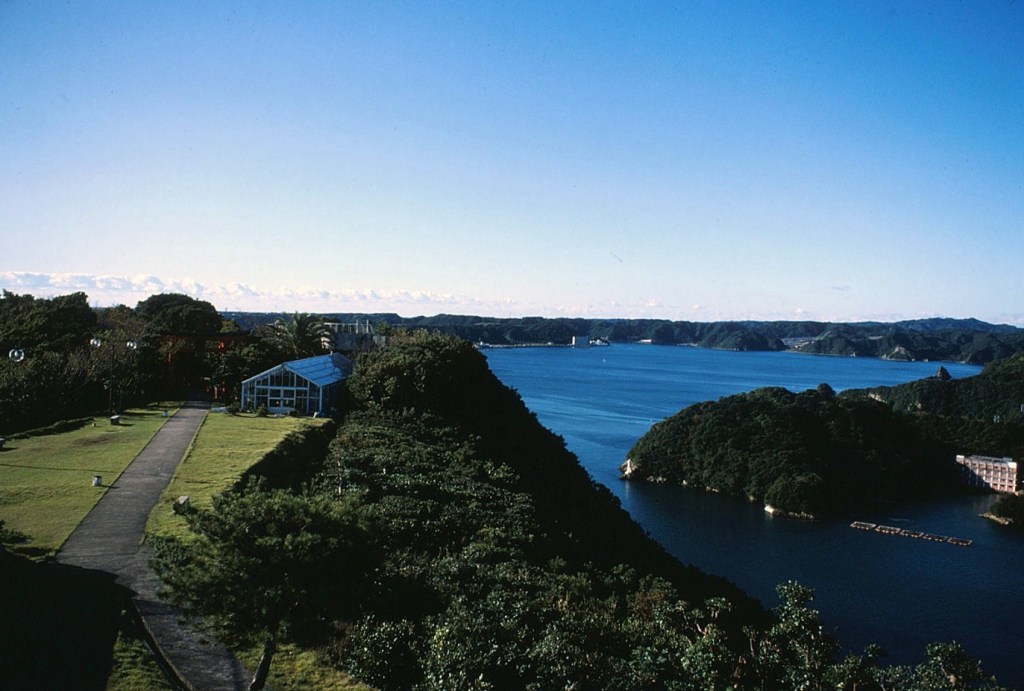
[And if this is not a view of the city of Toba from our ryokan, then I have no idea where we were . . . ]

Here in Tokyo they’re not just hard working but almost violently cheerful. Down at the Peacock, the change flows like tap water. The women behind the registers bow to you, and I don’t mean that they lower their heads a little, the way you might if passing someone on the street. These cashiers press their hands together and bend from the waist. Then they say what sounds to me like “We, the people of this store, worship you as we might a god. ~ David Sedaris

[Oh, and a rare beautiful sunny day accentuating the surrounding scenery . . . ]

The whole of Japan is a pure invention. There is no such country, there are no such people. The Japanese people are simply a mode of style, an exquisite fancy of art. ~ Oscar Wilde

What a strange thing! To be alive beneath cherry blossoms. ~ Kobayashi Issa

[And now, my most favorite experience of the entire trip . . . ]

[Presenting: Kumano Nachi Taisha]

[Kumano Nachi Taisha is a Shinto shrine and part of the UNESCO-designated World Heritage Sacred Sites and Pilgrimage Routes in the Kii Mountain Range. The Kumano Kodo route connects it to other sites under the same classification, which are primarily located in Wakayama Prefecture. The four sites on the route, classified as pilgrimage destinations and World Heritage Sites, are: 1) Nachi Taisha; 2) Hongu Taisha; 3) Hayatama Taisha; 4) Koya-san. This classification is based mostly in Japanese history, as pilgrims would travel to all three sites to complete their pilgrimage. Kumano Nachi Taisha is an example of Buddhist and Shinto syncretism (Shinbutsu shugo) nestled in the Kii Mountains, near Kii Katsuura. Cedar forests surround the site. The Nachi Waterfall, worshiped at the Hiryū Shrine near Kumano Nachi Taisha, is believed to be inhabited by a ‘kami’ called Hiryū Gongen.  Also, there is a sacred tree at this site, the Sacred Camphor Tree, located between the Nachi Shrine (heiden) and Seigantoji Temple. It is 850 years old and is said to have been planted by Taira-no-Shigemori (1138-1179). The straw rope (‘shimenawa’) and paper flags show that this tree has been sanctified as a ‘kami’. The tree is alive with moss and ferns and other small plants growing on its ancient limbs. It is possible to enter the tree, where there is a small altar for making offerings. Nachi-no-Hi Matsuri Fire Festival, performed on July 14, is the major festival of Kumano Nachi Taisha. It is a fire festival in which six-meter-high portable shrines symbolically representing the purification of the waterfall with the fires from oversized torches is laboriously carried by men dressed in white (Wikipedia).]

[Kumano Nachi Taisha is one of the three Kumano shrines, situated a few kilometers inland from the coastal hot spring resort of Katsuura. The shrine is part of a large complex of neighboring religious sites that exemplify the fusion of Buddhist and Shinto influences that is particular to the Kumano region. The site also boasts the tallest waterfall in Japan. The veneration of the Kumano shrines as holy sites of Shintoism predates Buddhism’s introduction to Japan in the mid 6th century. Once Buddhism arrived in Kumano it took root quickly, and rather than competing with the indigenous religion for religious authority, it began a long process of harmonious mixing. A product of this congenial relationship can be seen at Nachi Taisha. Directly beside the eminent shrine is the Buddhist temple Seigantoji. In fact, for most of their history the buildings were not even under separate control and functioned as one religious institution. The buildings of both the shrine and the temple are impressive, and among the buildings of Seigantoji there is a three-story pagoda (japan-guide.com).]

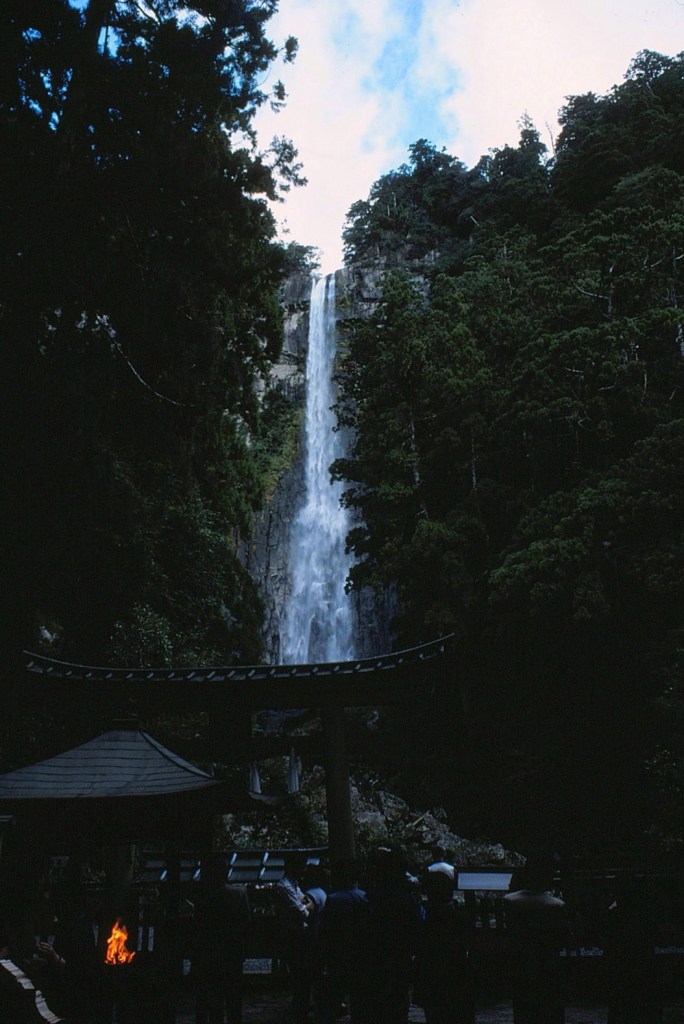
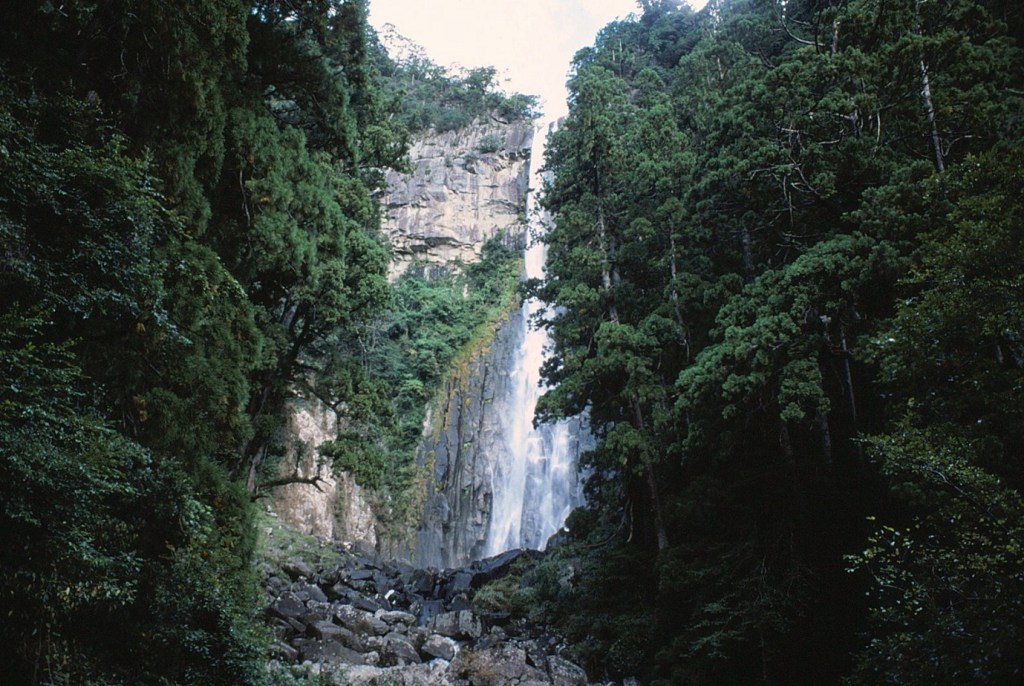
[A short distance from Seigantoji and Nachi Taisha is the 133 meter waterfall Nachi no Taki. The tallest (single-tiered) waterfall in Japan, it was the original religious site in the area. Before the development of organized religious doctrine, Nachi no Taki was venerated by the earliest Japanese people. Even today, visitors will be impressed by the natural power and beauty of the falls (japan-guide.com.]

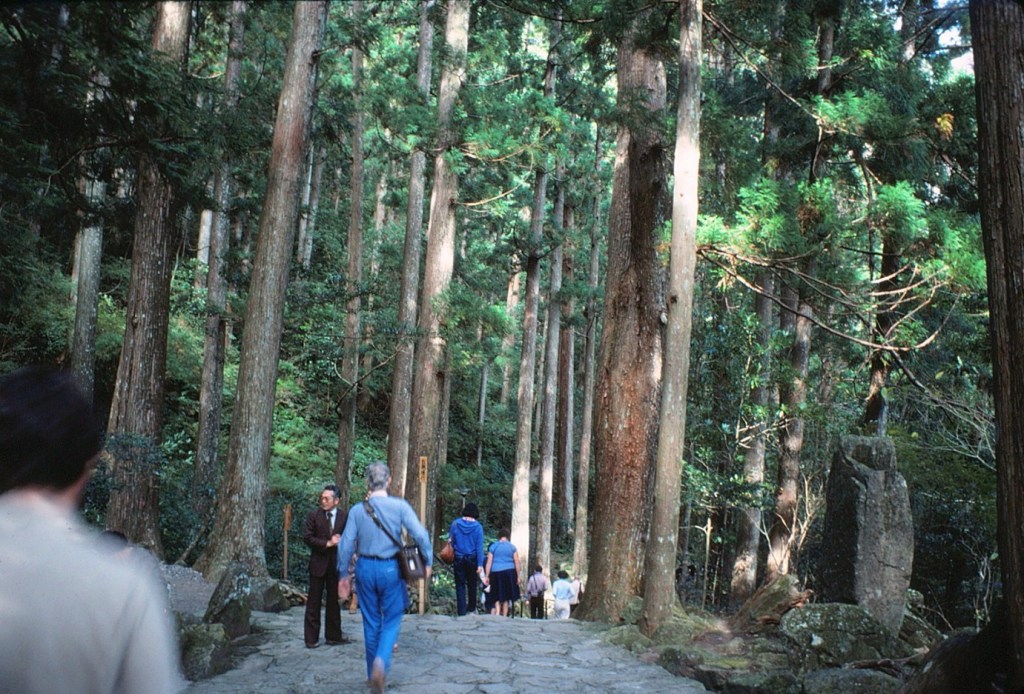
[Like Hongu Taisha and Hayatama Taisha, Nachi Taisha was one of the main destinations of the Kumano Kodo pilgrimage routes. For travelers who want to experience the trails but are impeded by time constraints, a hike up the Daimon-zaka is a good option. The route, paved with stone and lined with massive evergreens, leads 600 meters up to the gates of Nachi Taisha (japan-guide.com).]

[This whole place was just a wondrous assault on all the senses . . . ]

[You may even run into dazzled American tourists here . . . ]

[Yeah, like that one . . . ]

[In the Kii Mountains . . . ]

[The falls, from a distance . . . ]

[To this day, still one of my all-time favorite shots . . . ]

[Seiganto-ji is a Tendai Buddhist temple founded in the early 5th century. Legend holds that a Buddhist priest from India drifted ashore and experienced a revelation of Kannon, the Buddhist deity of mercy. Seiganto-ji Temple is also the first sacred place of “Saigokujunrei”, or pilgrimage to 33 Kannons which started in 1161 (tb-kumano.jp).]

There are two ways of spreading light: to be the candle or the mirror that reflects it. ~ Edith Wharton

[This place is all about vertical . . . ]

[The Seigantoj three-story pagoda . . . ]

[The difference between Shintoism and Buddhism is simple; they are two very distinct religions. Shintoism means “the way of the gods”, and is a polytheistic system with thousands of ‘kami ‘deities. The kami are deities of nature, such as the sun, the sea, and even rice. Buddhism originated in India and is a religion based on the teaching of the Buddha and the hope of achieving enlightenment by breaking the cycle of reincarnations. It was imported to Japan from China in the sixth century (japan-experience.com).]

[Daimon-zaka (Kumano Nachi Taisha Area) is an excellent short walk on the Kumano Kodo pilgrimage route. The actual staircase is about 600 meters long with 267 stairs. At the end of the slope is the impressive Meitosugi – “husband and wife cedar trees”, whose roots are entwined beneath the path (tb-kumano.jp/).]

[Roy coming down some of those stairs . . . ]

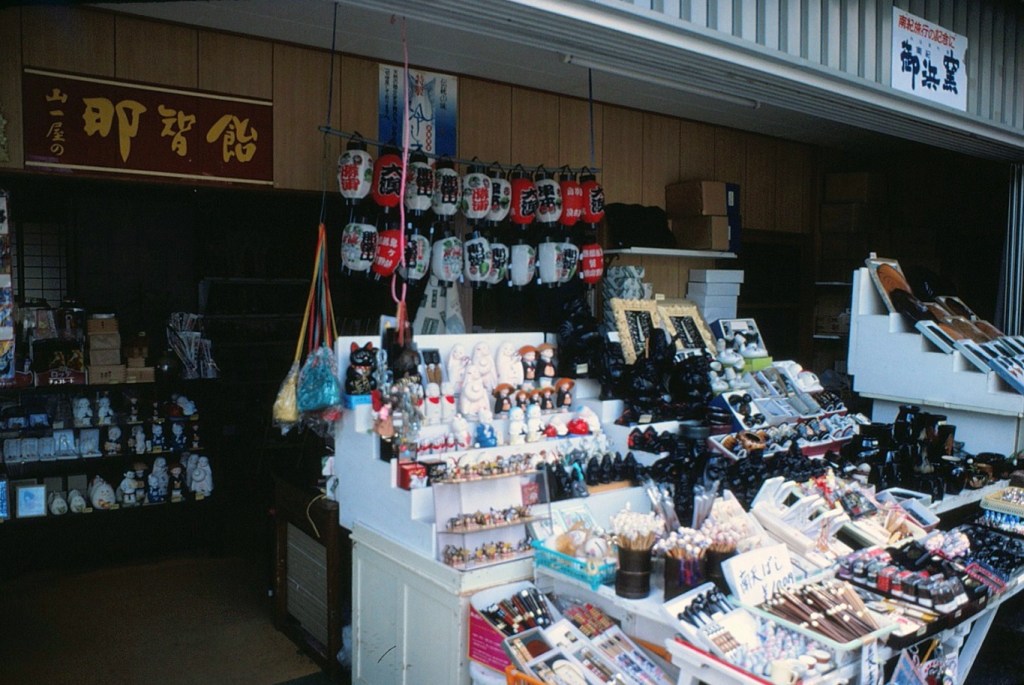
[Tourist commerce . . . ]

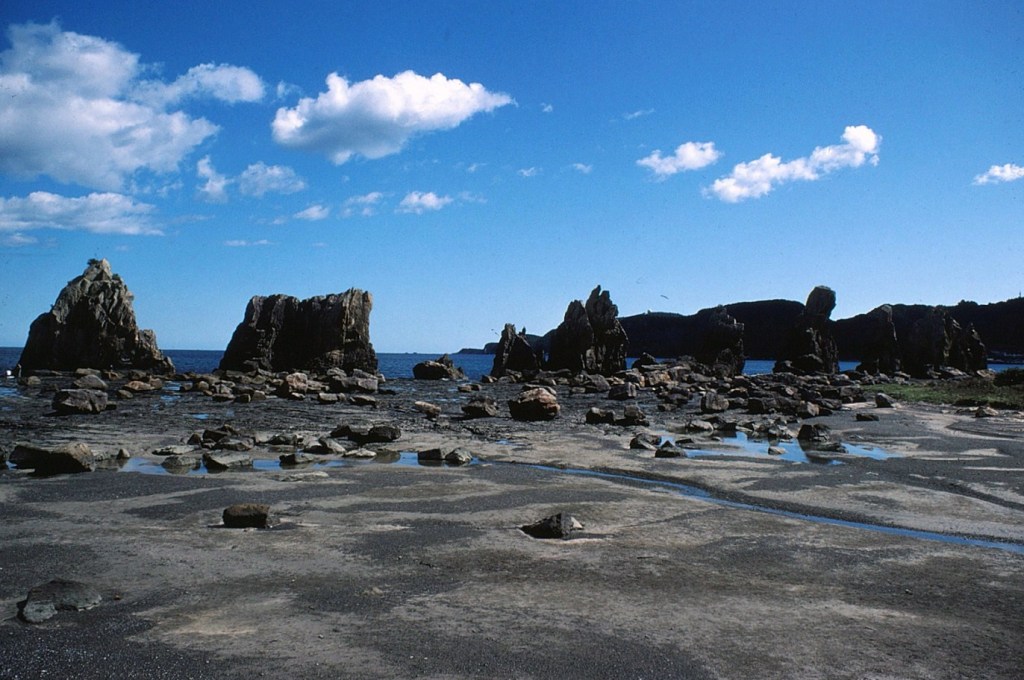
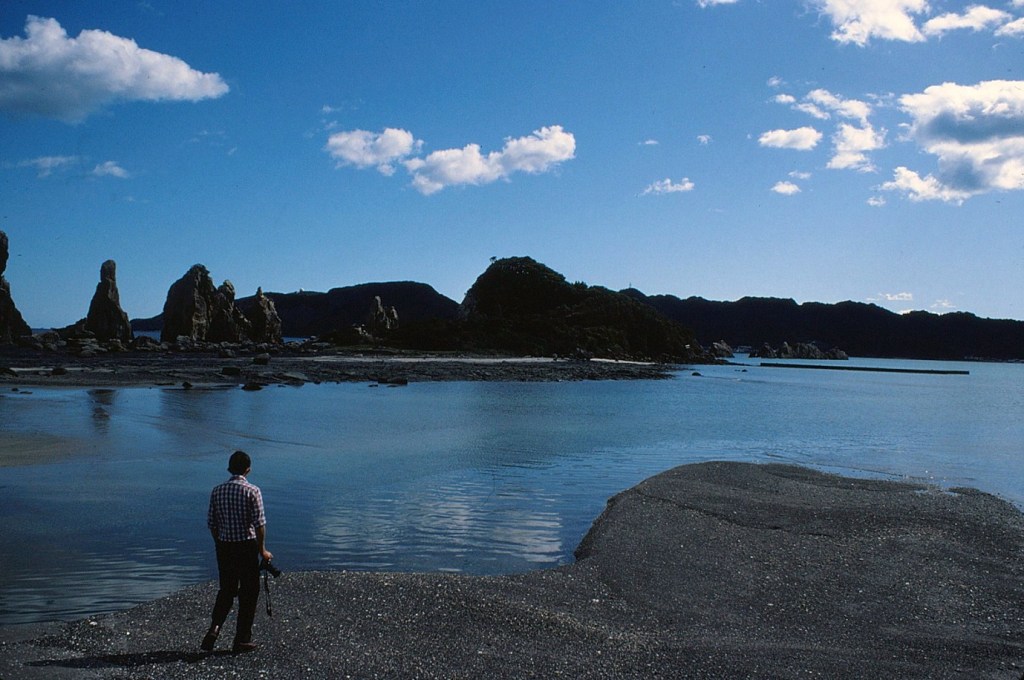
[Obviously, we came down out of the mountains – this area is called “the shore” . . . ]

[Roy appears to be venturing out at low tide . . . ]

It’s a total myth that good sashimi comes directly from sea to sushi counter. The reality is that raw fish, especially in the finest Japanese restaurants, are aged. ~ Johannes Pong

[The sashimi, close up . . . ]

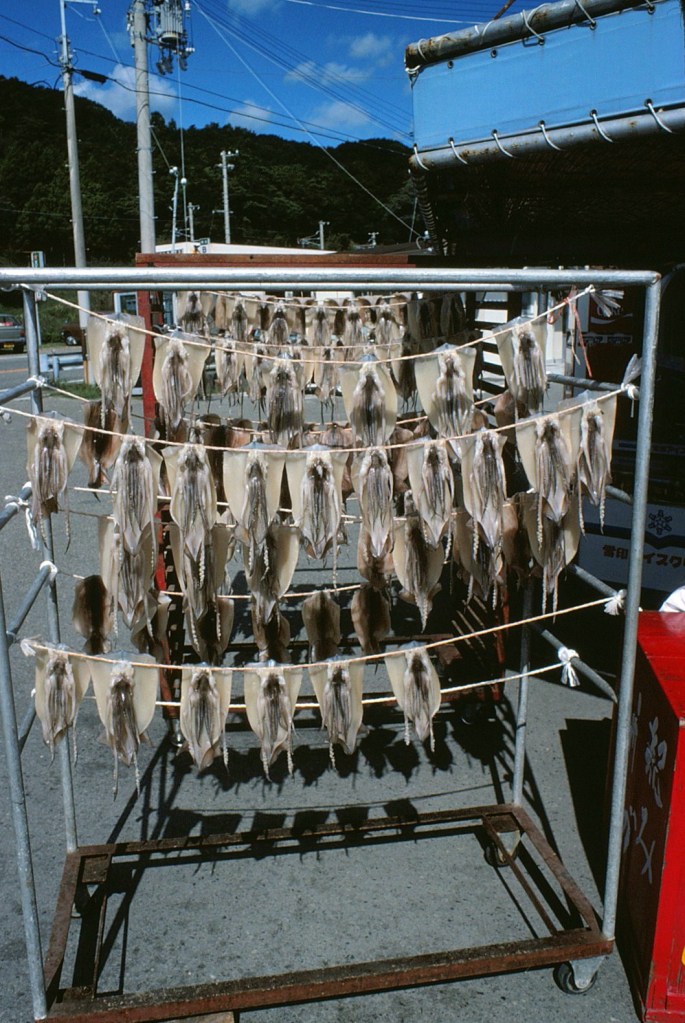
[This appears to not be sashimi (yet) . . . ]

I know I’ll never find another ewe . . .

The method (of learning Japanese) recommended by experts is to be born as a Japanese baby and raised by a Japanese family, in Japan. And even then it’s not easy. ~ Dave Barry

Japan is not a Western democracy. The Japanese have kept their traditions, culture and heritage, but they have joined the community of free nations. ~ Natan Sharansky

[Overly fresh sashimi . . . ]

[Tourists – whadya gonna do?]

One night in Tokyo we watched two Japanese businessmen saying good-night to each other after what had clearly been a long night of drinking, a major participant sport in Japan. These men were totally snockered, having reached the stage of inebriation wherein every air molecule that struck caused them to wobble slightly, but they still managed to behave more formally than Americans do at funerals. ~ Dave Barry

Up Next: Part 9

Japan 1983 (Part 7)
November 9

Well, you live and learn. Then, of course, you die and forget it all. ~ Noel Coward

After the 20 Magical Musical Tour postings and some sort of national election, it’s time to return to 1983 Japan. As you may recall, I could find no documentation of this trip and have to recall these photos from memory (unlikely) or extensive Google and Wikipedia searches. The “extensive” part is what cools my jets about delving into this again . . .

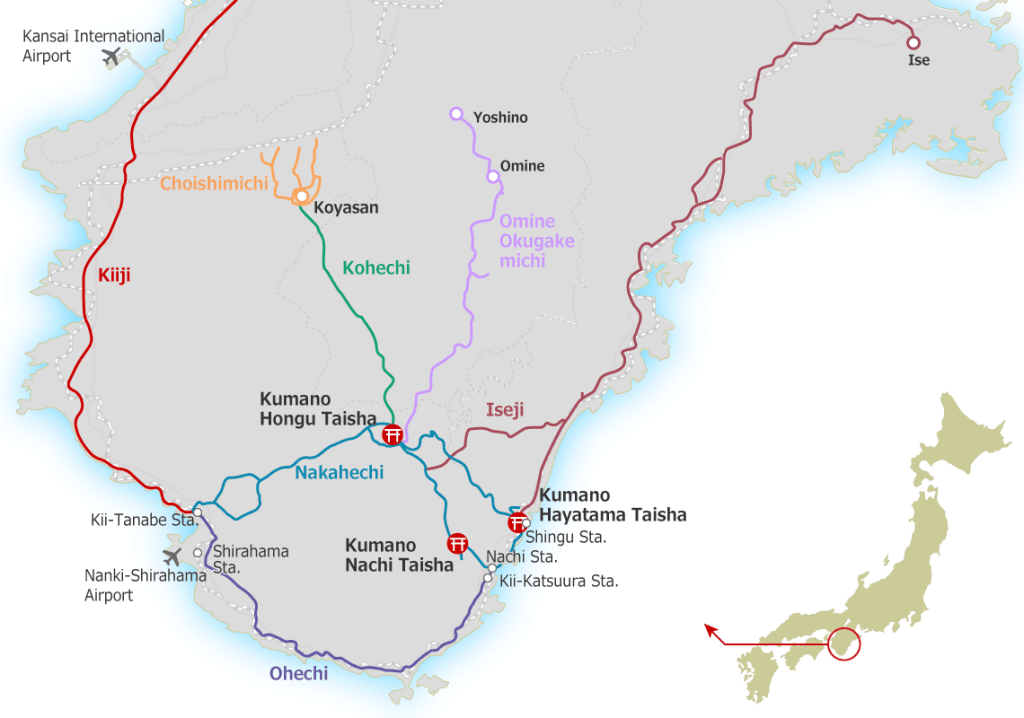
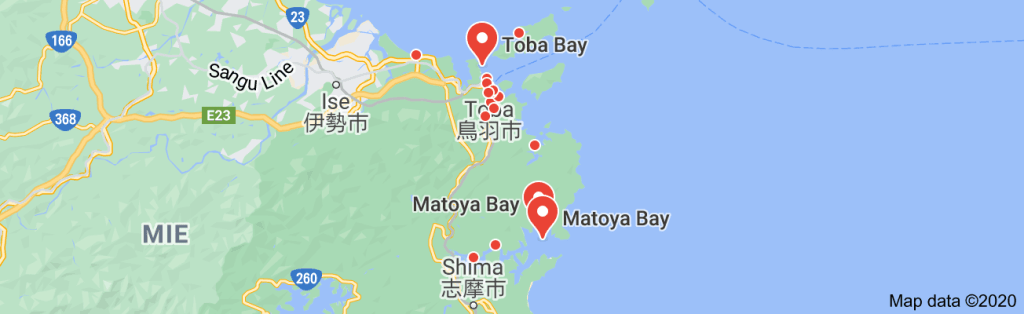
[When last we left you we were at the Ise Grand Shrine (upper right on the map) . . . ]

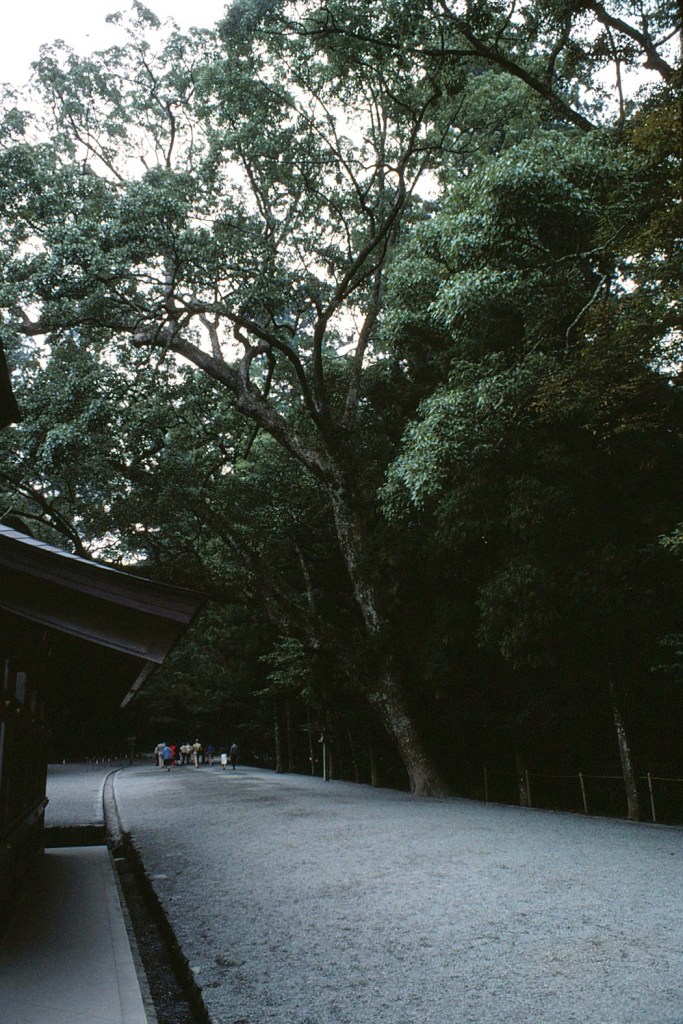
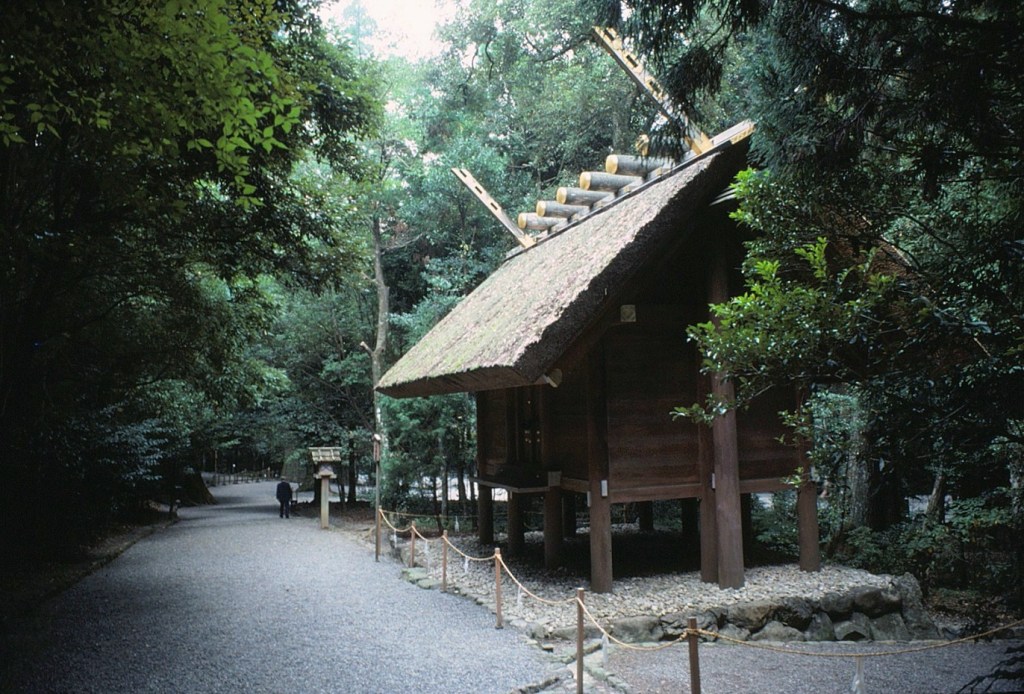
[And I think we’re still at the Grand Shrine here, having a walkabout . . . ]

Teaism is a cult founded on the adoration of the beautiful among the sordid facts of everyday existence. ~ Kakuzo Okahura

[The Inner Shrine (Naikū) is one of the two main shrines making up the Ise Shrines in Ise City. Formally known as Kotai Jingu, the Inner Shrine enshrines Shinto’s most venerated deity, the Sun Goddess (Amaterasu Omikami), and is considered Japan’s most sacred shrine. The Inner Shrine is believed to have been established over 2000 years ago. Its main buildings resemble ancient rice granaries and are built in an architectural style that shows almost no influence from the Asian mainland because they predate the introduction of Buddhism. Both, the Inner and Outer Shrine, are rebuilt from scratch every 20 years according to an ancient Shinto tradition. The 62nd rebuilding was completed in 2013. The 63rd rebuilding will take place in 2033 (japan-guide.com/e/e4300.html).]

[A typical visit to the Inner Shrine takes between 60 and 90 minutes and starts from the Uji Bridge, an approximately 100 meter long, wooden bridge across the Isuzugawa River. The bridge has two large torii gates, one at each end, which are made from the former shrine building’s main pillars. The shrine grounds fascinate through their simplicity, as visitors encounter little more than gravel-covered walkways and wooden, barely painted shrine structures, surrounded by a serene forest (japan-guide.com/e/e4300.html).]

I thought that I would never see, a tree this much larger than me . . .

If your computer speaks English, it was probably made in Japan. ~ Alan Perlis 

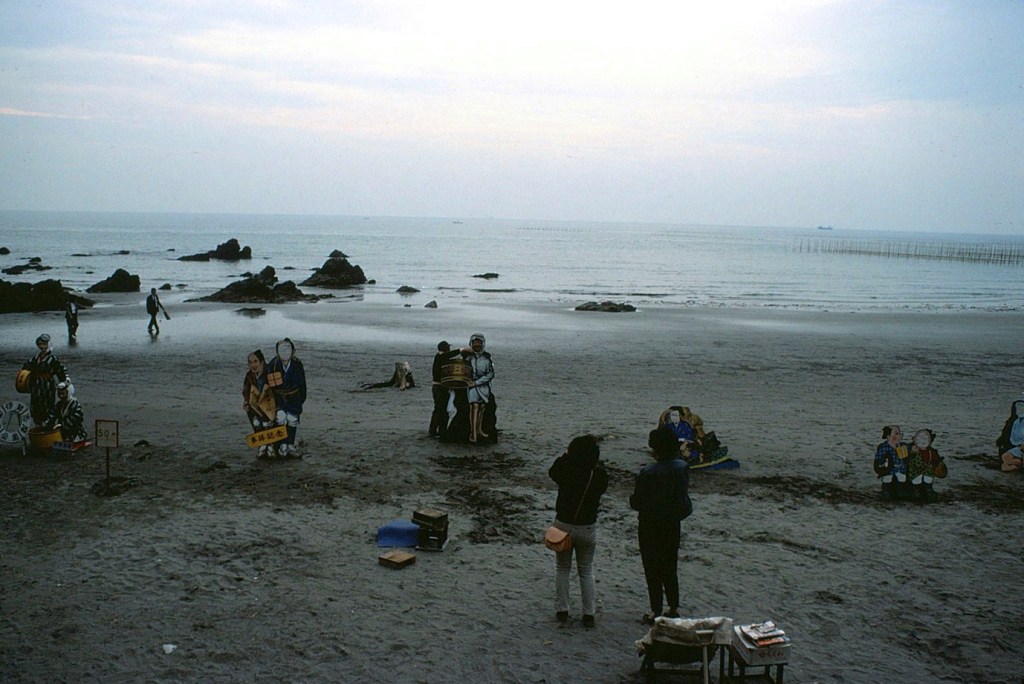
[Because of following pictures, I have every reason to believe this is a Toba Bay beach . . . ]

[The Toba Bay area, just east of Ise, is important for . . . ]

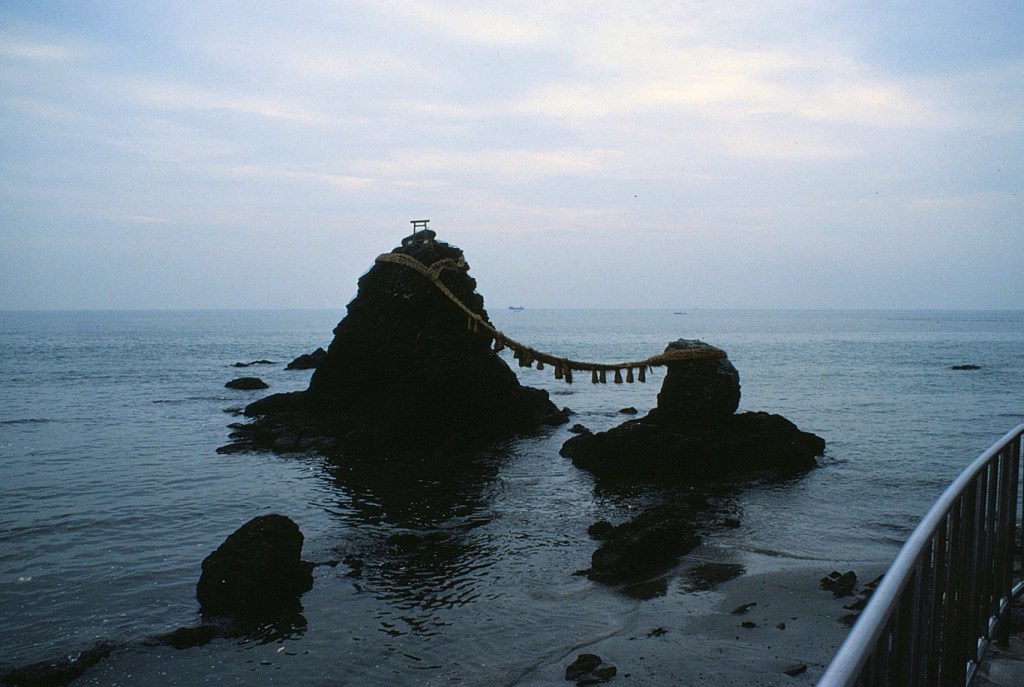
[This I remember for reasons unknown? Meoto Iwa (or the Married Couple Rocks) are two rocky stacks in the sea off Futami, Mie. They are joined by a ‘shimenawa’ (a heavy rope of rice straw) and are considered sacred by worshipers at the neighboring Futami Okitama Shrine (Futami Okitama Jinja). According to Shinto, the rocks represent the union of the creator of ‘kami’, Izanagi, and Izanami. The rocks, therefore, celebrate the union in marriage of man and woman. The rope, which weighs over a ton, must be replaced several times a year in a special ceremony. The larger rock, said to be male, has a small torii at its peak. At dawn during the summer, the sun appears to rise between the two rocks.  Mount Fuji is visible in the distance. At low tide, the rocks are not separated by water. Okitama Shrine is dedicated to Sarutahiko Okami and imperial food goddess Ukanomitama. There are numerous statues of frogs around the shrine. The shrine and the two rocks are near the Grand Shrine of Ise, the most important location of purification in Shinto (Wikipedia).]

[And a great site for group tour bus photos . . . ]

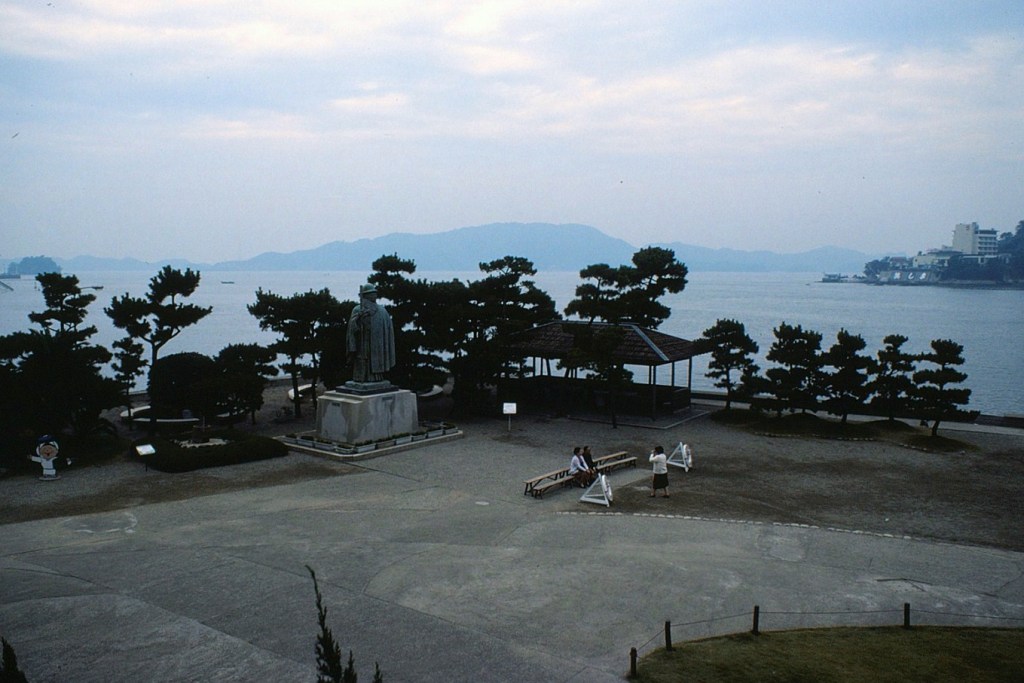
[Mikimoto Kokichi Statue located in Toba . . . ]

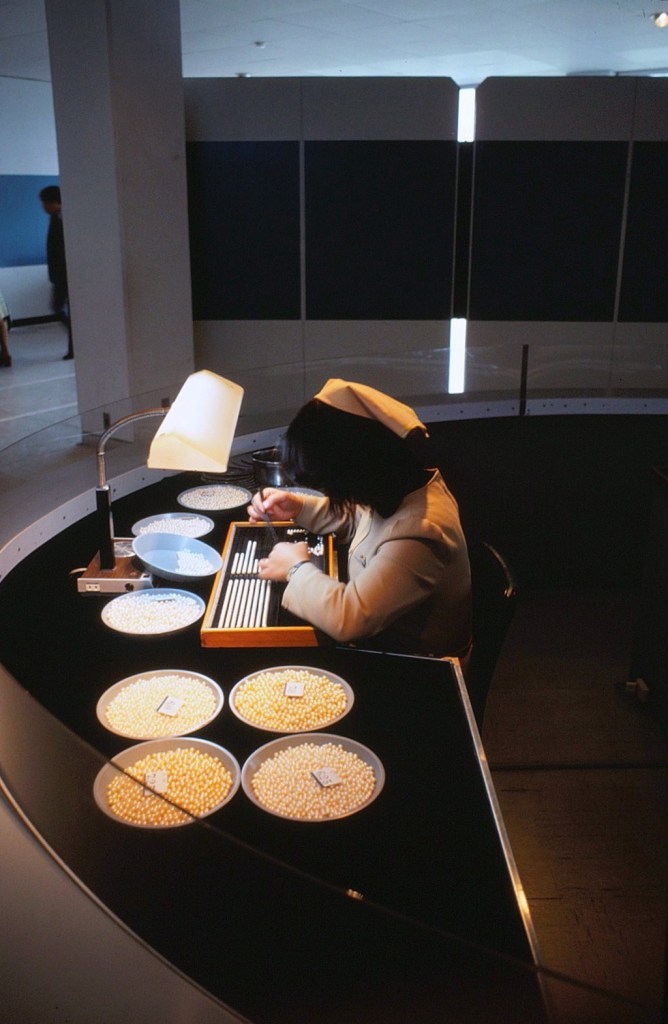
[The Mikimoto Pearl Island (Mikimoto Shinjujima) is an excellent museum about pearls, pearl cultivation and Mikimoto Kokichi, the pioneer who first succeeded in cultivating pearls. The island is located in the Bay of Toba, accessible via a bridge. Mikimoto Kokichi was born in Toba in 1858 and became the first person to successfully cultivate pearls in the year 1893. He opened the first Mikimoto Pearl Store in 1899. The Mikimoto Kokichi Memorial Hall introduces his life story. Also located on the island, the Pearl Museum provides detailed explanations about pearls and the cultivation of pearls in Japanese and English. In the adjacent Pearl Plaza you can view and purchase a wide variety of pearl jewelry (www.japan-guide.com/).]

[Sorting by size, color, etc., etc. Why yes, I did buy some pearl necklaces for the folks back home – and the Super now wears the one I bought for mom . . . ]

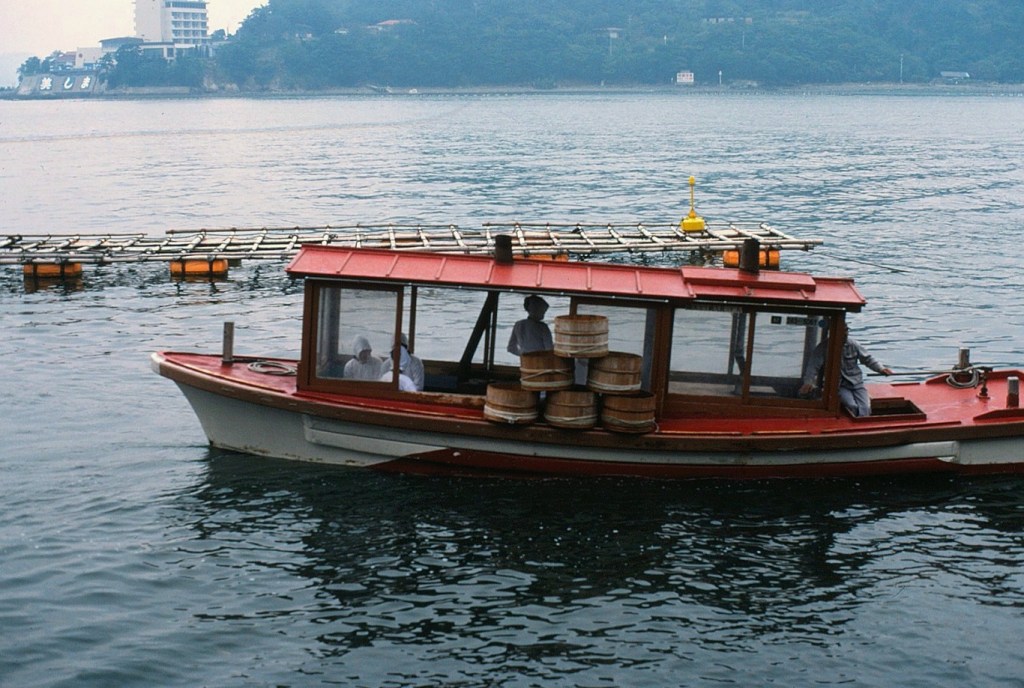
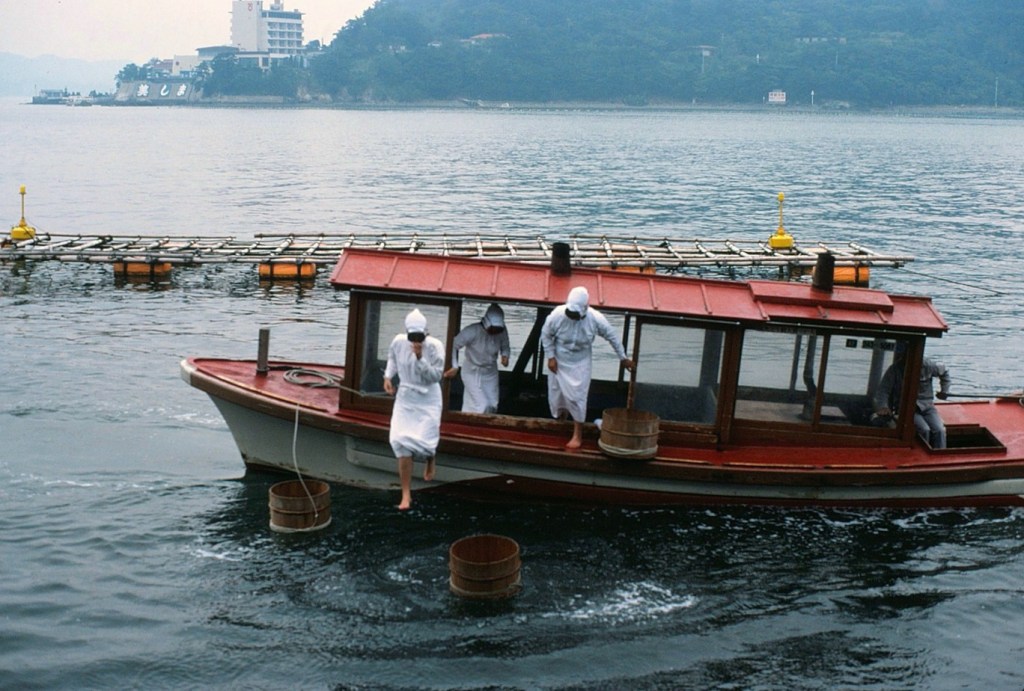
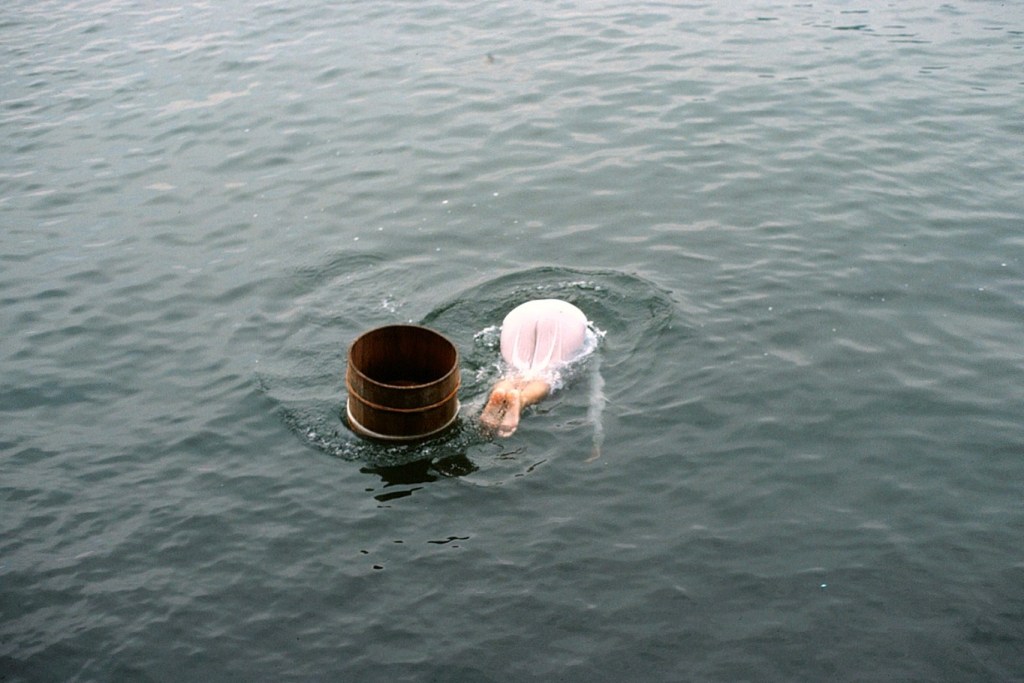
[The Mikimoto Pearl Island also offers hourly performances by female pearl divers, known as ‘ama’ (lit. “sea women”), who have traditionally been planting and harvesting the oysters (and other seafood) (www.japan-guide.com) . . . ]

[Japanese tradition holds that the practice of ‘ama’ may be 2,000 years old.  Traditionally, and even as recently as the 1960s, ‘ama’ dived wearing only a loincloth. Even in modern times, ‘ama’ dive without scuba gear or air tanks, making them a traditional sort of free-diver. Records of the female pearl divers, or ‘ama’, date back as early as 927 AD in Japan’s Heian period. Early ama were known to dive for seafood and were honored with the task of retrieving abalone for shrines and imperial emperors. Ama traditionally wear white as it was believed to ward off sharks. Early divers wore only a loin cloth but in the 20th century the divers adopted an all-white sheer diving uniform in order to be more presentable while diving.  Pearl diving ama were considered rare in the early years of diving. However, Mikimoto Kokichi’s discovery and production of the culture pearl in 1893 produced a great demand for ama. He established the Mikimoto Pearl Island in Toba and used the ama’s findings to grow his business internationally. Nowadays, the pearl diving ama are viewed as a tourist attraction at Mikimoto Pearl island.  The number of ama continue to dwindle as this ancient technique becomes less and less practiced due to disinterest in the new generation of women and the dwindling demand for the diving women. In the 1940s, 6000 ama were reported active along the coasts of Japan while today ama practice at numbers more along the scale of 60 or 70 divers in a generation (Wikipedia).]

[We were advised on this trip that after much experimentation Mikimoto determined that broken clam shells from the Mississippi River provided the best irritant for the oysters to produce the best pearls . . . ]

So, bottoms up!

[I believe this is a green tea field . . . ]

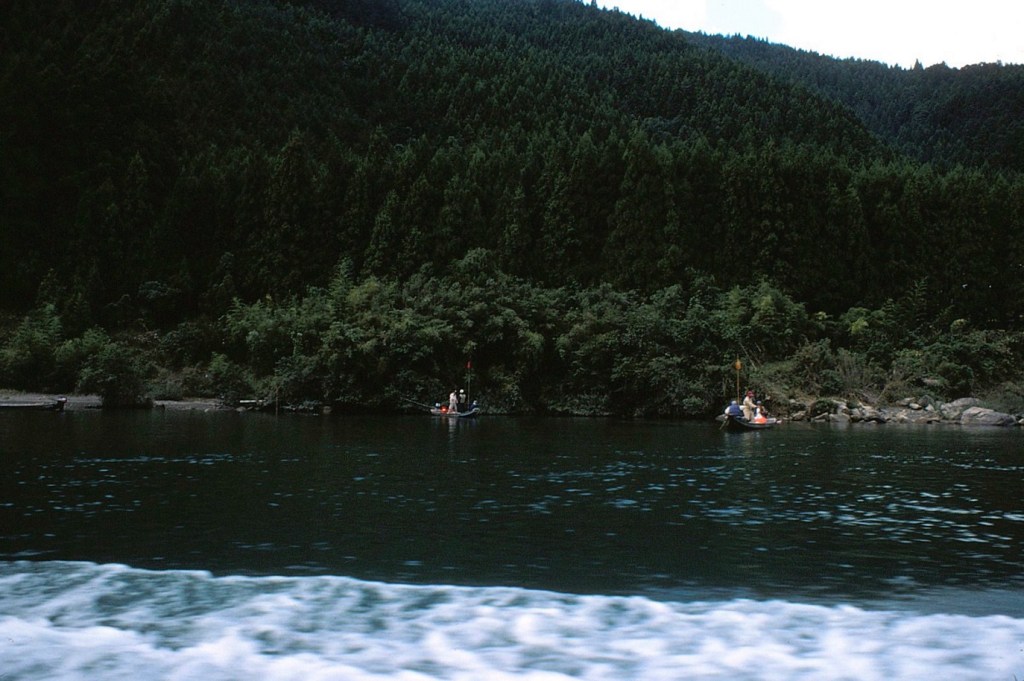
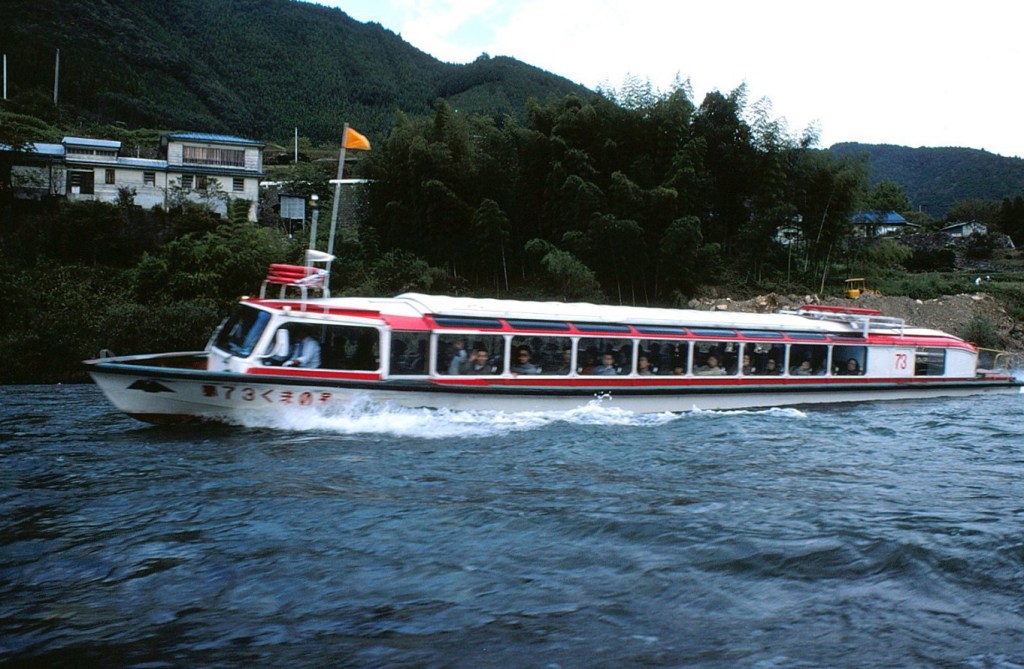
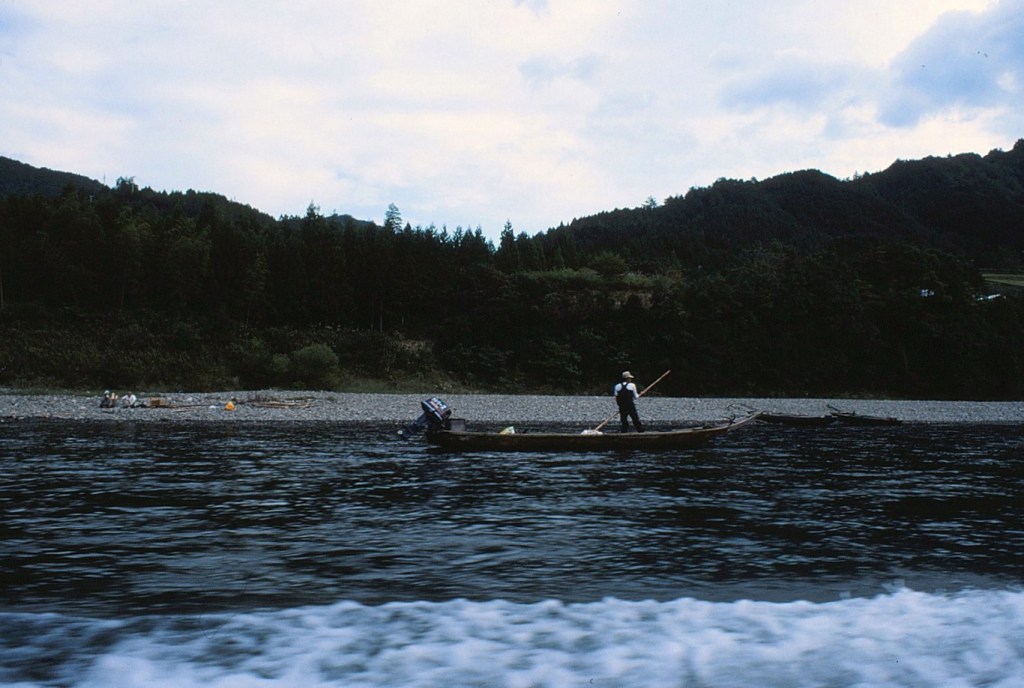
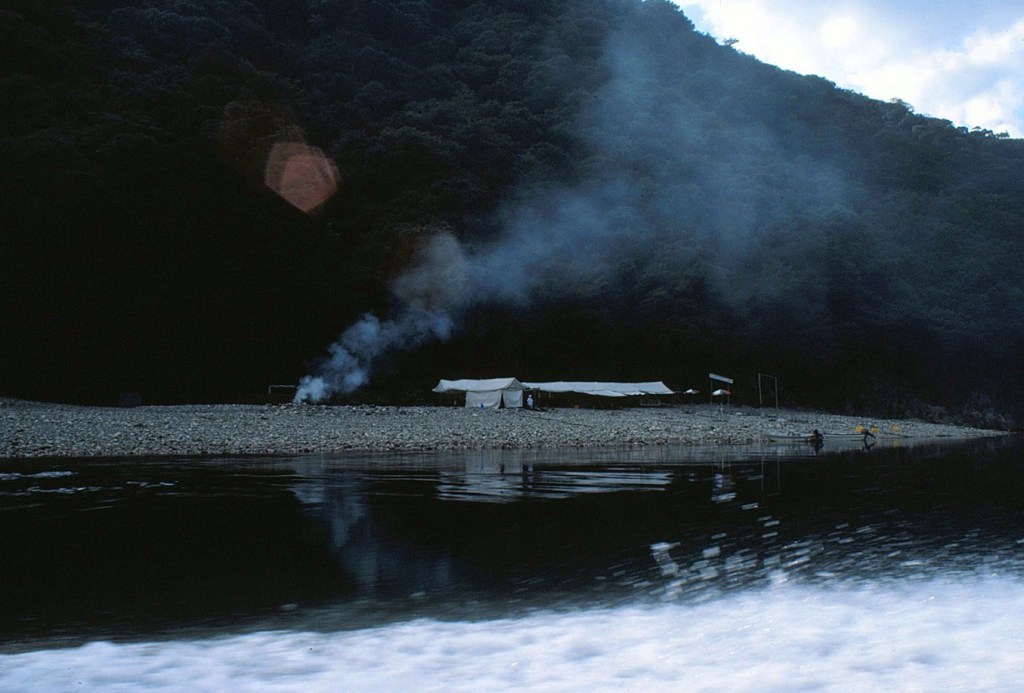
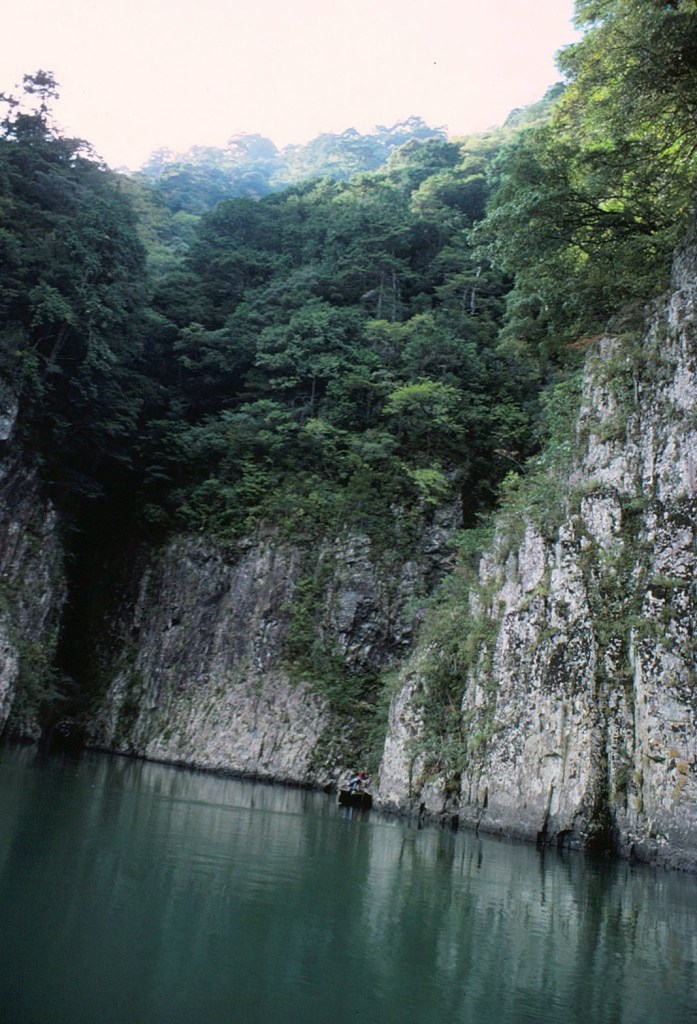
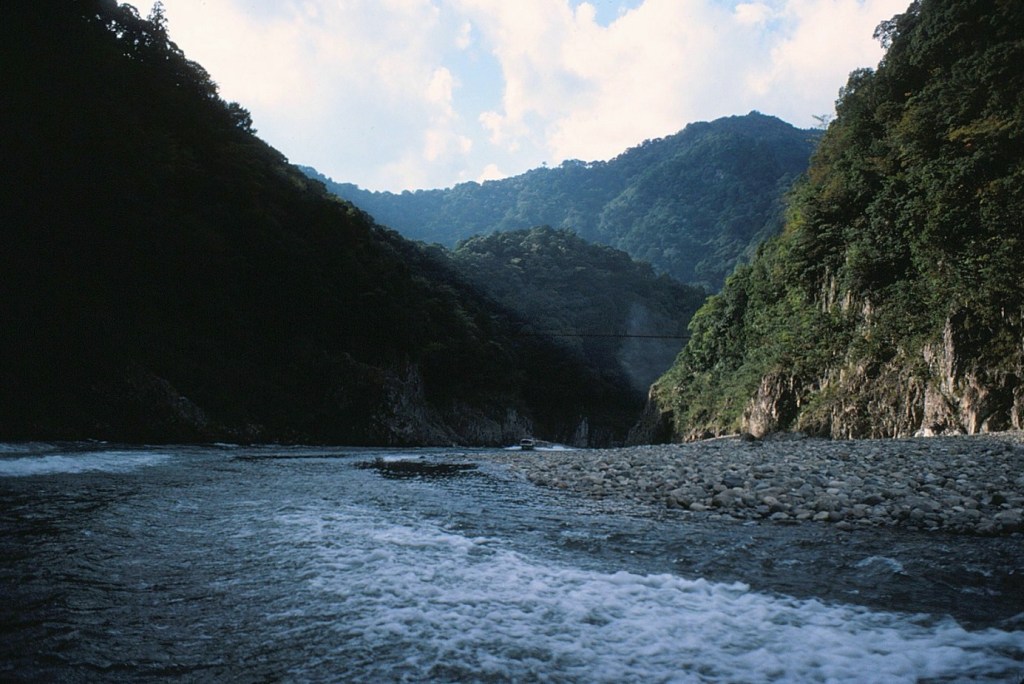
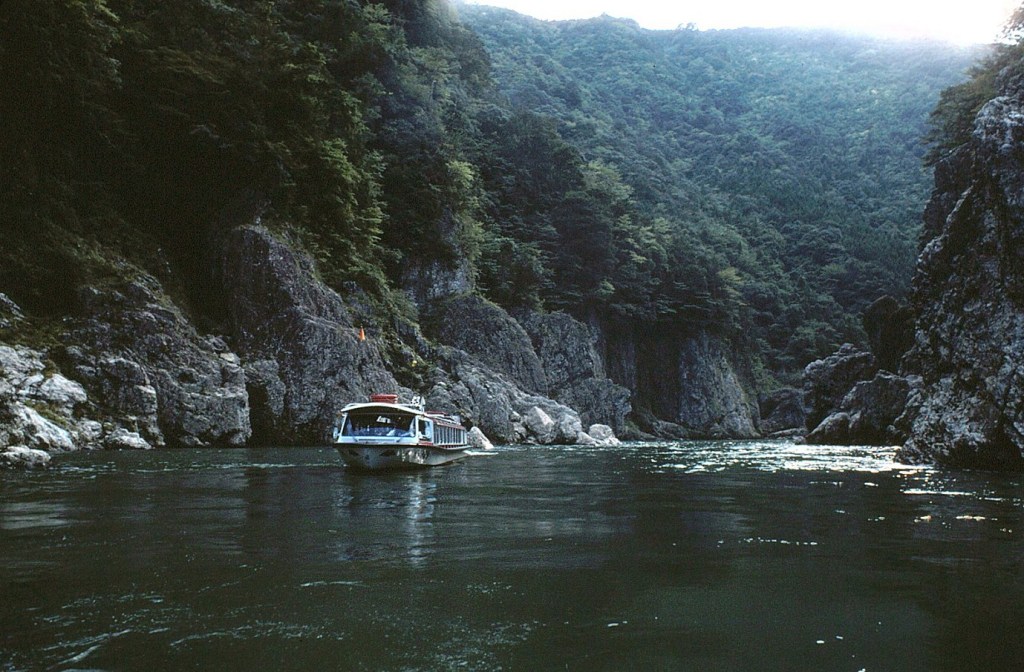
[And then it happened. The next several pictures are of a river boat ride. And though I well remember the ride, I cannot find any information about it – the whys and wherefores – even after hours of scouring the internet . . . ]

[A Minnesota guess would be fishermen . . . ]

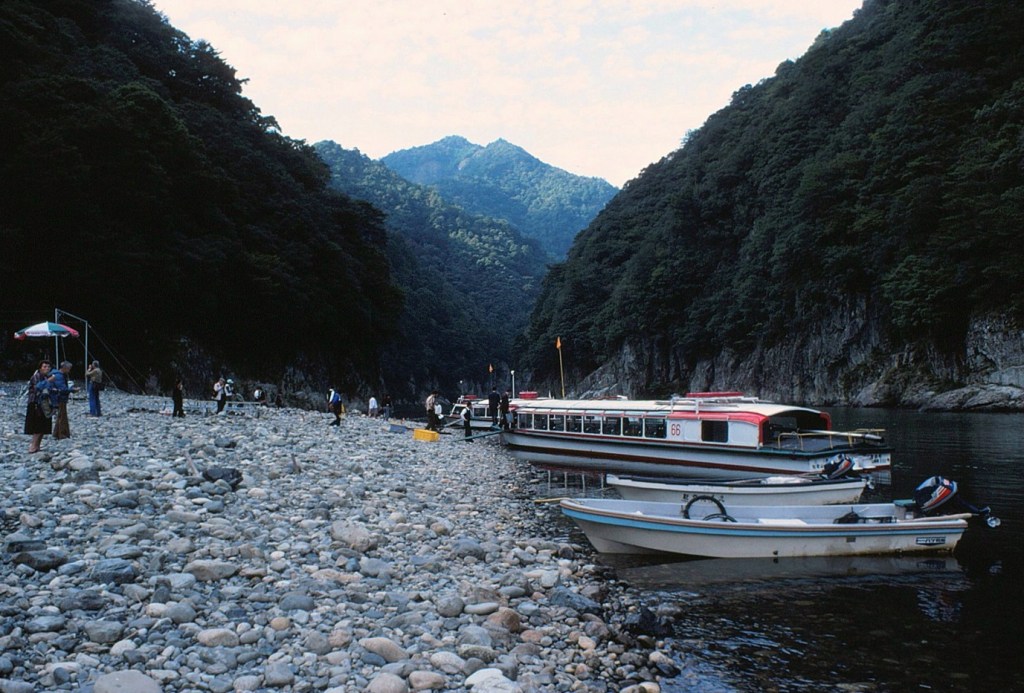
[A twin boat to the one we were in . . . ]

You cannot call yourself a true geisha until you can stop a man in his tracks with a single look. ~ Arthur Golden

[Shore lunch?]

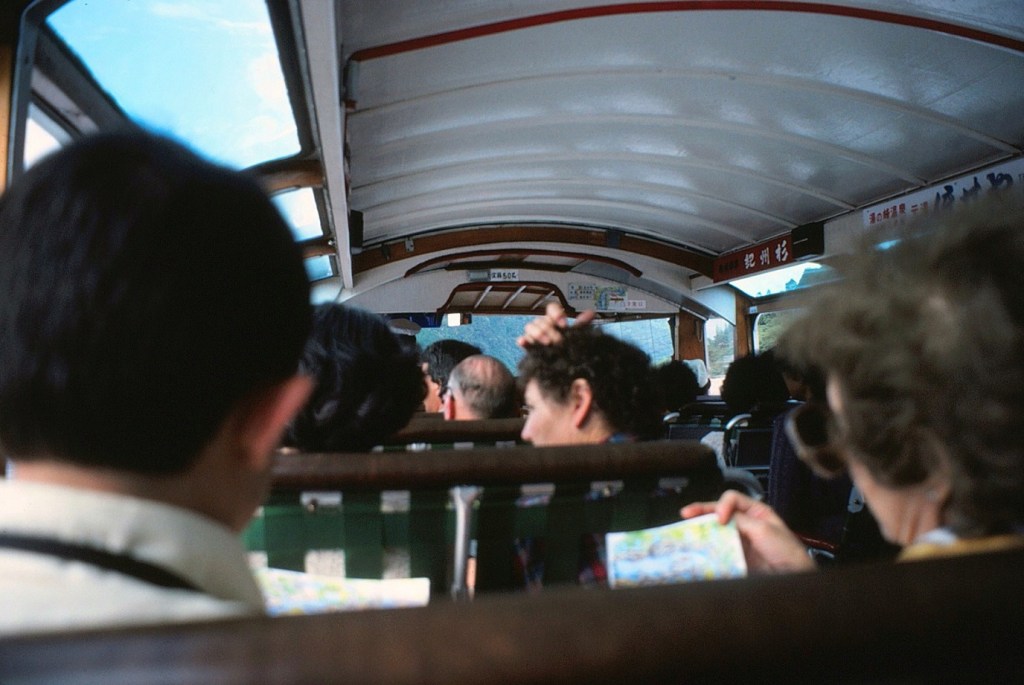
[The sun roof was open . . . ]

In Japanese we have a word for those feelings that are too deep for words: yugen. Yugen gives us a profound sense of the beauty and mystery of the universe. ~ Dr. Qing Li

[Roy popped out for a photo op . . . ]

Living in a world such as this is like dancing on a live volcano. ~  Kentetsu Takamori

Hatred of domestic work is a natural and admirable result of civilization. ~ Rebecca West

Somewhere, something incredible is waiting to be known. ~ Carl Sagan

He is not only dull himself; he is the cause of dullness in others. ~ Samuel Johnson

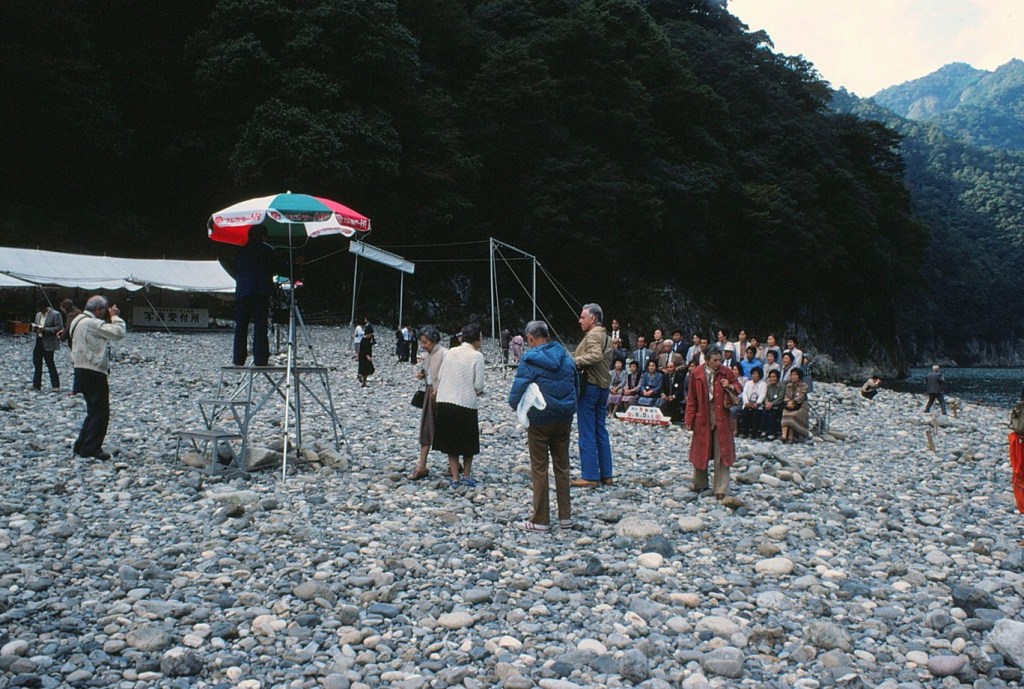
[A group photo op not unlike at Wedded Rocks . . . ]

I’ve just learned about his illness. Let’s hope it’s nothing trivial. ~ Irvin S. Cobb

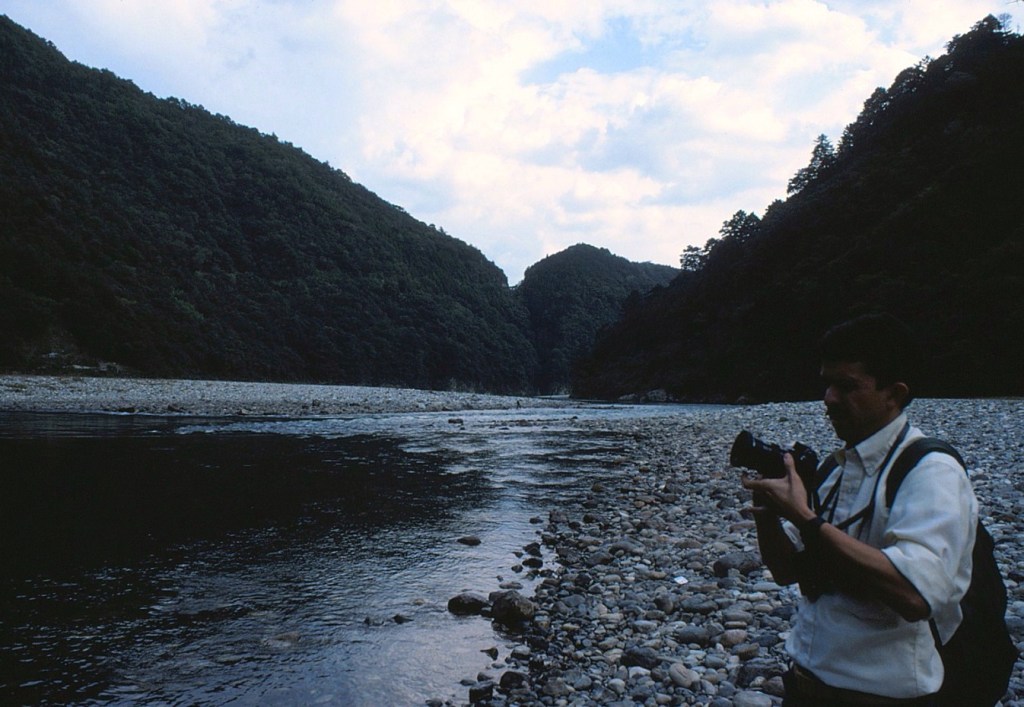
[Everything is f-stops and shutter speeds . . . ]

[On the road again looking for a place to rest our heads . . . ]

[And here we are . . . ]

[I believe we are in the Todaya Ryokan in the Toba Bay area . . . ]

[But don’t hold me to it . . . ]

[Remember rotary dial phones?]

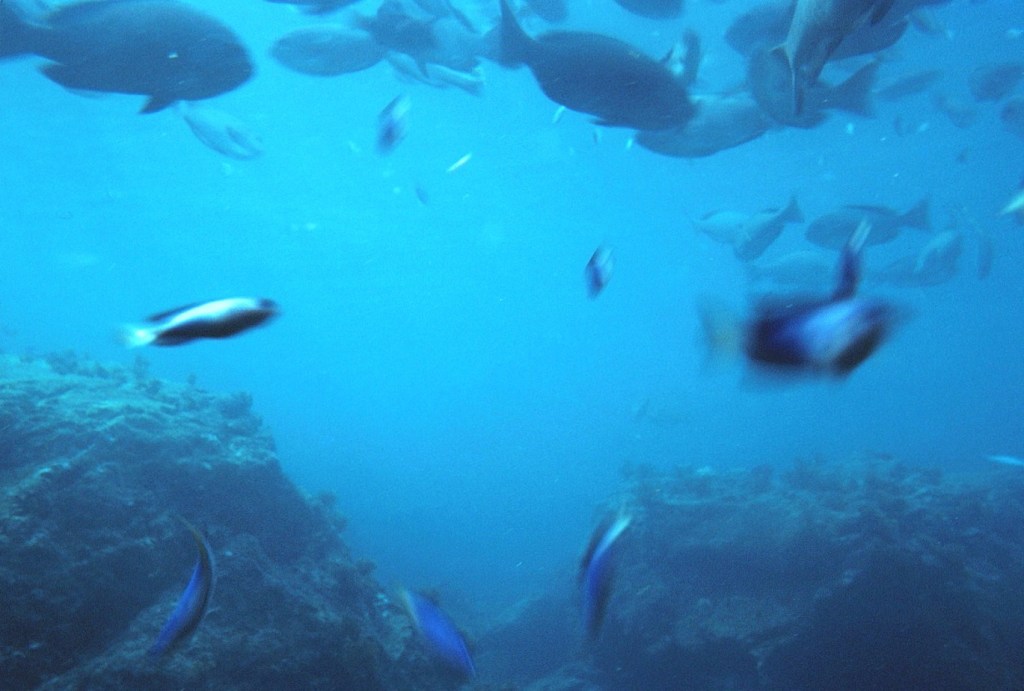
[Highlighting Ama divers, women of the sea . . . ]

Experience is a good teacher, but she sends in terrific bills. ~ Minna Antrim

Up Next: Continuing Japan 1983
A Complete Abridged History of Music (Part 20)*

November 4

* In the greater Alexandria, Minnesota, standard metropolitan statistical area

There are two means of refuge from the misery of life — music and cats. ~  Albert Schweitzer

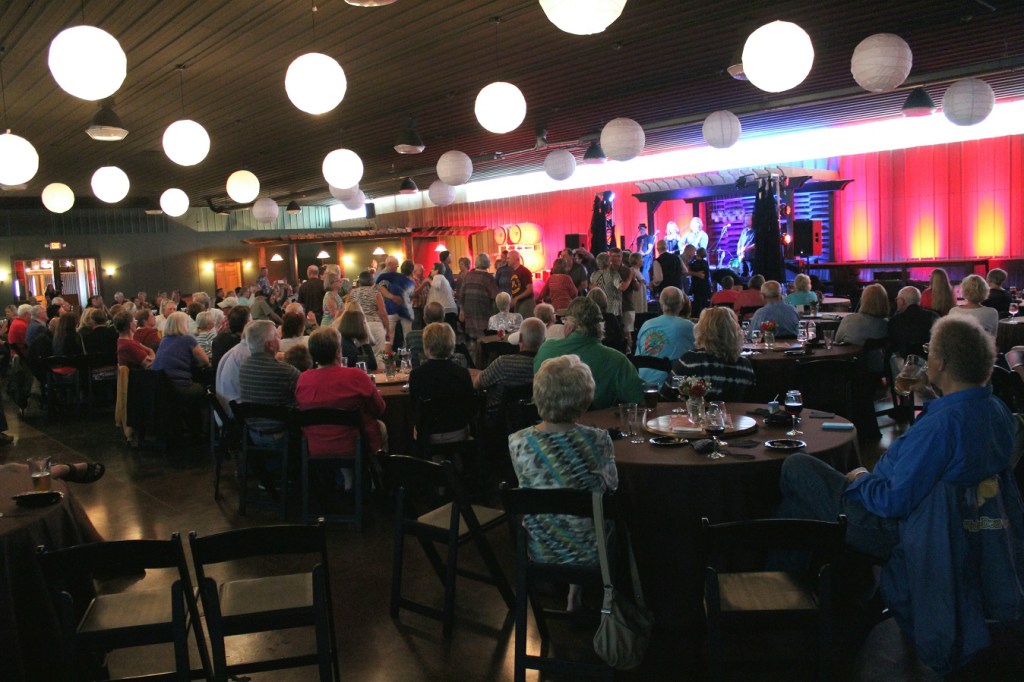
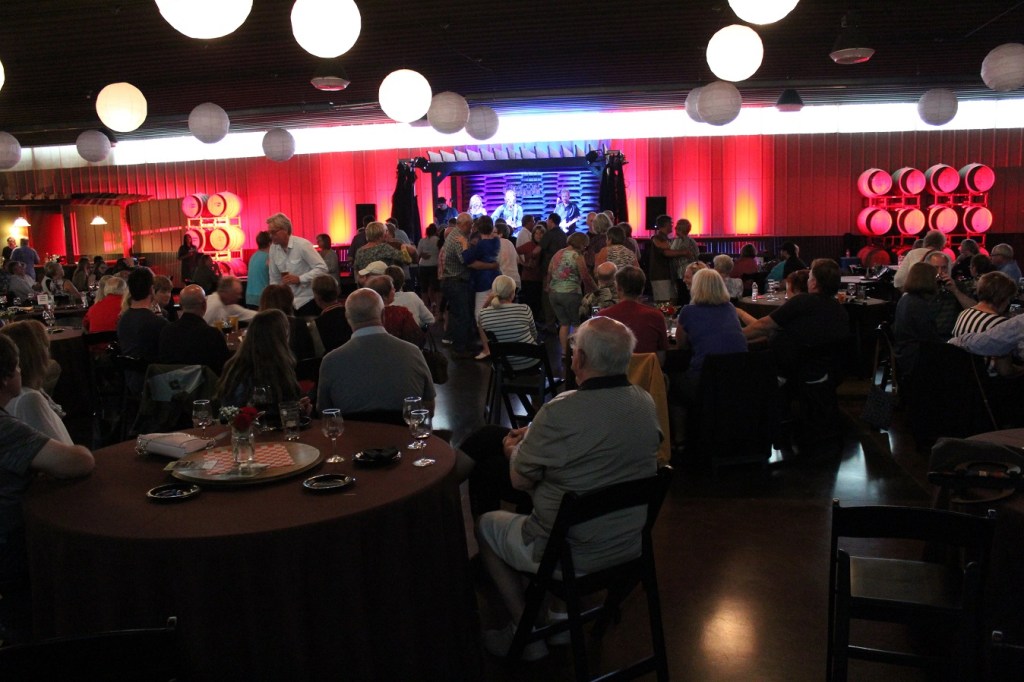
Well, boys and girls, we have reached the end of our 20-year sentimental journey down the musical memory lane. Who’da thunk that this last year would occur in the midst of a 100-year pandemic. Our last venture to an indoor venue occurred last March, and we were probably pushing it a bit at the time. Who knows when we’ll go inside again, as the cold weather season is soon upon us. I didn’t realize until I got into this that 2013 and 2014 were by far our most active years of cub reporting. Coverage has been gradually slipping since then in conjunction with my bodily mental and physical slippage. I find myself going to bed at 8:00 pm and waking at 2:00 am. There is not a great need for cub reporting at 9:00 am, when my battery is fully charged. So finally, and at last, I give you what was available in 2020 . . .

I had a boyfriend who told me I’d never succeed, never be nominated for a Grammy, never have a hit song, and that he hoped I’d fail. I said to him, ‘Someday, when we’re not together, you won’t be able to order a cup of coffee at the fucking deli without hearing or seeing me.’ ~  Lady Gaga

Josie Nelson @ CCW, January 2020

Anthony Miltich @ CCW, March 2020

Cheese Bots @ Garden Bar, March 2020 THE LAST INDOOR EVENT BEFORE PANDEMIC PROTOCOLS

Josie Nelson @ CCW, June 2020

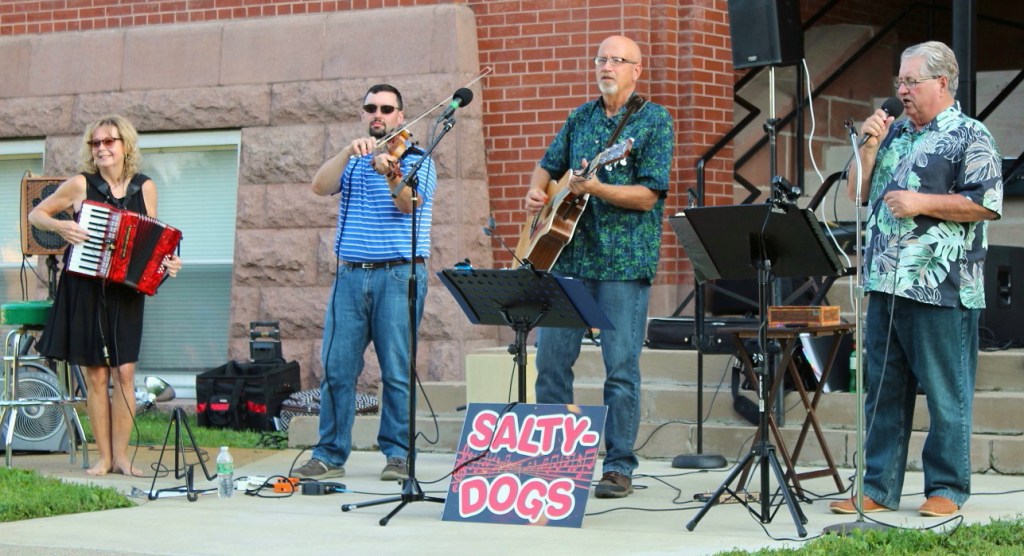
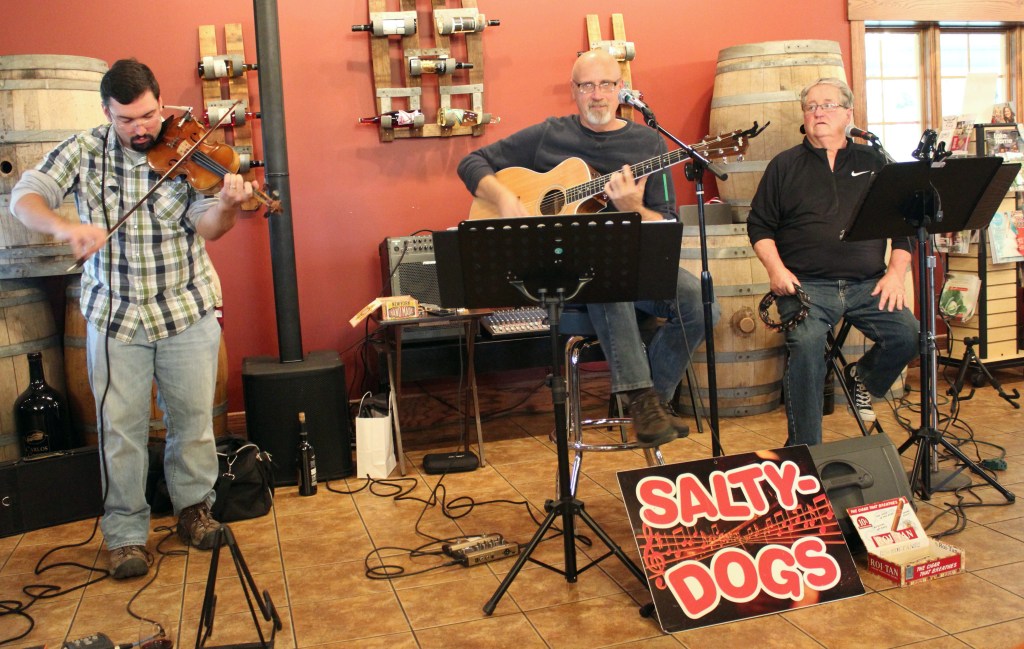
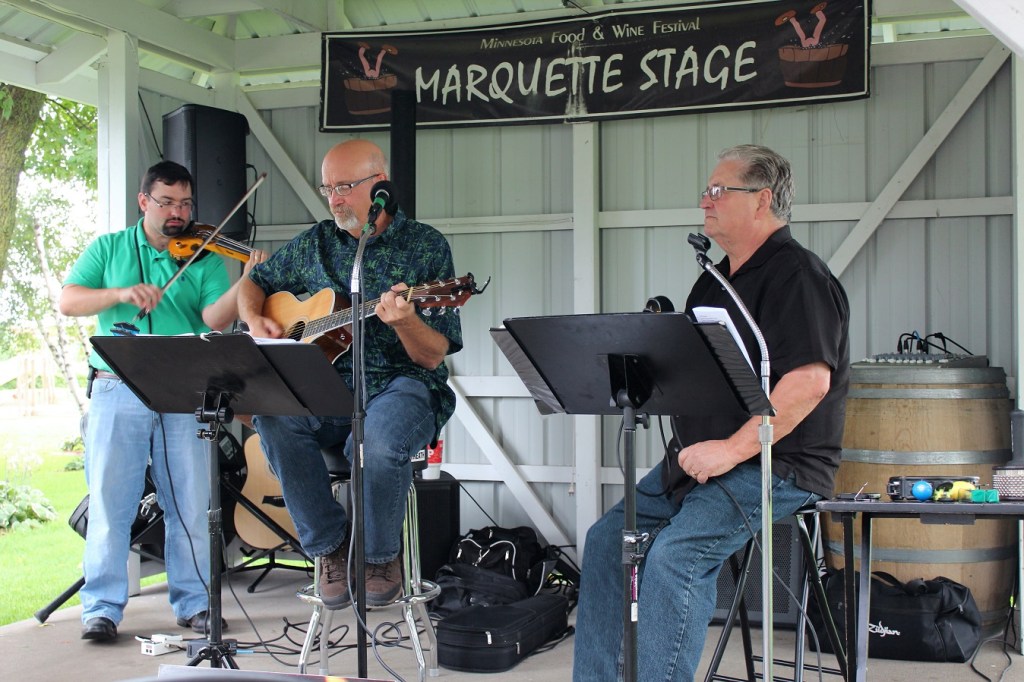
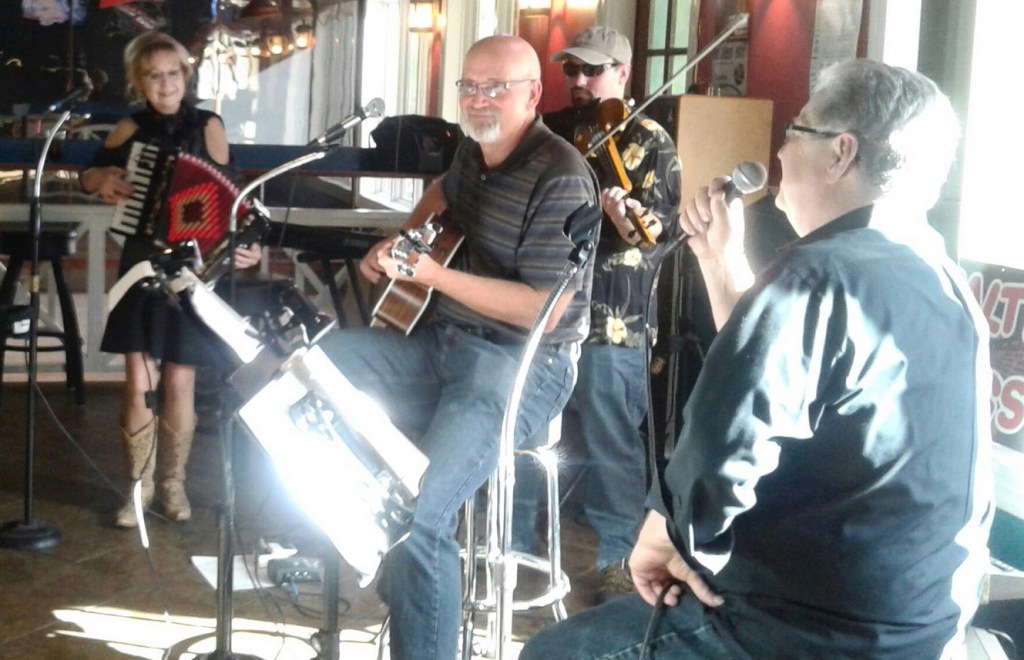
Salty Dogs @ CCW, June 2020

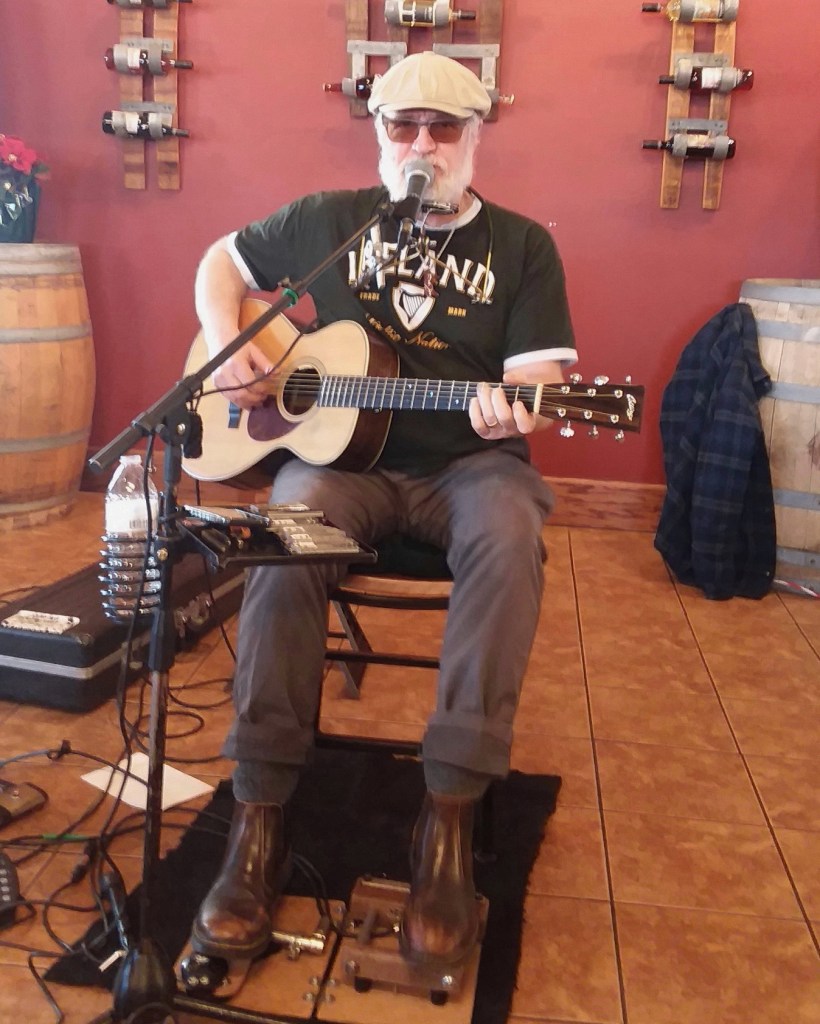
Terry Kennedy & Bill Riggs @ Garden Bar, June 2020

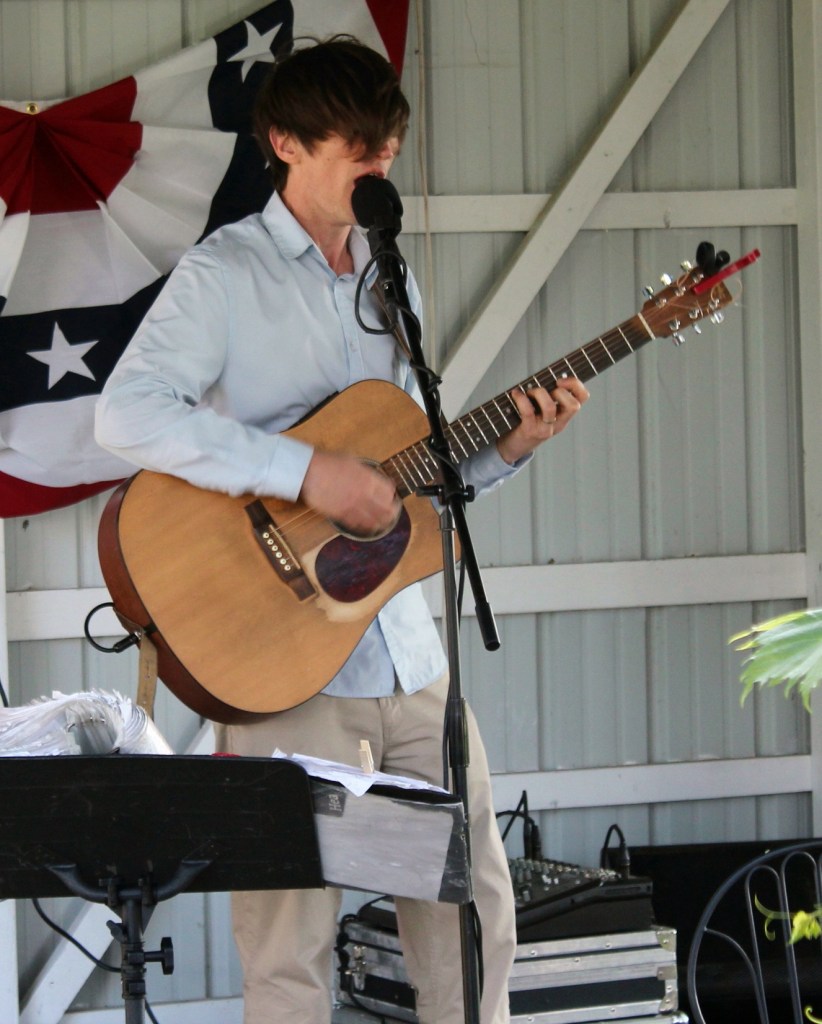
Anthony Miltich @ Lure Lakebar, July 2020

Farewell Angelina @ TLHD, July 2020

(Lauren Lucas, Lisa Torres, Nicole Witt and Andrea Young (may not be in that order here) )

Love at a Distance (Carson Rose Schneider, Siena Forest, Luke Williams & David Walton) @ TLHD, July 2020

Tuesday Night Club (Terry Kennedy, Bill Riggs, Al Lieffort) @ Garden Bar, August 2020

Bill Riggs

Dan Chouinard @ TLHD, August 2020

Kevin Kling @ TLHD, August 2020

Elsa Lee @ CCW, August 2020

Erik Schultz @ CCW, August 2020

Her Crooked Heart (Hilary James & Rachel Ries) @ TLHD, September 2020

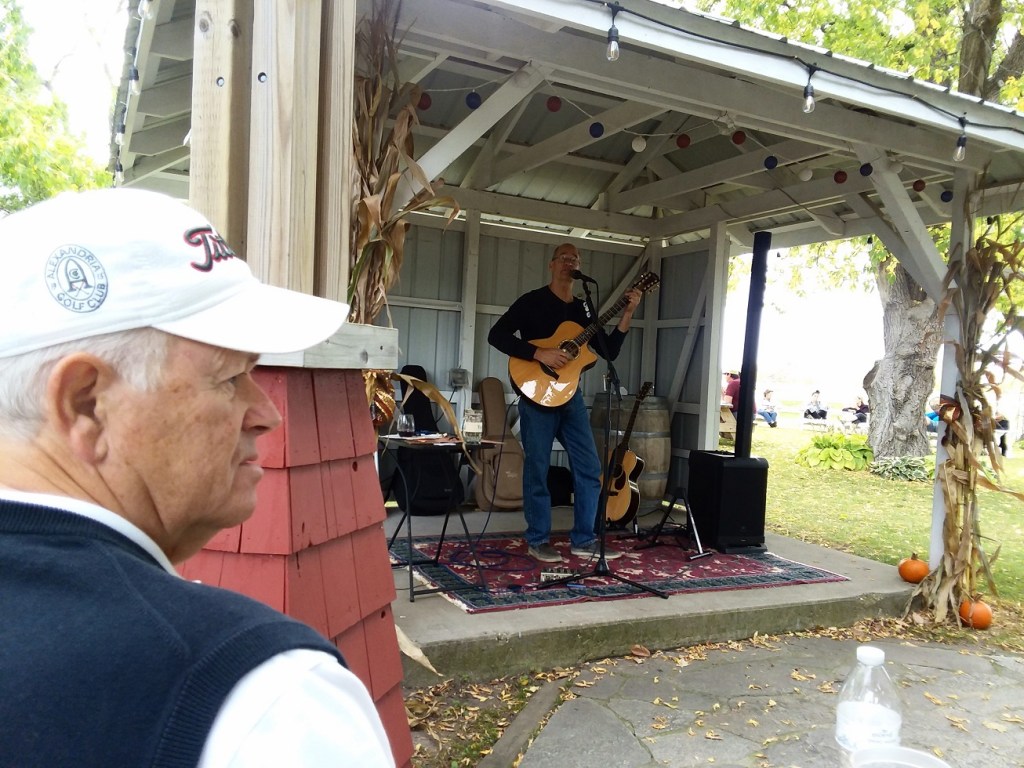
James Case (w/ Jimmy Peterson & Casey Gooby) @ TLHD, September 2020

King Pari (Cameron Kinghorn & Joe Paris Christensen) @ TLHD, September 2020

Debbie Duncan @ TLHD, September 2020

Judi Vinar @ TLHD, September 2020

Lori Dokken @ TLHD, September 2020

Patty Peterson @ TLHD, September 2020

Rachel Holder @ TLHD, September 2020

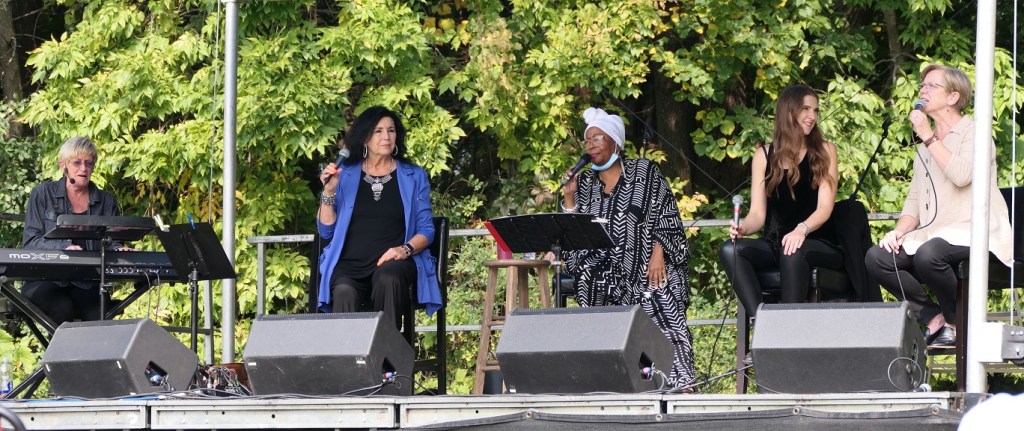
Lori, Patty, Debbie, Rachel & Judi @ TLHD, September 2020

Terry Kennedy, Bill Riggs & Al Lieffort @ Garden Bar, September 2020

Terry & Bill, same time & place . . .

Anthony Miltich @ CCW, September 2020

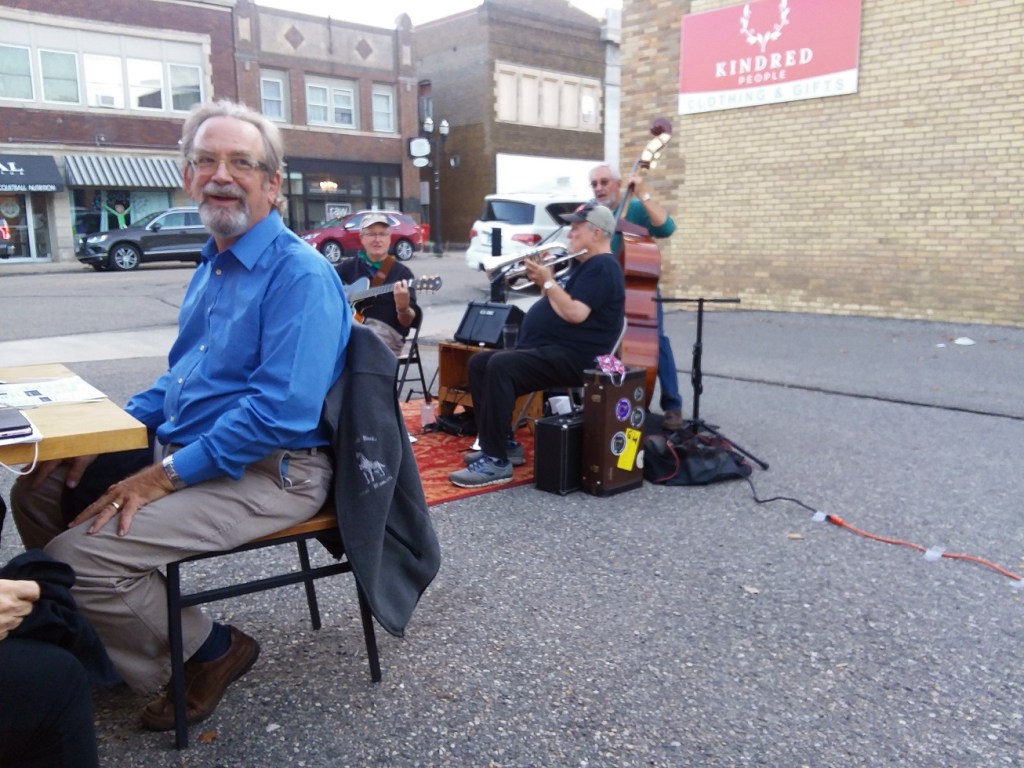
Terry Kennedy, Bill Riggs & Jim Faber @ Garden Bar, September 2020

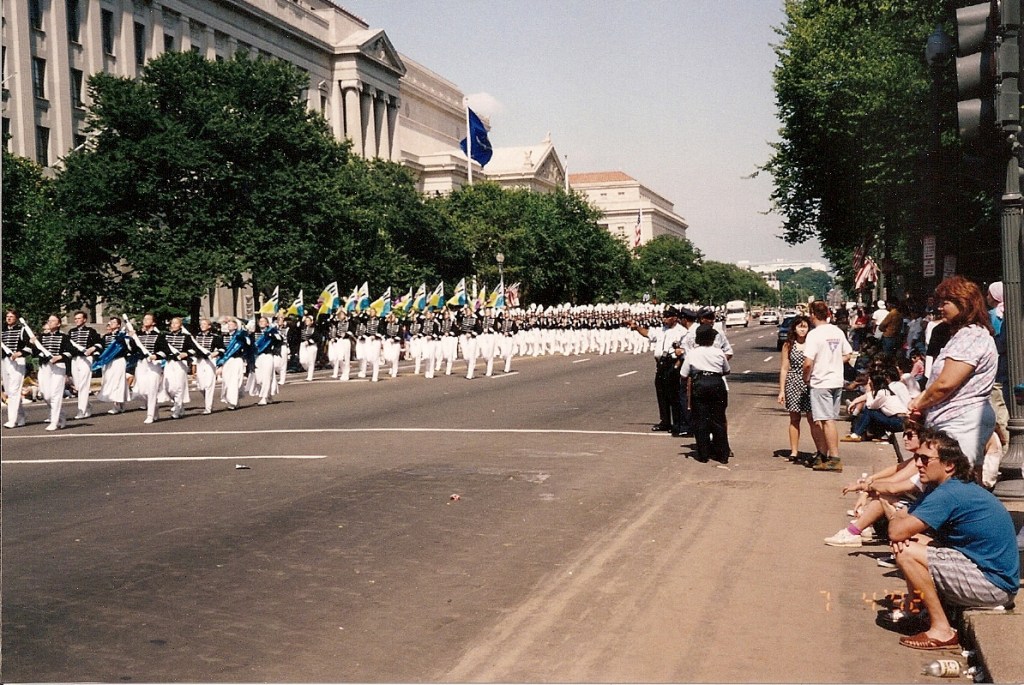
Alexandria High School Marching Band on Constitution Avenue, Washington, D.C., 1992

[The Alex band was recognized as one of the best in the country at the time and was thus rewarded as the final performers in parade. I was living in Arlington, Virginia, at the time, so I consider these my first Alex music photos.]

Goodbye, Goodbye
Goodbye, Goodbye
Goodbye, Goodbye
My love, goodbye

If I should ever die, God forbid, let this be my epitaph: THE ONLY PROOF HE NEEDED FOR THE EXISTENCE OF GOD WAS MUSIC. ~  Kurt Vonnegut

Up Next: Back to 1983 Japan?
A Complete Abridged History of Music (Part 19)*

* In the greater Alexandria, Minnesota, standard metropolitan statistical area

I love to sing, and I love to drink scotch. Most people would rather hear me drink scotch. ~ George Burns

Before Arthur Rubinstein’s American appearance, he decided to wander about the packed concert hall. When an usher told him to leave because the performance was sold out, Rubinstein snapped back, “Because I am performing, may I sit at the piano?” (joannemarie.parba.net/)

Charlie Roth @ CCW, January 2019

Anthony & Jim Miltich @ CCW, February 2019

Elsa Lee @ CCW, February 2019

Tuesday Night Club @ Garden Bar, February 2019

Anthony & Jim Miltich @ CCW, March 2019

Elsa Lee @ CCW, March 2019

Dan Mahar @ Garden Bar, April 2019

Mel Lamar Trio @ Garden Bar, April 2019

CCW, May 2019

Elsa Lee @ CCW, May 2019

Patchouli @ Central Square Cultural & Civic Center, May 2019

This image has an empty alt attribute; its file name is patchouli-julie-patchouli-bruce-hecksel-5-19.jpg

Salty Dogs @ CCW, May 2019

Sam Miltich & family & friends @ Evansville Arts Center, May 2019

AAHS Alumni @ Discovery Middle School, June 2019

Anthony Miltich @ Lure Lakebar, June 2019

Josie Nelson @ CCW, June 2019

Julie Patchouli @ CCW, June 2019

Patchouli @ CCW, June 2019

Erik Schultz & Paul Trumm @ Garden Bar, July 2019

Erik Schultz @ CCW, July 2019

Josie Nelson @ CCW, July 2019

Anthony Miltich @ Lure Lakebar, August 2019

Charlie Roth @ CCW, August 2019

Josie Nelson @ CCW, August 2019

Tuesday Night Club @ Garden Bar, August 2019

Anthony Miltich @ Evansville Arts Center, September 2019

Central Lakes Symphony Orchestra @ Broadway Ballroom, September 2019

Lindy Pederson @ CCW, September 2019

Greg Donahue, Rachael Ianiro & Erik Schultz @ CCW, September 2019

Elsa Lee @ CCW, December 2019

The long and winding road . . .

Nothing is more beautiful than a guitar, except, possibly two. ~ Frederic Chopin

Up Next: Finishing at 2020

A Complete Abridged History of Music (Part 18*)

November 3
* In the greater Alexandria, Minnesota, standard metropolitan statistical area

Now and then, an innocent man is sent to the legislature. ~ Kin Hubbard (c. 1900)

Researchers found that those who played an instrument for two years showed a stronger “neurophysiological distinction” between certain sounds than children who didn’t get the instrumental training. For instance, the music-makers more easily could tell the difference between the words “bill” and “pill,” a key skill in learning to read” (nammfoundation.org/articles). Anecdotal evidence to the contrary, I played trumpet in the 5th and 6th grades, and to this day, when I’m not feeling well, I take two ‘bills’ and call the doctor in the morning . . .

Sound Idea @ Garden Bar (Tim Cochran & Bruce Tatge), January 2018

Salty Dogs @ CCW, April 2018

Cheese Bots @ CCW, April 2018

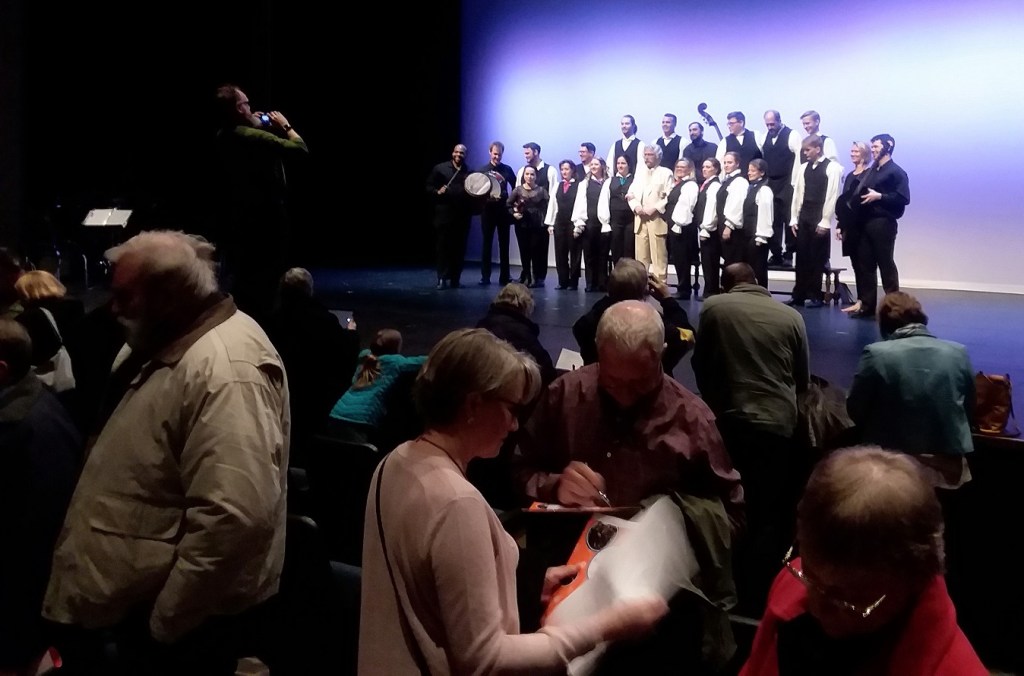
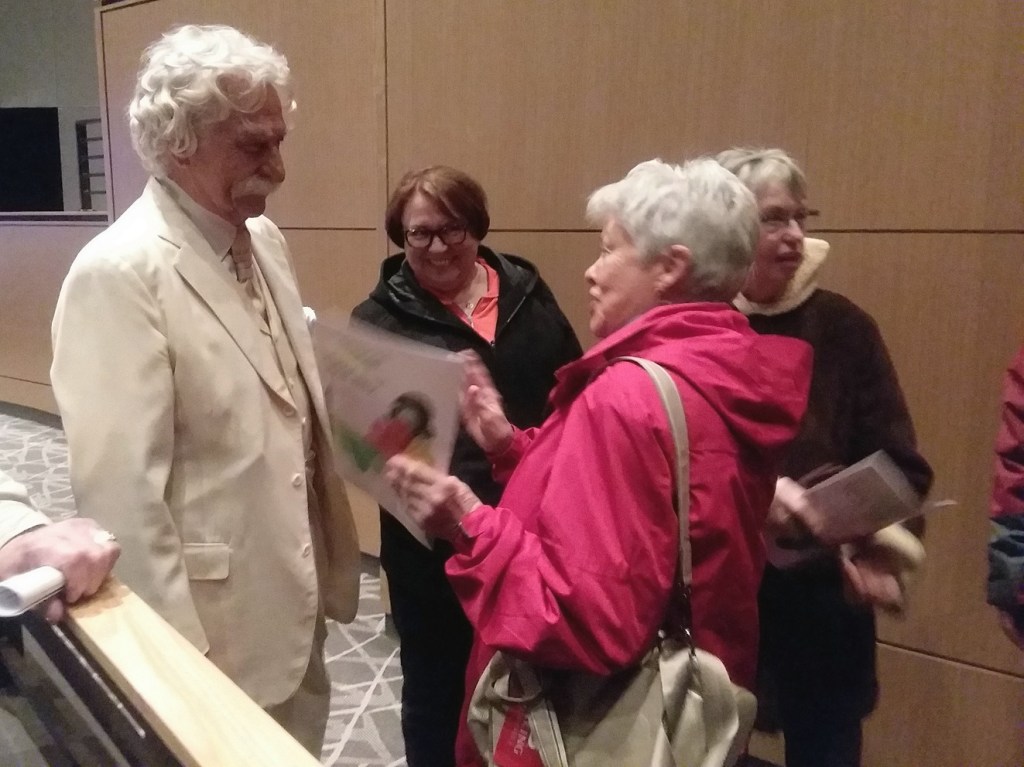
Don Shelby as Mark Twain @ AAHS, April 2018

(w/ fans)

Lisa Lynn @ Copper Trails Brewery, April 2018

Charlie Roth @ CCW, May 2018

Robb Justice @ CCW, May 2018

Anthony & Jim Miltich @ Evansville Arts Center, July 2018

Anthony Miltich @ Methodist Church, July 2018

Cloud Cult @ TLHD, July 2018

George Mulder (w/ fan) @ Legacy of the Lakes Gardens, July 2018

Cheese Bots @ Garden Bar, August 2018

Lisa Lynn @ Copper Trails Brewery, August 2018

Patchouli @ CCW, August 2018

Salty Dogs @ Courthouse Lawn, August 2018

Anthony Miltich @ CCW, September 2018

Josie Nelson @ CCW, September 2018

Salty Dogs @ CCW, September 2018

Alli Prestby & Anthony Miltich @ December 2018

Erik Schultz @ Garden Bar, December 2018

“Whatever gets you through the night”

Texas was the only place where they didn’t look at me like I was crazy. ~ Jerry Jeff Walker (born Ronald Clyde Crosby in Oneonta, New York)

Up Next: 2019

A Complete Abridged History of Music (Part 17)*

November 17

* In the greater Alexandria, Minnesota, standard metropolitan statistical area

There are worse things in life than death. Have you ever spent an evening with an insurance salesman? ~ Woody Allen

Are you getting the idea I’m running out of music quotes? “He’s one of those who knows that life Is just a leap of faith Spread your arms and hold your breath Always trust your cape” ~ Guy Clark

Anthony Miltich @ CCW, August 2017

CCW, August 2017

CCW, August 2017

CCW, August 2017

Erik Schultz @ Garden Bar, August 2017

Jeff James @ CCW, August 2017

Josie Nelson @ CCW, August 2016

Paul Drinkwine @ CCW, August 2017

Salty Dogs @ CCW, August 2017

(w/ a fan)

BAT @ CCW, September 2017

Charlie Roth @ September 2017

Cheese Bots (Lindy Pederson, Jim LaRoque & Marty Sarlette) @ Garden Bar, September 2017

Erik Schultz @ CCW, September 2017

Paul Drinkwine @ CCW, September 2017

Bill Staines @ Legacy of the Lakes Museum, October 2017

Cheese Bots @ CCW, October 2017

Deanna Paulzine & Charlie Roth @ CCW, October 2017

Erik Schultz @ CCW, October 2017

Anthony Miltich @ CCW, November 2017

Derelict Trio (Danielle Olson, Steve Hornstein & Mark Downing) @ Garden Bar, November 2017

Josie Nelson @ CCW, November 2017

AAHS Carolers @ Garden Bar, December 2017

Anthony Miltich @ CCW, December 2017

Anthony Miltich @ CCW, December 2017

Paul Drinkwine @ CCW, December 2017

As usual, there is a great woman behind every idiot. ~ John Lennon

I hate reality but it’s still the best place to get a good steak. ~ Woody Allen

Up Next: Moving on to 2018

A Complete Abridged History of Music (Part 16)*

November 1

* In the greater Alexandria, Minnesota, standard metropolitan statistical area

We idolized the Beatles, except for those of us who idolized the Rolling Stones, who in those days still had many of their original teeth. ~ Dave Barry

There is a limited pot of education money but charter schools keep taking a bigger bite, usually with a lot less oversight than that applied to public schools.  Does it really make sense economically to find new buildings for, and new means of transportation for, students who for our nation’s entire history have always been educated quite nicely in our public schools. Well, it’s my venue. May as well take advantage of it. And now, 2017 . . .

Anthony Miltich @ CCW, February 2017

Charlie Roth & Paul Drinkwine @ CCW, February 2017

Shaun Johnson Big Band Experience w/ Central Lakes Symphony Orchestra @ AAHS, February 2017

Shaun Johnson w/ the Super

Josie Nelson @ AAHS, March 2017

Josie Nelson @ CCW, May 2017

Miltich Family @ CCW, May 2017

Anthony Miltich @ Arrowwood, June 2017

CCW, June 2017

Charlie Roth @ CCW, June 2017

Josie Nelson @ CCW, June 2017

Killer Vees @ CCW, June 2017

Salty Dogs @ Bug-A-Boo Bay, June 2017

Vinnie Rose @ CCW, June 2017

Adam Astrup & Tom Anderson’s son @ Gathered Oaks, July 2017

Anthony Miltich @ Arrowwood, July 2017

Anthony Miltich (w/ fans) @ CCW, July 2017

BAT @ Arrowwood, July 2017

BAT @ CCW, July 2017

CCW, July 2017

Cheese Bots @ Garden Bar, July 2017

Cheese Bots @ CCW, July 2017

Erik Schultz @ CCW, July 2017

Josie Nelson @ CCW, July 2017

Mel Lamar Trio & Mary Lou Thunselle @ CCW, July 2017

Salty Dogs @ Bug-A-Boo Bay, July 2017

“Which one are you?” Lennon’s answer: “I’m Eric.”

If you’re born with a gift, to behave like it’s an achievement is not right. ~ Woody Allen

Up Next: Finish 2017

A Complete Abridged History of Music (Part 15)*

November 1

* In the greater Alexandria, Minnesota, standard metropolitan statistical area

Money doesn’t talk, it swears. ~ Bob Dylan

You’ve seen a lot of photos of musicians performing at SAWA (Sixth Avenue Wine & Ale) through this blog run. This was the last year for our first favorite music venue – if it was Thursday night, it was SAWA. So many thanks again to DiAnn Ness for giving it a terrific 10-year run . . .

BAT @ SAWA, September 2016

BAT @ CCW, September 2016

Cheese Bots @ CCW, September 2016

Cheese Bots @ CCW, September 2016

Monroe Crossing @ CCW, September 2016

Anthony & Jim Miltich @ CCW, October 2016

CCW, October 2016 (Grand Opening 1999 signatures)

CCW, October 2016

Salty Dogs @ CCW, October 2016

Anthony Miltich @ CCW, November 2016

(The ever popular bread in my jar schtick again!)

CCW, November 2016

(Wine pick up parties . . . )

AAHS Carolers @ SAWA, December 2016

AAHS Carolers @ CCW, December 2016

CCW, December 2016

Cheese Bots @ SAWA, December 2016

Jim & Anthony Miltich @ CCW, December 2016

Sami Steidl @ SAWA, December 2016

(With Jeff Montoya)

Waybacks @ SAWA, December 2016

SAWA, the last night, December 31st . . .

SAWA Farewell – a fitting parting photo by SAWA chef Janet Baker

It won’t be long yeah (yeah), yeah (yeah), yeah (yeah) . . .

If you’re listening to a rock star to get your information on who to vote for, you’re a bigger moron than they are. ~ Alice Cooper

Up Next: 2017